23 November 2016

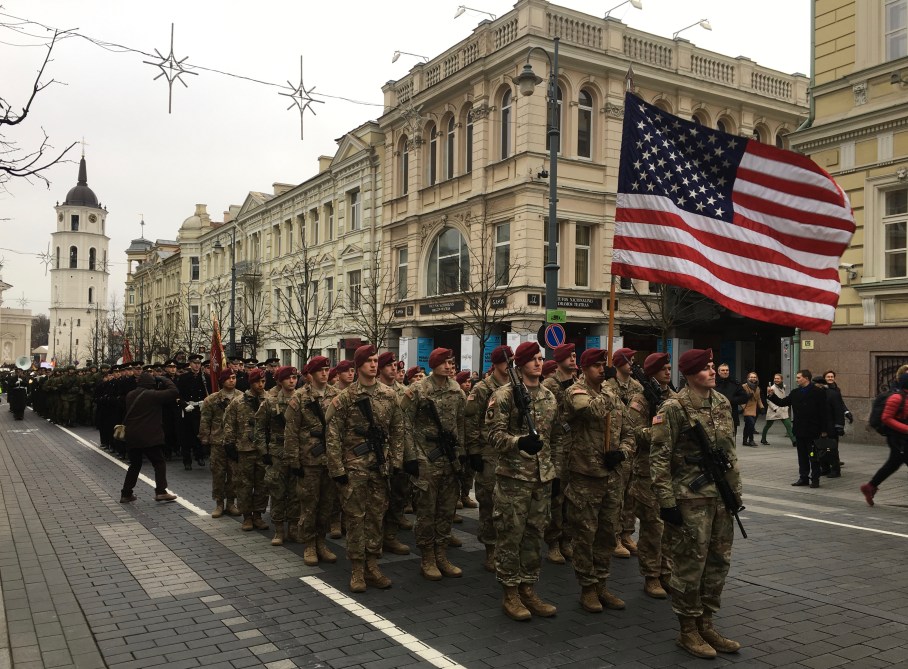
Jumped rope before my history class at 3:00. En route I encountered the Lithuanian Armed Forces Day Parade along Gediminas Street. It celebrated the 98th anniversary of the establishment of the Lithuanian Armed Forces. NATO allies were invited to participate, I was excited to find an American regiment.

img_1701

Professor Jakubcionis insinuated that it was wrong of the Lithuanian president to publicly apologize for Lithuanian collaboration during the war. He said that Lithuanian police only rounded up Jews and transported them to killing sites, but rarely participated in the actual murders. It took everything I had not to confront him.

21 November 2016

Went on a frigid morning run before my morality classes. We learned about cosmopolitanism and targeted killings. Used the time between to blog.

20 November 2016

After breakfast I traveled to the Kadriorg area a few miles from Tallinn Old Town. Attractions had yet to open so I strolled through the massive park.

img_1512

Stumbled on a particularly well-groomed plot surrounding two frozen ponds.

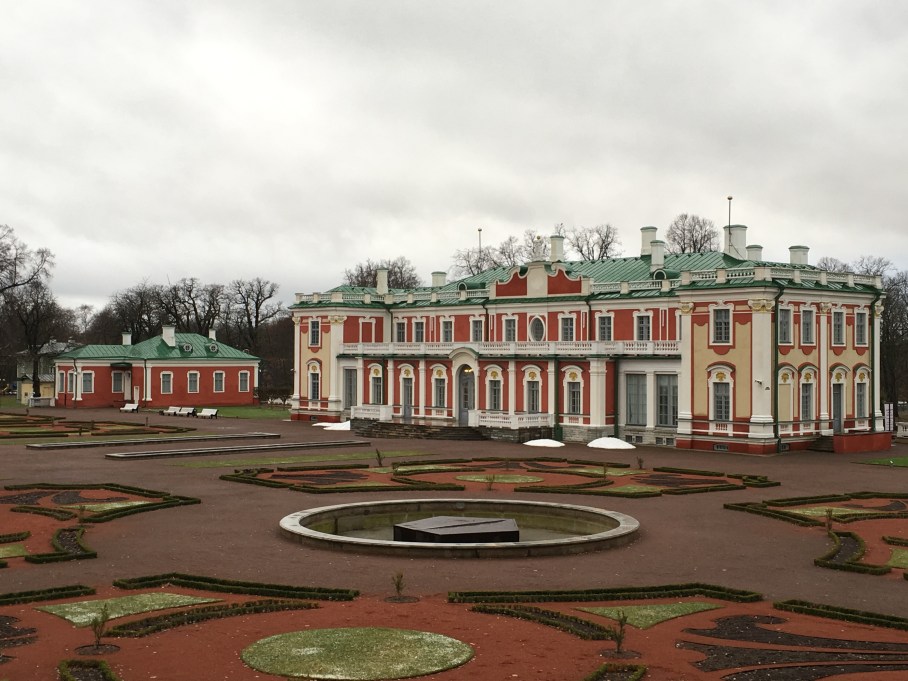
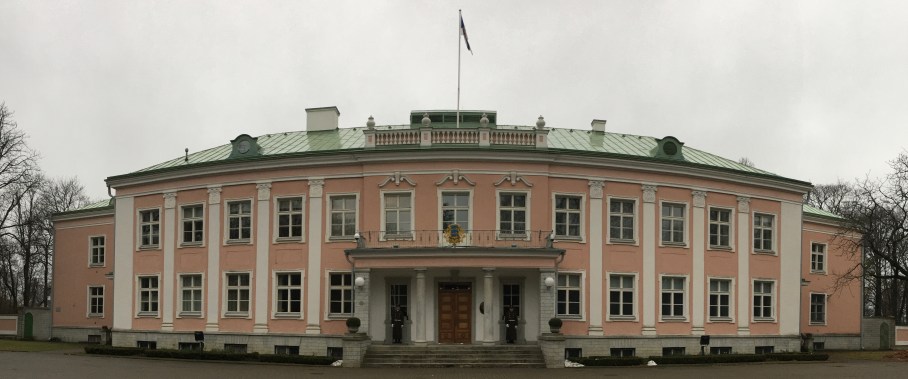
A full loop around the park put me in the lovely gardens of Kadriorg Palace.

img_1534

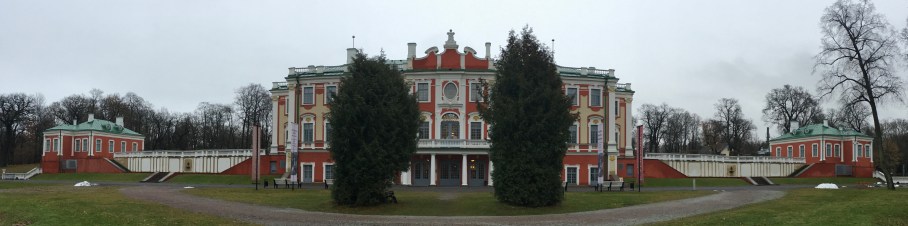
Following his successful capture of Estonia during the Great Northern War (1700-1721) Tsar Peter I commissioned there the construction of a residence. He named his colorful new palace for his wife (literally ’Catherine’s Valley’), but would not live to see it completed.

img_1589img_1591

The quaint building where the royal couple stayed on multiple visits to the uncompleted palace was a highlight of my stroll around the park.

img_1510

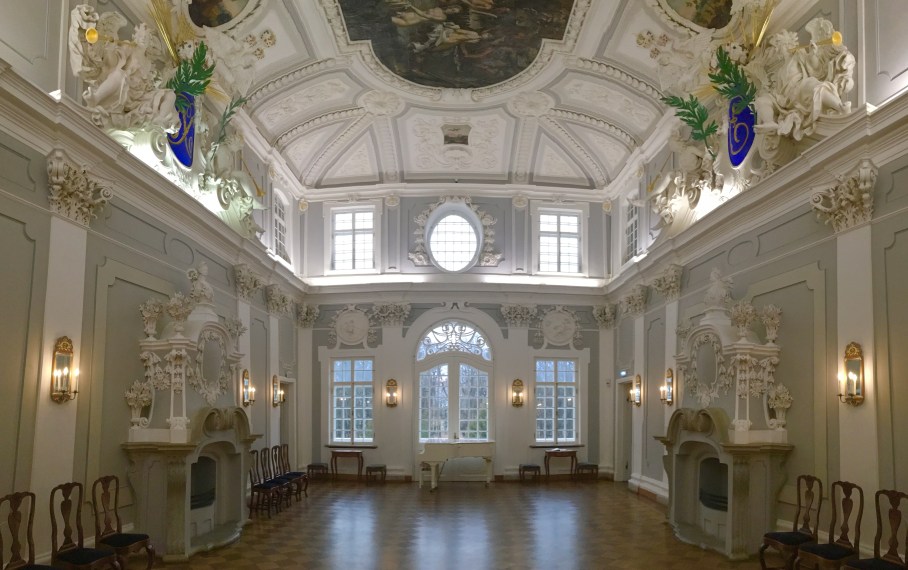
Surely the pride of the palace is her magnificent great hall. Designed by Roman architect Nicola Michetti, it has been described as the ‘Baroque Pearl of the North’.

img_1551

Catherine’s initials still grace the hall even though she rarely visited the palace following her husband’s death.

img_1553

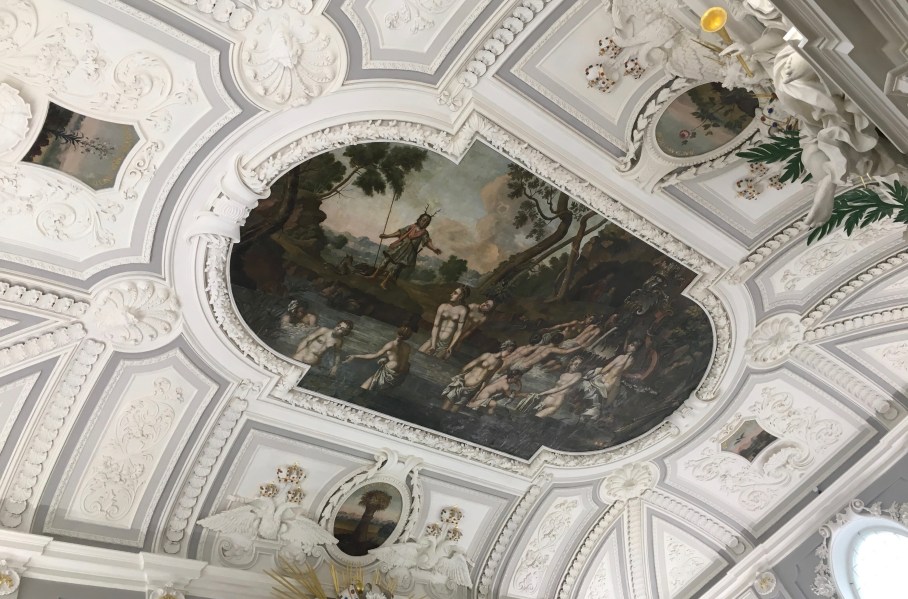
The intricate stucco decorations are enhanced by an impressive series of ceiling paintings that depict Ovid’s Metamorphoses as an allegory for Russian victory in the Great Northern War.

img_1567

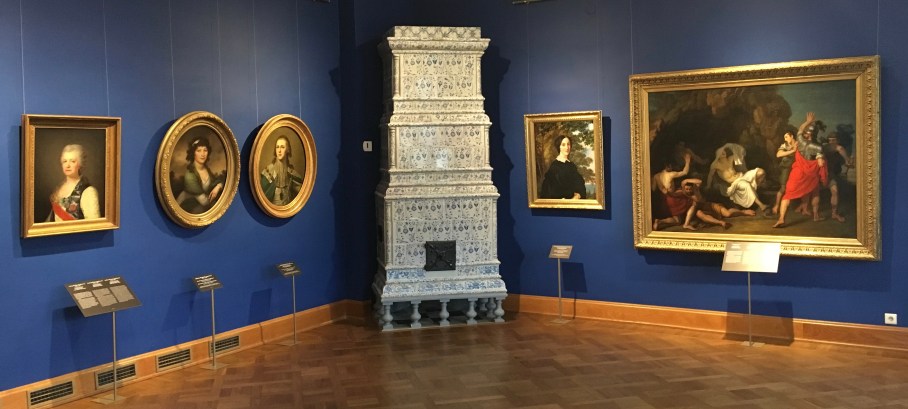
While the great hall has been preserved in her original form, the remainder of the palace underwent significant renovations under Tsar Nicholas I (r.1825-1855). Kadriorg was then on visited by generations of Russian royalty, but only on sporadic summer holidays. The royal bedrooms, offices and so on are now assumed by impressive foreign artwork.

img_1579

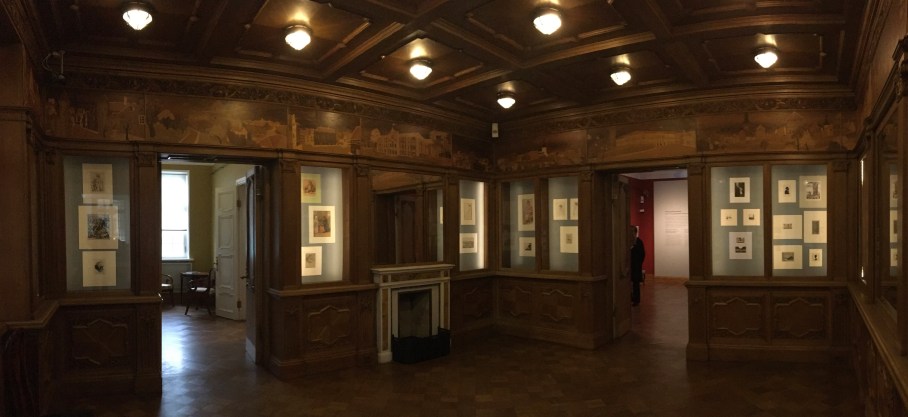
In 1934 the head of the interwar Republic of Estonia, Konstantin Pats, moved into Kadriorg. He controversially redesigned many parts of the interior, namely the library, which now houses an exhibit of Russian Graphic Art.

img_1586

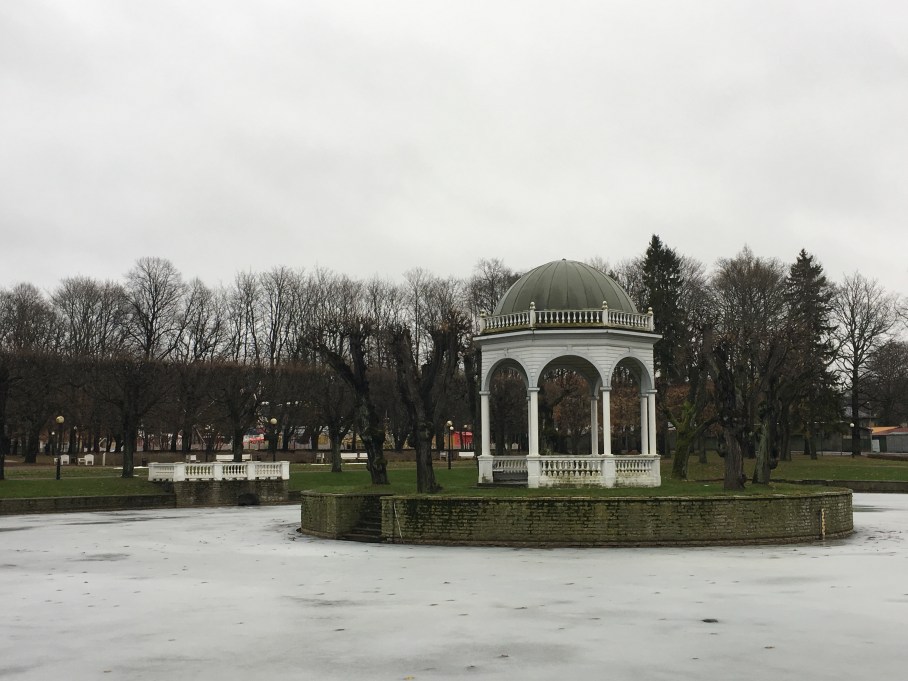
In front the palace stands the Swan Pond occupied by a gazebo in the middle. It was frozen as well.

img_1598

Just behind the palace stands the purpose-built Presidential Palace. Constructed in 1938, President Pats lived there for only two years before Estonia was occupied by the Soviets. It housed the highest regional authorities under German and Soviet occupation, but resumed her original purpose after Estonian liberation in 1991. The Honor Guard stands watch 24 hours a day.

img_1615

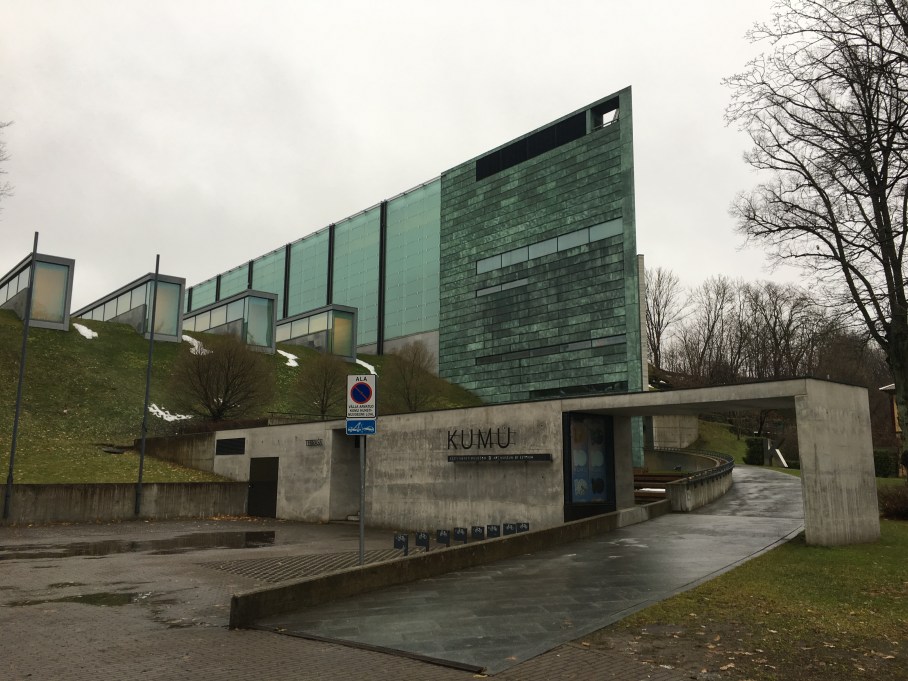
I ended my tour at Kumu, the Art Museum of Estonia. Built in 2006, it is the largest museum in the country.

img_1619

I spent my limited amount of time visiting the permanent exhibition. I was thrilled to find it arranged in chronological order, rather than thematic. I particularly enjoyed the works of Johann Koler, a nineteenth century Estonian whose style is classified simply as ‘history painting’.

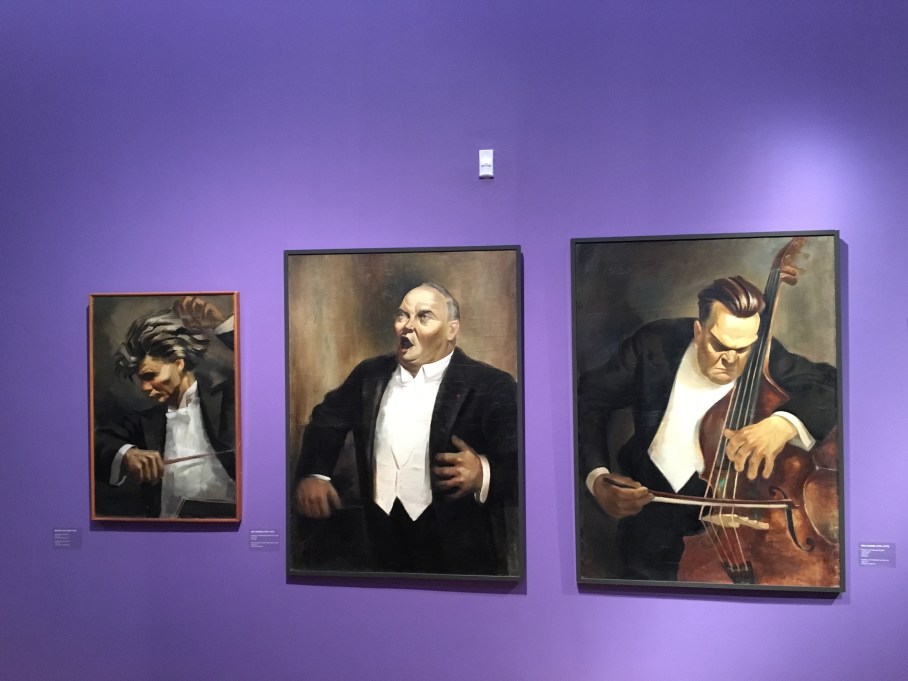
I also enjoyed Eduard Ole’s early 20th century paintings of musicians.

img_1631

Called a taxi to the airport at 1:00. Flight was delayed a few hours, used the time to blog.

img_1639

Arrived in Vilnius at 6:30.

19 November 2016

Planned my day over breakfast.
img_1186

Walked first to Toompea Hill, which reigns over Lower Town. Together they comprise Old Town.

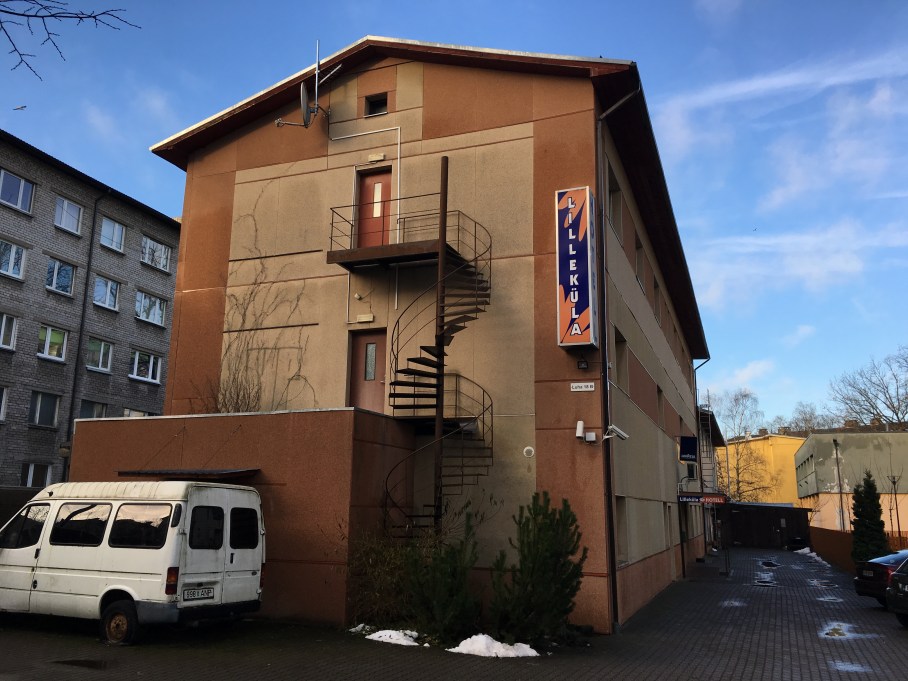
I started at Freedom Square. Erected in 2009, the Victory Column commemorates the 4,000 Estonians who lost their lives during the War of Independence (1918-1920), one of many that followed the Soviet overthrow of the Russian Empire.
img_1190

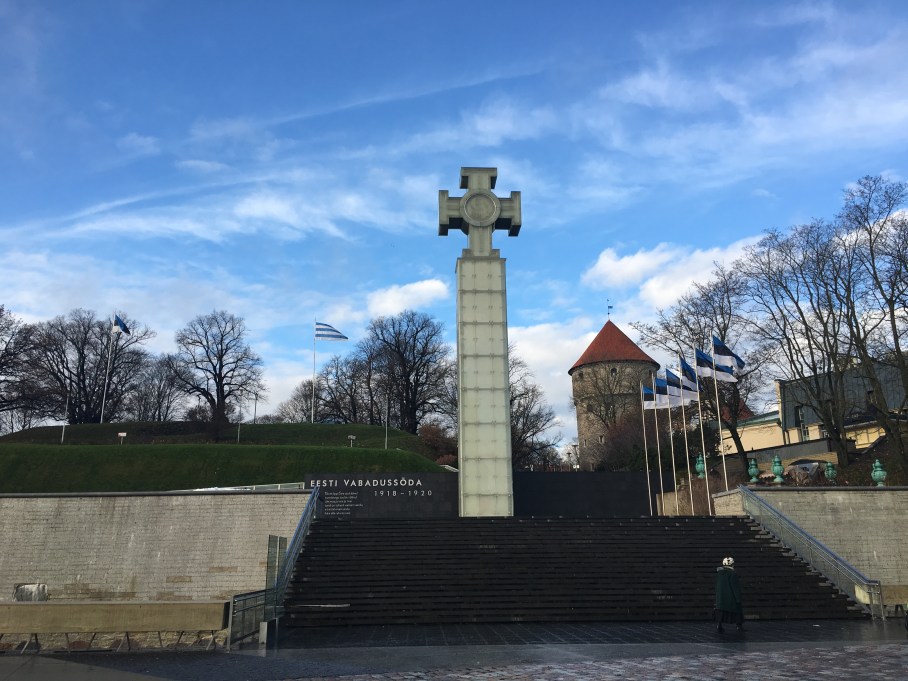
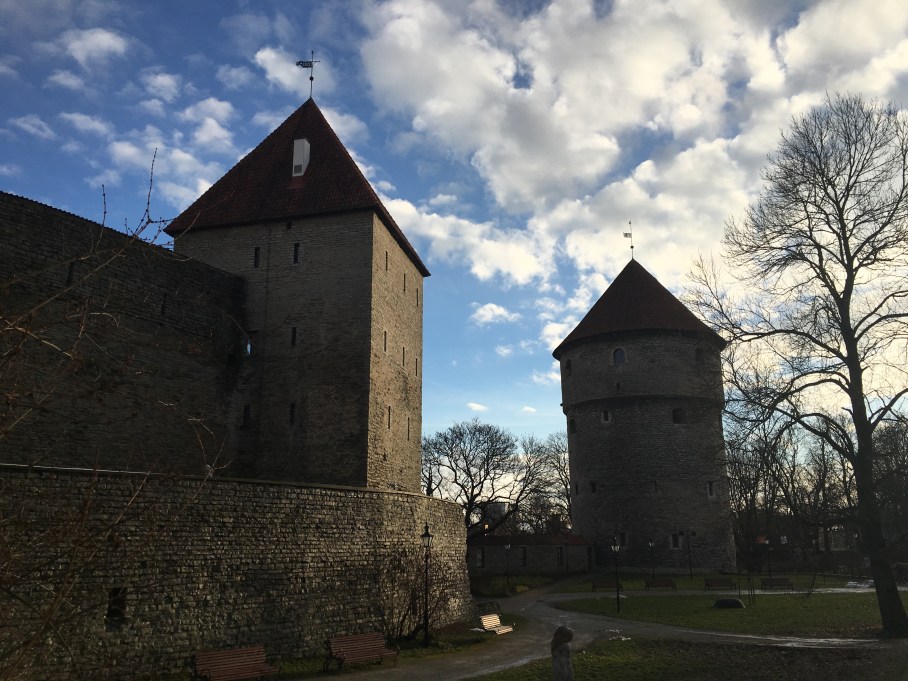
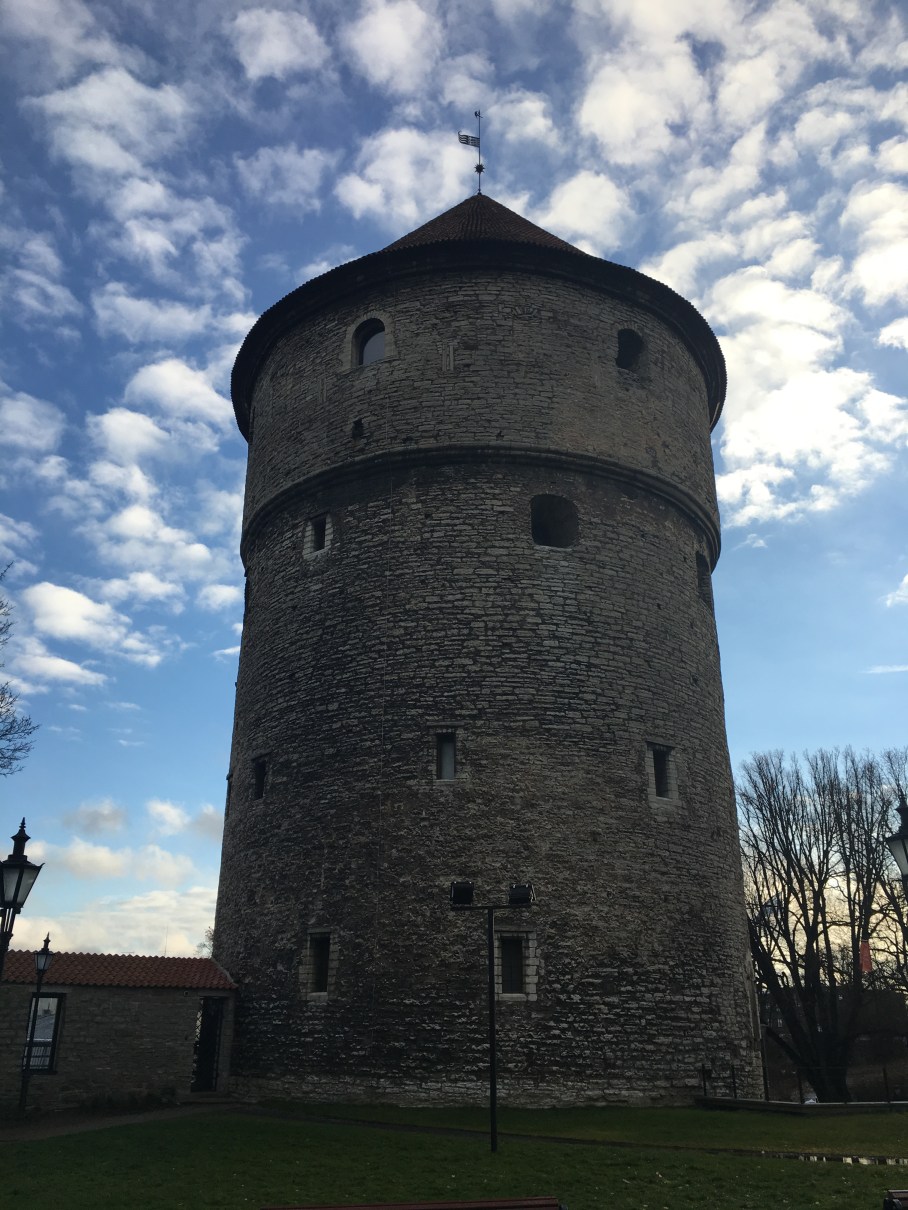
Just behind stands Kiek in de Kok. Built in 1475 by the Livonian Confederation, Kiek in de Kok is the mightiest tower that remains of the 46 towers that were once incorporated into the medieval city walls.
img_1200

After their defeat in 1236 at the Sun Battle in Siauliai, the Livonian Brothers were incorporated into the larger Teutonic State as the Livonian Order. Ironically, it was the Livonian Order alone to withstand the dissolution of the Teutonic State at the Battle of Grunwald in 1410. They retained control of their historic territory (roughly Estonia and Latvia) under the guise of the Livonian Confederation, until their defeat during the Livonian War of 1558-1583. Tallinn was relinquished to the Kingdom of Sweden. Cannon balls from that war can still be found lodged into Kiek in de Kok.
img_1196

The 38 meter tower now houses a rather unimpressive museum. It did make for some impressive views of the city though.

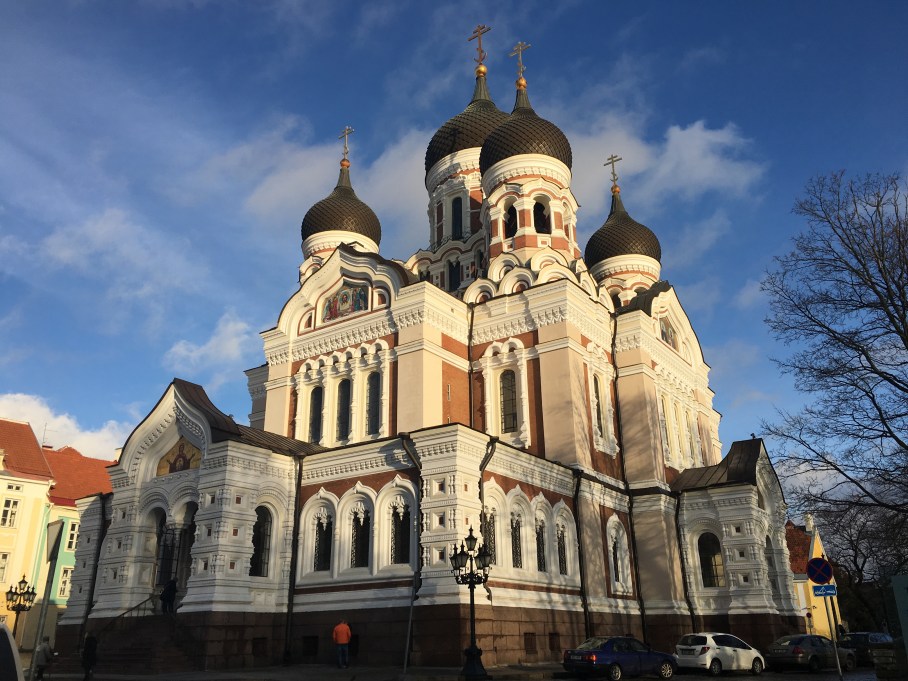
Alexander Nevsky Cathedral stands nearby. It is the dominating landmark of Toompea Hill. Built in Russian Revival style, it was ordered by Tsar Alexander III in 1894. It serves the Russian Orthodox community of Estonia. Named for Saint Alexander Nevsky of Russia who defeated the Livonian Order at battle in 1242, it was meant as a symbol of Russian supremacy. The Russians conquered Estonia from the Swedes during the Great Northern War (1700-1721).
img_1238

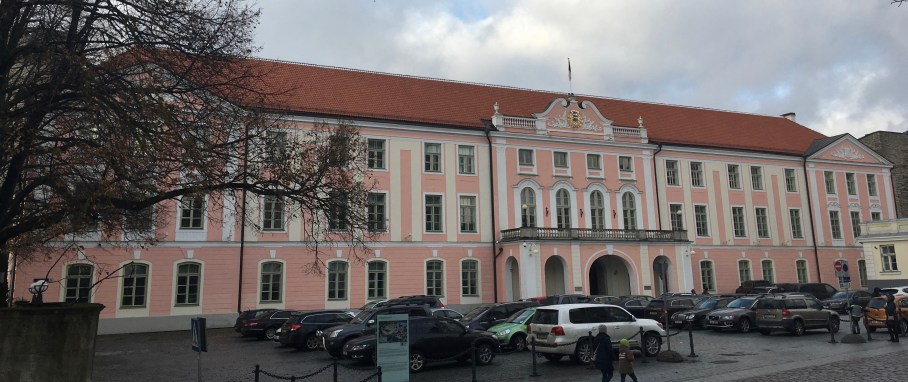
The cathedral faces Toompea Castle, built by Estonians in the early years of the last millennium. The Danes conquered the region in 1219 from the Estonians, who would not again enjoy independence for 800 years. In 1346 the Danish sold their Baltic holdings to the Teutonic Order, who rebuilt the castle entirely.
img_1222

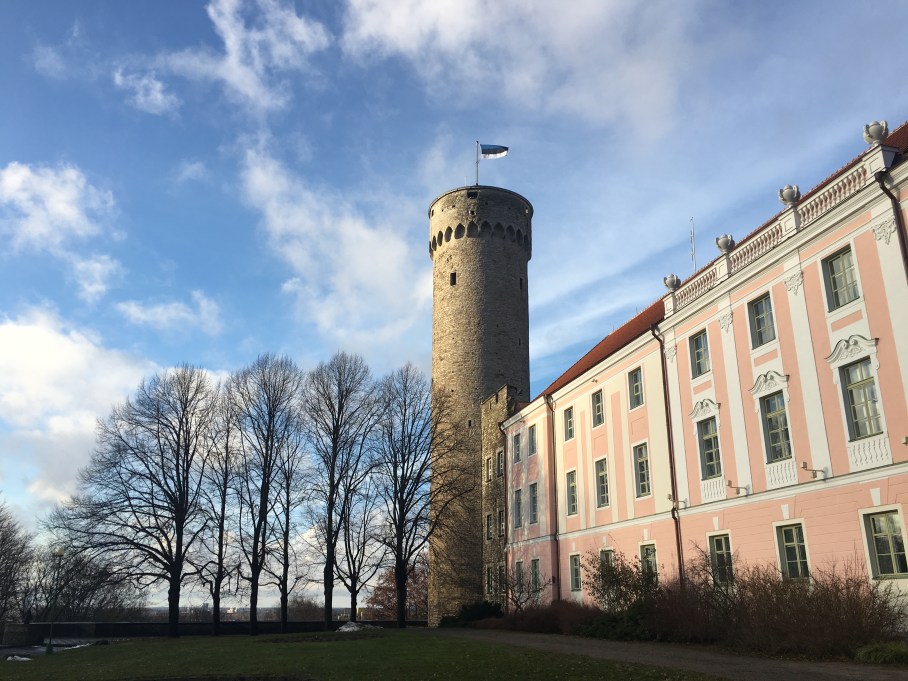
Tall Hermann Tower still dominates the castle skyline at 48 meters tall. It functioned then as both a fortress and a monastery, in true crusader style.
img_1234

Under Swedish rule, Toompea Castle functioned as an administrative centre of political power in Estonia, a purpose the castle retained through Russian occupation until the present. It is now the seat of the Estonian Parliament.
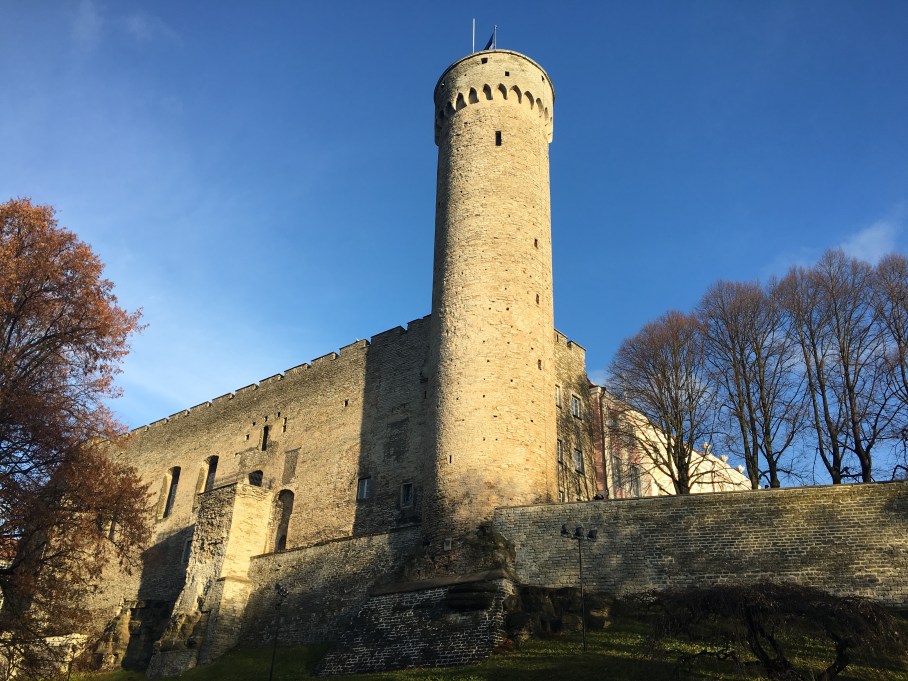
img_1244

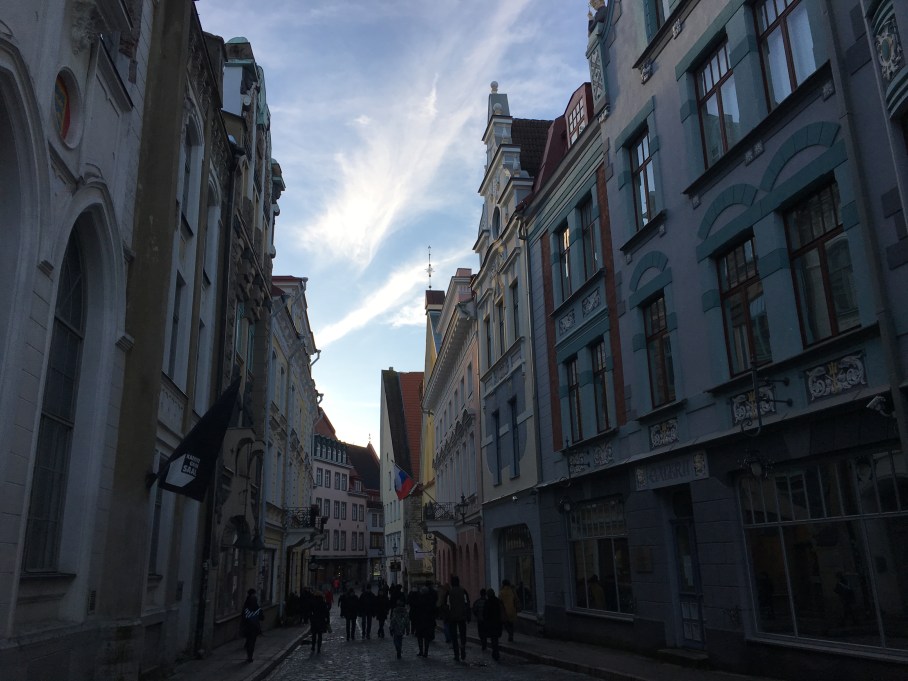
Walked down a pleasant medieval street to reach Dome Church.
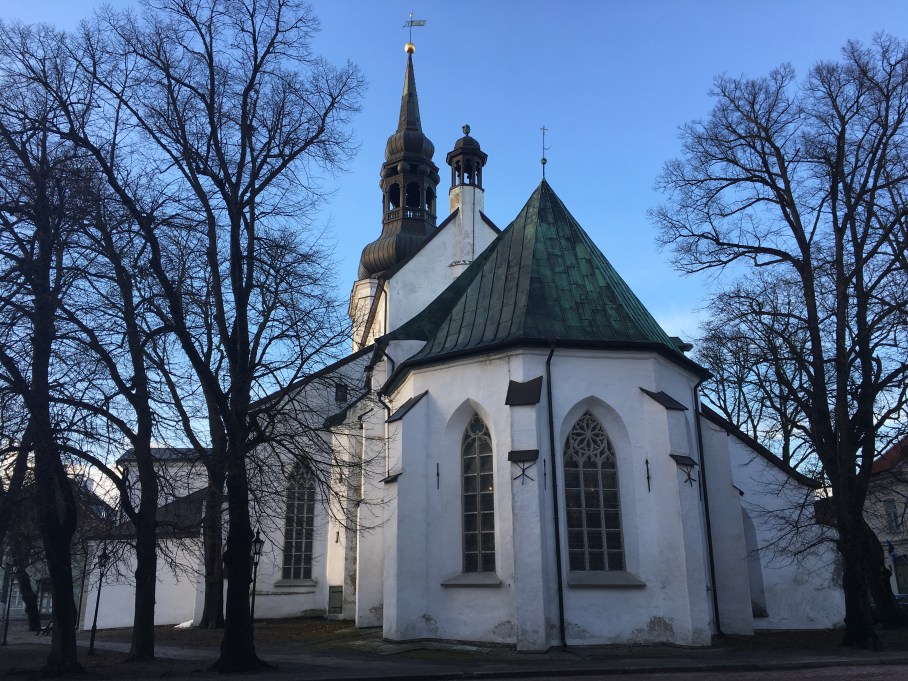
img_1283

Founded by the Danish in 1219, it is the oldest church in Estonia. It serves the Lutheran community of Estonia.

Of all the churches visited on my travels, it was the first where I heard the organ played. I was beyond excited.


En route to Lower Town I visited two viewing platforms.
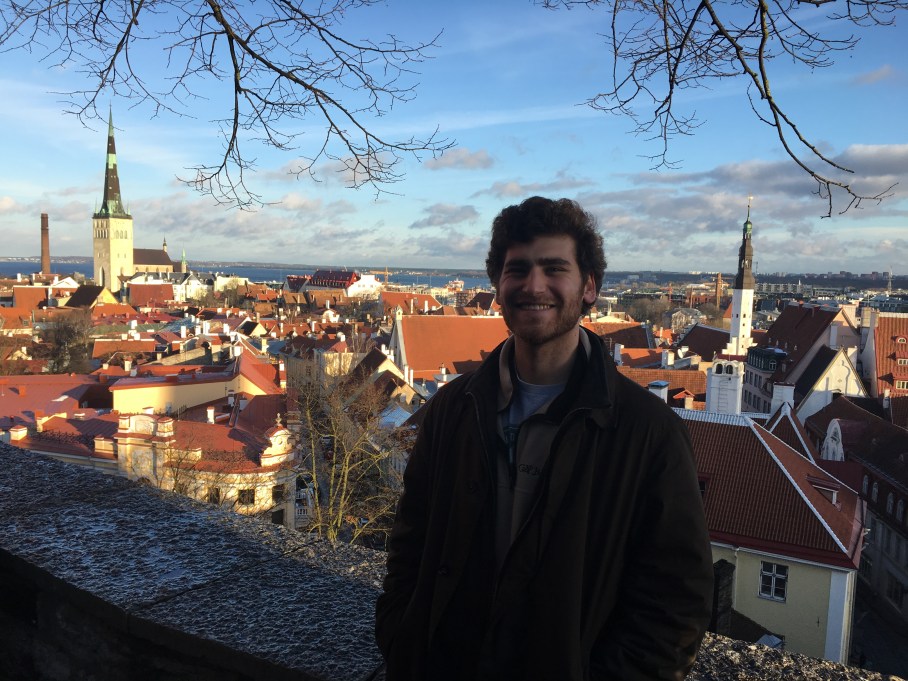
img_1296

Forecast predicted showers all weekend. I feel like I’ve been rewarded for traveling despite my exhaustion.
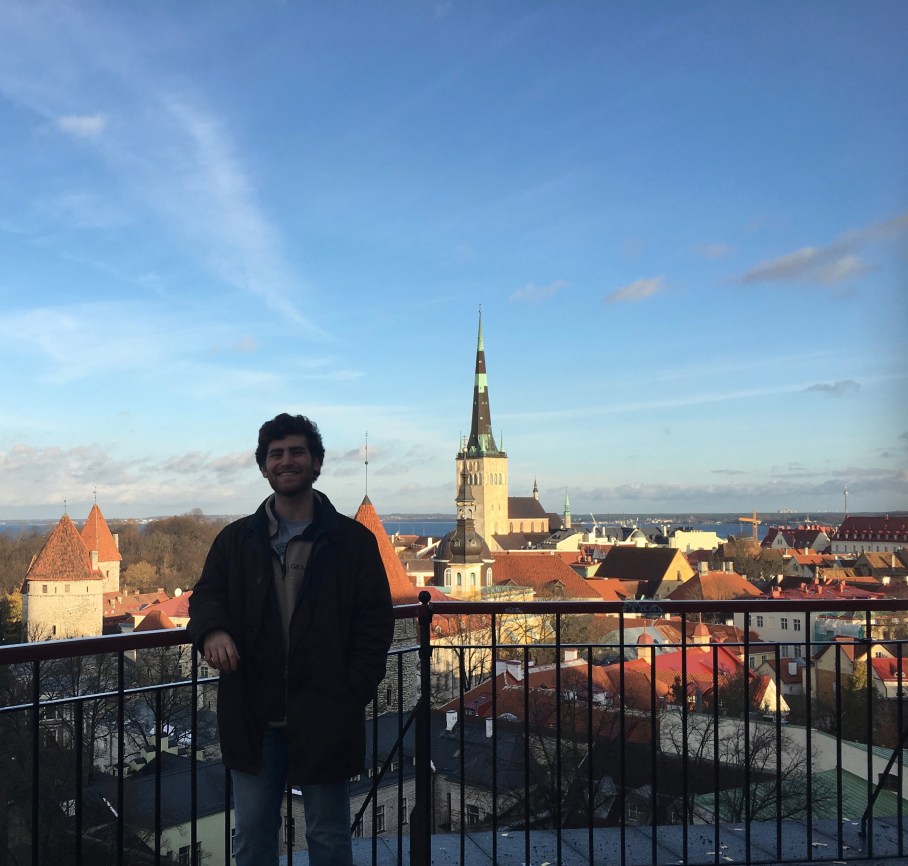
img_1306

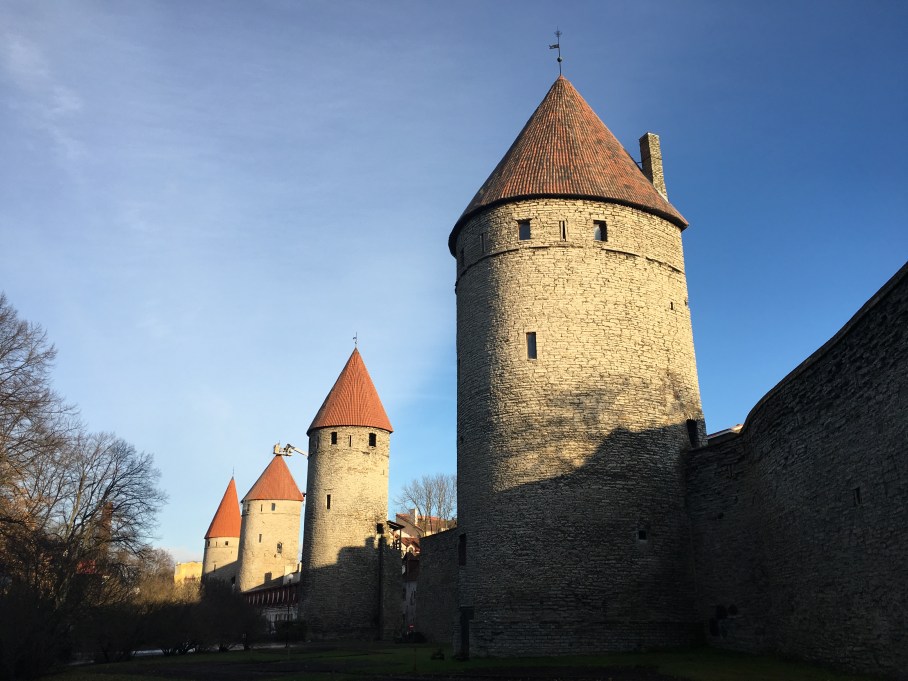
I made way down a steep flight of winding stairs to reach Lower Town. Her entrance is guarded by three of the oldest towers- the Nunne, Sauna and Kuldjala.
img_1324

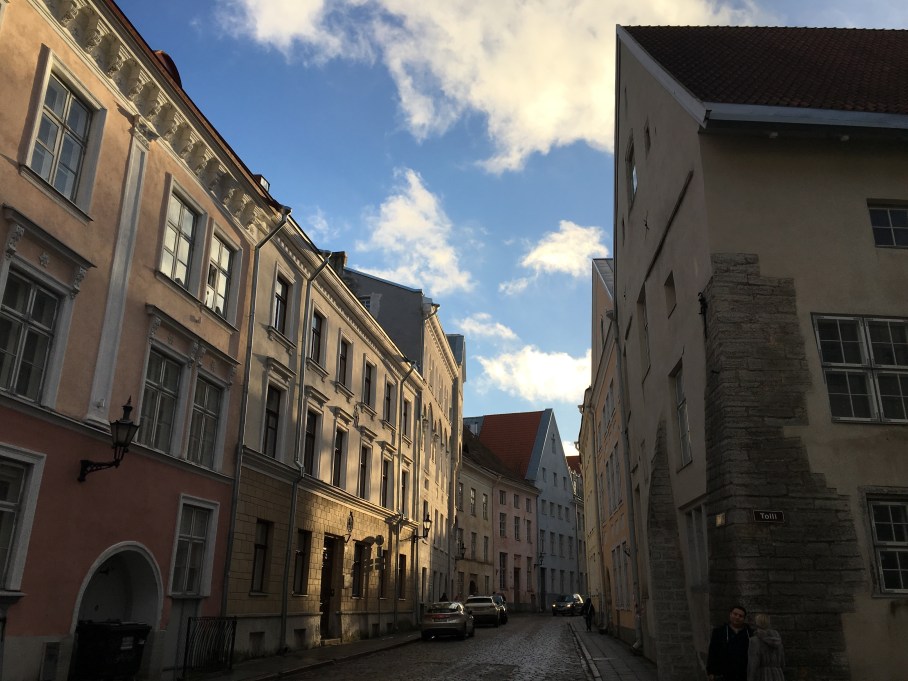
Of the 46 towers that once guarded the city, twenty remain. They stand scattered along the 1.85km of surviving city wall. In doing so, they preserve the medieval feel of Tallinn. That feel is enhanced by the narrow cobblestone roads that wind throughout the city.
img_1337img_1352

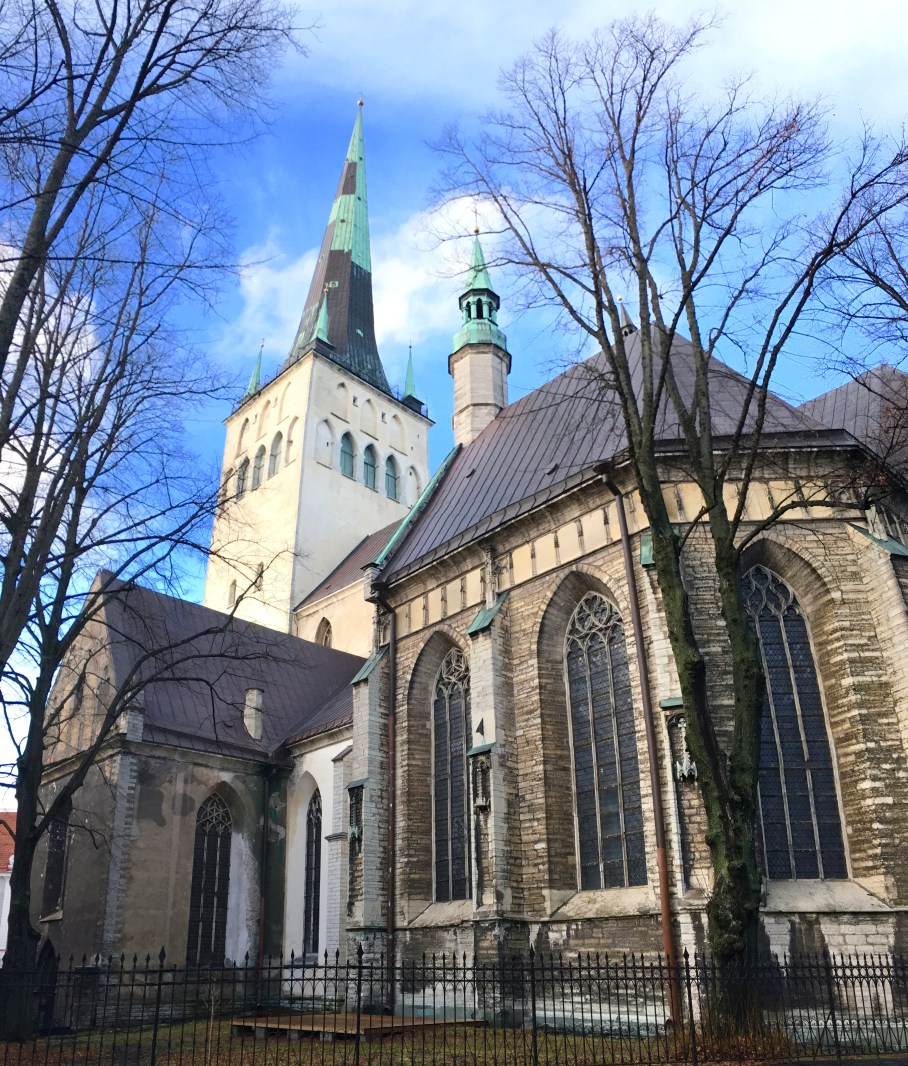
First referenced in 1267, Saint Olaf’s Church soars over the city. With the addition of a steeple in 1549 it was the tallest building in all of Europe for almost a century. Surrounded by tight alleyways on all sides, it was extremely difficult to take a picture of.
img_1331

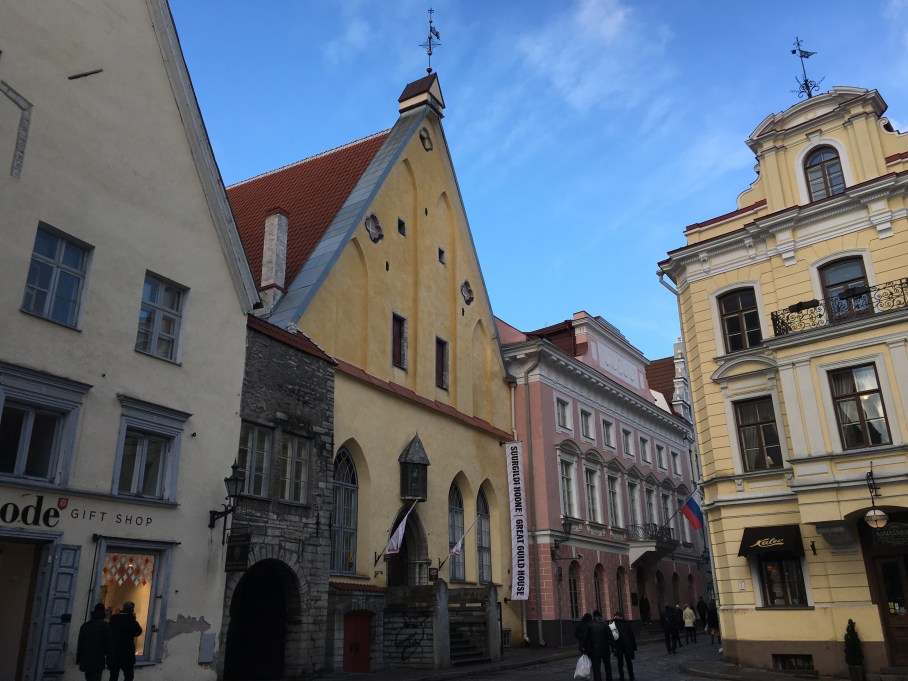
It was a pleasant walk to the Estonian History Museum located just north of Town Hall Square. It is housed in the Great Guild Hall, for which it provided an extensive overview. Built in 1410, the Great Guild Hall was the epicenter of Tallinn’s economic and cultural life until Swedish occupation. It was endowed by the Great Guild, an association of Hanseatic merchants.
img_1354

The Teutonic Order was German in origin, having been invited from the Holy Roman Empire to the Baltics by Polish Kings in the 13th century in order to subdue the encroaching pagan tribes. With them came a flood of German merchants belonging to the Hanseatic League, which dominated trade throughout Europe for centuries. Although never quite a sovereign entity, the Hanseatic League had significant influence over cities across Europe- including Tallinn, which was attractive for its position between Russia and the West as well as for its impressive harbor.

Ethnic Estonians were excluded from the guild as well as subject to widespread serfdom until the 19th century. Germans dominated the economic and cultural life of Tallinn and Estonia even through Swedish and Russian occupation.

The Grand Hall now houses the bulk of the permanent exhibition, but once accommodated Tallinn’s most lavish celebrations (Shrovetide, Christmas, etc).
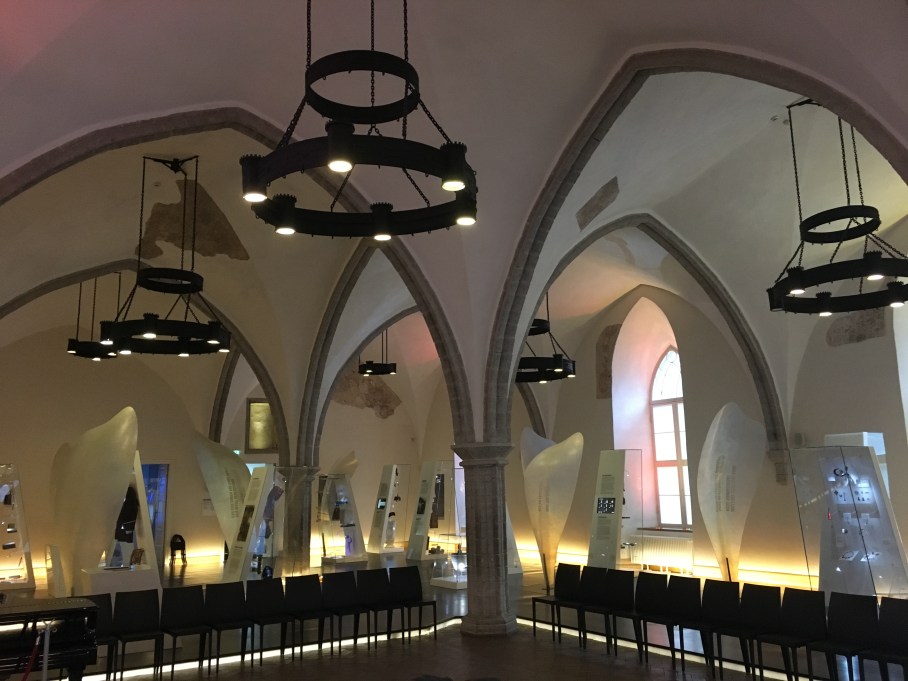
img_1376

I was particularly interested in the display about the Estonian language. It has only about one million speakers worldwide, with roughly ninety percent residing in Estonia. I was surprised to learn that both the language and people are of Finnic origin rather than Baltic.

It was a short stroll down the notable medieval alleyway known as ‘Catherine’s Walk’ to reach the other side of Old Town. It felt like walking through a time-machine.
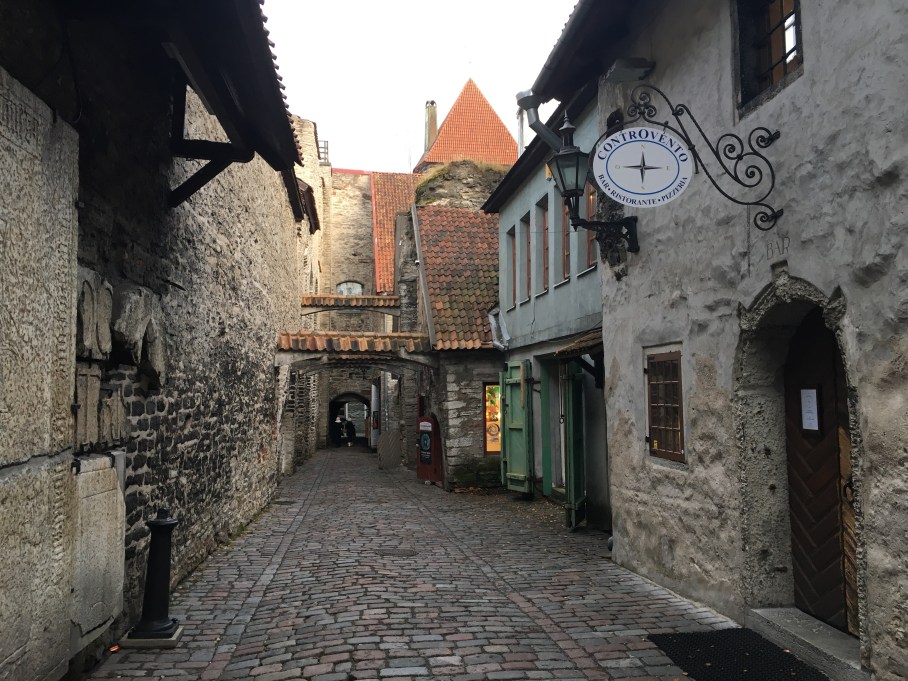
img_1399

It let out at a crowded market along a tall segment of surviving city wall.
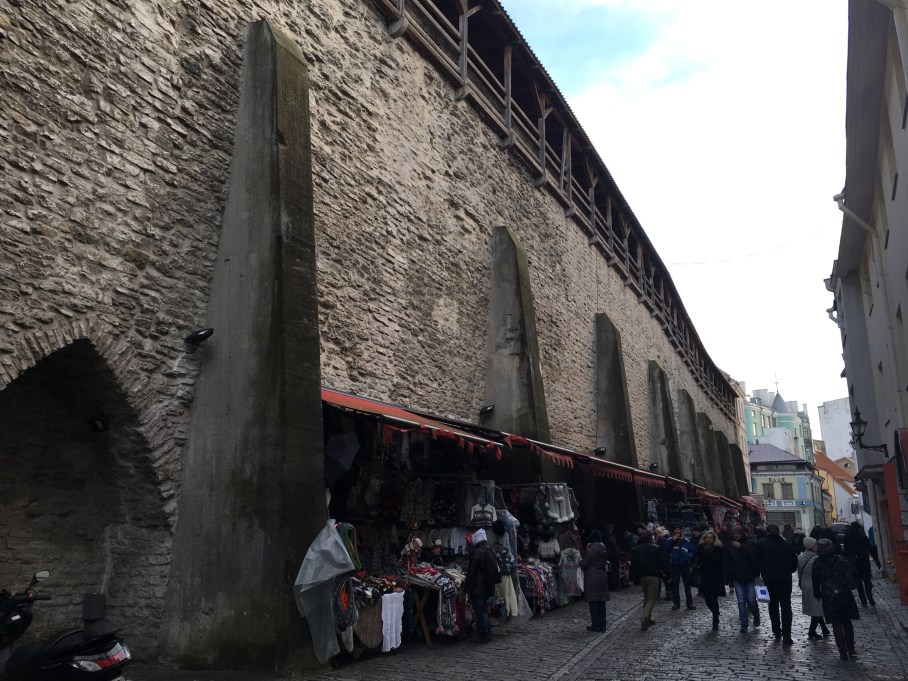
img_1401

I followed the wall to Viru Gate where I found a bustling thoroughfare (I was wondering where all the people were). All that remains are the two corner towers of a much once larger barbican dating to the 14th century.
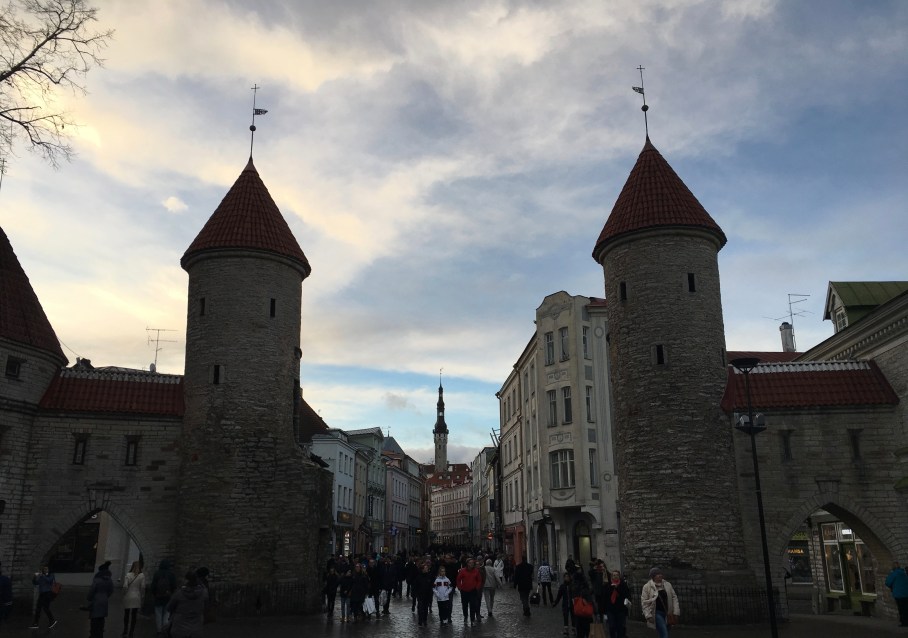
img_1415

I joined the flood of people, which only grew as I neared Town Hall Square.
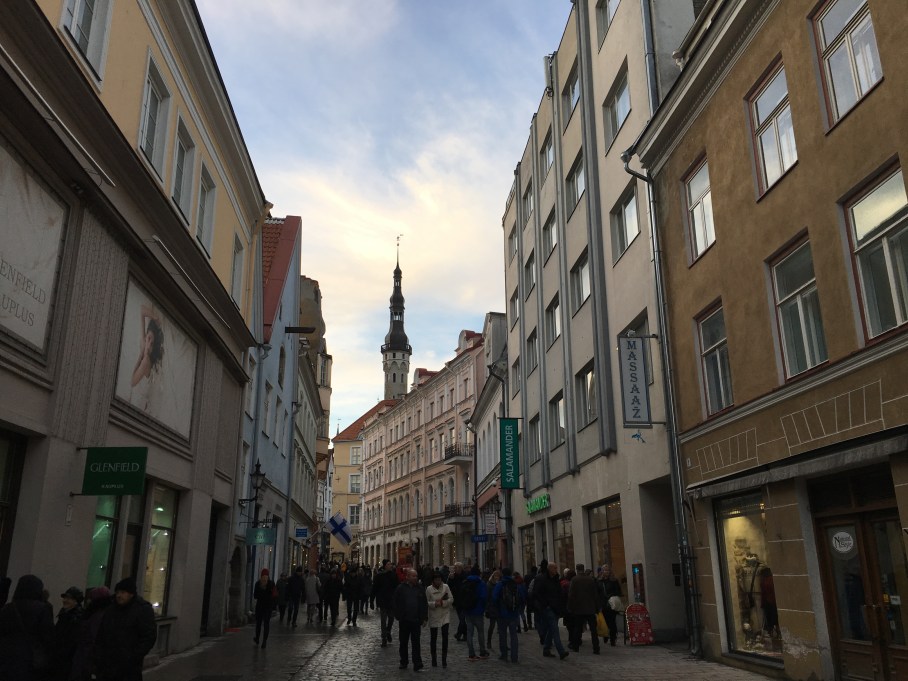
img_1419

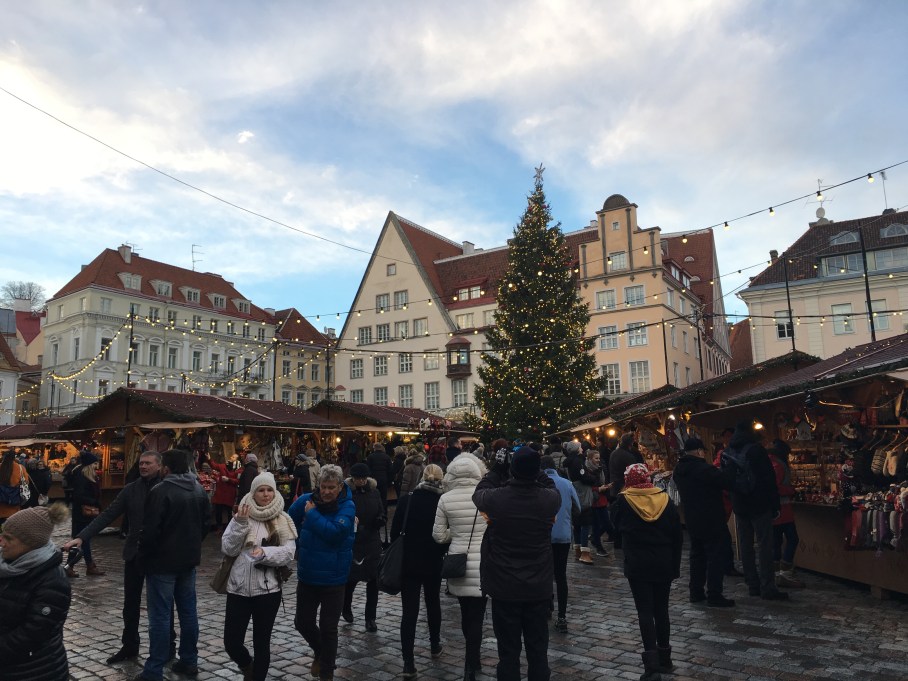
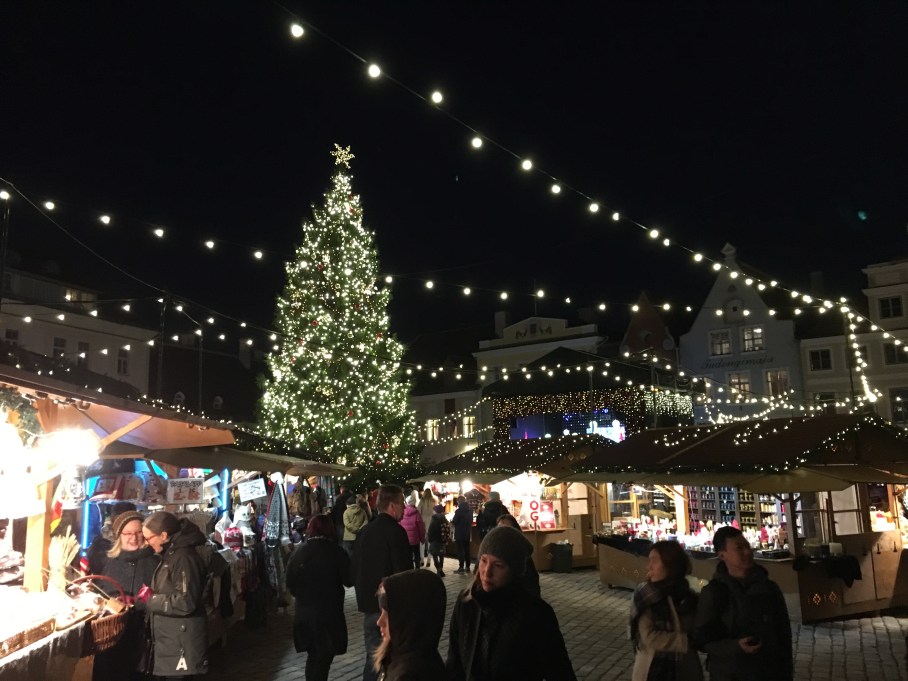
I was a bit confused, but nevertheless excited to find a Christmas celebration. A bevy of merchants sold seasonal ornaments, nutmeg and the like to a crowd of cheery natives and tourists. At the center of it all stood a glowing Christmas Tree.
img_1425

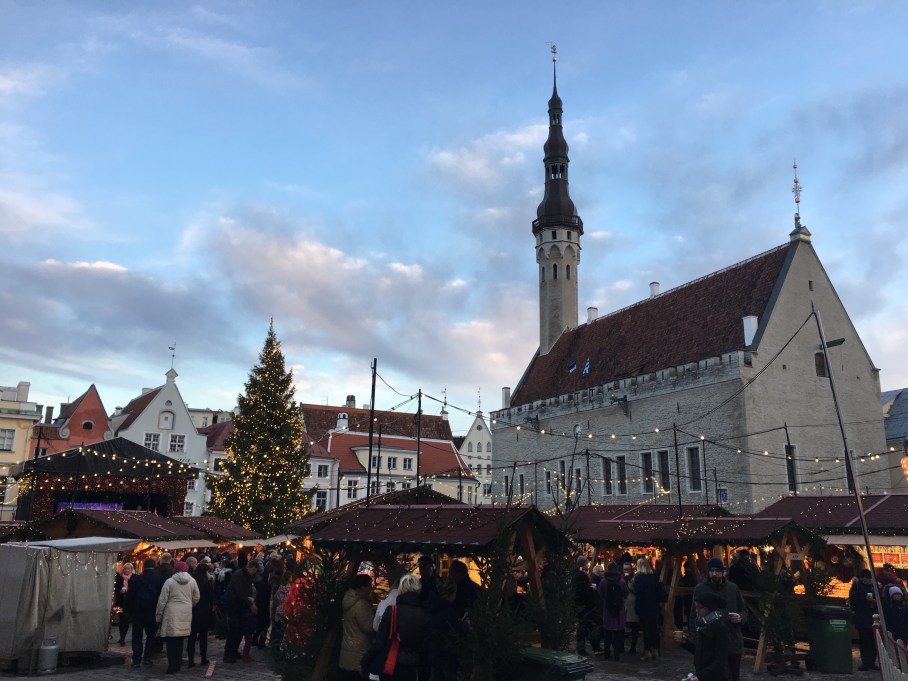
Erected in 1404, the Tallinn Town Hall is the oldest in all of Northern Europe. From construction until 1970, it was the seat of municipal government. She now serves as a venue for ceremonial and cultural functions.
img_1461

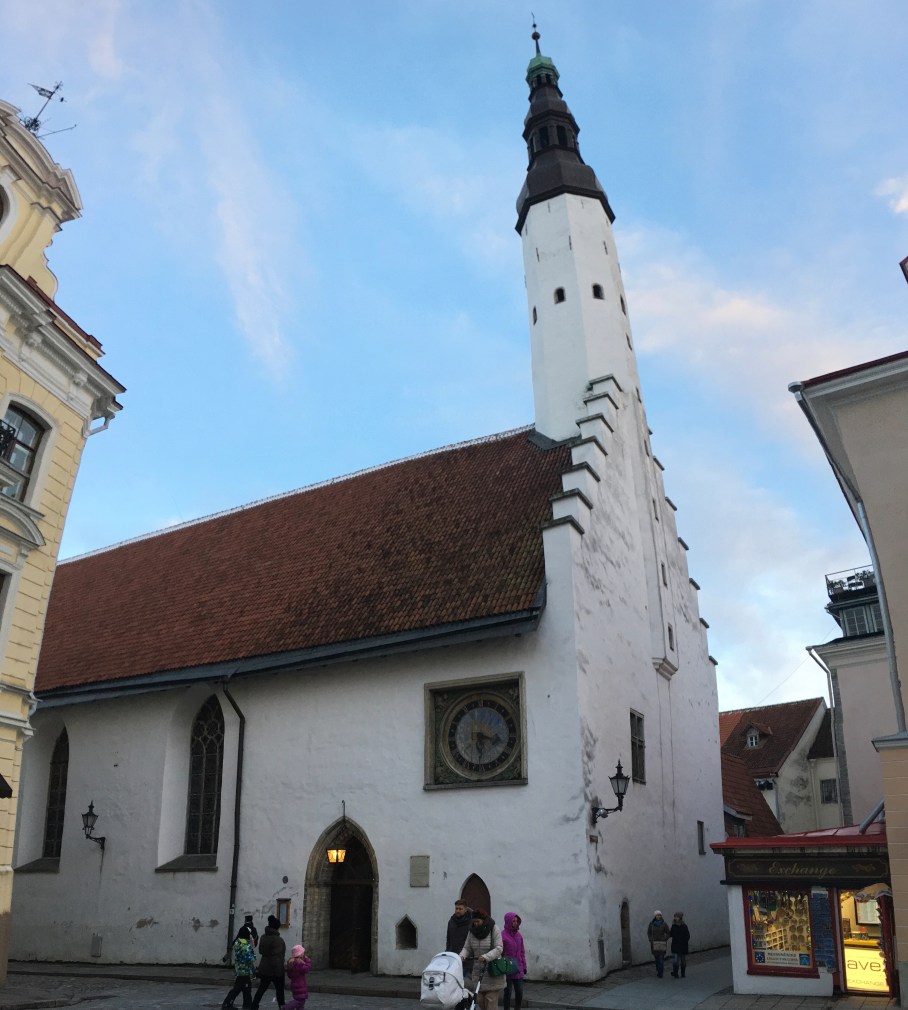
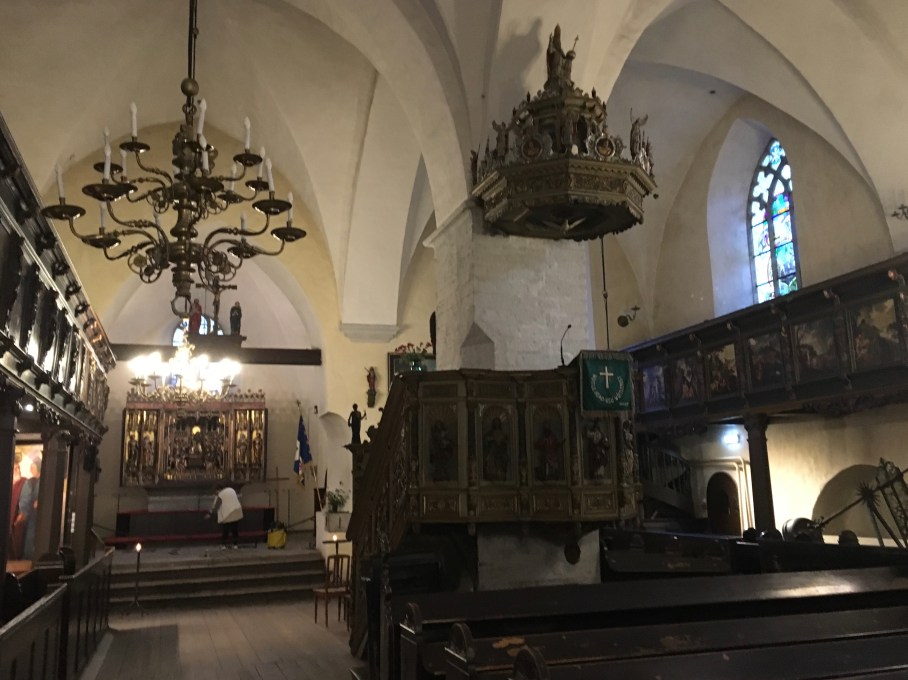
I strayed briefly to the 13th century Holy Spirit Church.
img_1465

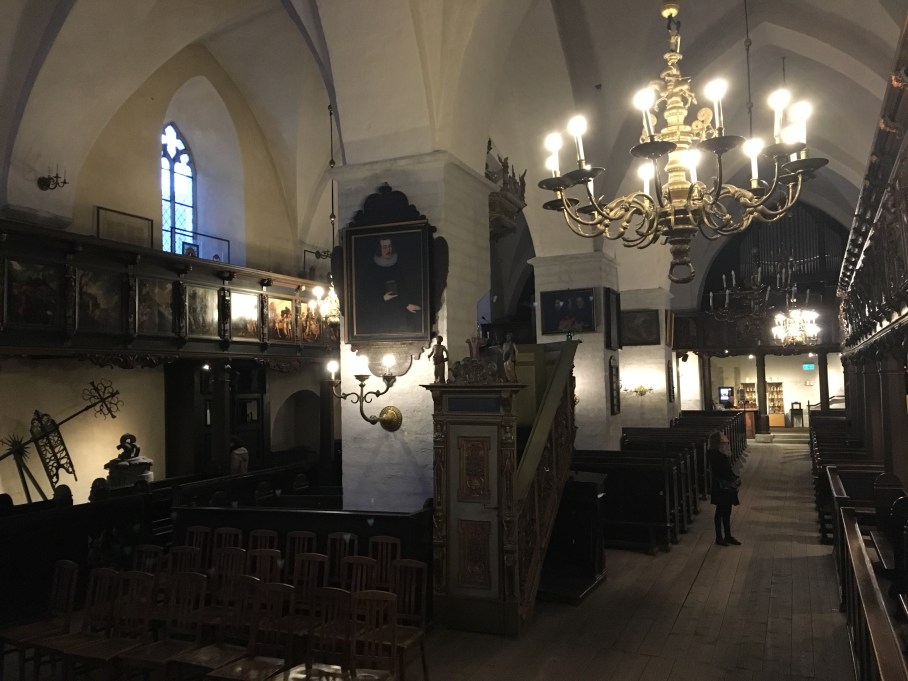
In addition to her impressive Baroque tower, she sports an intricate wooden interior with the oldest pulpit in Tallinn.
img_1474

I was fortunate to hear yet another organ played.
img_1482

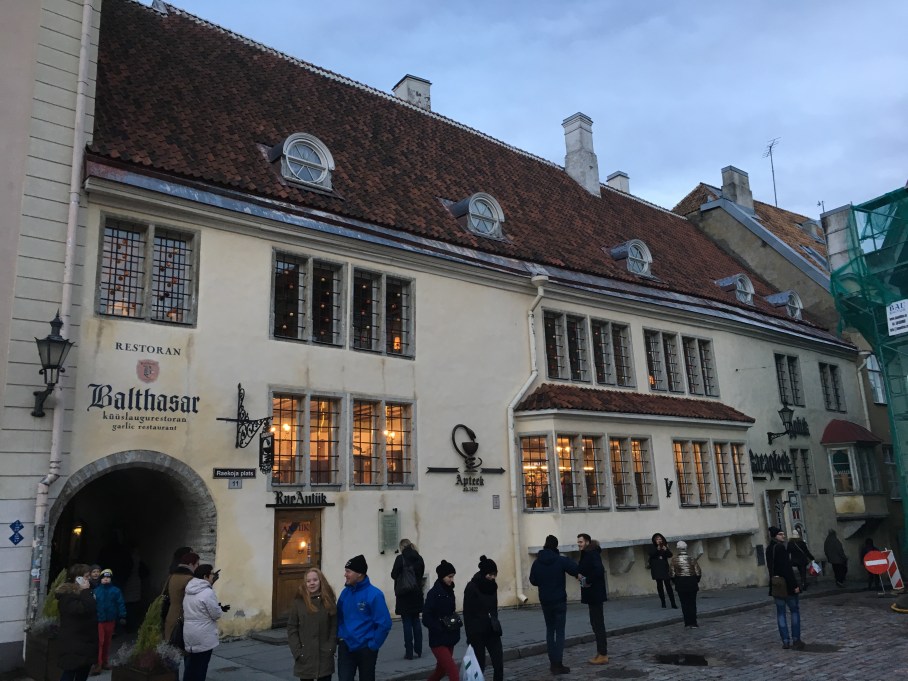
Ventured back to town square where I found Raepteek, one of the oldest continuously running pharmacies in all of Europe.
img_1486

I warmed up over a cup of traditional fish and vegetable soup before rejoining the crowd for Christmas performances.
img_1506

I was disappointed to find an amateur troupe of various ages (to put it kindly) dancing to traditional Arabic music…
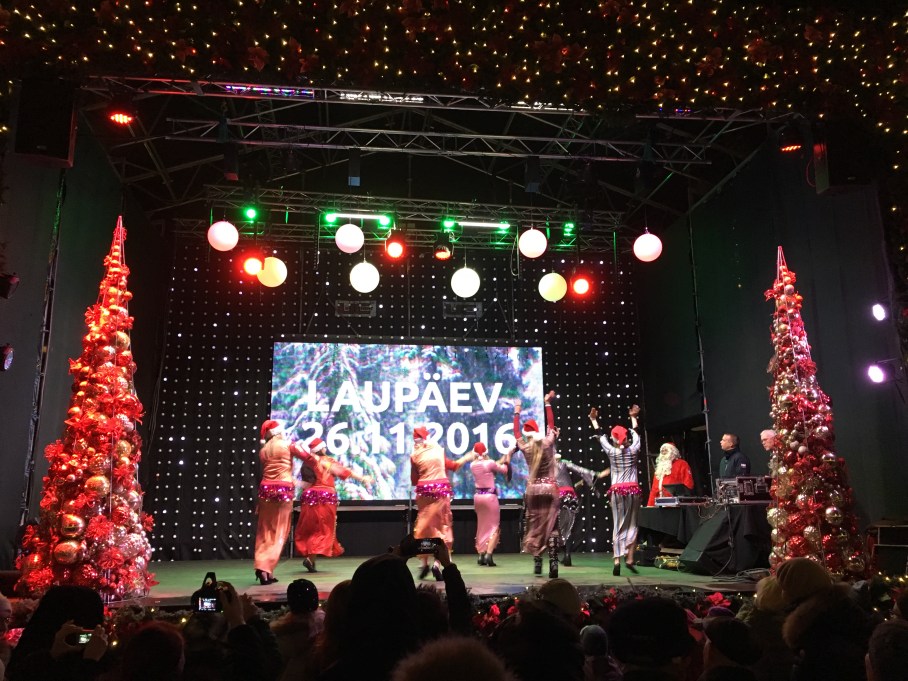
img_1502

Picked up a traditional meal before taking a taxi back to the hotel. Blogged for the rest of the evening.
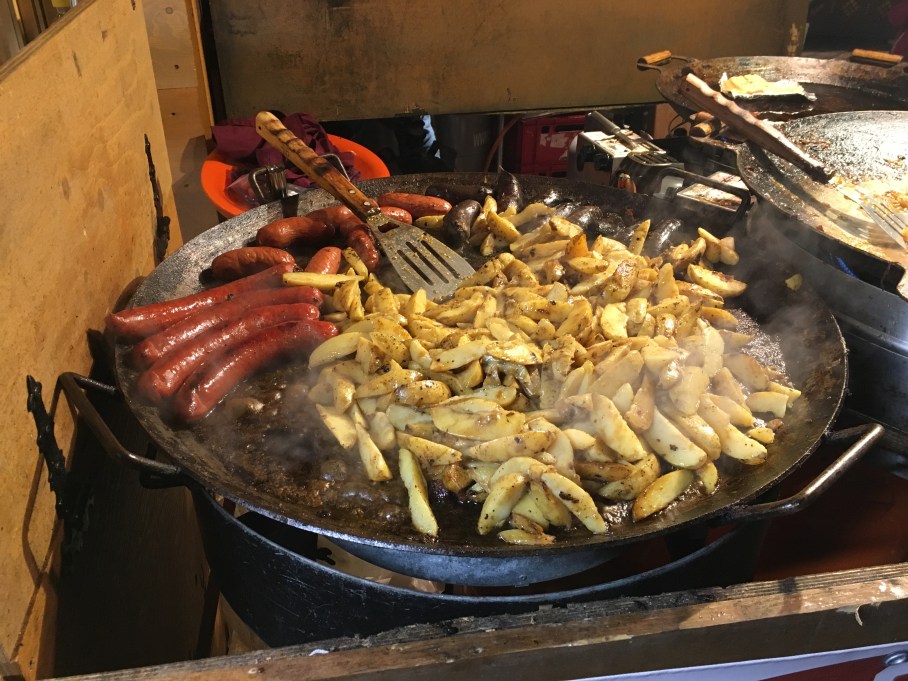
img_1504

18 November 2016

Jumped rope before class.

Ate lunch then packed for the weekend.

Ubered to the airport a couple hours in advance of my flight. Blogged before takeoff at 7:30.

Arrived in Tallinn an hour later, had Subway at the airport.

Taxied to my hotel, blogged.

17 November 2016

Jumped rope then bussed to Gediminas.

Paid rent at SEB Bank, paid my phone bill across the street.

Blogged at CoffeeInn for the rest of the day.

16 November 2016

Bussed to a restaurant on Pilies where I picked up my credit card that I’d been missing since the first night Dad arrived.

Worked in CoffeeInn before meeting with Indra Lukos who is studying for her masters in anthropology at a university in Kaunas. She is considering writing her thesis on the ways heritage travel can impact ones identity. She reached out after finding my blog. We had a very nice discussion, I found her questions very thought provoking.

Rushed to my lecture, which was incongruent as usual. Afterwards, I was approached by a Lithuanian student who was interested in my thoughts on the election. He was shocked that I didn’t support Trump, who he thought would clean our country of criminal Mexicans and terrorist Muslims.

Walked to the Jewish Cultural and Information Center for another Yiddish Literary Circle, conducted entirely in Yiddish by Professor Katz. We read from ‘Der Shulhoif’, a collection of short stories by Vilnius native Chaim Grade– a leading Yiddish writer of the 20th century. The story was based in Rudninku Street, one block from where we sat. It felt like reading Peter Pan while in Neverland.

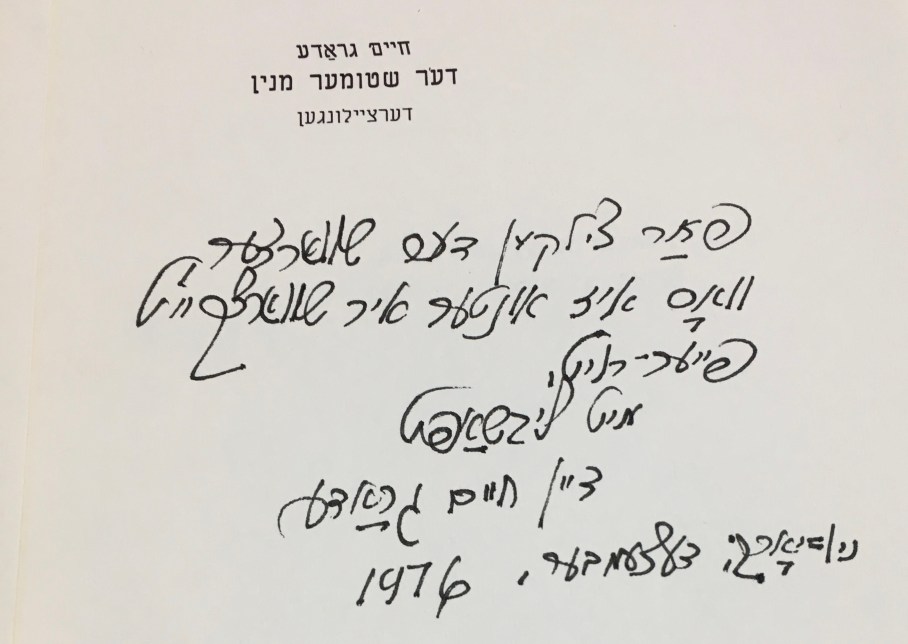
Professor Katz then showed us a book that he’d received from a recently deceased woman who claimed to be a lover of Grade’s. It has a handwritten dedication from Grade with romantic undertones.

img_1179

Afterwards, a few of us walked next door for drinks (I had dinner). I spoke at length with Professor Katz about the developing crisis within the Vilnius Jewish community. I tried my best to write up a synopsis of the conflict. It is truly the most interesting case of Jewish community drama that I’ve yet to experience, and the Birmingham Jewish community is by no means devoid. Accusations of Soviet ties have been made publicly by both sides:
http://rabbikrinsky.blogspot.lt
http://www.lzb.lt/en/2016/11/02/why-does-rabbi-krinsky-seek-to-divide-the-lithuanian-jewish-community-and-our-believers/

14 November 2016

Slept in and then walked to the Mexican restaurant outside my morality courses. I was excited to see my student mentor Milda waiting in line, who I hadn’t seen for months. I had a delightful lunch with Milda and her friend, but was embarrassed when I had to explain why Donald Trump will be our next president even though he received almost two million fewer votes than Hillary.

My morality courses were interesting as usual. In my first class we studied Israeli philosopher Yael Tamir’s ‘Liberal Nationalism’- an attempt to reconcile state nationalism with liberal ideas of social justice. I was unconvinced. In my later class we studied terrorism.

Picked up dinner on the way home.