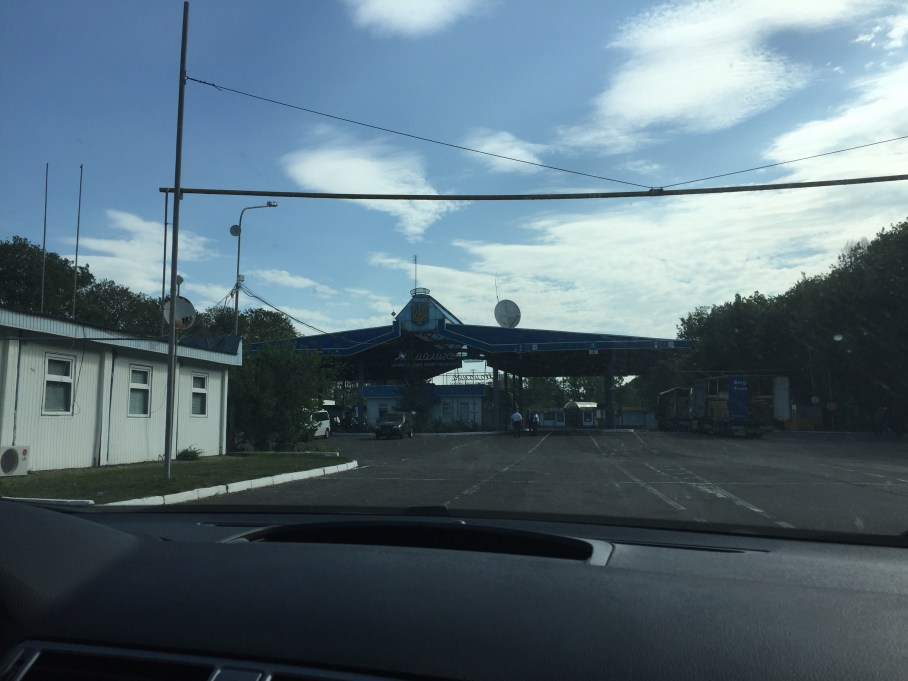
After our strenuous experience at the Ukraine-Moldova border, we figured it would be a good idea to wake up early so that we could cross the Romanian border and still make it to Iasi at a decent hour. That didn’t happen.
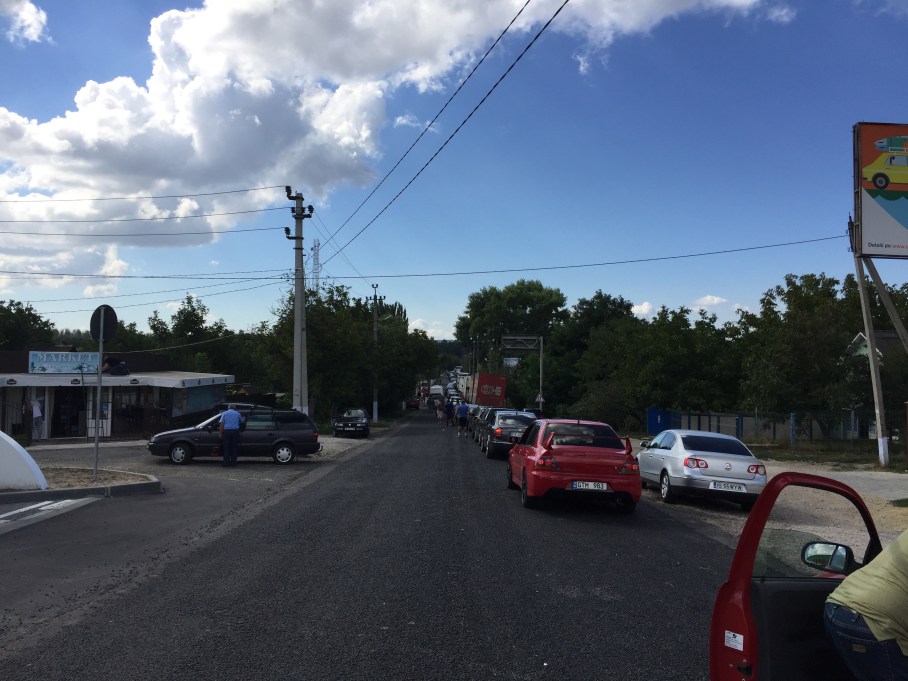
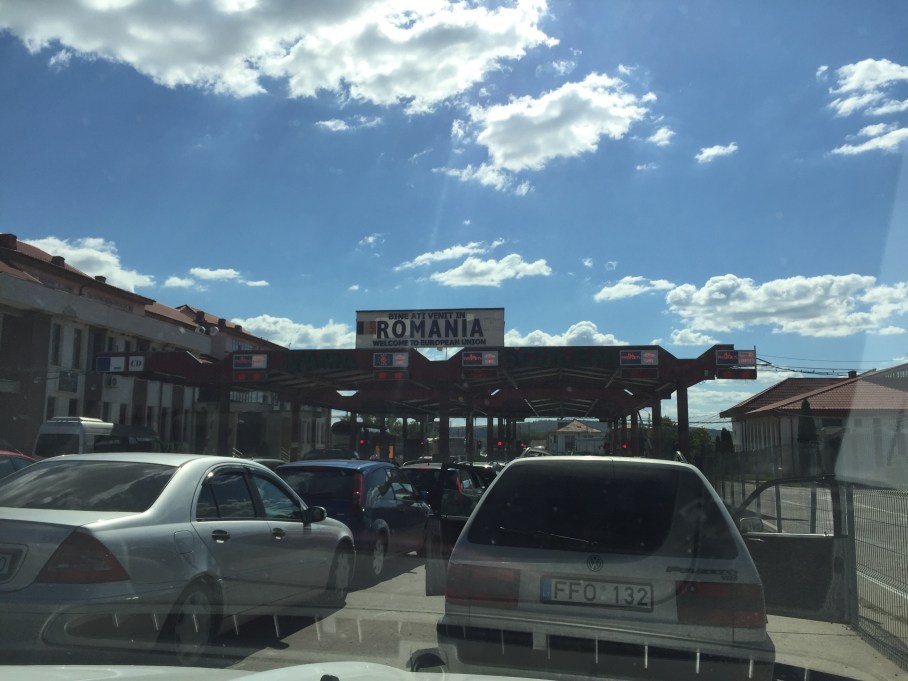
We neared the Romanian border around 10:30, but between us stood between 50 and 100 vehicles waiting to cross.
Chase graciously allowed me to write as he slowly inched the car forward.
About four hours later we were finally inside the checkpoint. Our vehicle was meticulously searched by the Moldavians unlike any other we’d seen, perhaps because it was a Ukrainian vehicle, perhaps because we are Americans. It took at least another hour to cross through Romanian security and purchase a new vignette.
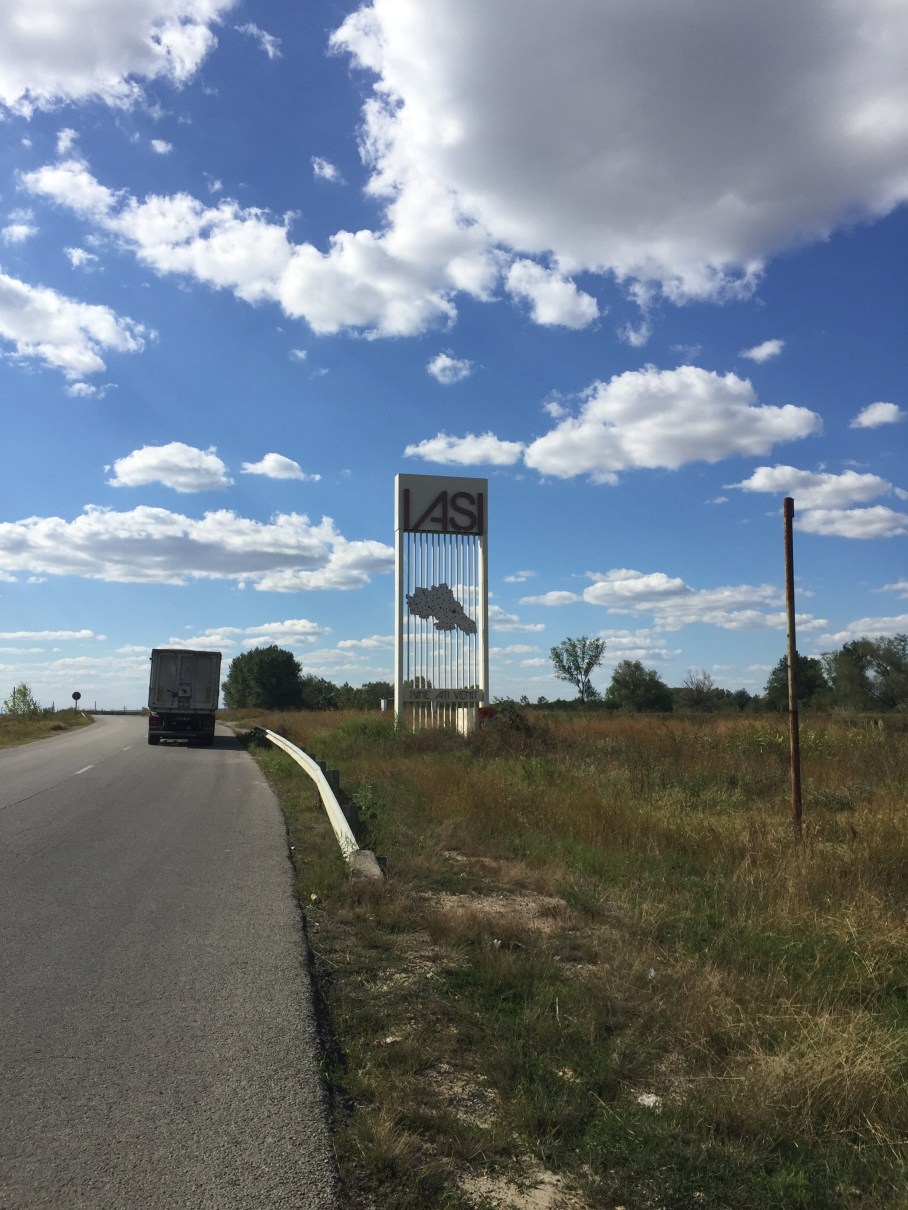
By the time we got into Romania it was about 4:00. We’d canceled our reservations as a result of the schedule change (due to the car mishap), but were able to purchase a room in the same hotel for a bit more.
Around five we began to make our way through the city based on a route that I found online. It would be remiss to not mention that while I have in large part picked the sights and found the routes, Chase has been our navigator the entire trip. I am so impressed with his sense of direction.
Iasi was once the capitol of the Kingdom of Moldavia and briefly of the Kingdom of Romania. We had now made our way through the three regions of the Kingdom of Moldavia, including Bukovina and Bessarabia. Iasi is the culture capitol of Romania.
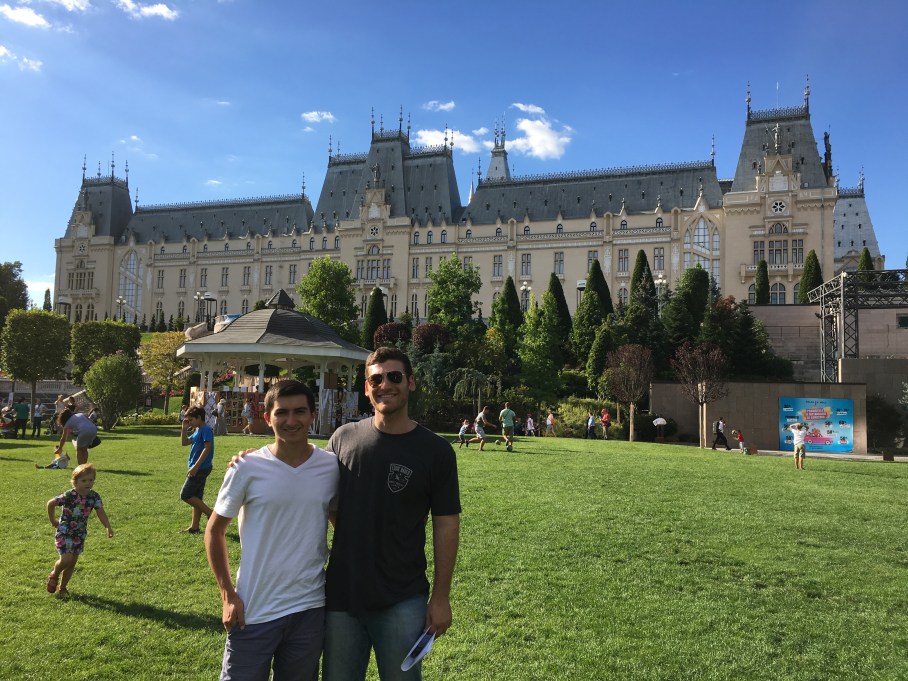
We started at the impressive early 20th Palace of Culture, which just so happened to be hosting a folk festival on the lawn.
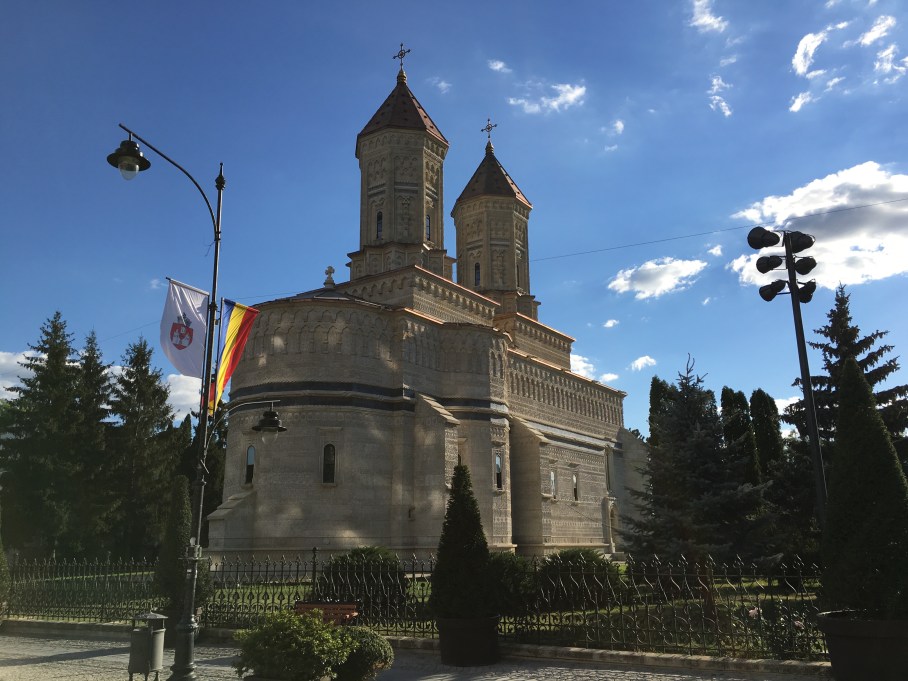
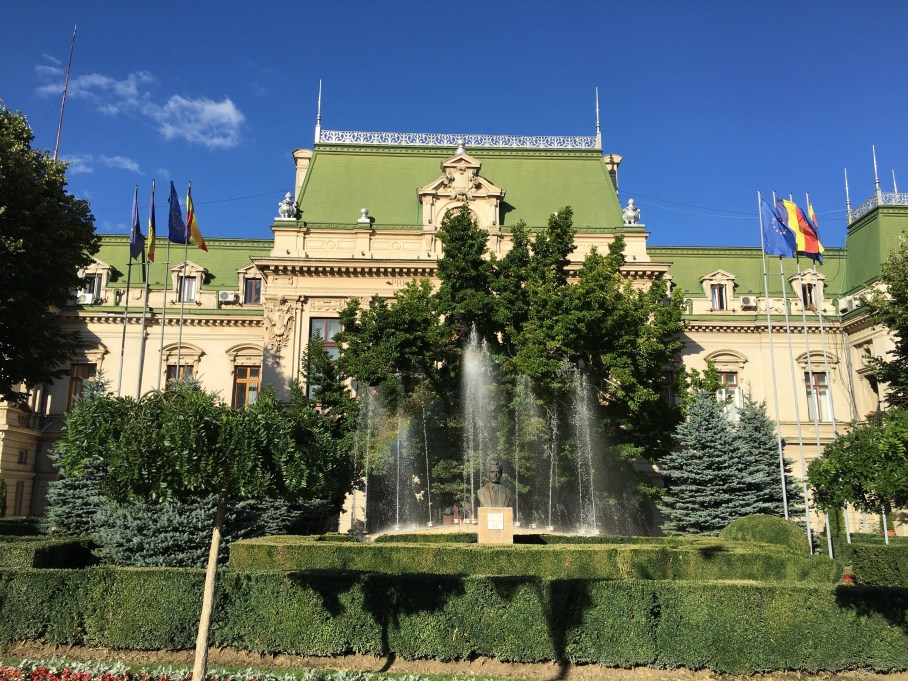
From there we made our way down Stefan Cel Mare Si Sfant Boulevard, the heart of the ‘Golden Plateau’, which features most of Iasi’s treasures:
Church of the Three Hierarchs (resting place of Alexandru Ioan Cuza)
St. Paraschiva Metropolitan Cathedral
National Theater
City Hall
On the way to the synagogue we were fortunate to see the University, which was briefly a royal residence in the late 19th century.
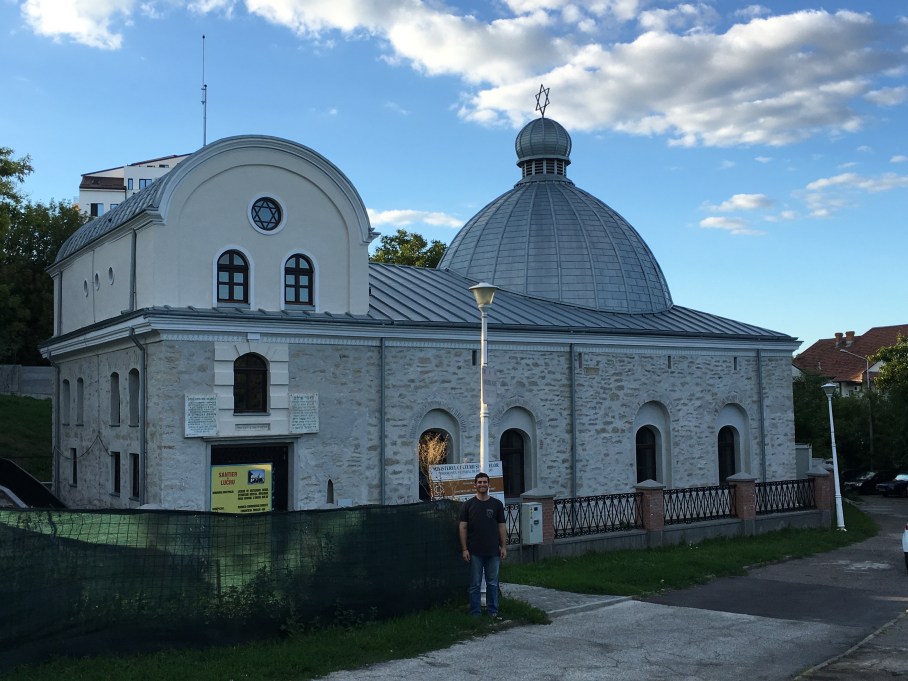
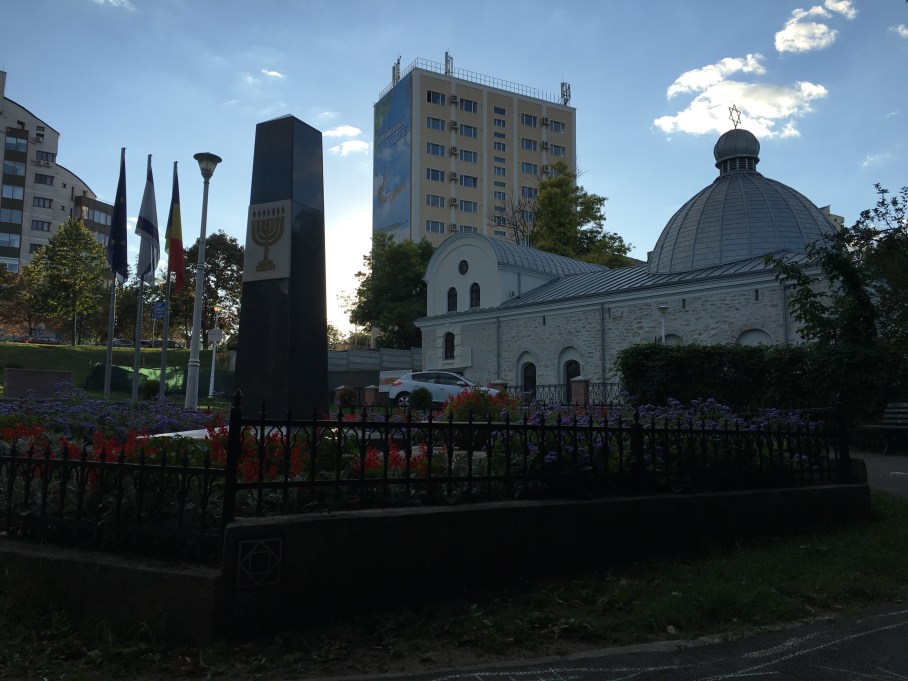
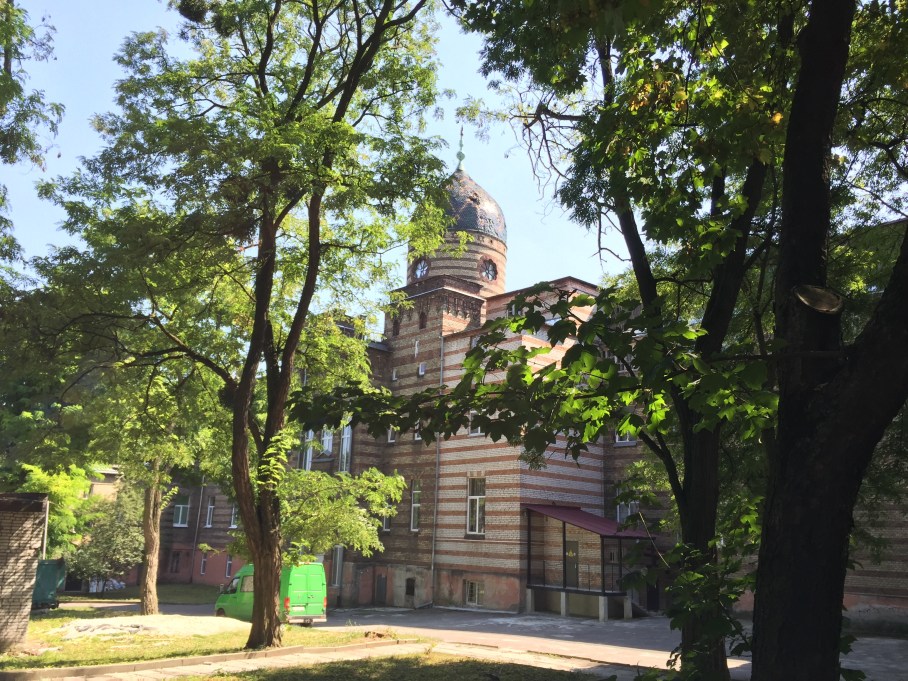
The Great Synagogue of Iasi is the oldest in Romania and second oldest in all of Europe. It was founded in 1670 and served as the core of Iasi’s Jewish community, which at one point accounted for a majority of the city. We learned that the synagogue was built deep into the ground, as Jews were not allowed to build high structures.
Outside there was a monument to the 13,000 Jews murdered in a 2 day pogrom in 1941.
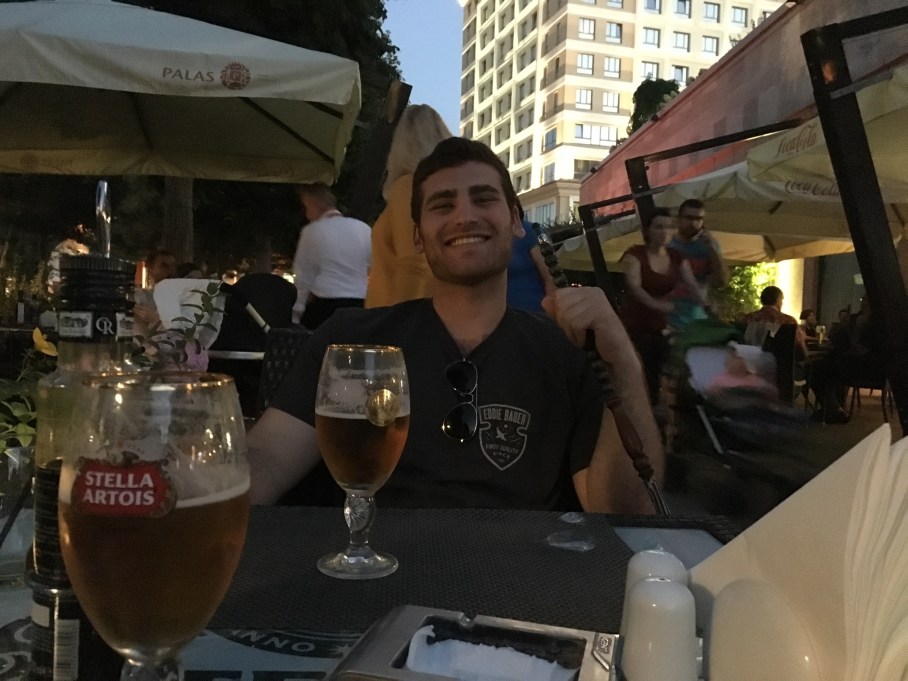
We eventually made our way back to the Palace of Culture. We ate a delicious dinner near the lawn, followed by a well-prepared hookah.
Chase directed us back to our hotel around 10:00. I went to sleep very impressed by Iasi. Romania is clearly of the Western persuasion.
We were on the road by 9:00. It was Ukrainian Independence day, but we were advised to continue on our journey because most sights would be closed, and I was personally concerned about any divisiveness that might erupt.
As we neared the border with Moldova, the road signs began to read in Romanian in addition to Ukrainian.
I was both nervous and excited as we neared the crossing. A young Ukrainian in uniform asked for our passport and car documents. In just a few minutes we were through the gate, but I did not realize that it was only the first. We were directed to another line in which we sat for about an hour. We shared our passport with a couple different officials and I briefly opened the trunk, but otherwise no real inspection of the vehicle was conducted.
Upon finally interacting with the Moldovan officials, we learned that we were missing the ‘vignette’ needed to drive a vehicle in Moldova. I was directed into a nearby office, where I learned that they were unable to print a ‘vignette’ due to a machine malfunction. I continued to pace in this building, between the borders of Ukraine and Moldova, until they finally got the printer working about an hour later.
By the time we were in Moldova it was almost 1:00. I immediately thought that the scenery was distinct from Ukraine. The trees were well organized along the side of the road, and there were open fields in both directions as far as the eye could see. Very few homes surrounded the central road between the few cities that we encountered.
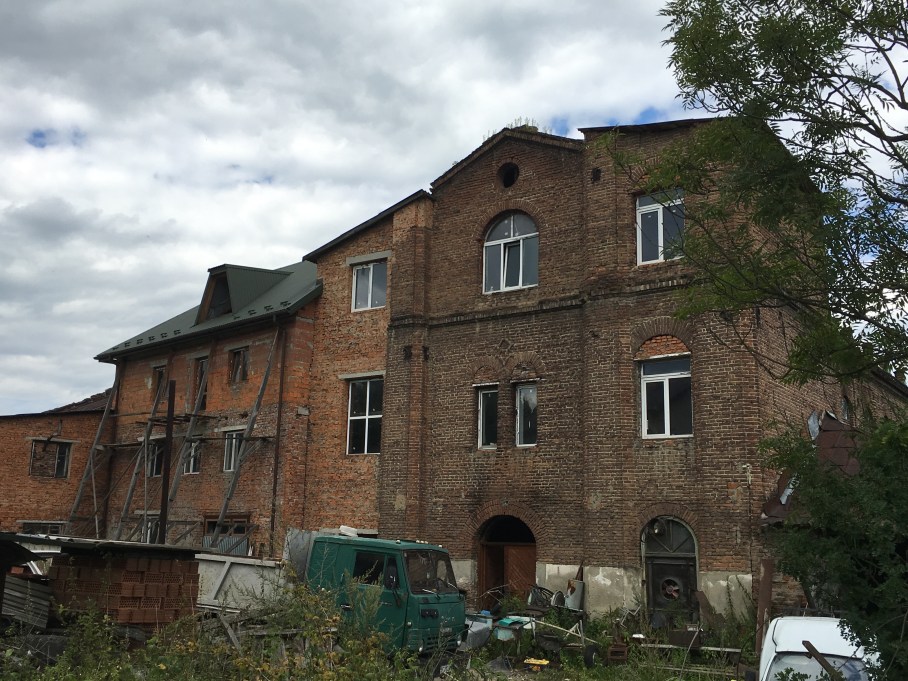
We had intended to visit two of Chase’s ancestral shtetls today, but given the new time constraints we only briefly drove through the first. Lipcani was the home of Chase’s great-great grandmother, Feiga Kushner. The town was only about ten minutes from the border. The homes were relatively old and the streets were significantly quieter than any we had seen in Ukraine. The Jewish cemetery had been burnt down by vandals only two years ago.
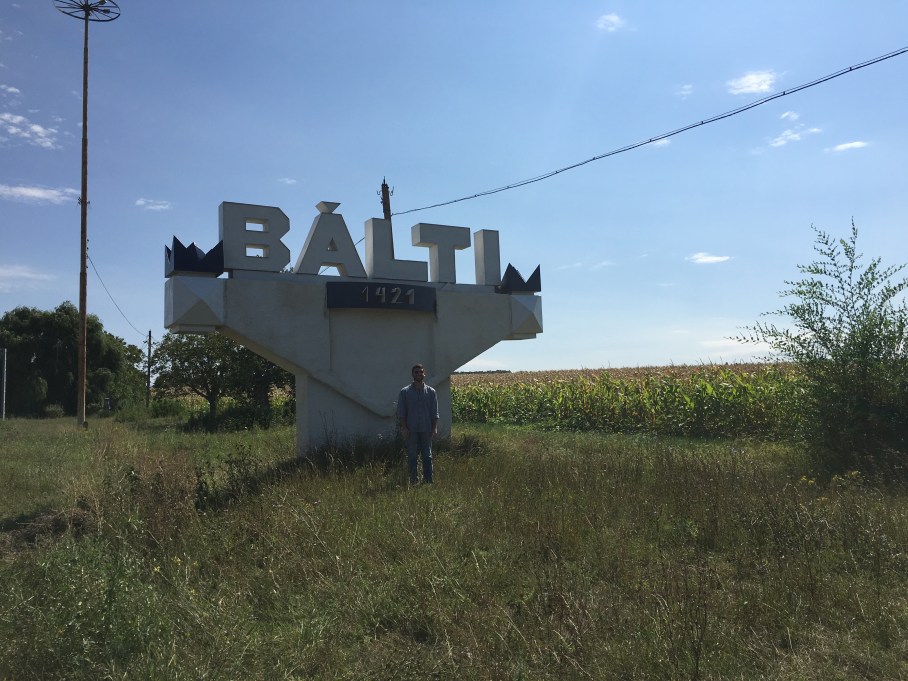
From Lipcani we continued our drive south to Balti. Unfortunately, Verizon doesn’t have a data plan in Moldova, so we had to rely on offline maps and couldn’t continue to play the Beatles- we are determined to listen to every Beatles album before our journey is over.
The Moldovan countryside was beautiful. Chase noted that one of his favorite parts of our journey has simply been witnessing the country on our drives.
We arrived in Balti about an hour and a half later.
Immediately we could tell that the vast majority of the city had been built during the Soviet era. Towering block-style buildings reigned over the city.
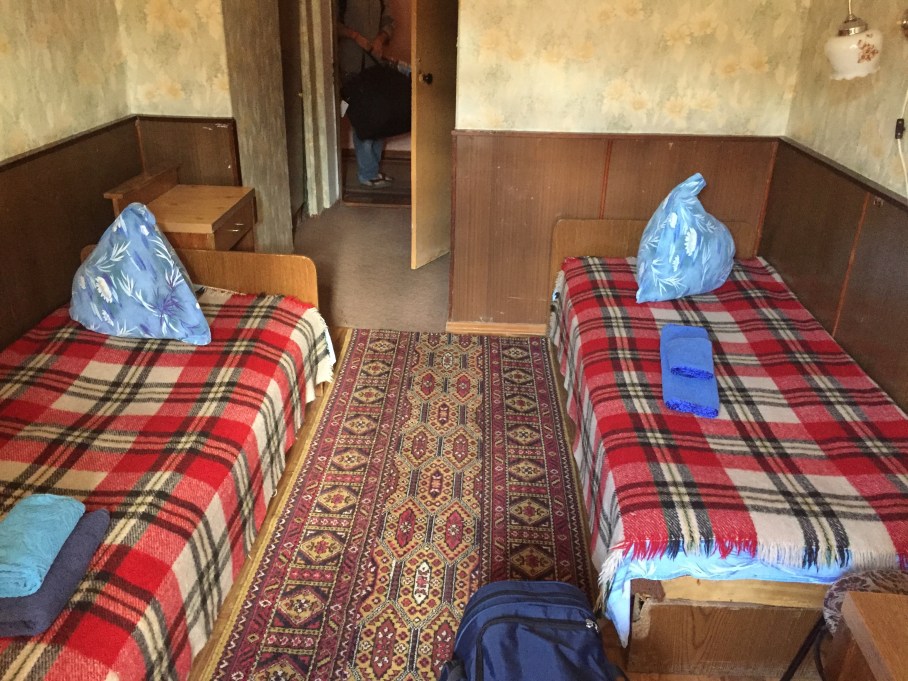
We tried futilely to find the apartment that we had arranged to stay in. After wasting a couple hours at a lunch that took too long to be served, and trying again to locate the apartment complex, we gave up and searched for another hotel. We happened upon ‘Hotel Balti’ near the center of town, where prices were even better than the apartment we had intended to stay in. The place was just about as Soviet as you can get, block-style and dim-lighted. Even our room looked like it had not been furnished since the Soviet era, but I sort of enjoyed the ambiance.
By then it was nearing the early evening, and we were determined to visit the Jewish cemetery before the sun went down.
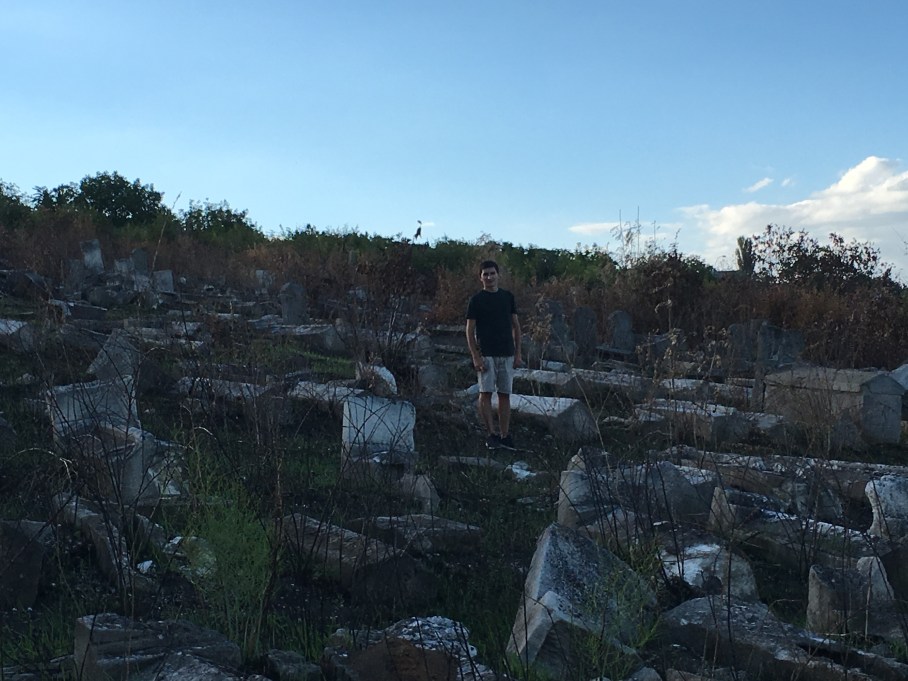
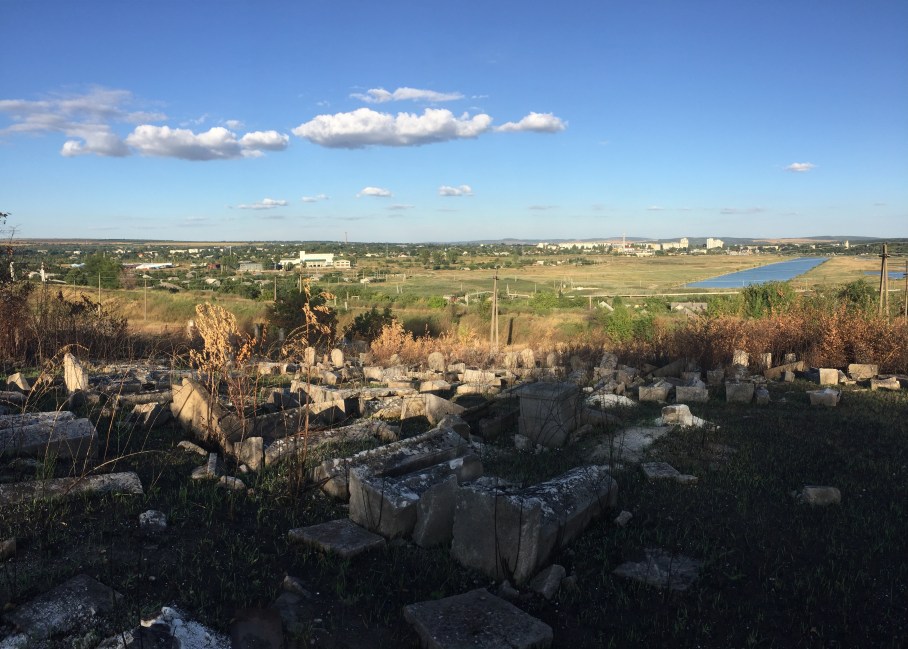
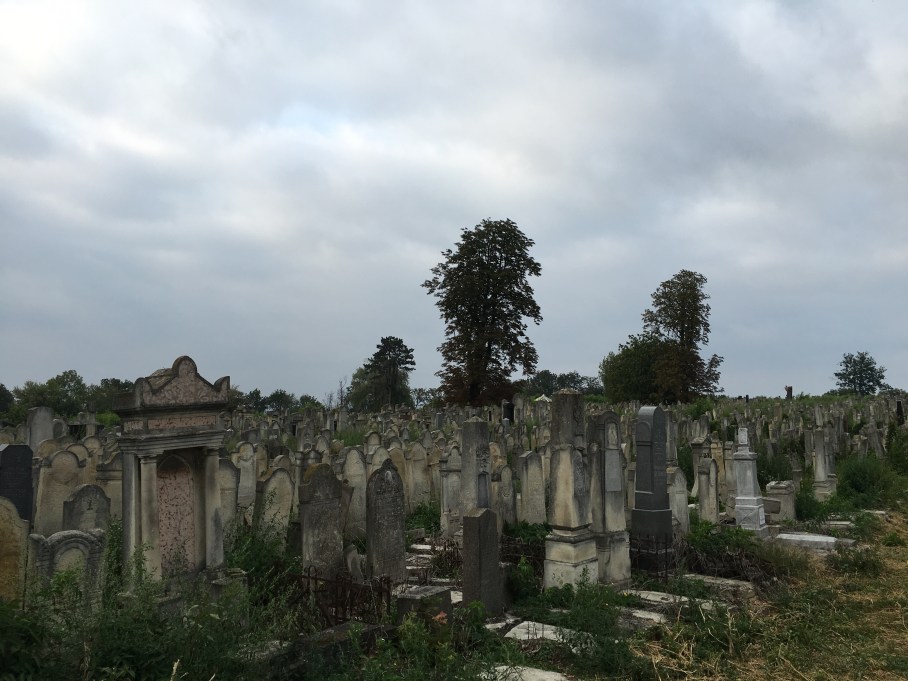
At first, the cemetery looked to be relatively new, perhaps for the Jewish community that returned after the war. But after walking through rows of headstones we finally found what looked to be the old section, where Chase’s ancestors are likely buried. Chase’s great-grandfather, David Cabaret, was born in Balti and emigrated from there in the early 1920’s. It looked like the cemetery had been vandalized long ago, perhaps by the Nazis.
The view was similarly beautiful to those at Turka and Chernivtsi cemeteries.
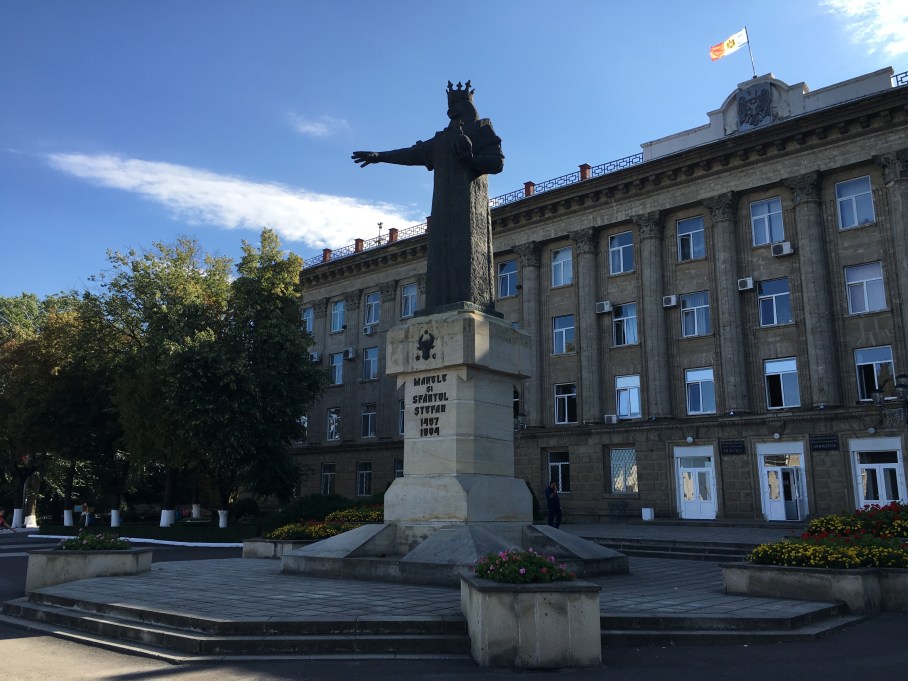
We drove back to the hotel and then wondered around the city. In spite of its Soviet structure, there were still some nice monuments and pre-soviet buildings.
The city square was also pleasant and boasted a bustling night-life once the sun went down.
We sat down at a pub around 8:00 and enjoyed a pizza and a couple drinks. I finally managed to talk to dad. Afterwards we picked up a delicious cream-filled desert and then headed back to the hotel. I was asleep by 10:30.
We woke up to a fresh load of laundry, courtesy of Oleg’s aunt, and a traditionally ginormous breakfast- potato vareniki and sour cream.
Nazar 1 swung by to say farewell, we traded contact information, and just like that, we were off.
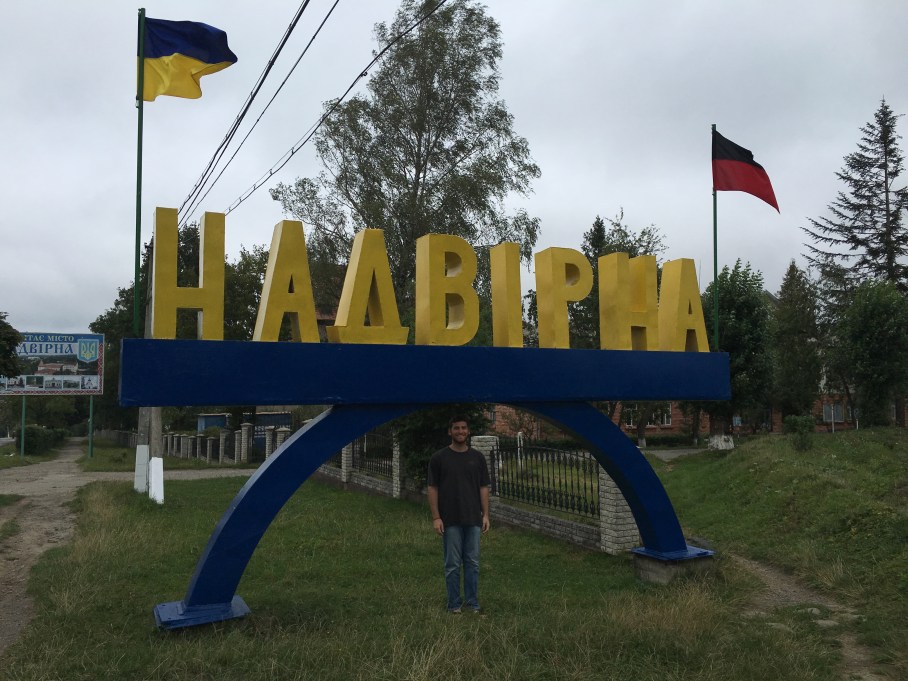
In hindsight, our car breaking down will probably stand to be the best part of our journey. Sure, we had to take a couple things out of the itinerary, but having the opportunity to get to know Ukrainians our age was a priceless experience, one that I will remember for the rest of my life. My time in Nadvirna completely crushed my preconceived notions about Ukrainians. Our friends were the warmest, most generous, hospitable people in recent memory. I asked myself many times if I would’ve extended the same hospitality to foreign travelers in America, I can’t say I would’ve before my time in Nadvirna. I hope that I would now.
It would be remiss to not mention the self-sufficiency that we witnessed in Nadvirna. They grew and prepared their own food, they fixed their own cars, they built their own homes. Even the young children could be seen walking in groups from place to place alone. Our friends experienced the weekend not in movie theaters or shopping malls but in the rivers and waterfalls that surrounded them. My time in Nadvirna really put things in perspective. I have already made tentative plans to meet my new friends in Kiev, when I visit from Lithuania to see a few nearby shtetls.
Around 10:00 Chase and I started our drive south to Chernivtsi. I think I was still a bit scared from Saturday’s happenings. I journaled while Chase drove.
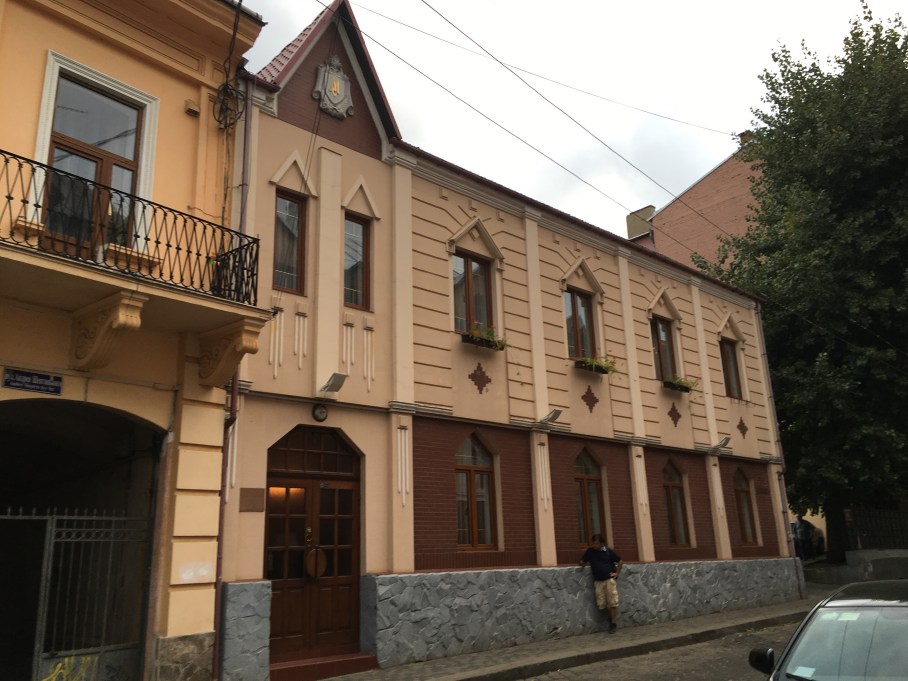
We arrived in Chernivtsi without a hotel reservation, but managed to find lodging for a good price right off the city square.
While our room was being prepared I was able to pull up a guide on my phone and also studied the history of the city. For the majority of the past millennium, Chernivtsi belonged to the Kingdom of Moldavia. In the 16th century, the Kingdom of Moldavia became the northernmost region of the Ottoman Empire, When Russia crushed the Ottomans in the late 18th century, Russia acquired the eastern region of Moldavia and deemed it ‘Bessarabia’, and Austria, who brokered the deal, received the northern region of Moldavia and deemed it ‘Bukovina’. Chernivtsi became the capital of Bukovina, and thus endured it’s greatest growth during this period.
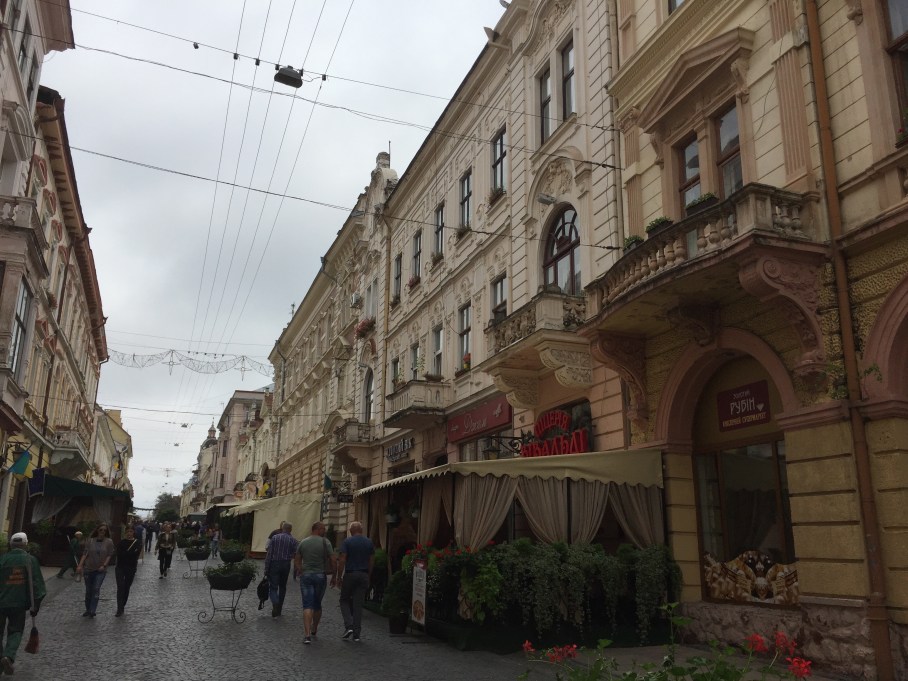
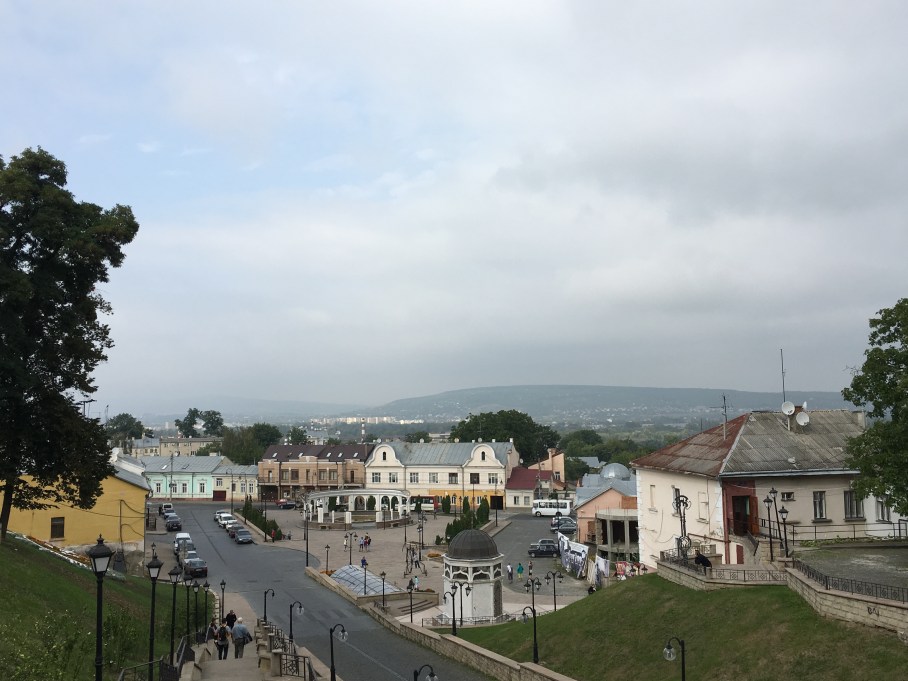
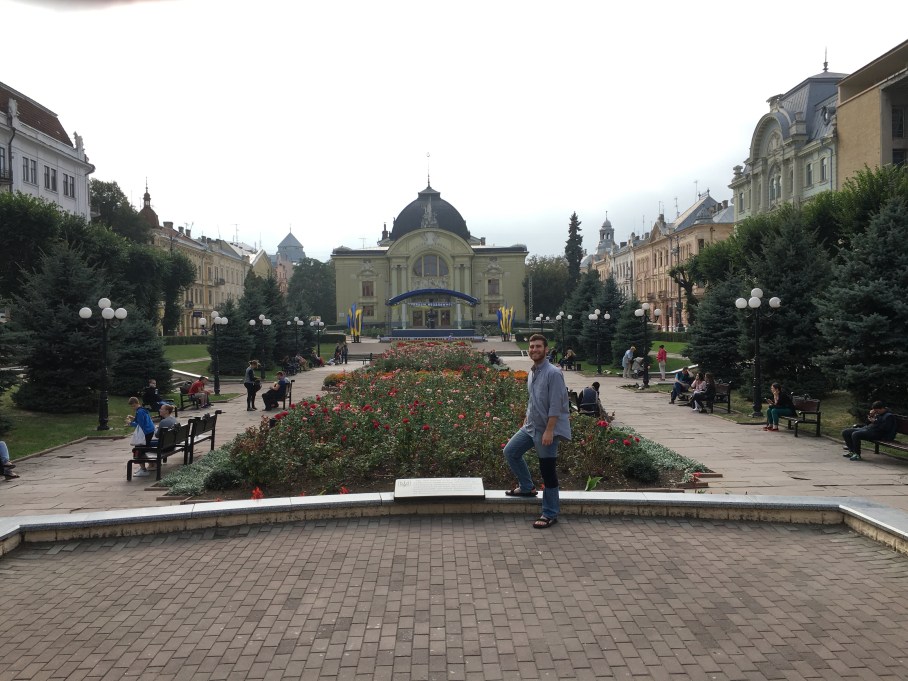
The roads were black cobblestone, like Lviv, and the buildings were similar in stature and color to those in Lviv. But unlike Lviv, the streets were relatively quiet and uncrowded.
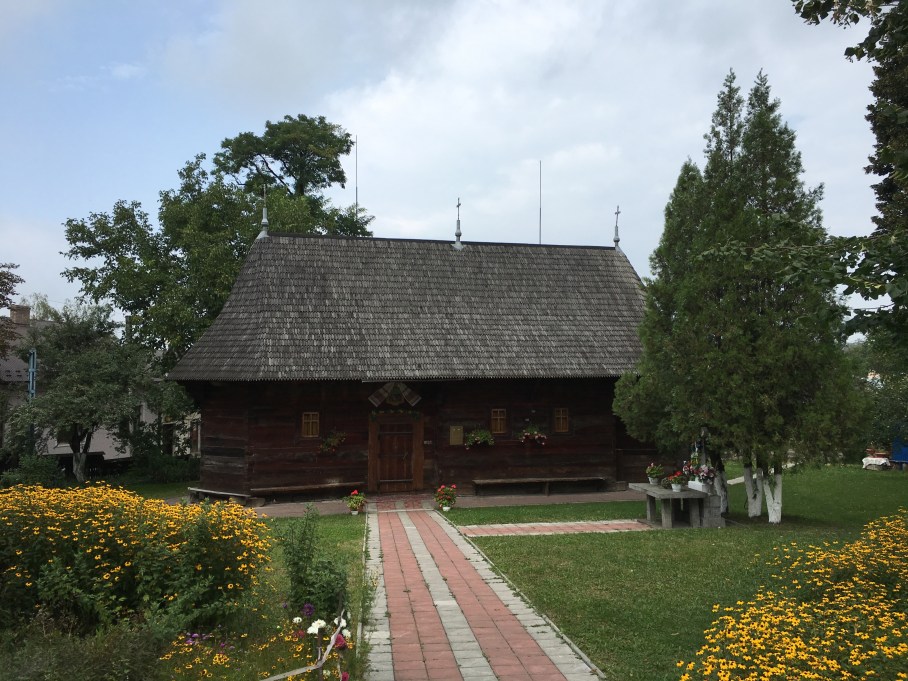
After a brief lunch we started down our route. Like Lviv, a handful of the sights were churches.
We quickly learned just how small the city was and were soon able to navigate to and from the hotel with ease.
I made a point to seek out the sights of Jewish relevance, of which few which few remained, including the old Jewish theater, the old Jewish synagogue (now a cinema), and a museum to the Jews of Bukovina (which was unfortunately closed).
We were very impressed by the university, built in the mid-19th century.
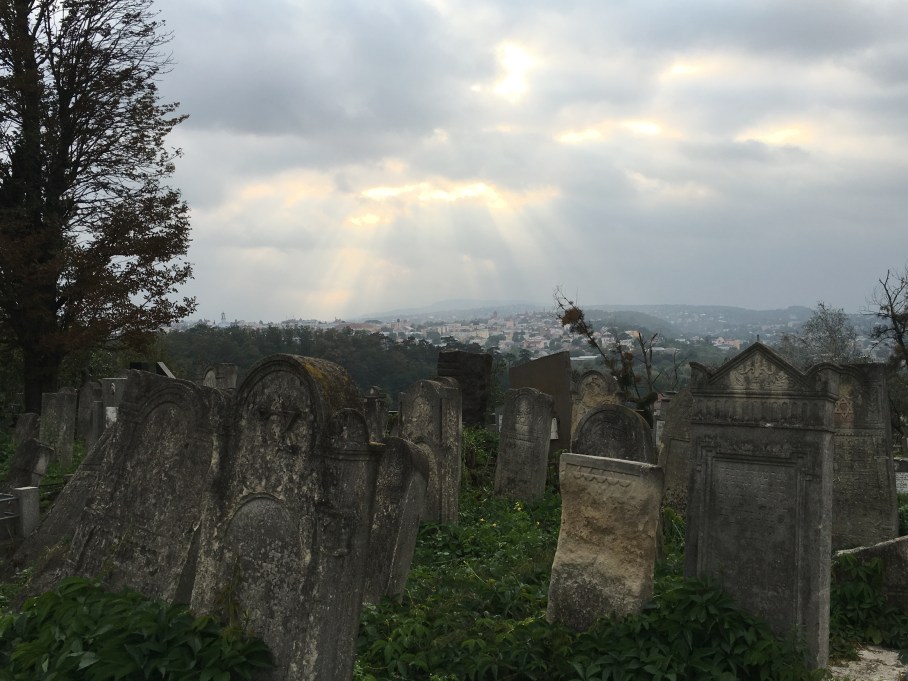
We walked back to the hotel and then took a short drive to the Jewish cemetery. Unlike others that we had visited, the Chernivtsi Jewish cemetery was in relatively good condition. There were headstones in Hebrew, German and Russian, and of all shapes and sizes, reflective of the varying degrees of assimilation of Chernivtsi’s Jews.
There was a beautiful view of the city from the cemetery.
We drove to the hotel and then made our way back into the city for dinner. Unfortunately there was a miscommunication with the waiter and I was served an extra course, but I paid for it anyways to avoid confrontation. The city sure was beautiful at night though.
Chase graciously agreed to go back to the hotel around 9:00 so that I could catch up on my writing.
I woke up at Oleg’s home rejuvenated. By this point, my distress over the vehicle and safety concerns were long gone. I was excited to start a new day in Nadvirna.
After a delicious breakfast cooked by Oleg’s aunt, we hopped in Oleg’s grandfather’s car- a manual Ukrainian vehicle from the 1970’s. We made our way through Nadvirna to the nearby village of Pasichna. As the roads faded, the views became increasingly more beautiful.
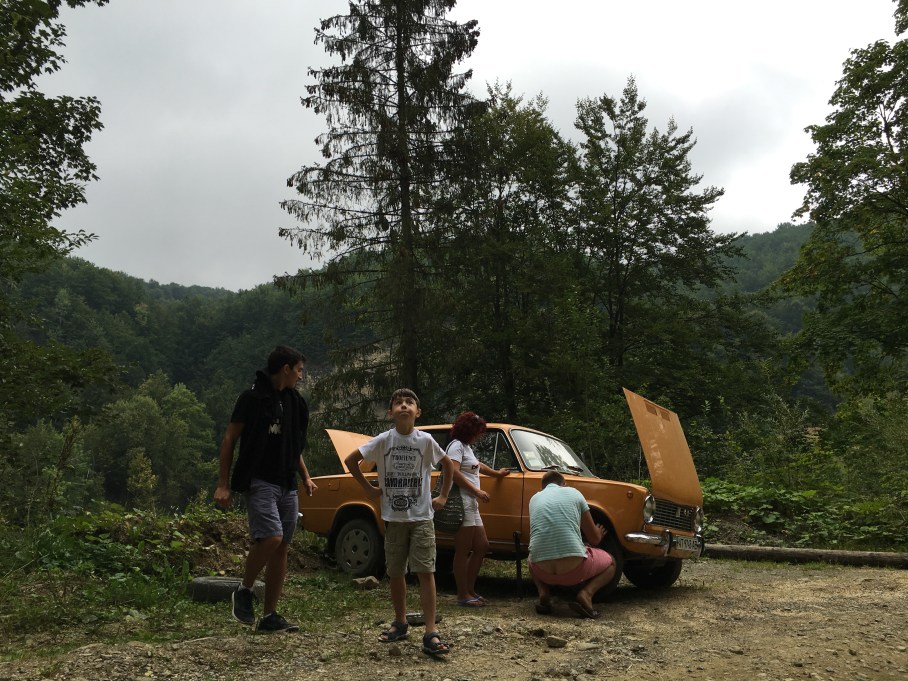
As we made our way up the mountains and through the winding trails, our vehicle came to an abrupt halt. Alas, instead of confront the problem then, we put rocks beneath the tires and continued our journey by foot. Apparently car troubles are common with manual vehicles.
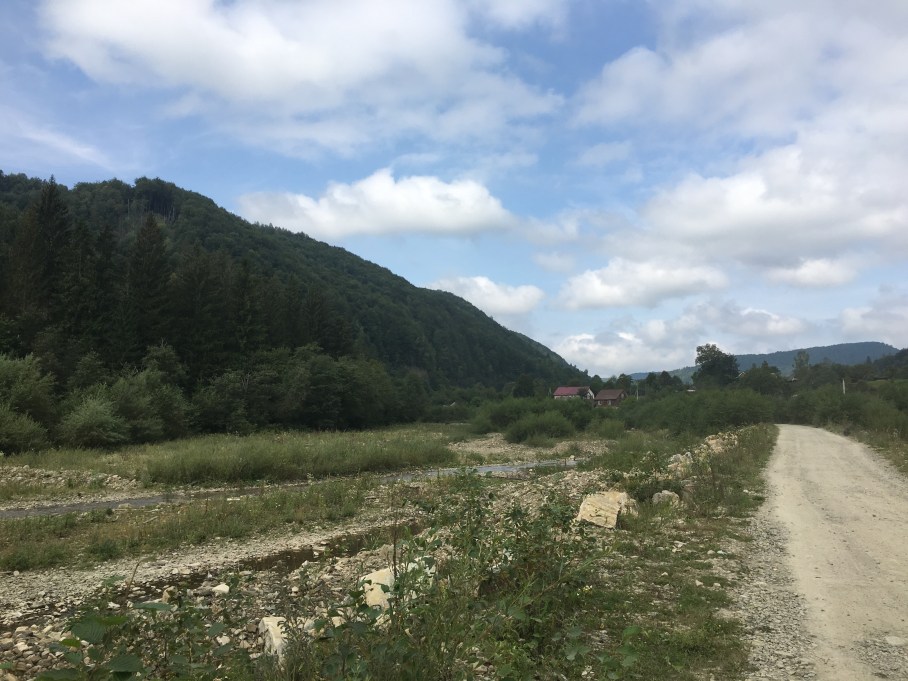
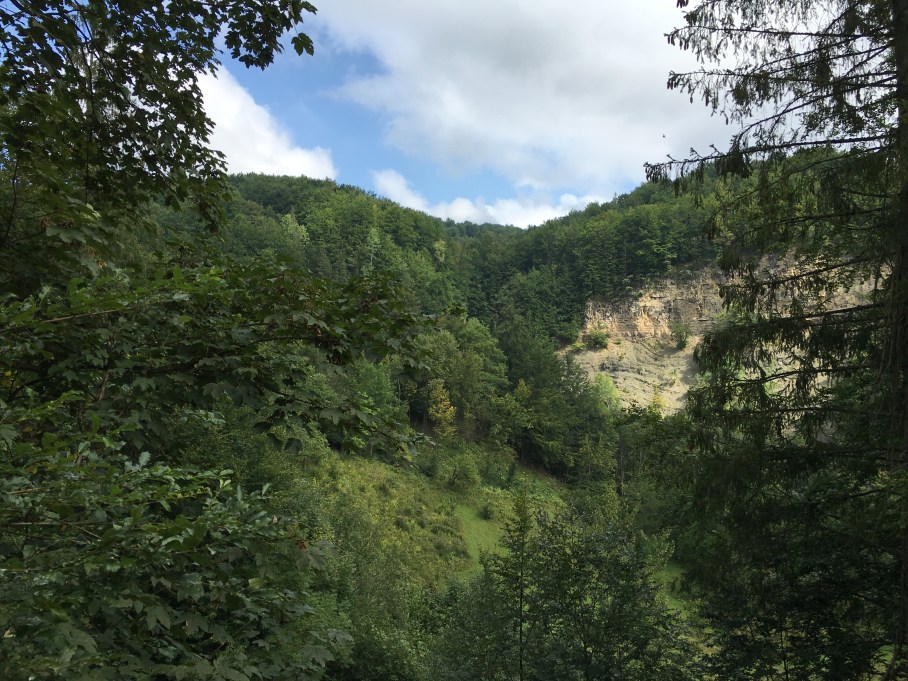
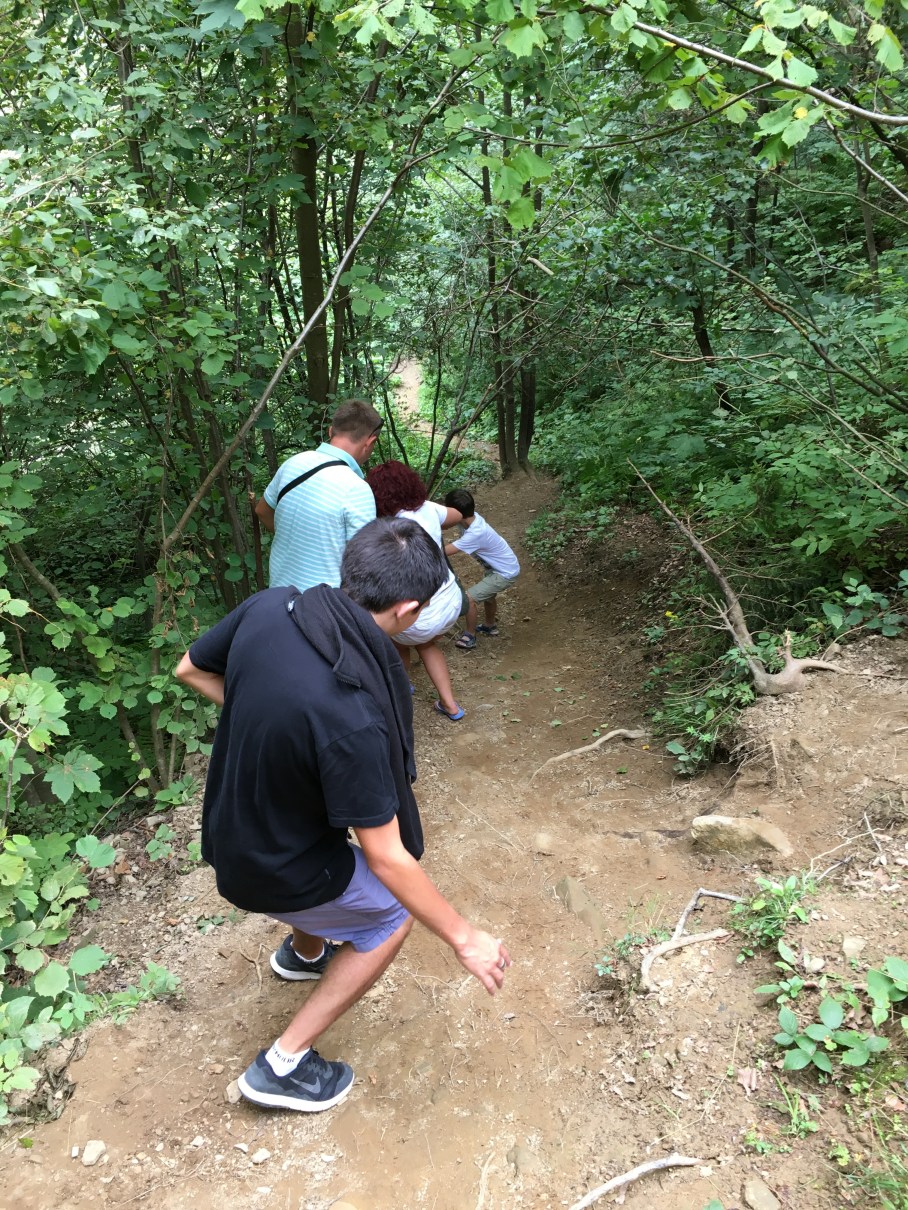
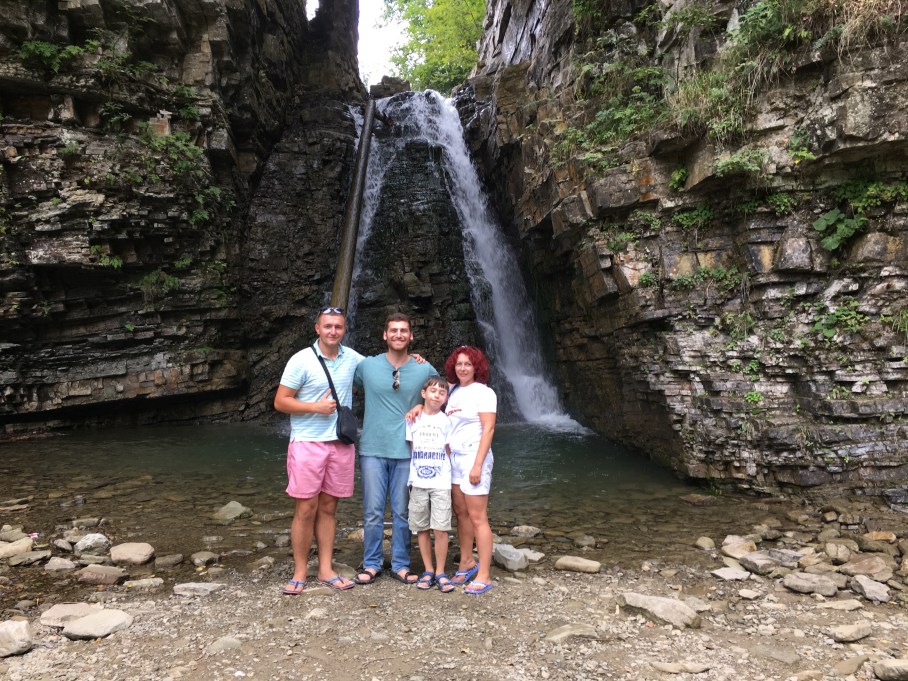
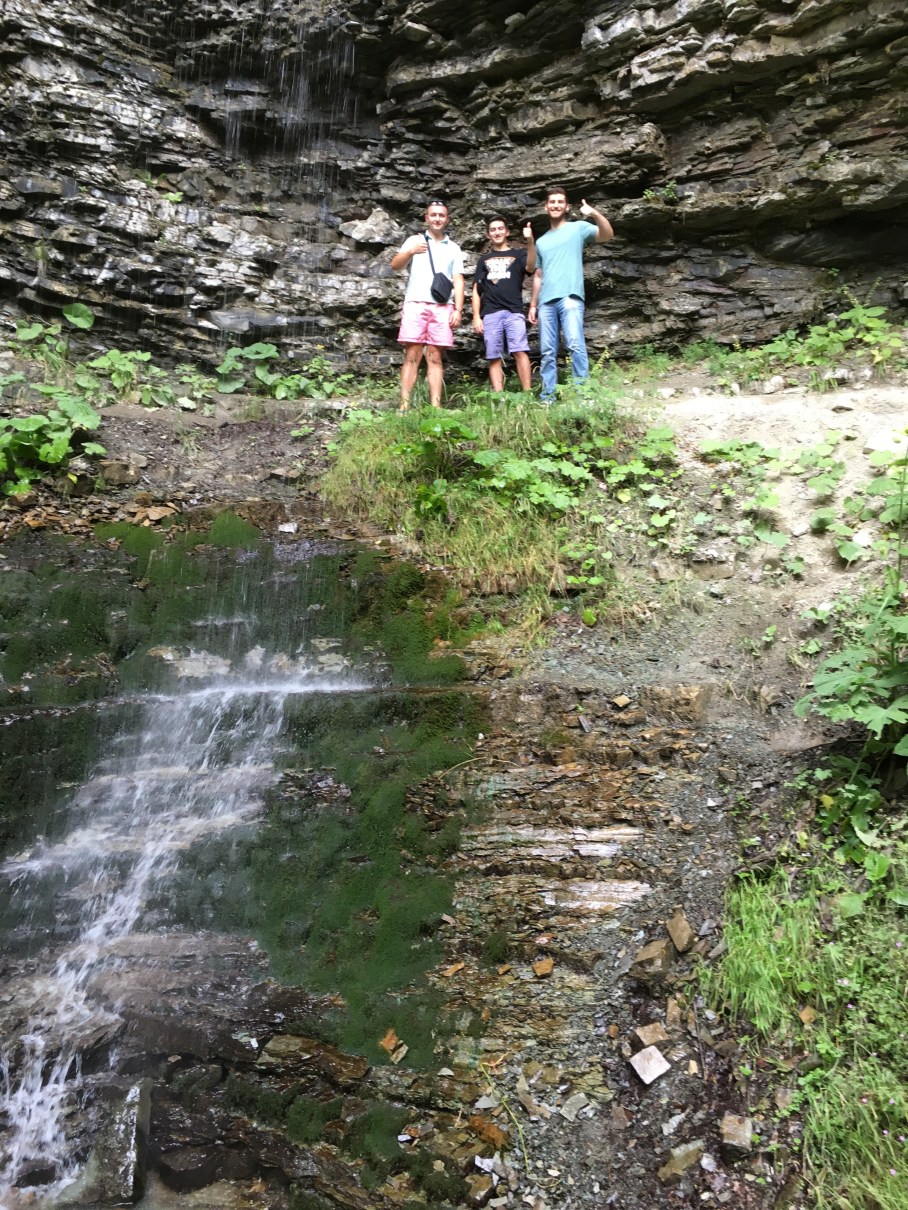
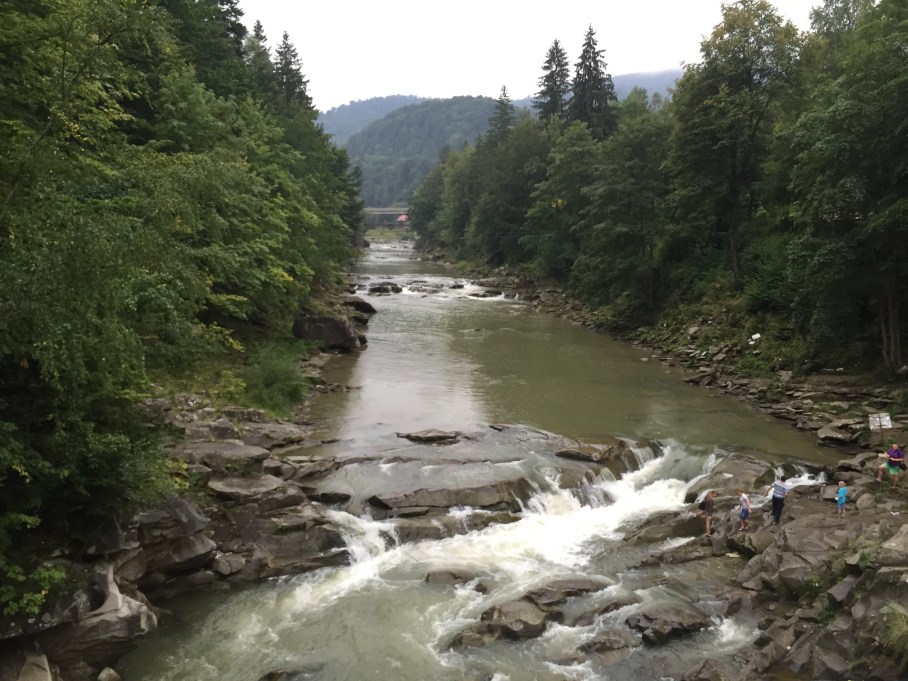
After a short stroll with breathtaking views of the Carpathians we arrived at the waterfalls. To reach them we had to carefully climb into the canyon.
We carefully climbed back up the canyon (perhaps would I did could be better referred to as a crawl). We arrived at Oleg’s car only to find that in addition to the engine troubles, a front tire was now flat. Thankfully, Nadvirnians are resourceful and self-sufficient, unlike Americans. While Oleg handled the car situation, I sat down with young Roman and taught him how to play ‘chopsticks’.
Before long, the car had a new tires and the engine was roaring.
We made our way back down the mountain, and on the way back to Nadvirna we stopped by the quaint home of Oleg’s grandmother, ‘Babusya’, in the village Pniv. She maintained a lovely garden in addition to raising chickens.
We stopped to pick up a new spare tire, at which point Oleg contacted our mechanic. We found out that the rental would be ready by evening, but would cost a bit more than expected. Still a better deal than to go through insurance. Nevertheless, we decided to stay another night in Nadvirna and wake up early the next morning to continue our journey.
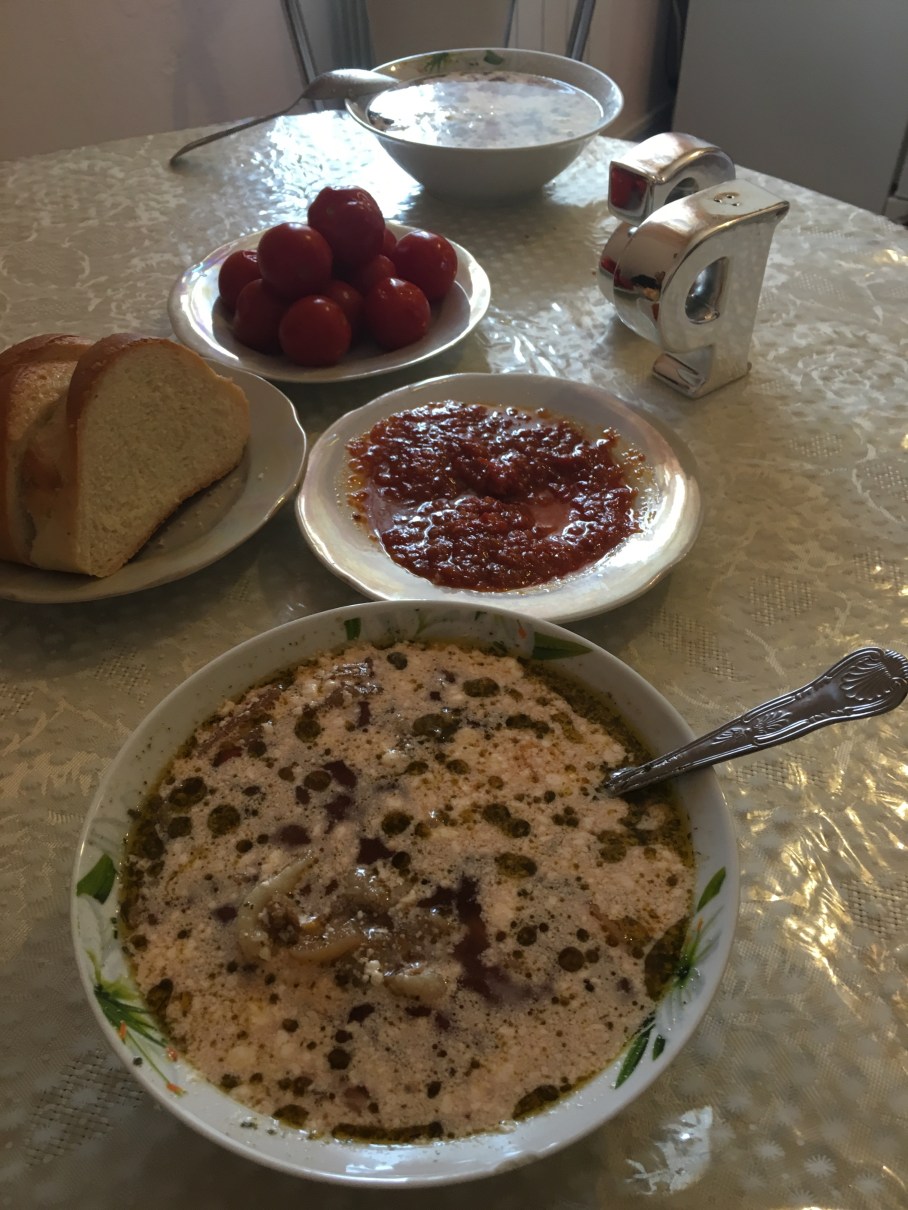
Back at Oleg’s home, his aunt cooked us another delicious meal. We were soon uncomfortably full, but continued to eat so as not to offend.
Afterwards, we walked to the city center where we met Nazar 1 and Olga. They drove us about 25 minutes south to the picturesque Carpathian town of Yaremche, not far from Mount Hoverla.
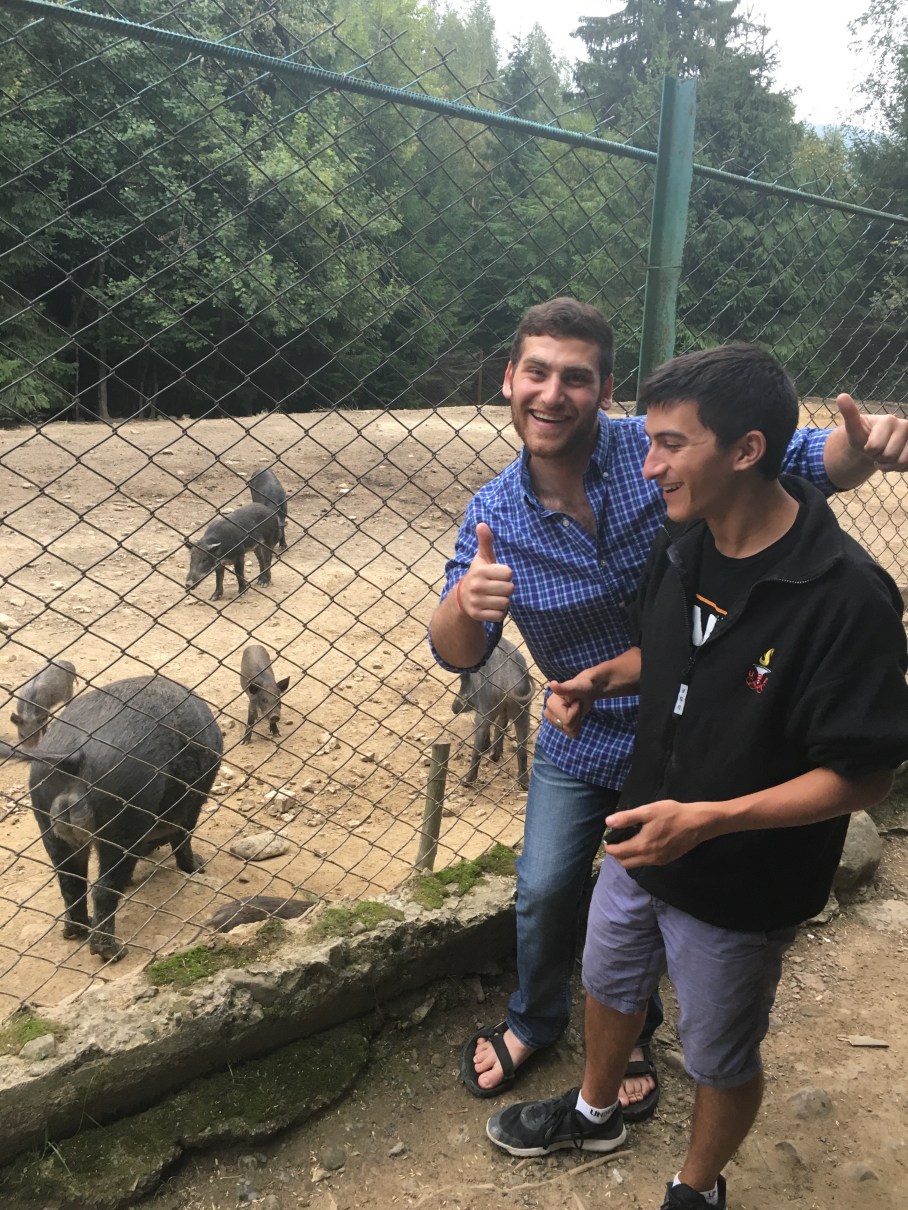
We began our afternoon in Yaremche by visiting the zoo. We fed bread to beautiful elk, deer, and wild pigs.
Olga bought us a delicious traditional snack, and we headed to the Yaremche falls. The waterfalls were a Unesco World Heritage sight. The rough current flowed in contrast to the serene Carpathian backdrop.
On our way back to Nadvirna we stopped by the mechanic to pick up our rental. It was such a great relief to have the car in working condition once more, although it will surely need a carwash before we return it.
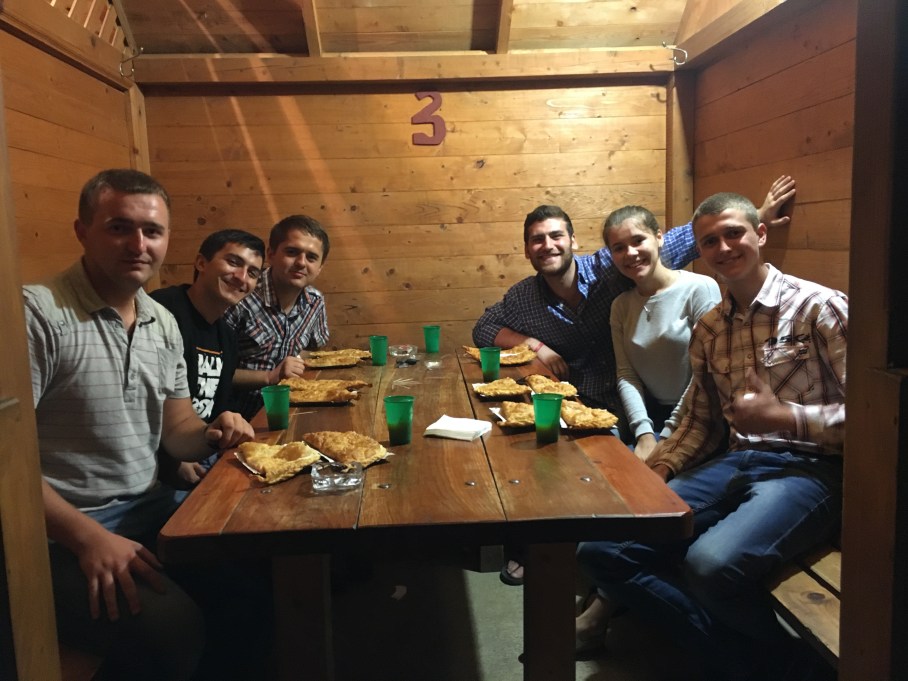
Oleg really enjoyed driving our car- ‘very cool’ apparently. After dropping of Igor at his home and helping Nazar’s sister move some furniture into her new office, we made our way to the home of Nazar 2 for coffee. After coffee we made our way to dinner on the outskirts of town. We indulged in another delicious, traditional, dish, known as Chebureki. The night began to feel like a going away party.
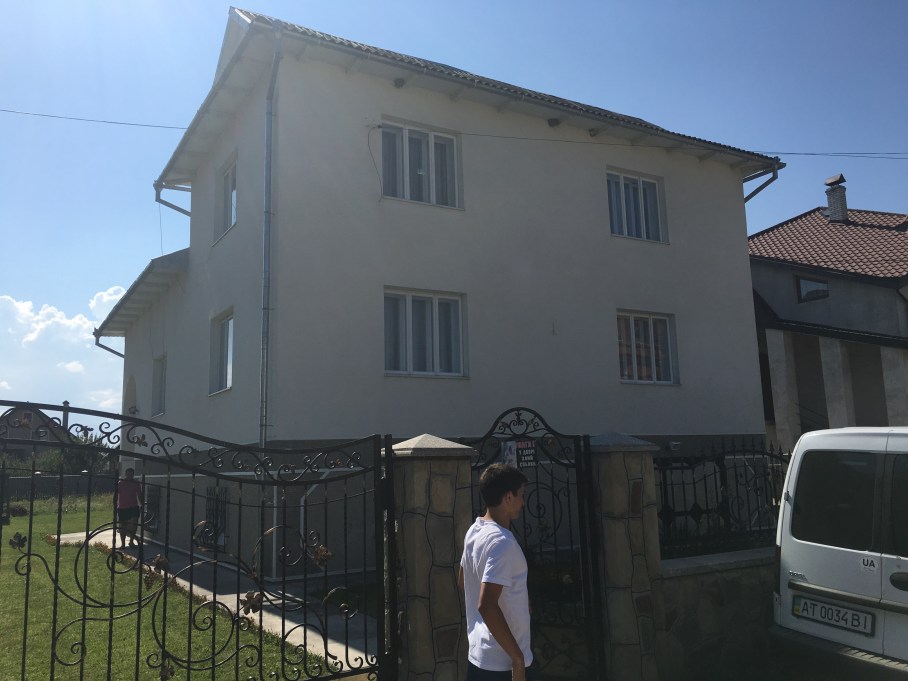
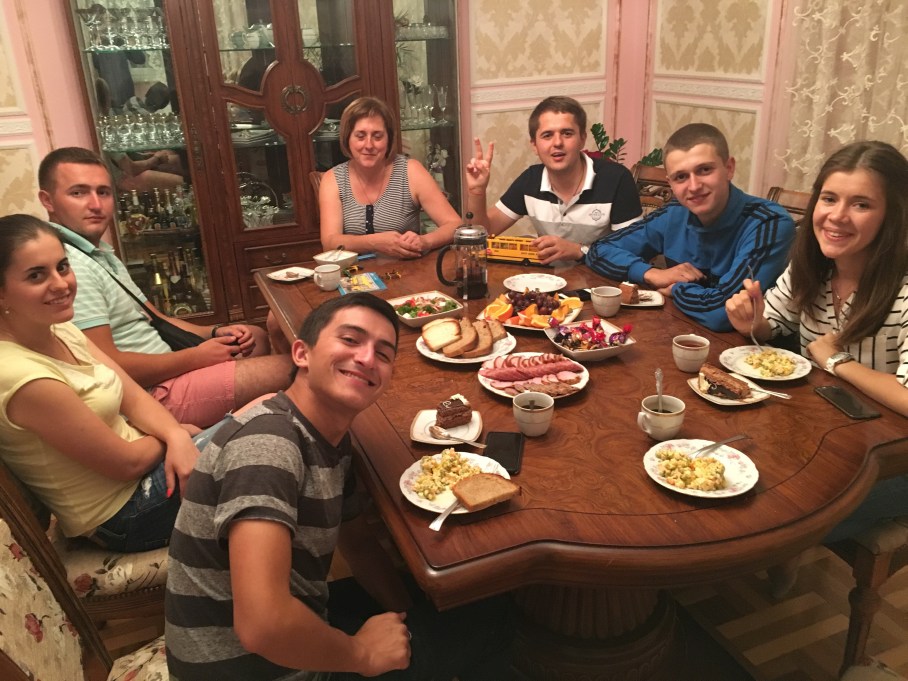
From dinner we quickly changed and then headed for the home of Nazar’s uncle, where we had an eternally memorable night. The home was very large and beyond gorgeous. I think it is safe to say the our new friends come from the upper echelons of Nadvirnian society, but they were nevertheless frequently curious about costs in America.
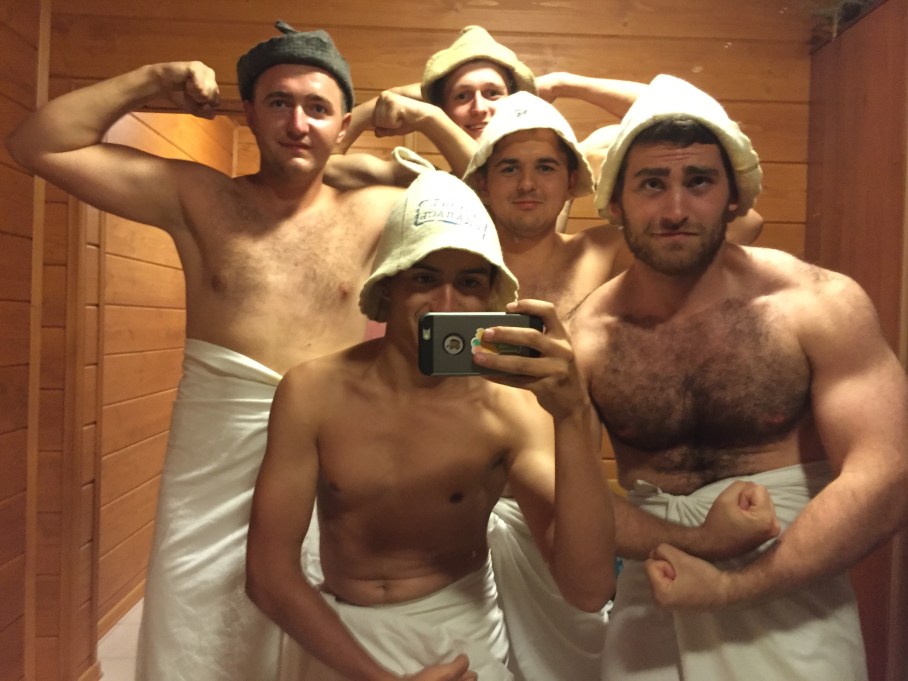
The home housed a luxurious sauna- the night’s primary activity. It was positively the hottest sauna I have ever been in.
By the time we stepped out, the dinner table was abundant with food and liquor. Chase astutely pointed out that gender rolls are very different in Ukraine. As we drank and ate, Olga and Nazar’s mother prepared food and ultimately cleaned up. Meanwhile, the men ate, drank, and enjoyed the sauna.
On one sauna excursion were asked to lie nude on our stomachs, at which point we were smacked with leafy branches soaked in cold water. As the cold water, mixed with the massaging leaves, hit our legs and back, the feeling was pretty close to serenity. The mild intoxication and and extreme dehydration only added to the effect.
Back at the dinner table we continued to take shots of Ukrainian vodka, apparently a tradition for departing guests.
After a quick shower, we dropped off Olga and headed on a nighttime journey through Nadvirna. The boys really enjoyed American rap.
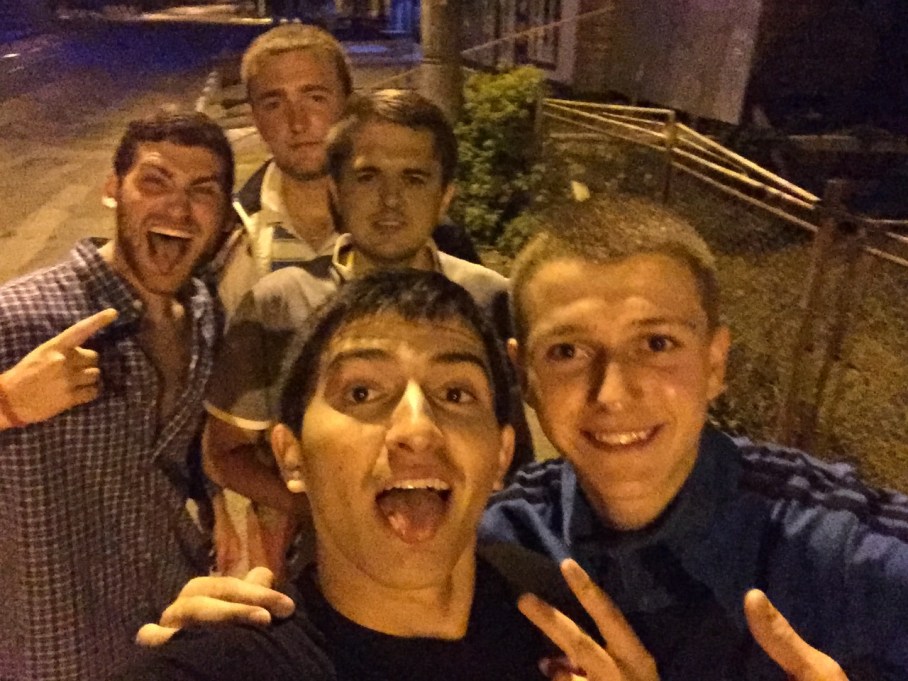
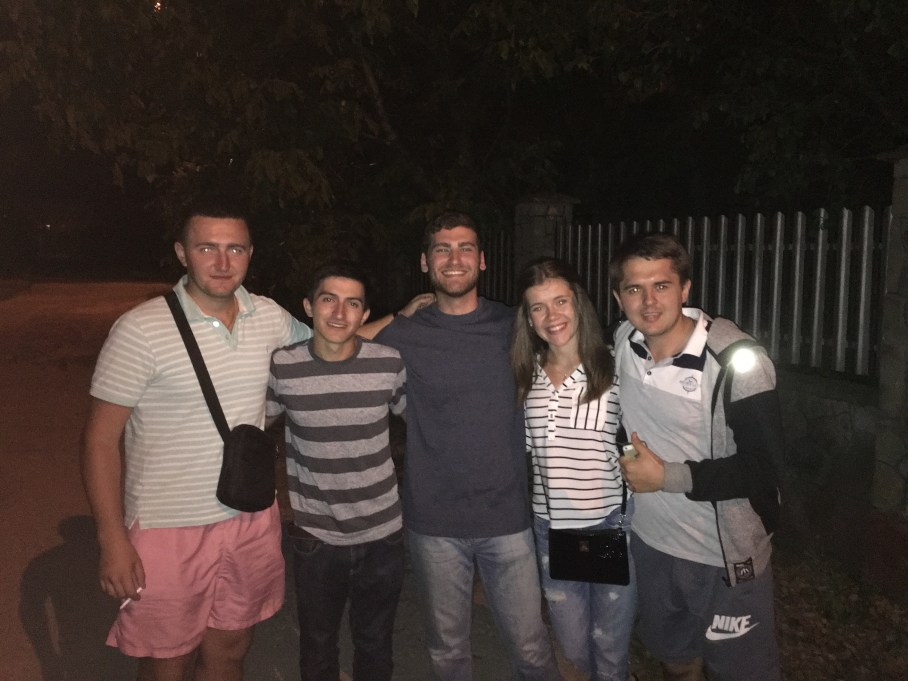
We took selfies at various locations and at one point were pulled over by the police, only to find out that they were Nazar’s friends. From what I understand, the police are a complete joke in Ukraine.
Finally, we headed back to Oleg’s house for our last night of sleep in Nadvirna.
I briefly woke up around 415 to noises outside our window. I stood there for about ten minutes afraid that some locals had heard that there were Americans in town and had come to rob and kill us. I somehow managed to fall back asleep.
When I woke up for the second time, the town was silent. Everyone in the city had gone to Church. I sat on the bed and caught up on my writing (which I am still very behind on). Chase meanwhile managed to exchange money and pick up grapes and croissants.
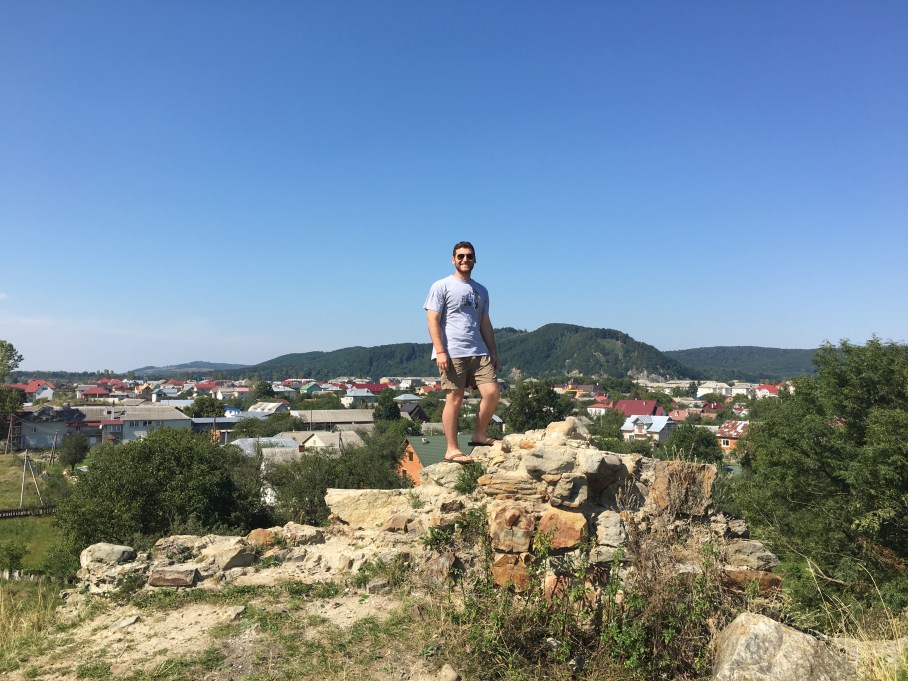
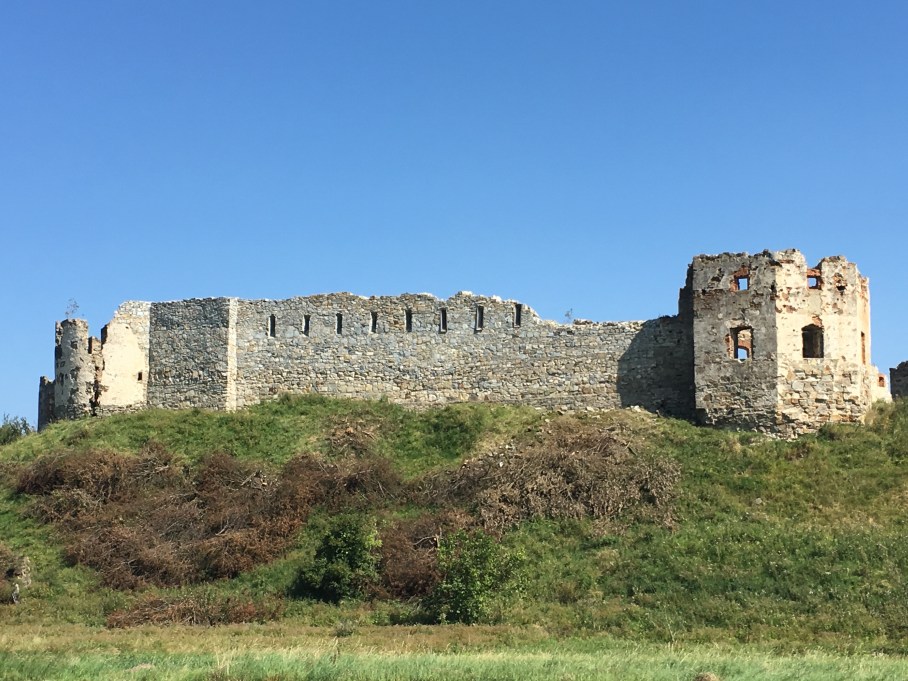
Around 3:00 Micha, his girlfriend, and Nazar 2 (tall Nazar) arrived at the hotel. It was a beautiful day. They took us in a van to the ruins of Pniv castle, built in the 16th century by Polish feudalists. The view of Nadvirna from the mountaintop was spectacular. I was thrilled to get my history fix in light of the circumstances.
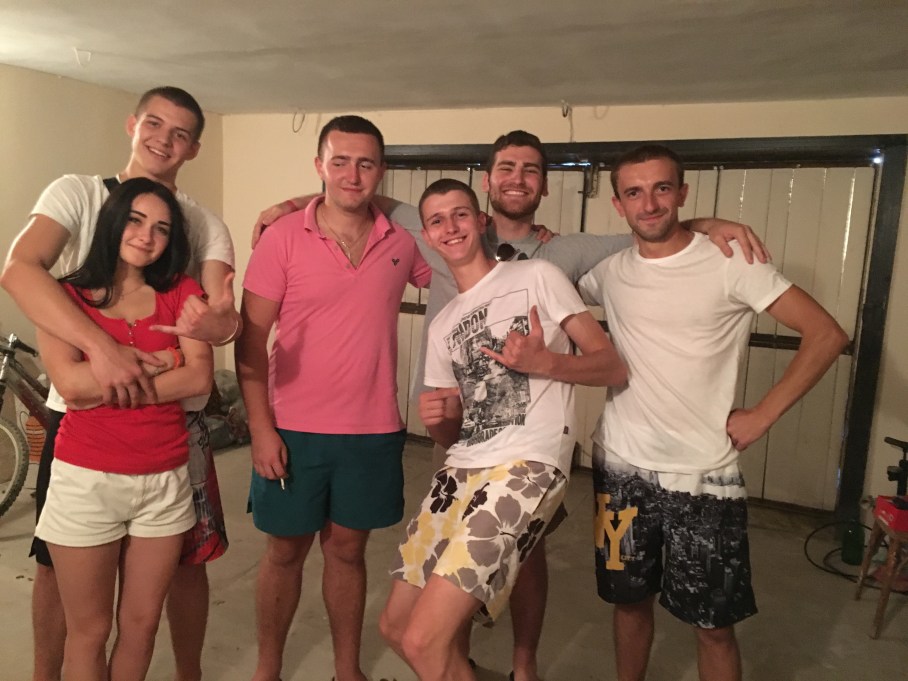
From Pniv Castle we journeyed to Igor’s home, who is 25 and apparently works for the Ukrainian equivalent of the FBI. We partook in some wholesome Nadvirna partying. We also met up with Oleg, and later Olga, before our walk to the river.
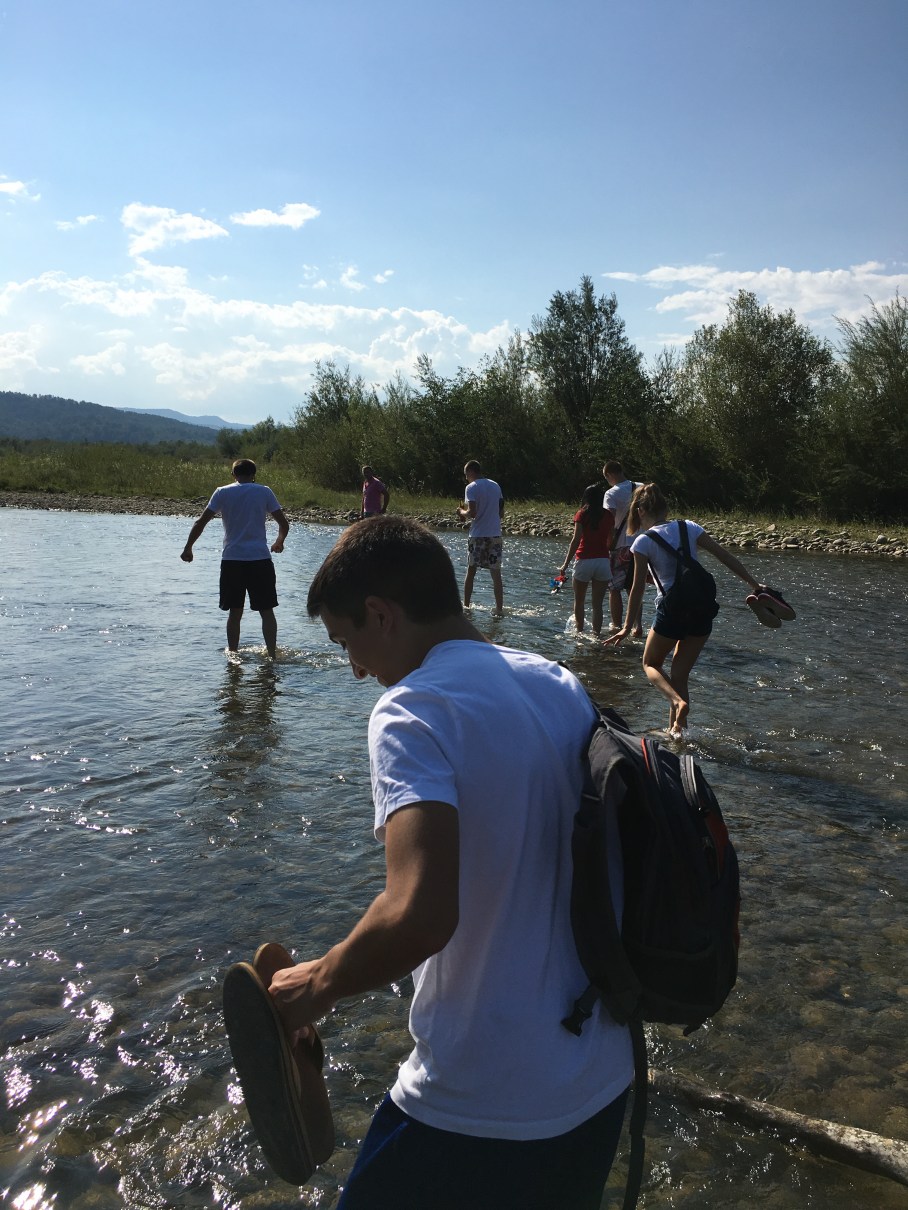
We picked up drinks along the way and enjoyed them as we walked. We had to cross through the river to reach our destination, my sandal broke along the way.
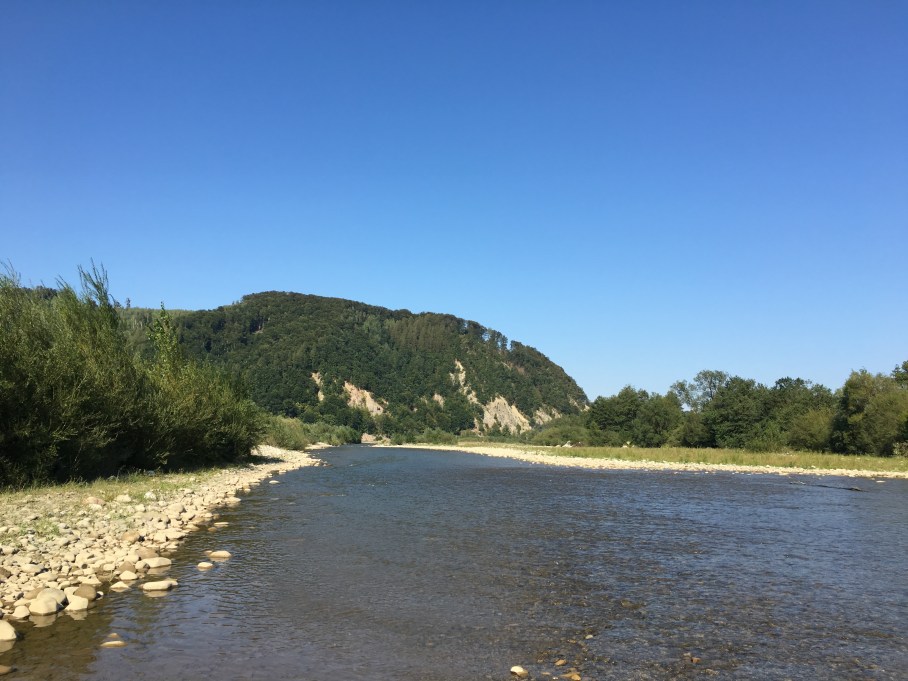
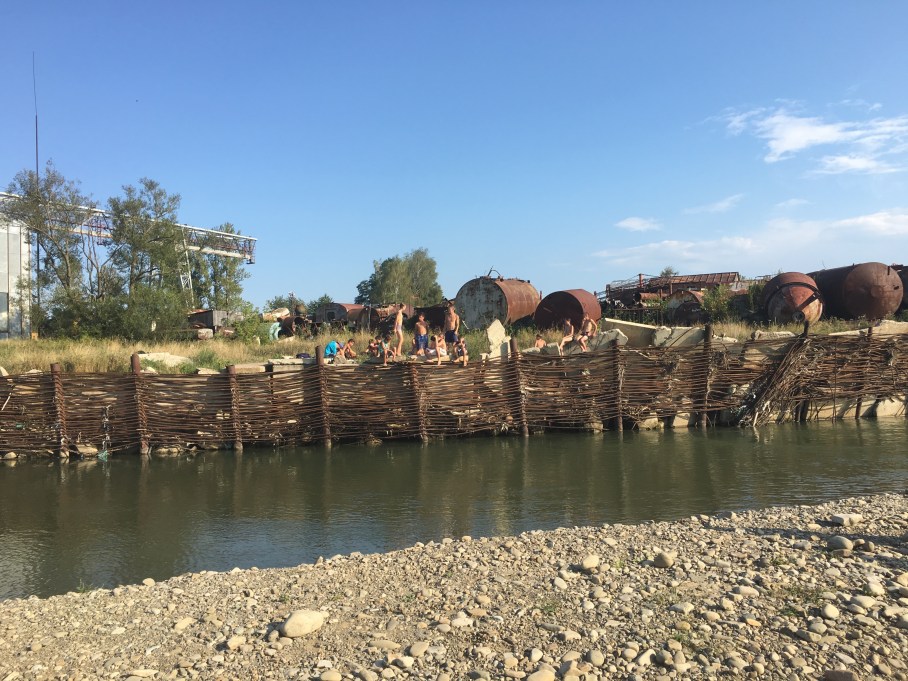
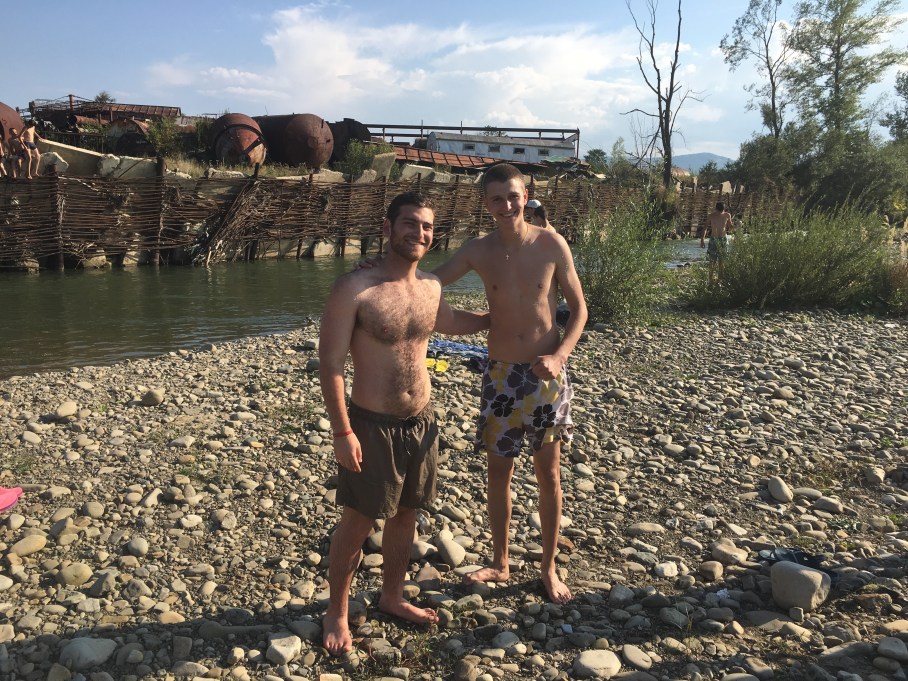
As we reached the riverside, we realized that it was the exact location that Chase and I had driven to the night before. We could even see our tire tracks.
The water was delightful. We enjoyed swimming up and sliding back down the current, as well as jumping in.
On the walk back, Olga very inventively offered a headband to keep my sandal in place, which somehow inspired a mild infatuation with her that would develop over the weekend.
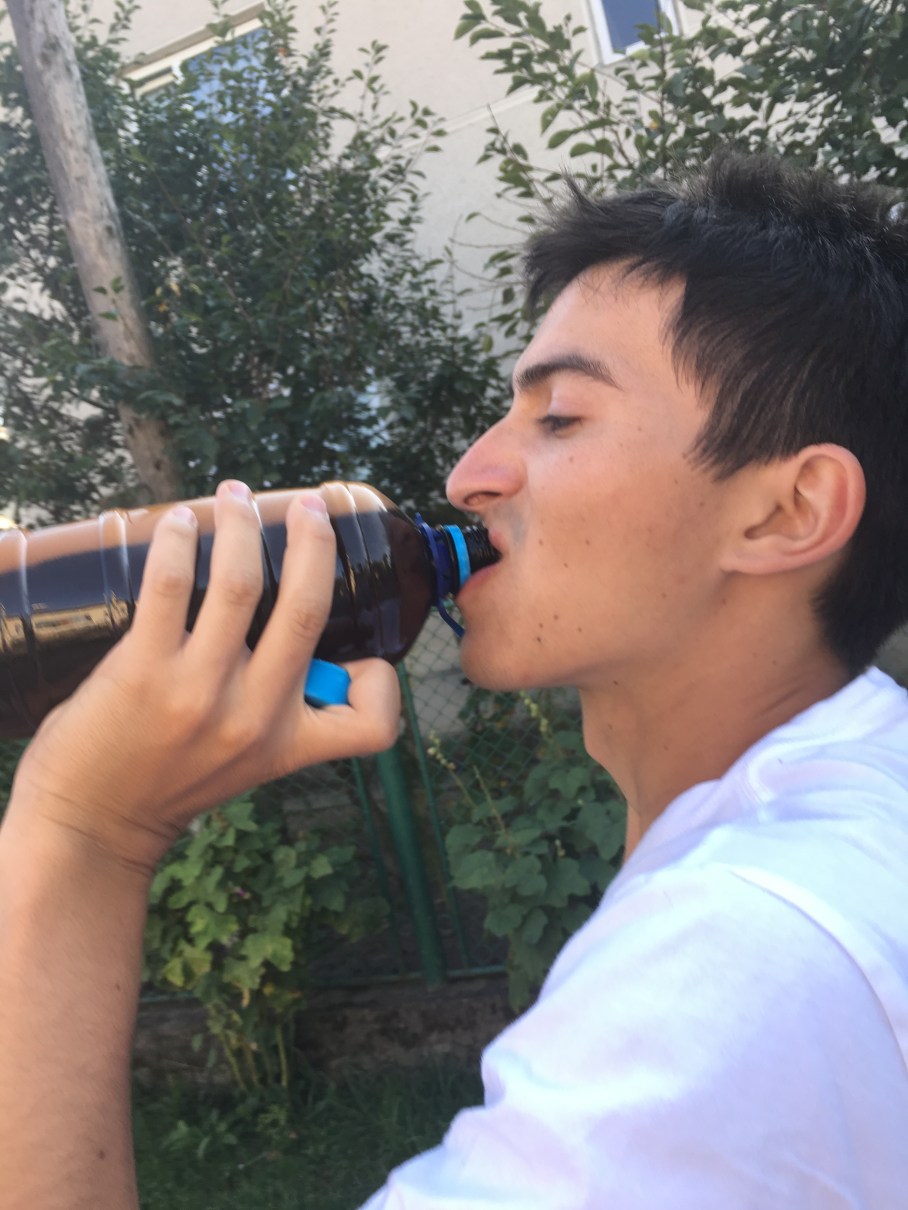
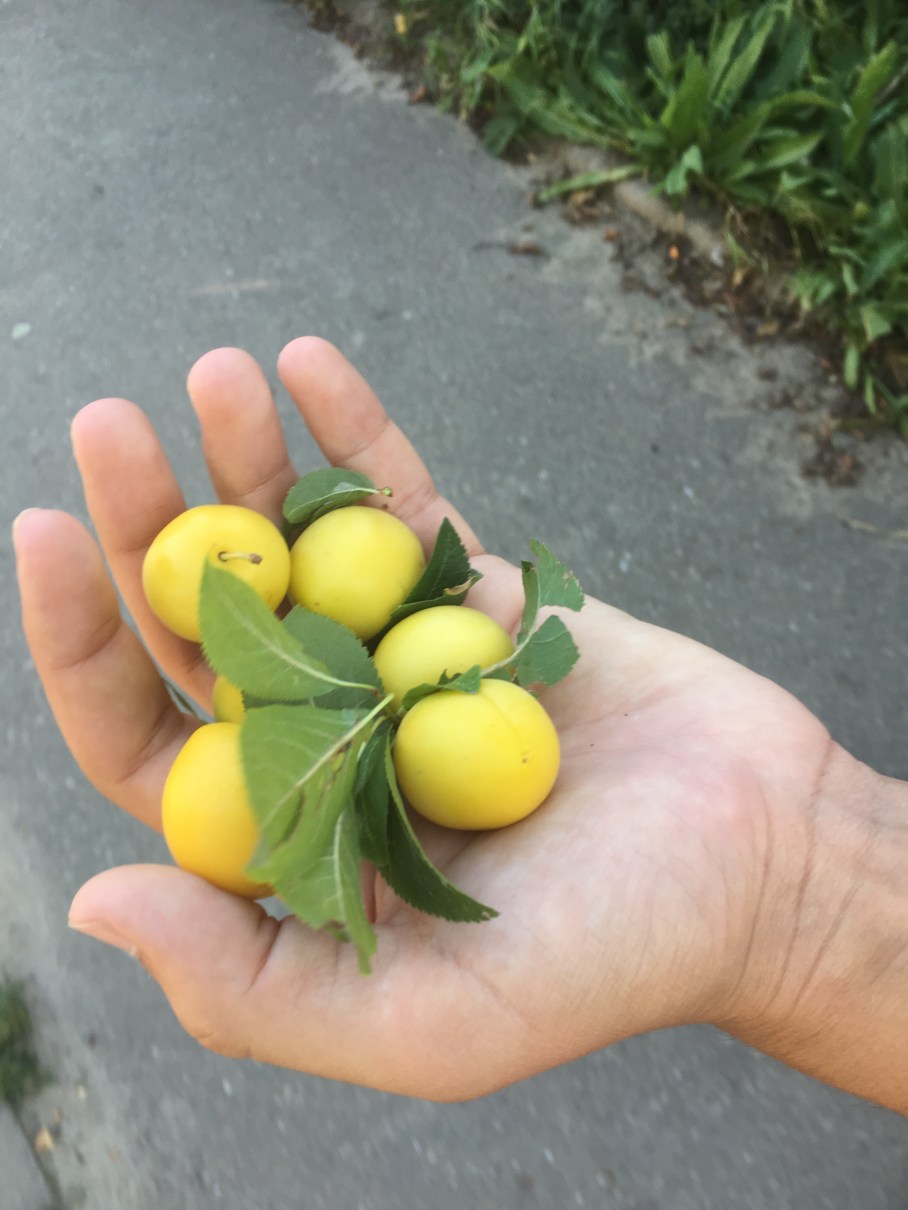
We picked delicious fruits, ‘alicha’, from the trees on the walk to Oleg’s house. They also provided as with ‘kvas’ (black lemonade), which we would enjoy throughout the weekend.
At Oleg’s house, he prepared for us a traditional Ukrainian meal- Frikadelkame with rice, and potatoes stuffed with meat. We also had bread with ketchup and mayonnaise. Not bad. This was the first of many times that we were served an abundance of food in Nadvirna.
We later learned that Oleg, like most folks in Nadvirna, grew the greater portion of the food that they consume.
Oleg’s parents work in Poland. Like others in our new friend group, Oleg studies at a University in Lviv. He shares his home in Nadvirna with his aunt and twelve-year-old cousin, Roman.
At some point in the evening, Oleg offered to house us for the night. We were so delighted to save money, especially considering how much the repair to the rental car was going to put us back.
We swung by the hotel to pick up our things and then showered. Nazar 1 soon showed up with new friends- Roman and Taras. Nazar kindly taught us some Ukrainian words, which we would use frequently over the next few days, among them:
Yakuyoo- thank you
Broshu- you’re welcome
Dobre- good
Druh- friend
Pishle- let’s go!
Cresevo- beautiful
Shestay- goodbye
Bud’mo- Cheers!
Our cyrillic reading also improved greatly in Nadvirna.
Our night commenced at a small lakeside bar in Nadvirna. Unlike in America, we mostly walked from place to place. The original car-repair crew joined us for drinks. We had the opportunity trade stories from our respective homelands.
After drinks we journeyed to the beautiful home of Nazar 1, where his mother had prepared some delicious food. Nazar’s sister had briefly worked as a teacher in New Jersey, it was thrilling to communicate with her without Google Translate.
After we bought more drinks for the crew. Nazar 1, Nazar 2, and Olga showed us around town, before we met up with the rest of the group at the city square.
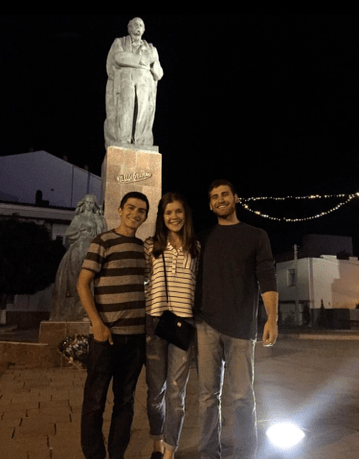
Among other highlights was the statue of Taras Shevchenko, the praised Ukrainian writer and nationalist. Statues of Shevchenko appeared in almost every city that we visited or passed through.
After a wonderful night in Nadvirna, we headed back to Oleg’s home for sleep. It was that evening that I decided our car troubles were fate.
Our second day in Lviv was dedicated to visiting sights of Jewish relevance. We said goodbye to the Lviv Hostel. I can’t say that I loved sharing a room with strangers.
We read on the city’s Jewish history and planned out the day over breakfast.
We started with a walking tour that I found online of the old Jewish quarter.
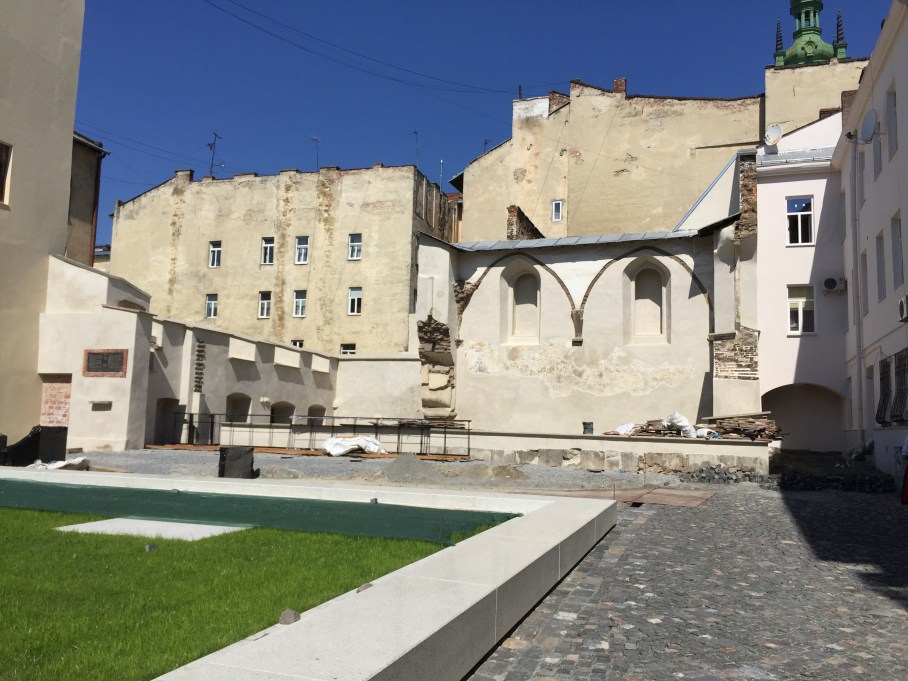
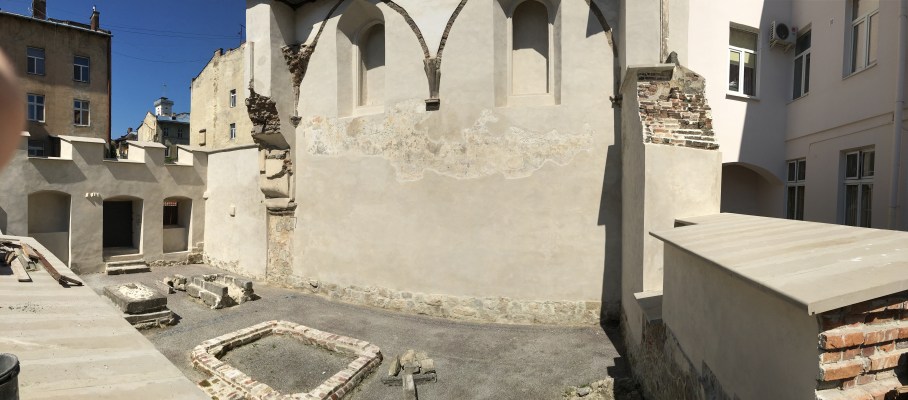
Perhaps most significant were the ruins of the Golden Rose Synagogue, built in the 17th century.
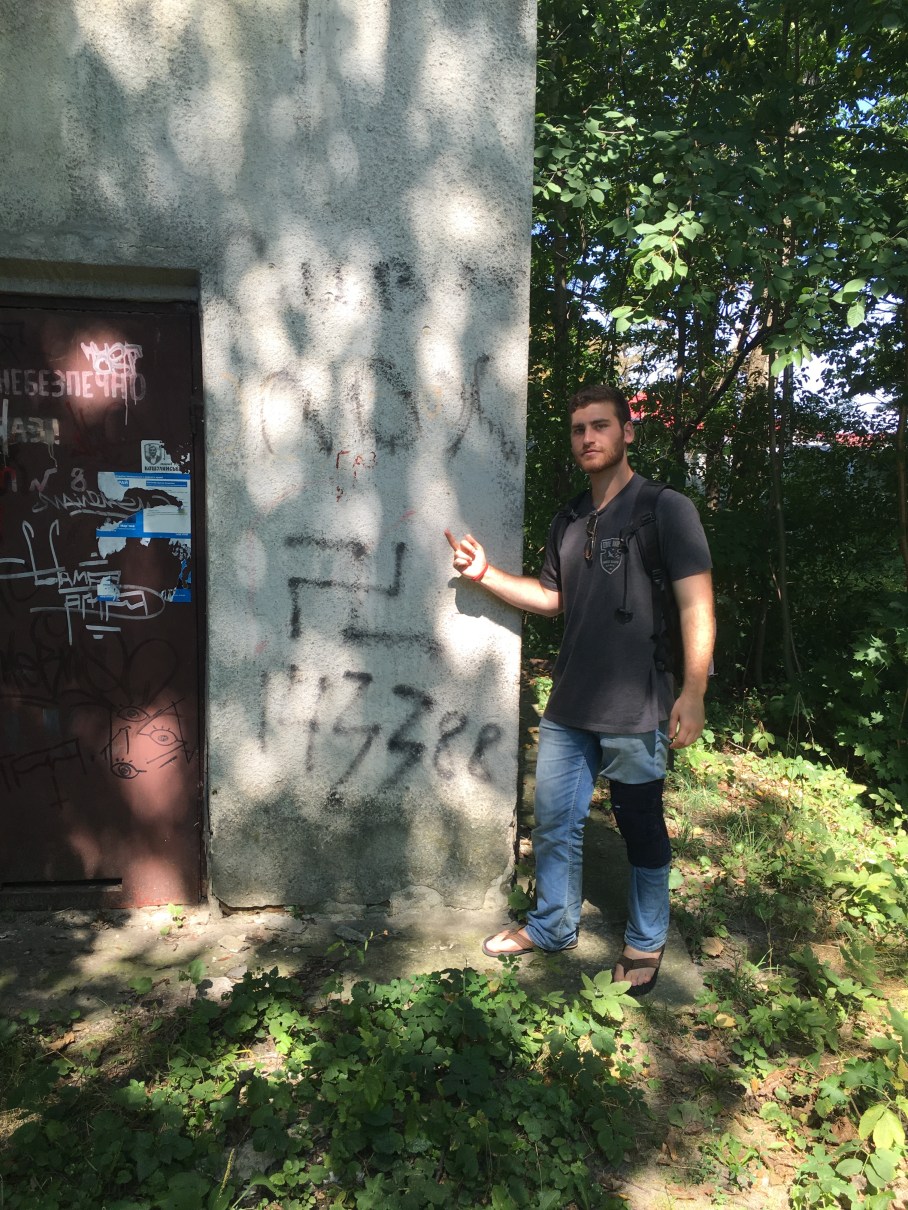
The abundance of Jewish sights and simultaneous absence of any substantial Jewish community was a constant reminder of the atrocities that took place in Lviv.
After the tour we sat down on a curb and plotted remaining sights Jewish relevance on our map.
We parked at the former home of renowned Yiddish poet ‘Shalom Aleichem’.
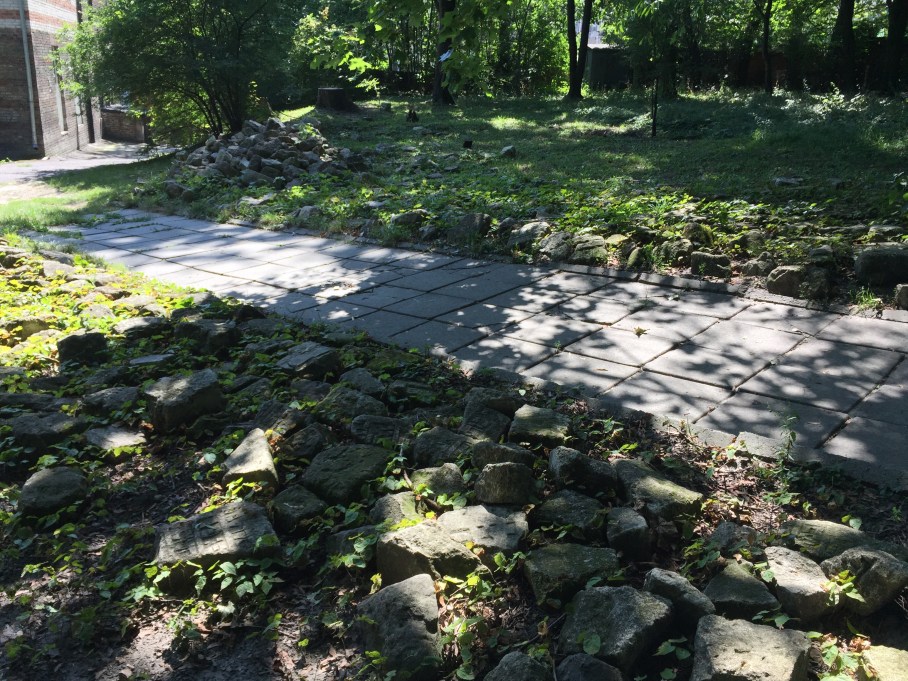
From there we walked to the destroyed Jewish cemetery, where a few headstones lay in rubble.
Across the street was the old Jewish ‘Rapport’ hospital.
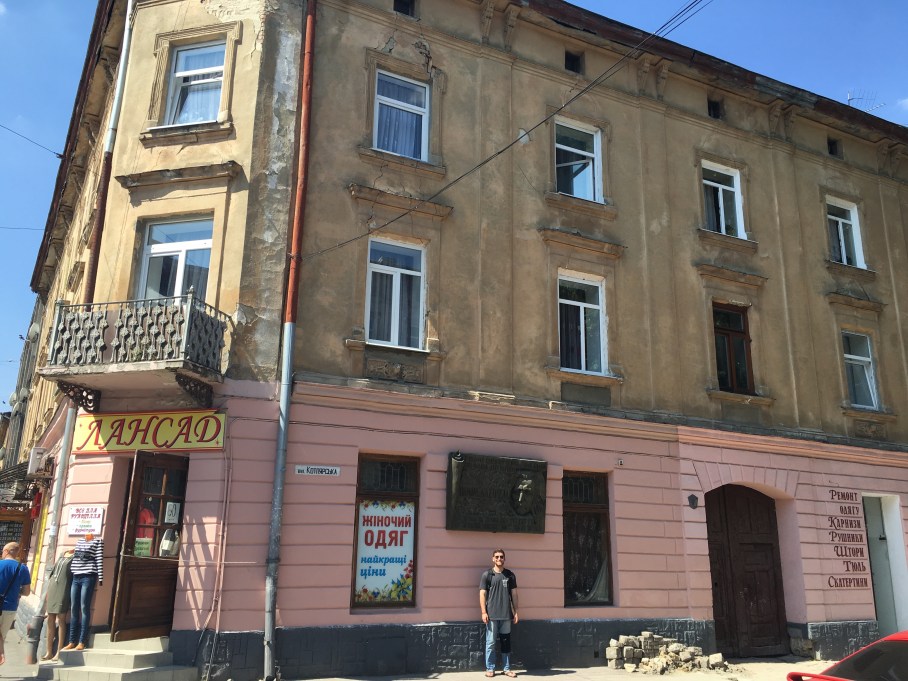
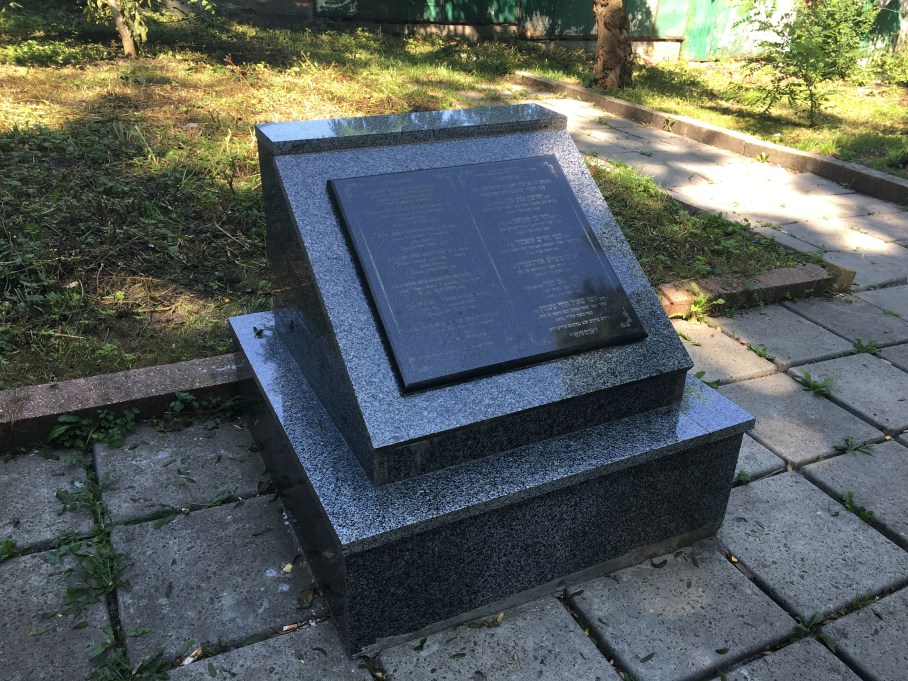
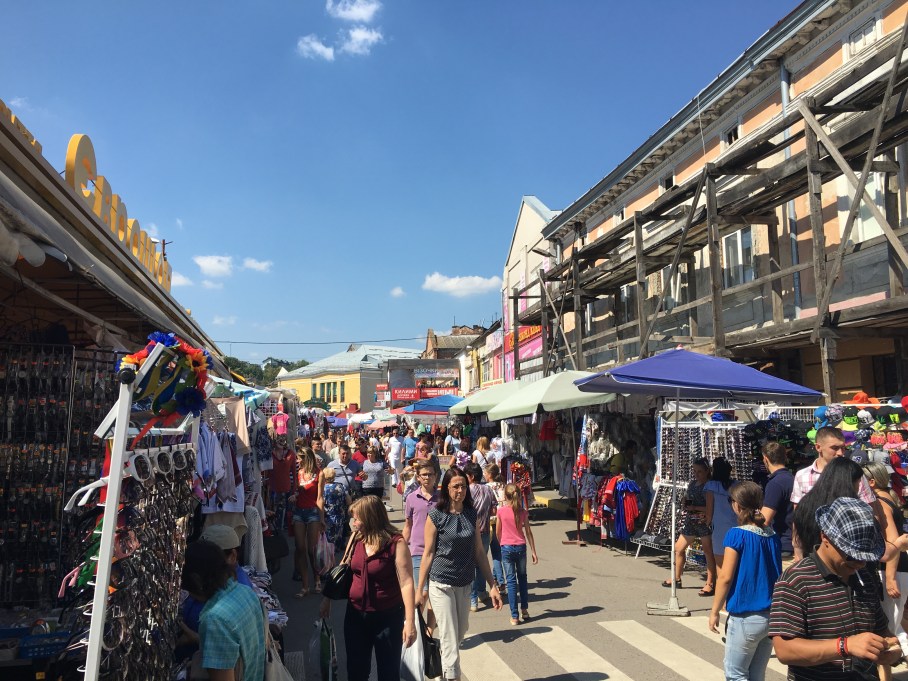
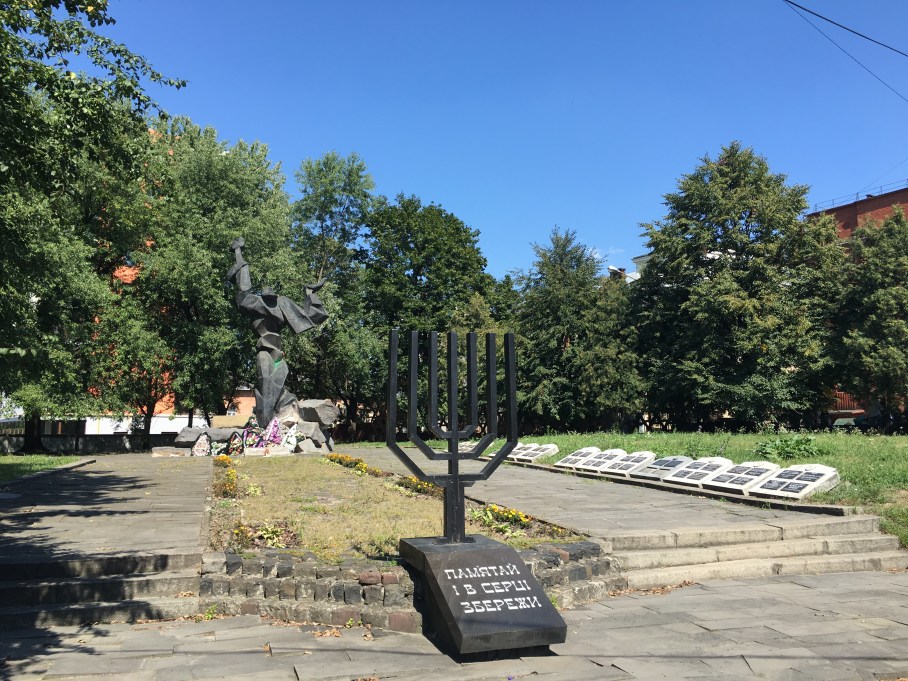
We briefly walked through a crowded market on the way to the Holocaust/Ghetto memorial.
We sat down to lunch at what seemed to be a traditional restaurant, but I can’t say the food was great.
Our final step in Lviv was the Janowska concentration camp, just on the outskirts of town. It was disturbing just how close in proximity the camp was to city center- a reminder of the complicity by non-Jewish locals.
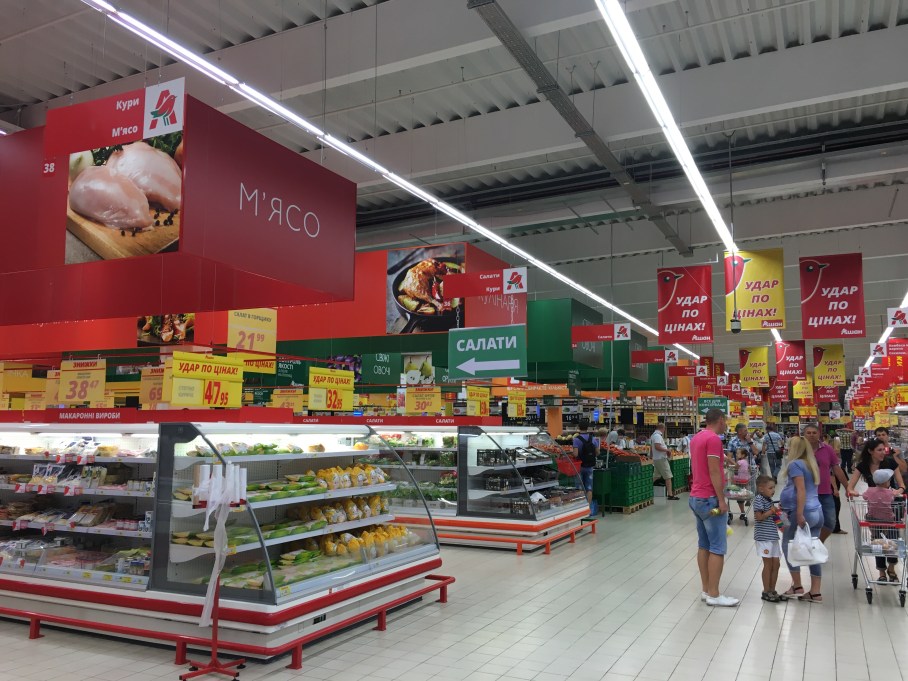
Before hitting the road we picked up some snacks at a Lviv grocery. It was strikingly large.
As we started our drive we also began what will likely stand to be the most terrifying experience of my life, and ultimately one of the most cherished and memorable. Our intended destination for the evening was a beautiful cottage in the village of Vorohkta. Our plan was to wake up the next morning to climb the Carpathian treasure of Mount Hoverla, the highest point in all of Ukraine with views into neighboring countries. When left Lviv around 4:00 the roads were smooth and spirits were high.
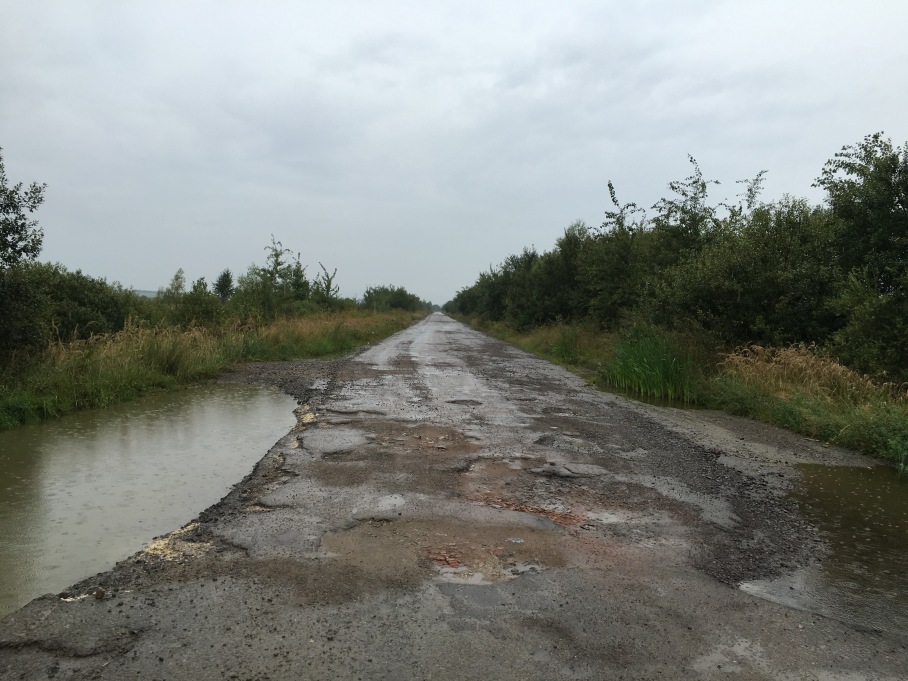
We eventually began to encounter potholes, but we enjoyed the challenge of weaving around them. This added a good amount of time to our journey; however, as the roads worsened the views only got more beautiful.
The roads continued to worsen as the sun set, and ultimately, there was not road at all. The development from paved roads to utter abis was a gradual one. It is hard to convey the distress and fear that issued. The path eventually became mounds of hardened earth in the middle of complete wilderness. Between mounds were pools of water. We frequently parked the vehicle to check the depth, to make sure we would not get stuck our sink.
Still, the Apple Maps instructed us that we were on the correct path. Meanwhile, I was also afraid that our car would break down from all the damage we were clearly doing to the bottom, based on the loud bangs and creeks that we heard. The worst was yet to come.
After driving to the middle of nowhere in the complete dark of night, the outline of the trails slowly began to fade. These paths (if you can even call them that) had clearly not been driven on in decades. For some reason I kept driving. Chase was a faithful navigator all the while.
We finally hit the river. On the other side of it there were comforting lights in the distance. Unfortunately, where Maps said there would be a bridge, there was none. I was having an internal meltdown at this point, meanwhile Chase showed complete determination. After driving along the rocky banks of the river we considered attempting to drive across it, but eventually decided against it. We agreed to turn around and rive back to the nearest city.
By this point we had completely lost sight of the trail. Chase pulled up a compass on his phone, and I literally drove through fields of open wilderness in the direction of the nearest city, during which we constantly heard the clicks and bangs underneath the car of it’s complete destruction. When we finally hit the original ‘trail’ I prayed underneath my breath.
We slowly made our way back to the nearest city, at which point Chase was able to direct us along a new path to Vorohkta. Alas, just as the roads began to improve and our spirits began to rise, the oil light went on. We located the nearest gas station (around 10:40) and looked under the car to find a puddle of oil underneath.
As distressful as this new chapter in our despair was, I was truthfully just relieved to be alive and our of the wilderness. Unfortunately, the folks at the station did not speak any English, but I managed to get a hold of Tanya who was so kindly willing to translate for us.
It was not long after that a group of young men and women, seemingly close to our age, approached our car. One young man spoke English (Nazar) and with the assistance of his friends, he pushed our car to the nearby car repair shop.
When we heard the news that our car would not be fixed until Monday or Tuesday, we were devastated. Alas, there was nothing we could do, so no point in being upset.
The group of young Ukrainians offered to give us a ride to a hotel in town. Only after checking with three did we find a room. We met them downstairs about five minutes later. We offered to buy everyone drinks for the night. We stopped at a market where I met a student from West London University. She was in disbelief that there was an American in her small town.
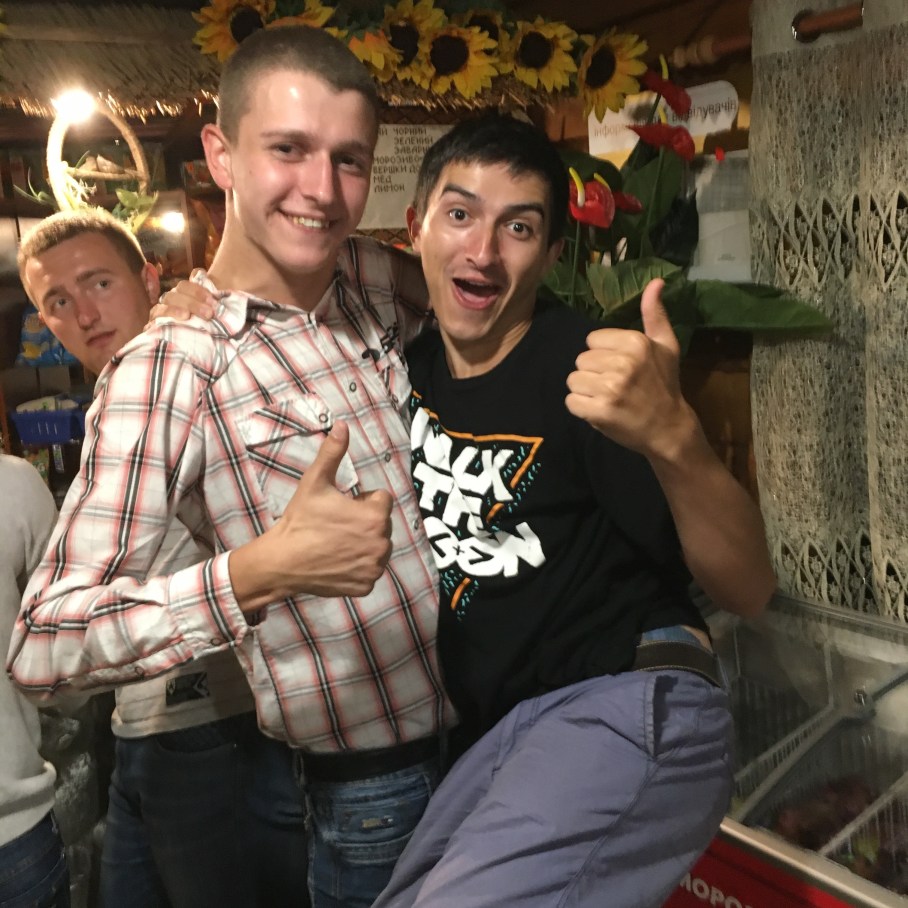
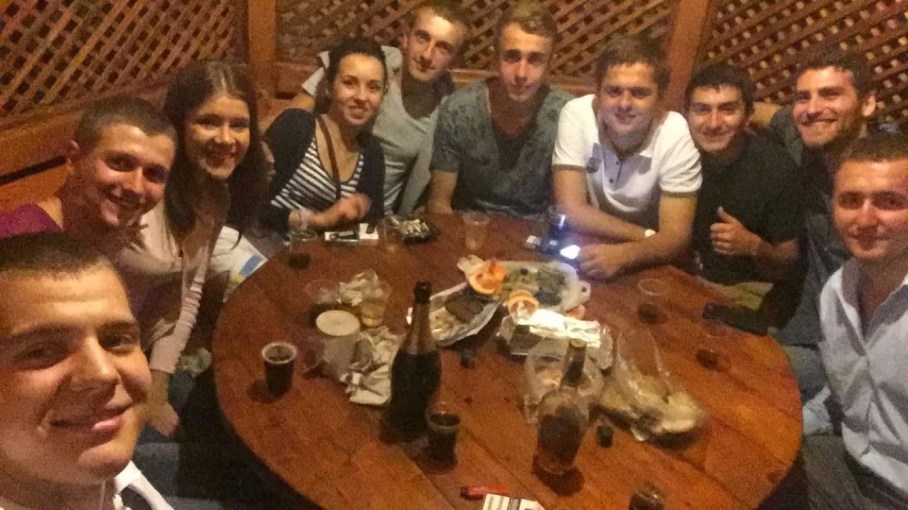
From the market we drove to the home one of our new Ukrainian friends, Oleg. At Oleg’s sizable home we ate chocolate and drank cognac in his gazebo with the crew from the gas station. We used Google Translate to communicate. Thank God for Google Translate. Everyone was clearly very excited to be with two Americans. Our new friends were Nazar 1, Oleg, Micha, Roman, Igor, Oksana, Olga, and Nazar 2.
It was a nice gathering, but I was still a bit anxious and uncomfortable with the situation. They asked to add us on Facebook, but we chose to tell them that we didn’t have, afraid they would rescind their hospitality after learning that we are Jewish and Chase is gay.
Before returning to the hotel we made plans for the next day. The name of the town was Nadvirna.
I woke up completely unprepared for the day ahead.
Chase and I headed for a coffee shop to plan the day. It was an unexpected 80 Degrees (Fahrenheit). For some reason I thought that I’d feel comfortable relying on online top ten lists to develop an itinerary, but the lists were not consistent. I started the day lacking the confidence that we were indulging in the best of Lviv.
Chase continued to put up with my stress for the first few hours of the morning. I searched frantically for guide books, and tried desperately to develop a path that aligned with the history I had read, to no avail. We ended up finding the official tourist center near ’Rynok Square’ (center of Lviv), where we picked up a map that denoted city highlights along an organized route.
At each stop we found a plaque (placed by the tourist center) that fortunately provided english context for what we were viewing. Based on the years provided, I was able to place the structures in the historical context that I needed to appreciate them. In short, the history of Lviv (and the region that surrounds it, ‘Galicia’) can be understood as follows:
Kievan Rus ~882: First organization of Eastern Slavs. Broke into three primary kingdoms after Mongol attacks, two of which would later join to form the Grand Duchy of Moscow, which would later develop into the Russian Empire. The third kingdom was…
Kingdom of Galicia and Volhynia ~1240: Merged former provinces of Kievan Rus. Capital was soon moved to new city of Lviv. Wrought by wars of succession in 14th century. Lithuania took Volhynia, Poland took Galicia.
Kingdom of Poland, 1349: Lviv remained capital of the Ruthenian Voivodeship (administrative unit). Would remain part of Poland once merged with Lithuania to form the Polish-Lithuanian Commonwealth in 1569 (Union of Lublin). Was occupied by Austrian Empire during the Partitions of Poland.
Austrian Empire, 1776:Became a crown land (private land) of the Hapsburg family, ‘The Kingdom of Galicia and Lodomeria’’. Lviv remained the capital. Would remain of Austria once merged with Hungary to form the Austro-Hungarian Empire in 1867. I give up at WWI.
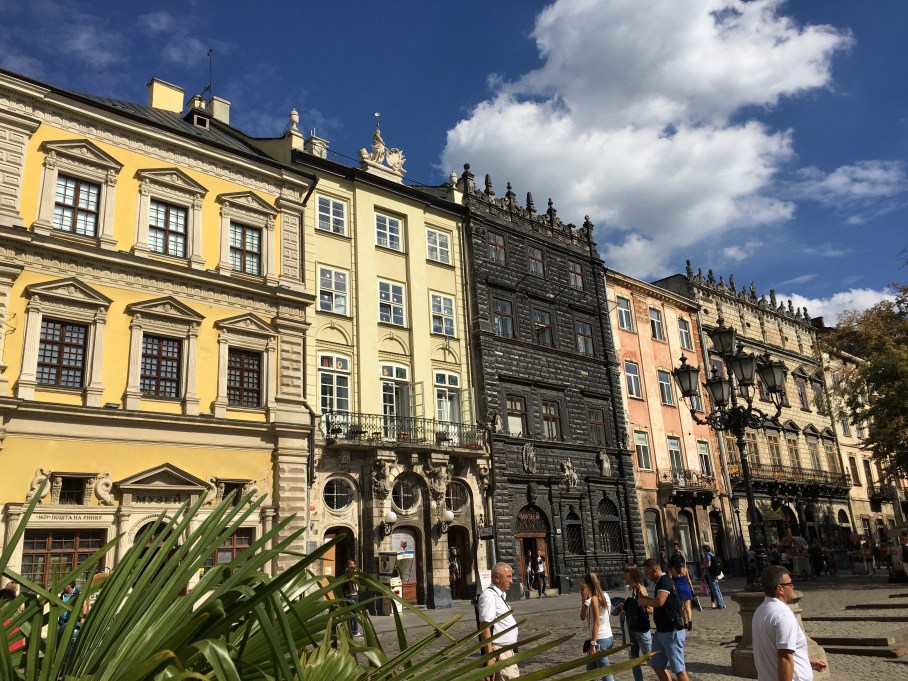
We started in Rynok Square at the Korniakt Palace, completed in 1580, which was in the 17th century a palatial residence of King Jan III Sobieski of Poland.
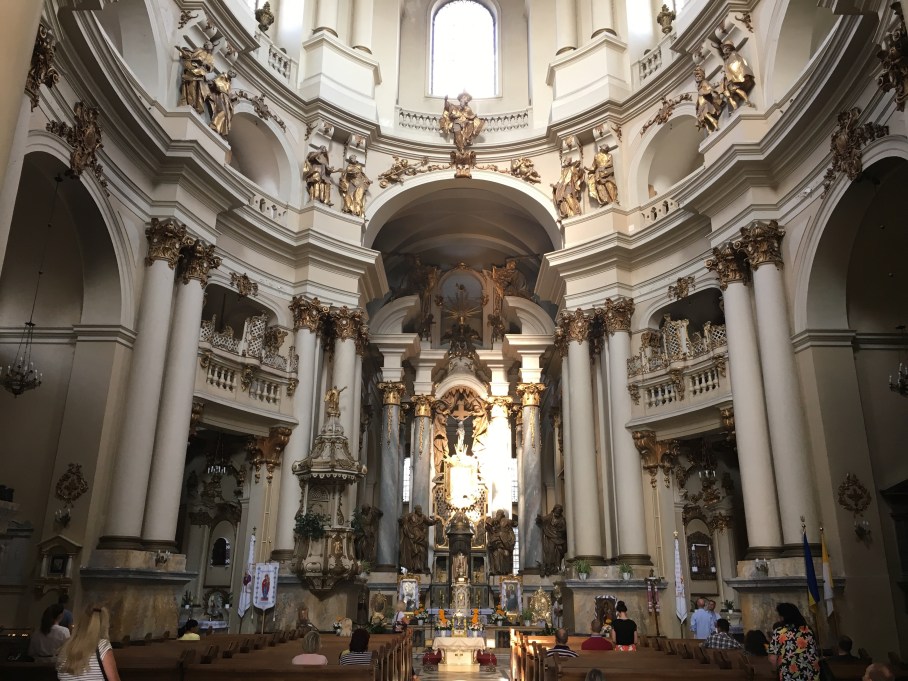
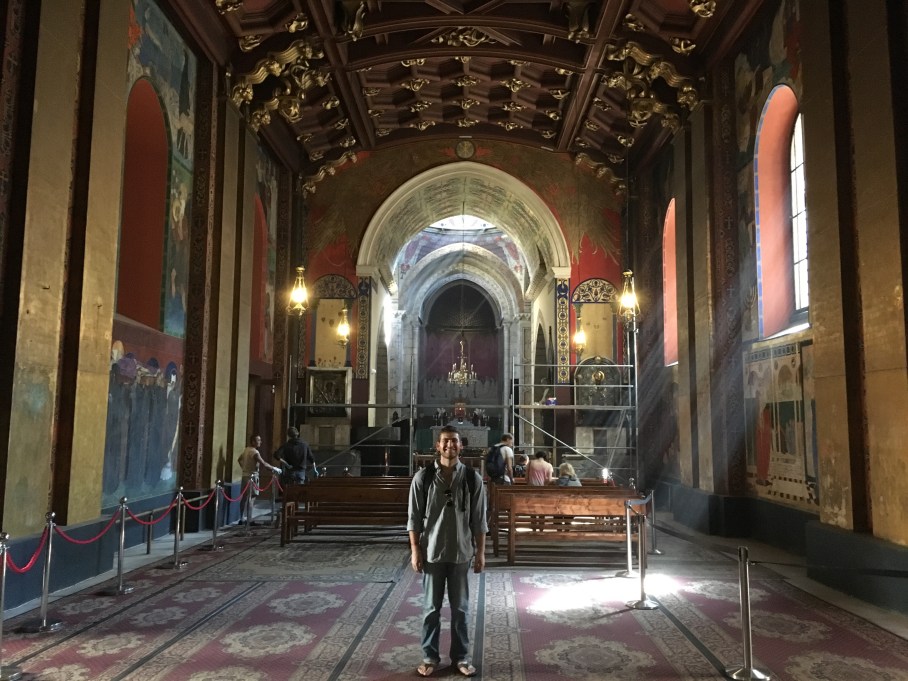
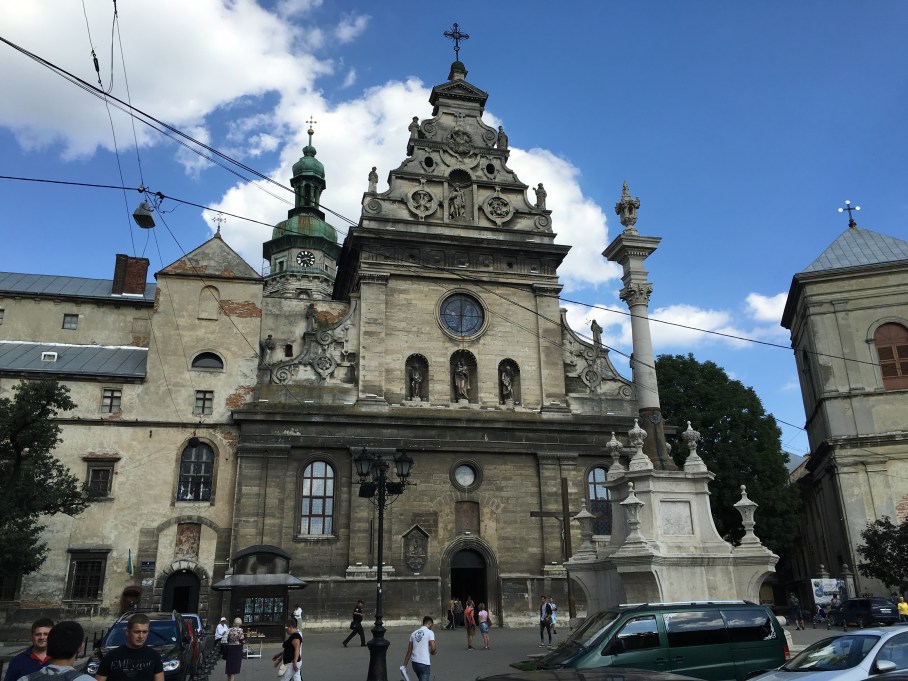
It became very clear, very fast, that we were going to be spending lots of time in churches.
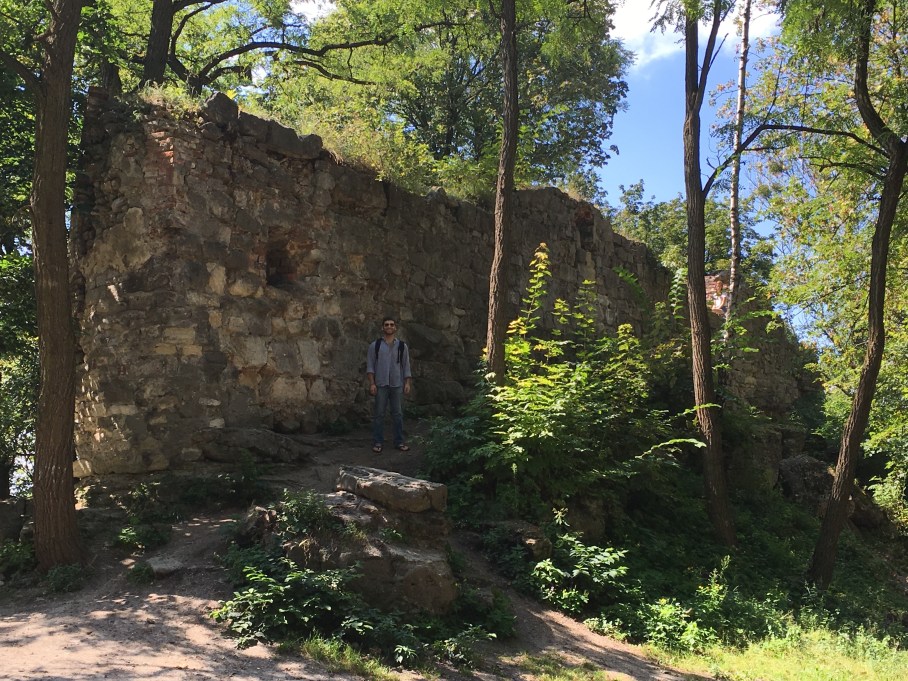
We had a beautiful view of the city from Castle Hill, where ruins of the High Castle (defensive fort from 13th century) lie. It was also the highest point in Lviv.
We had a particularly nice view from the ‘Union of Lublin Mound’, where now stands an imposing television tower that reigns over the city.
We really enjoyed the ‘Liberation Museum’ but could not understand a word of it.
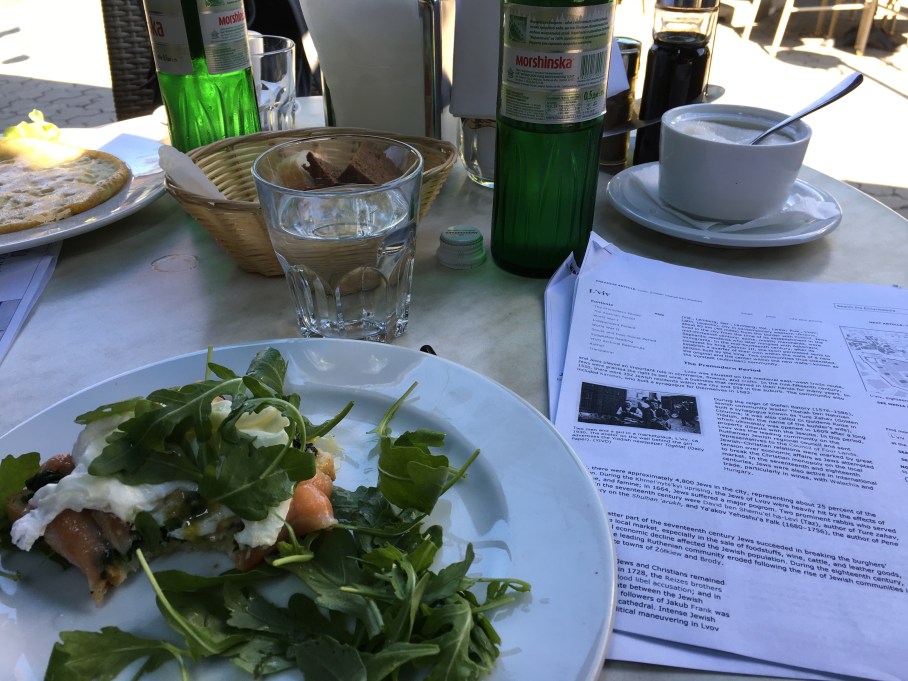
We grabbed lunch in the city square, I had mushroom soup per Tanya’s suggestion. We indulged in wine and beer, and used the down time to organize the rest of the day.
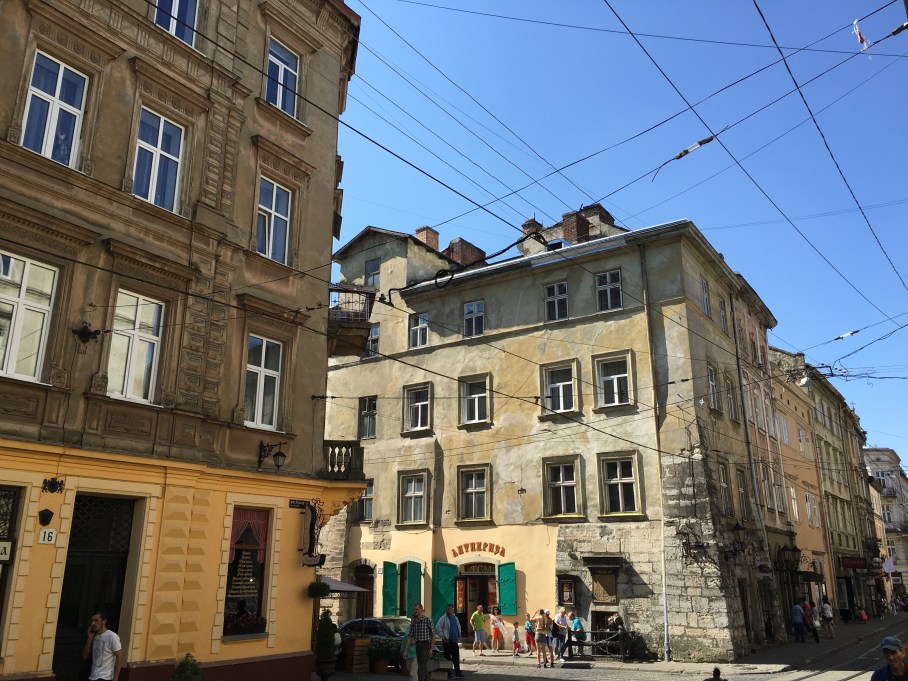
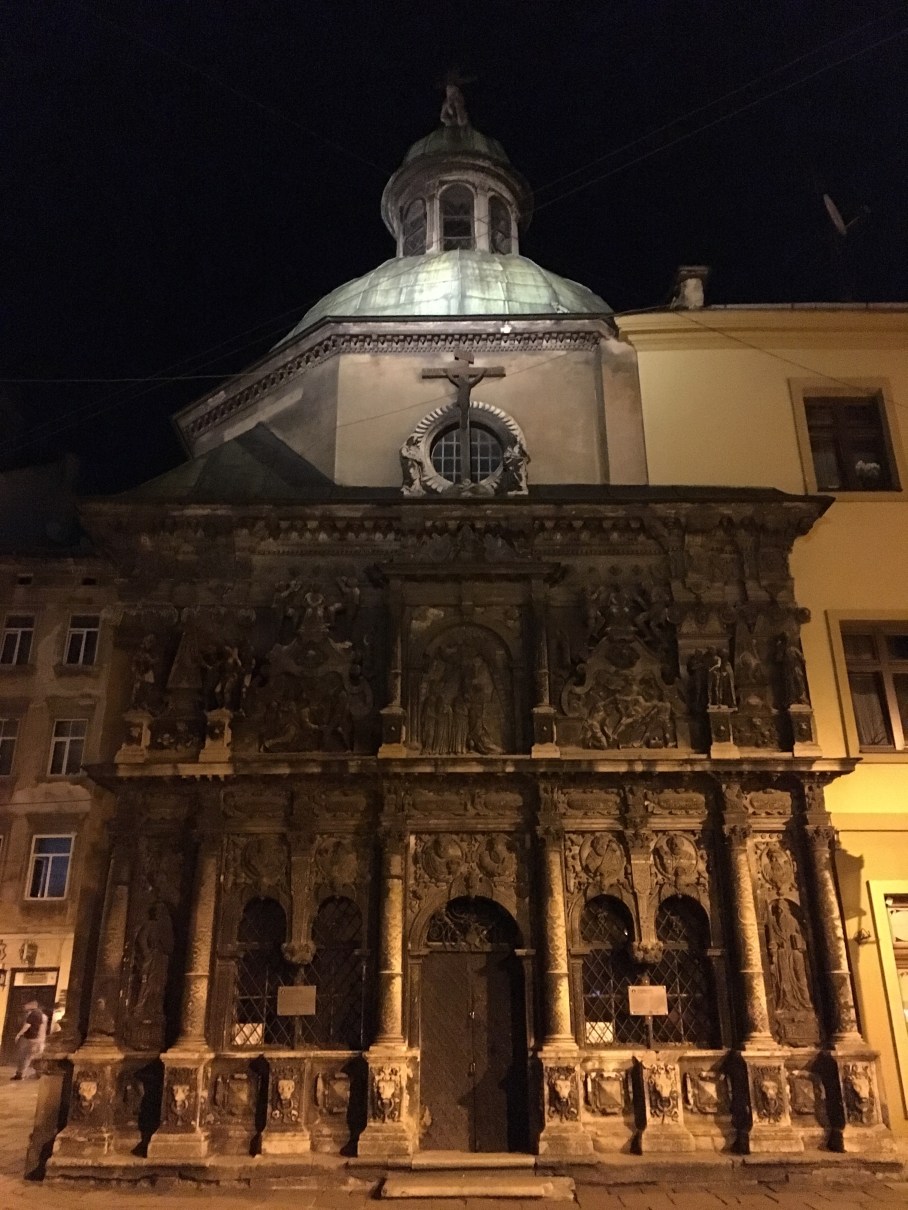
It is really such a beautiful city with a striking diversity of architecture, a testament to the diversity of occupiers. A good portion of the city was built in the Baroque style from what I understand. The streets are black cobblestone- pleasant to walk on, frustrating to drive on.
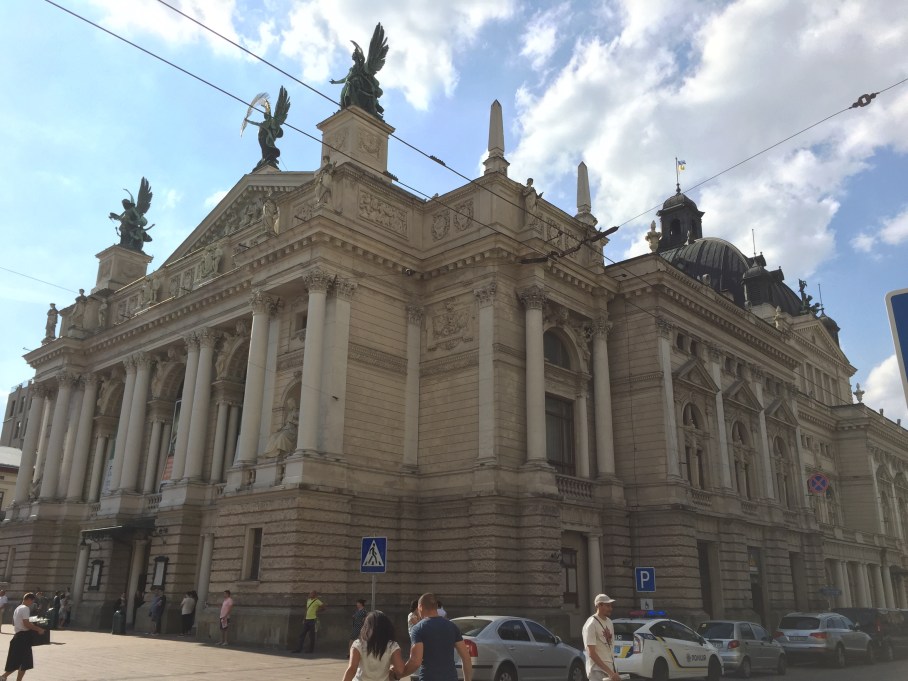
Among other sights we visited was the renowned Opera House.
We traveled back to the hostel, where Chase patiently waited while I showered- I’d not showered since Wednesday morning.
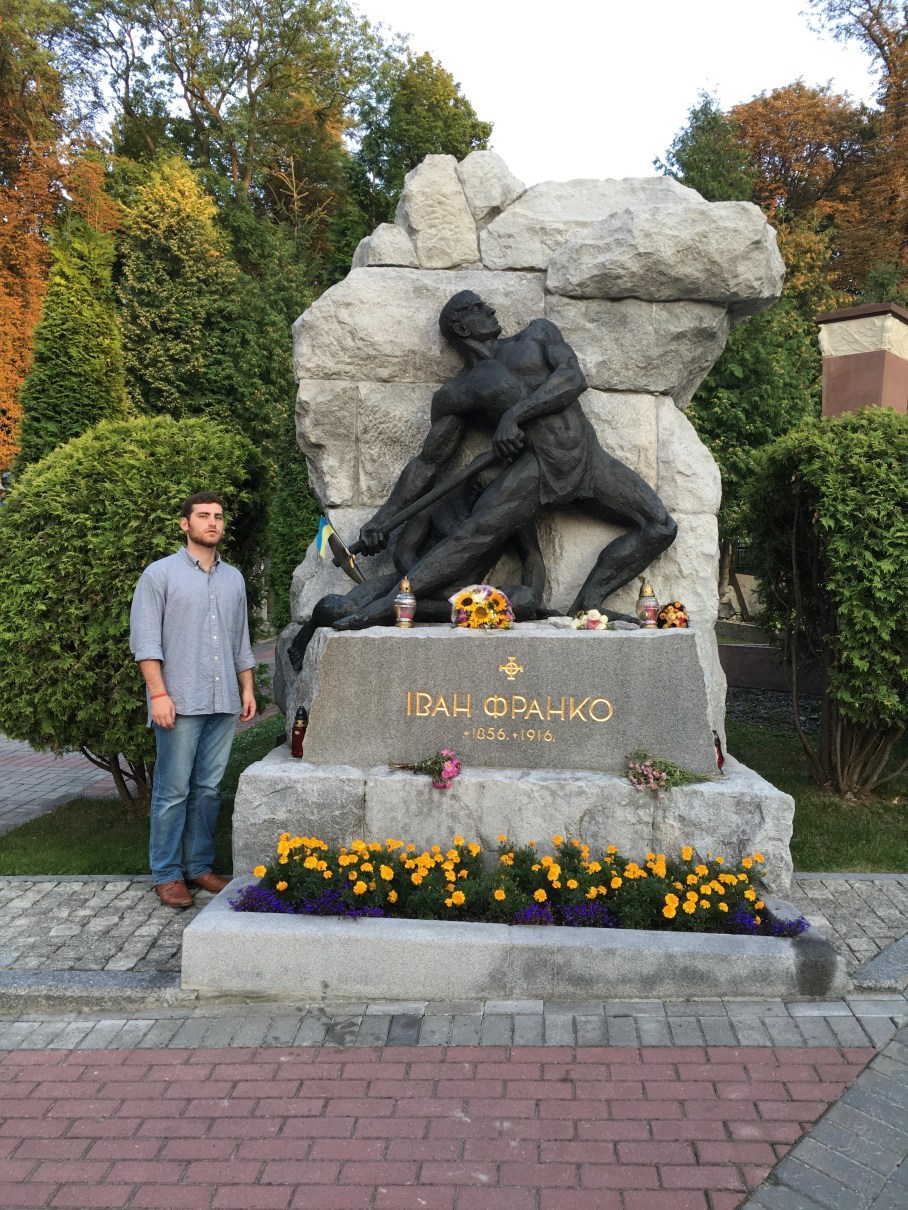
Afterwards, we drove to the Lychavik Cemetery, where 300,000 Lvivians have been buried since the 18th century.
Among the notable interred include Ivano Franko, the famed Ukrainian writer and praised nationalist figure.
The mountain of headstones lied stunning among the fur trees and setting sun.
We parked the car back at the hostel around 8:40, then walked away from city square towards the home of Rabbi Shlomo Bald.
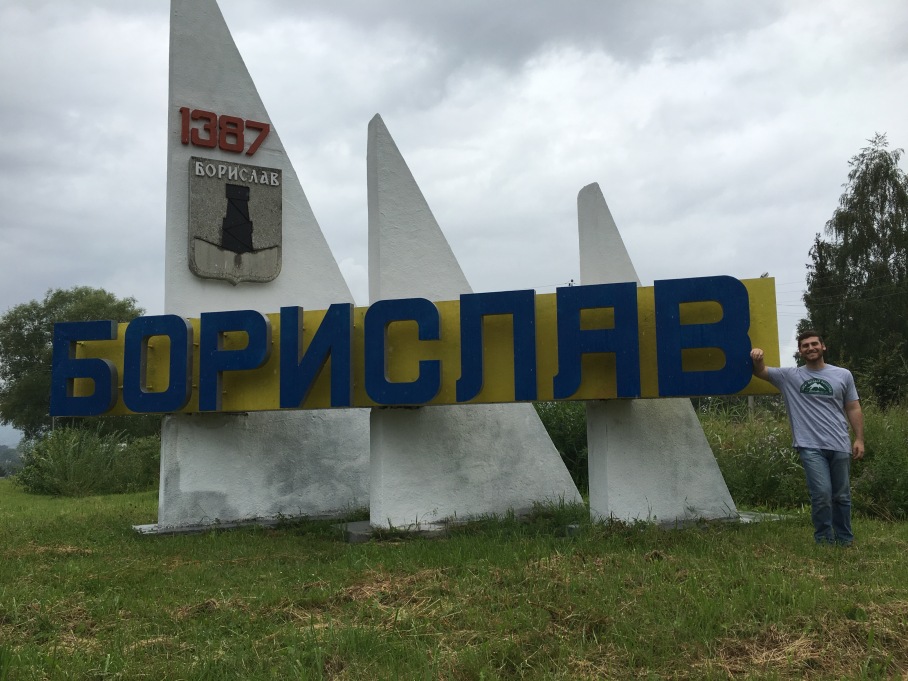
Tanya had provided contact information in Boryslav. There were about twenty people at the dinner table, about half of whom were children of the Rabbi. The Rabbi wore a large circular fur hat, but unfortunately we couldn’t take any pictures because it was Shabbes.
Rabbi Bald belongs to the Karliner branch of Hassidism. He was originally of Burough Park, New York, but moved to Lviv with his wife about 25 years ago to serve as the Chief Rabbi of Lviv. Dinner was in true Yiddish style: Gefilte Fish, Matzoh Ball soup, a variety of salads, Scotch Whisky, chicken, and fruit with cake for desert.
Unfortunately, the rabbi was determined to provide meaningful anecdotes from the lives of Moses and the prophet Noah, rather than provide insight into the lives of the remaining Jews of Lviv. His stories were tangential and frequently incoherent, he talked with limited interruption until past midnight, but it was nevertheless very special to enjoy a Shabbes dinner in the homeland of our ancestors.
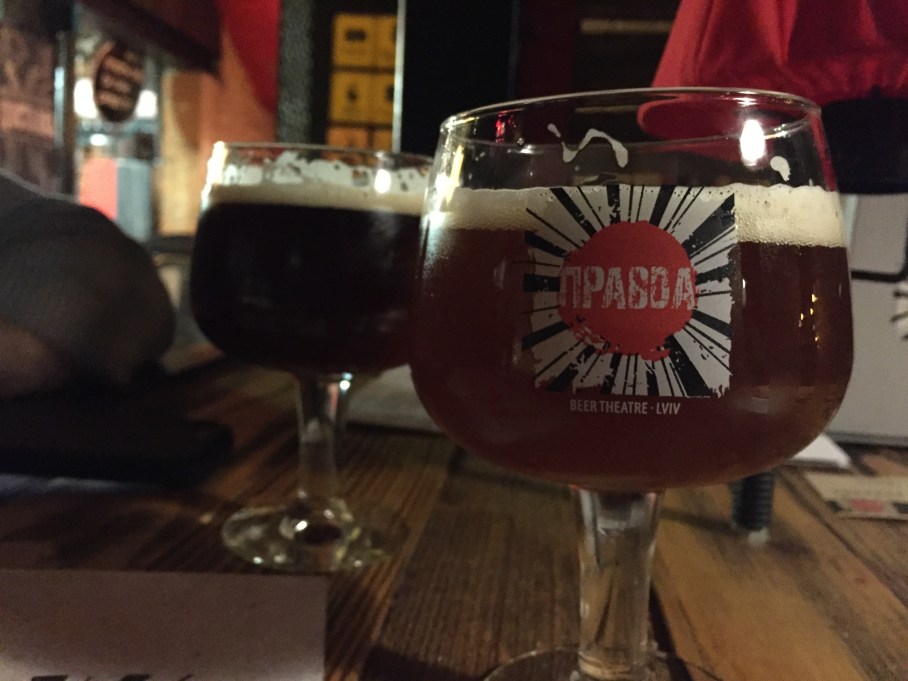
From dinner we walked back to city square, where we struggled to find a Hookah lounge, but ended up enjoying locally brewed beer until about 3 am.
I woke up at 4:00 this morning. I tried desperately to fall back asleep, but was too anxious to record my thoughts from the previous day. Before I knew it, it was 9:30 and Tanya called for me to come down.
We drove first from my hotel in Truskavets back to Boryslav, where we picked up our driver for the day, Tanya’s former father-in-law, Ilye. Ilye is married to the head of the Boryslav Jewish community, but he himself an ethnic Ukrainian. Unlike Tanya, Ilye had traveled during his many years in the region to Turka, our ‘shtetl stop’ for the day.Ilye was waiting for us at the storage units owned by Tanya’s humanitarian organization, dedicated to providing services for minority groups in the region, primarily Jews.
From there we visited her organization headquarters, and ate a nice breakfast before hitting the road to Turka at 11:00.
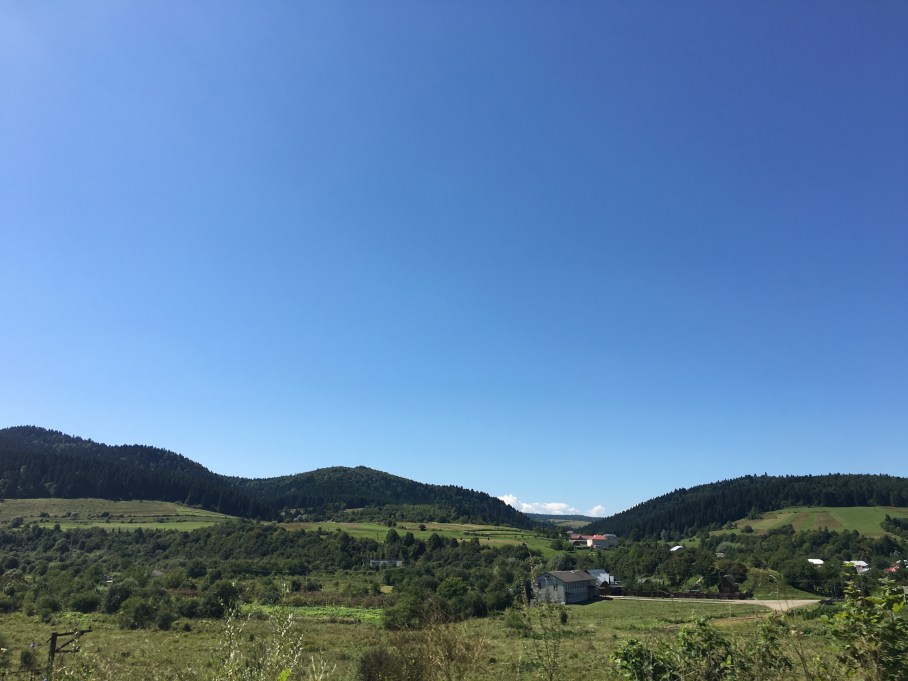
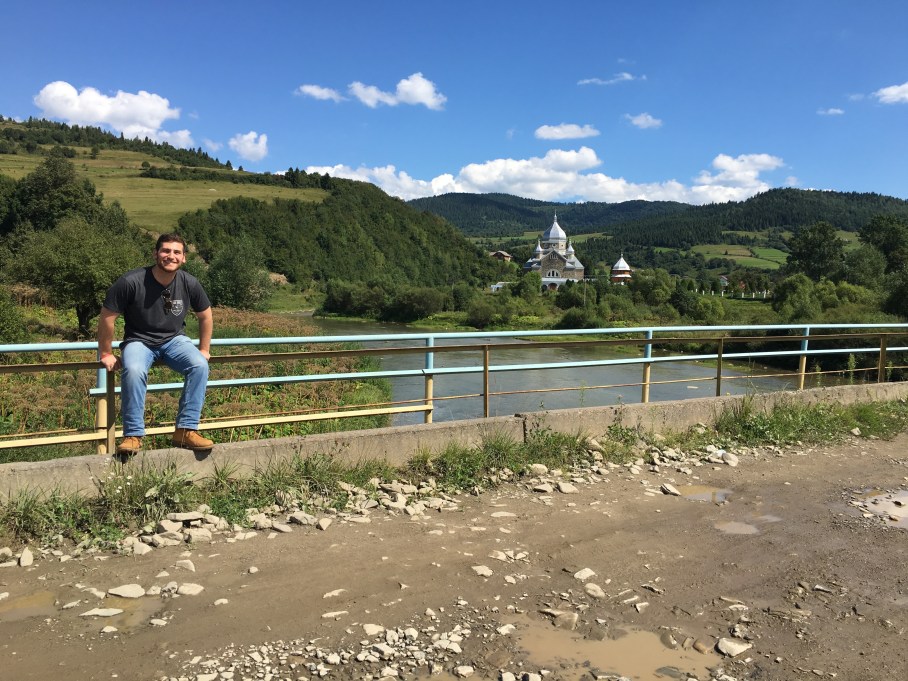
It was a one and a half hour drive on winding roads, miserably paved, through the most beautiful scenery I’d experienced in my young life. It was truly the heartlands of the Carpathians. We could see fur trees for miles in every direction.
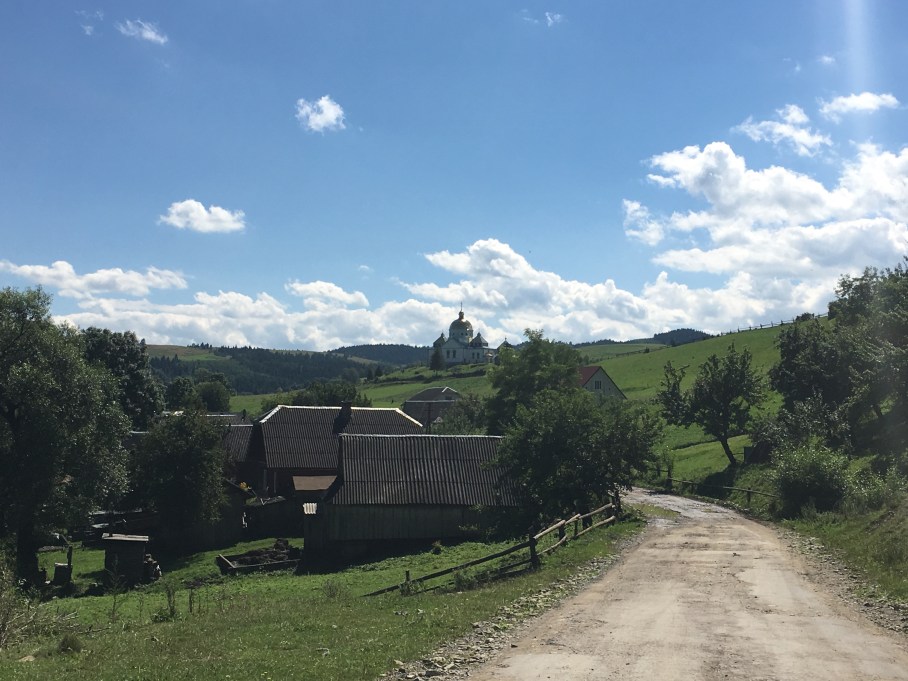
Turka resided deep in a valley, and once we reached there, it was another 13 kilometers of unpaved roads until the village of Ilnyk. We were joined on the road by cows, donkeys, men driving carts and short old women carrying crops to town. After asking multiple friendly locals for assistance, we finally reached the village. Max Eidex (my great-great-grandfather from Boryslav) was the son of Chaia Rachel Frommer, who was born in the village of Ilnyk in 1835.
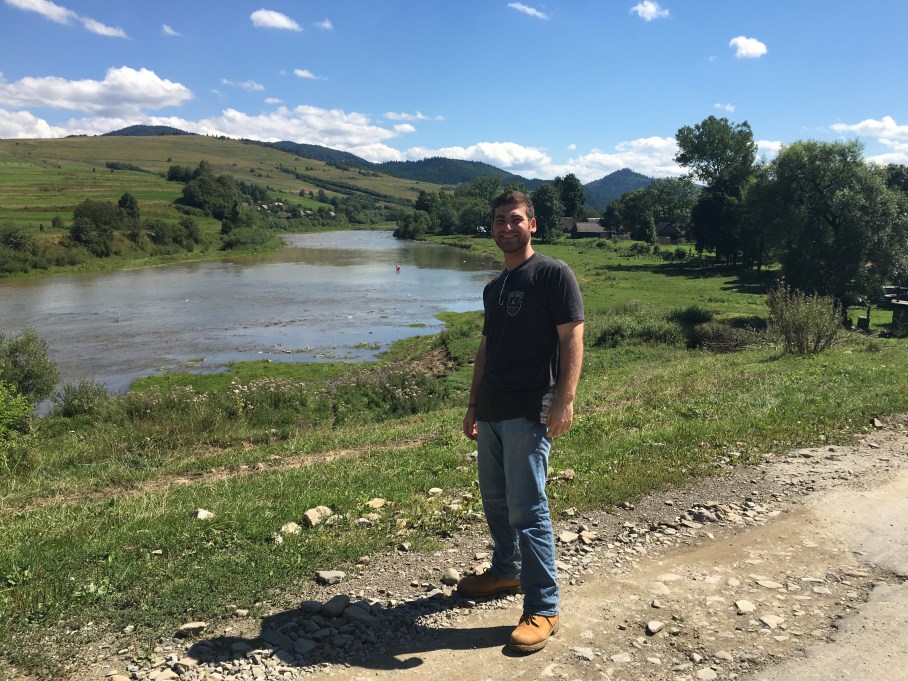
The village surrounded the beautiful river Rika.
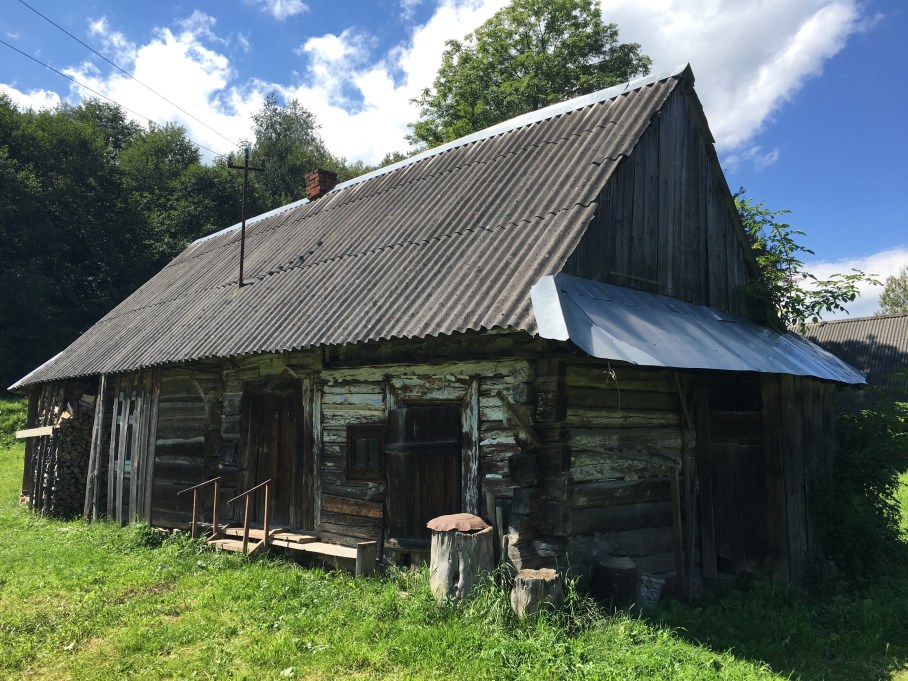
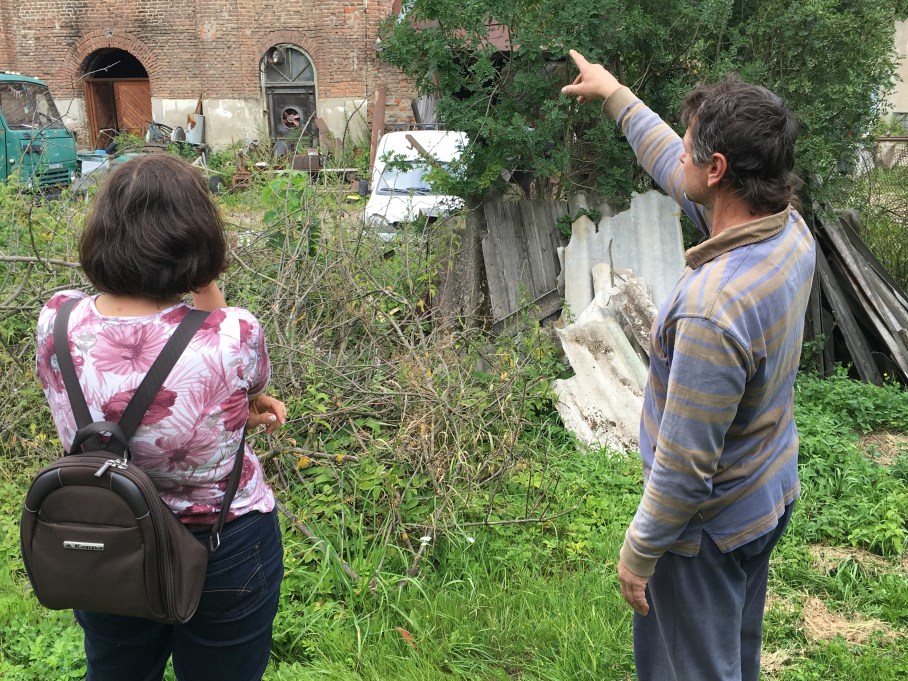
After driving down the central (and only) road for a couple of minutes, Tanya pointed out what looked to be a 19th century home.
She encouraged me to investigate, and I was exceedingly embarrassed when she knocked. I had originally thought it was a barn.
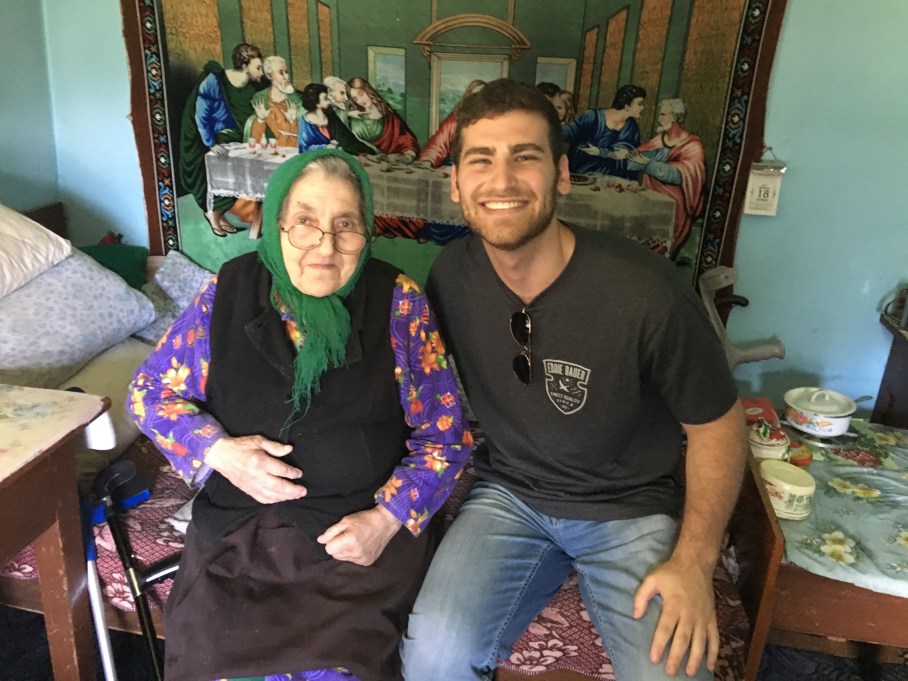
To my amazement, the door was answered by a short stalky woman. She invited us into her modest home. The woman, we later found out, was 87 years old. She could speak but was deaf for all intensive purposes. Tanya communicated with her in writing.
It was an out-of-body experience. She had remembered Jews living in the village before the War. They resided at the beginning of the street she said. We learned that she had been rammed by a calf at a young age, and was disabled for most of her life.She said that I had a beautiful smile, and encouraged me to marry one of the young women fro Ilnyk. I told her that I would consider it.
She directed us to the home of the village historian just a few houses down.
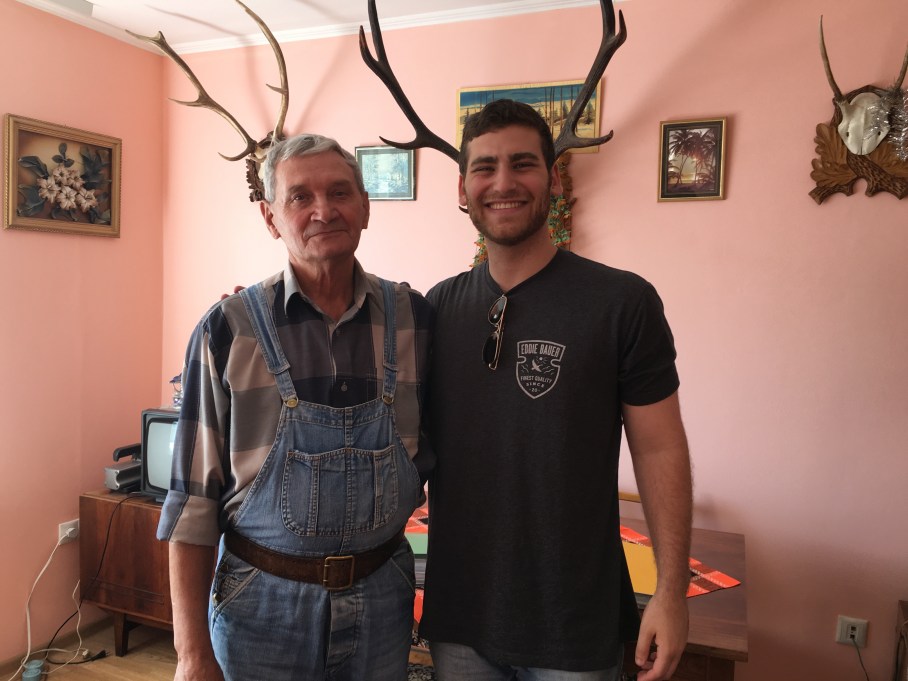
Nikolai Ivanovich Ilnytsky was born in Ilnyk in 1938. He had served as the director of Ilnyk secondary school and was the de facto town historian. Tanya inquired about the village’s Jewish community, and he had many stories to share with us.
(1) One cold winter night, during the War, a Jewish man with the surname Sandler knocked at the door. Nikolai’s grandparents provided the man with a coat and a loaf of bread, and allowed him to briefly lay by the furnace before sending him on his way. They were afraid that they would be turned in by the Nazi-collaborator next door and ultimately killed for harboring Jews.
(2) A family in the nearby village of Frohlich was killed for harboring Jews.
(3) Moshko, a friend of Nikolai’s father, owned a pub in town. Moshko would lend money to locals, and if they were too poor to pay, he would accept land in return.
Nikolai’s father fought in the Red Army and his uncle fought in the Polish army. His uncle was captured and eventually murdered in Dachau Concentration Camp. Nikolai served in the Soviet army. Nikolai corroborated the old woman’s memory that Jews lived at the front of the village. I left Nikolai’s home feeling as though I just stepped out of a story-book, completely astonished by the repeated warmth of Ukrainians.
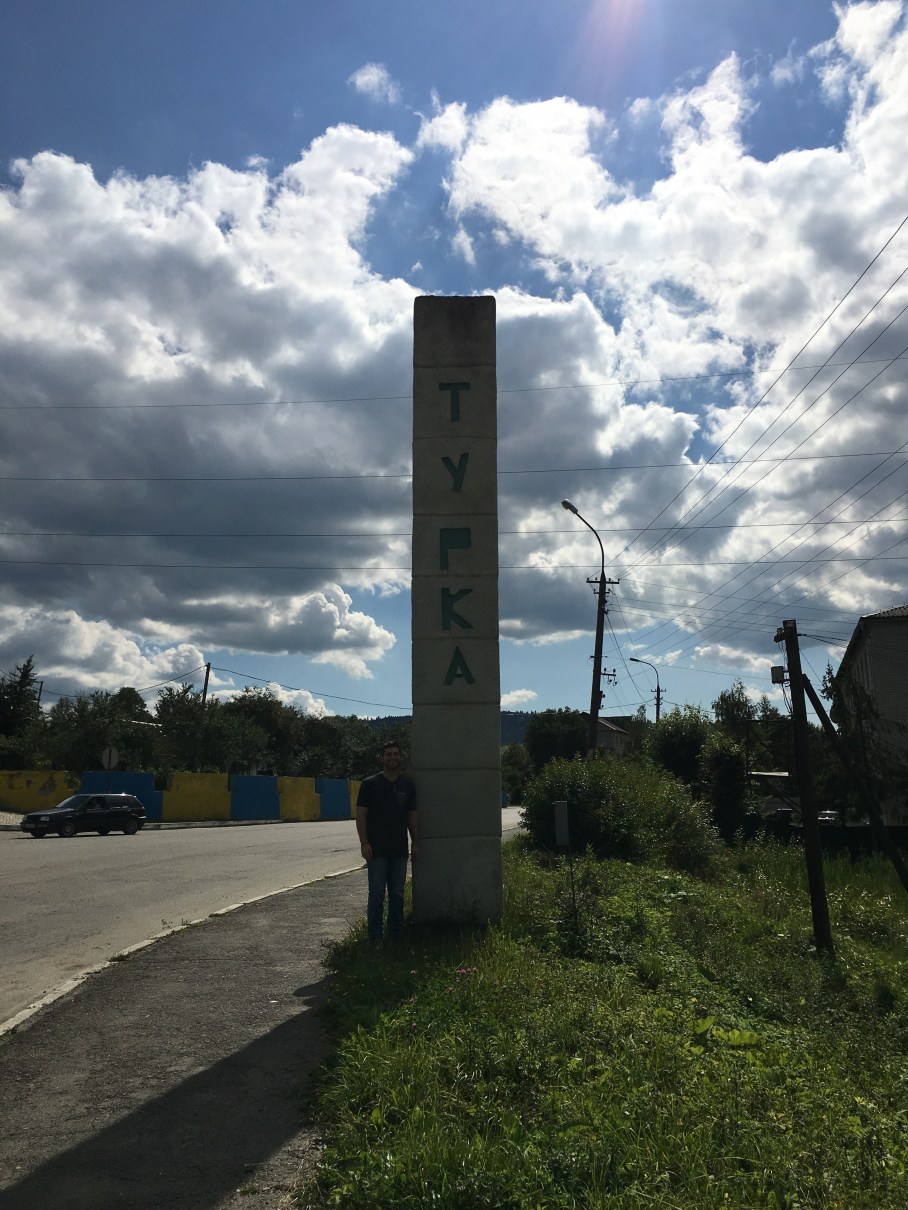
As we drove back through Ilnyk we stopped to take pictures at the village entrance where Jews resided.
We took the unpaved road back to Turka, passing impressive homes along the way, likely funded by expat family in Western Europe. Just a little western money goes a long way Ukraine.
In Turka, locals were again very willing to assist us.
One promptly pointed out the synagogue, where Jews from the surrounding villages (including my ancestors) would come to celebrate the high holidays. It was a magnificent, but dilapidated, 19th century structure.
A man residing nearby reached out to tell us about the structure and the former Jewish community. He pointed out a Jewish star, but it was oddly shaped. Tanya suggested that its shape may have some Kabballistic significance.
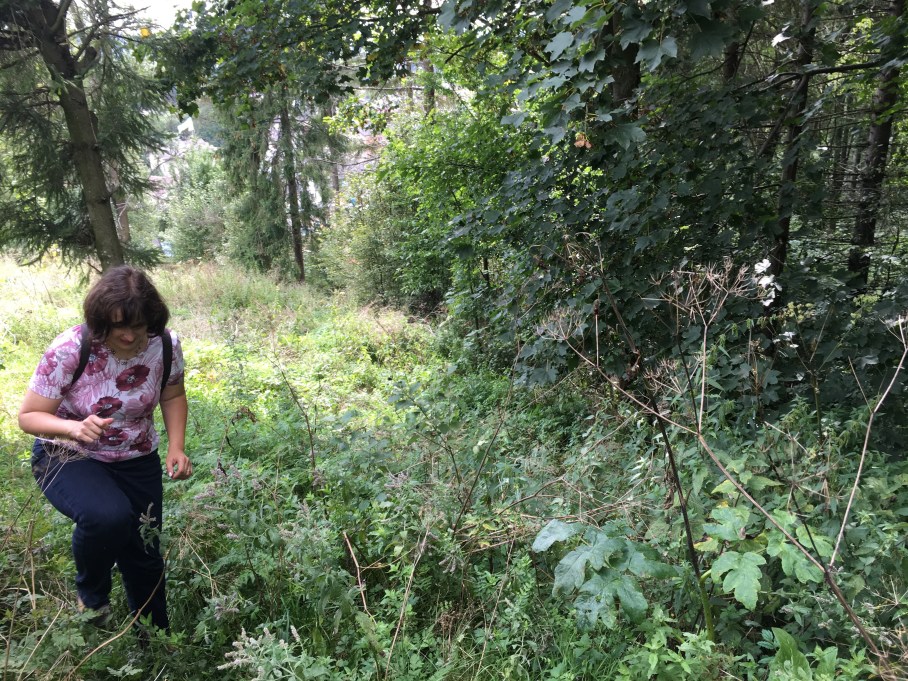
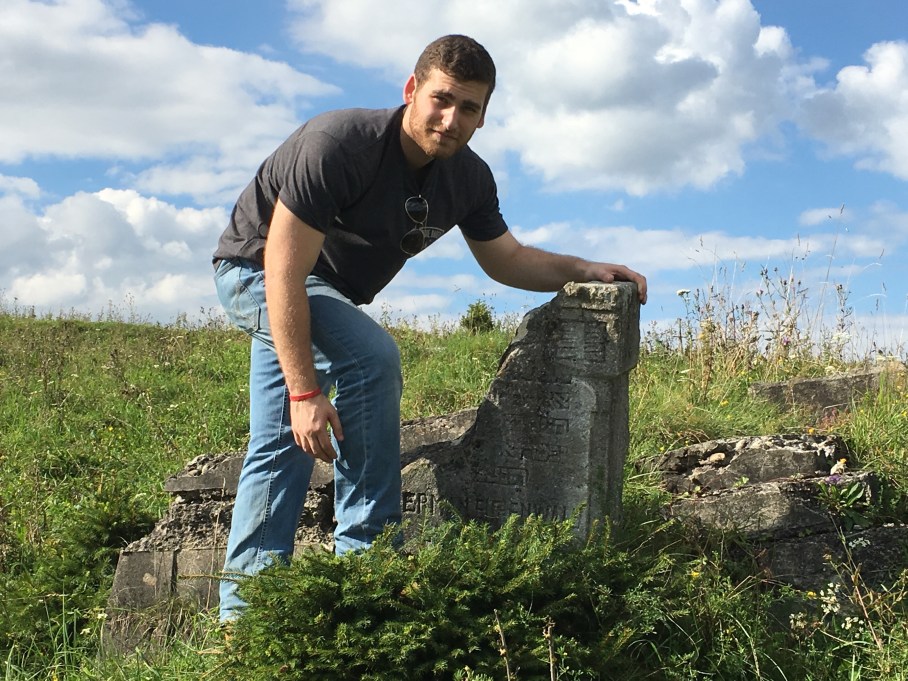
From there we were directed to the Jewish cemetery. To reach the cemetery we had to pass through the market, and from there a treacherous journey up a hill of overgrowth and insects. I was wearing Timberland boots and Tanya was in flats. She was nevertheless determined to make the journey. She surely wins the award for best tour guide.
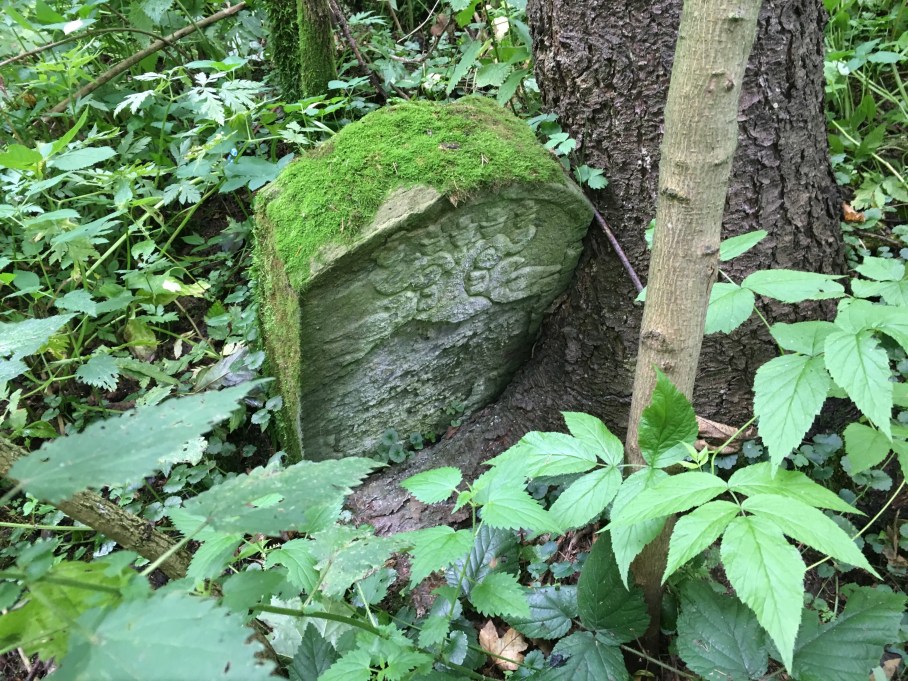
After a complicated and itchy climb, we finally saw the first headstone.
It was an unbelievably emotional experience. Somewhere in this cemetery lied my great-great-great-great-grandparents, Mechel and Sosche Fromer.
We finally reached the top of the hill and were upset to find a road that we could’ve taken, but truthfully I think our path was probably more fulfilling.
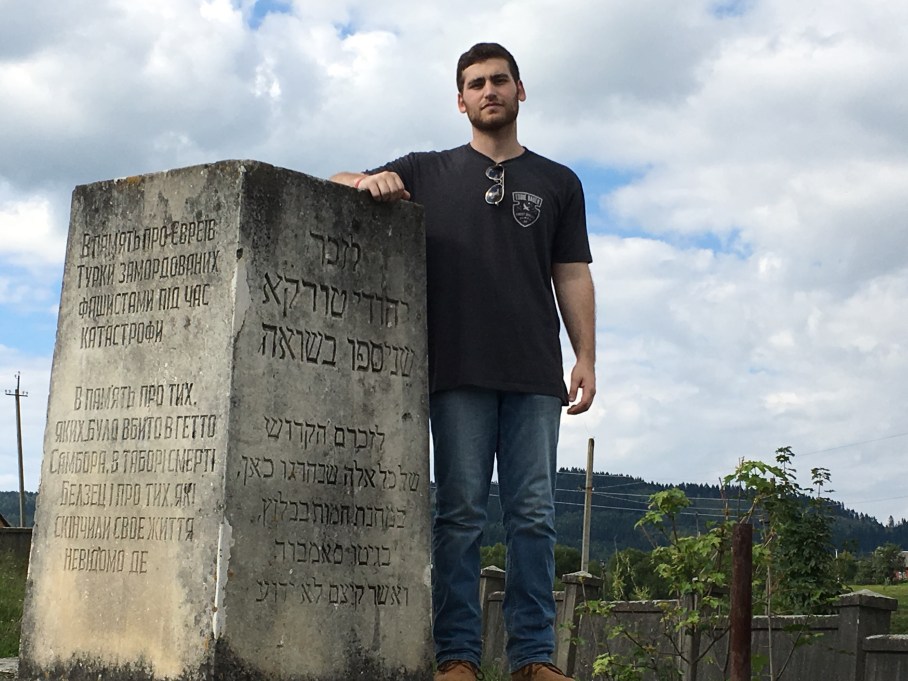
At the top stood a memorial to Turka’s massacred Jewish community, albeit in complete disrepair.
In stark contrast stood the most breathtaking views of Turka, the surrounding villages, and the Carpathians.
Most of the headstones were unreadable, washed away by time and the elements, but a few were legible.
Again, I said the Mourners Kaddish.
Tanya remarked that many of the graves looked to be from the early 19th century, and I found a stone dated as recently as 1935.
After a short while we traveled down the road, back to our car in the city center.
I talked to Dad for a bit on the ride back, and also managed to sleep between potholes.
Tanya and Ilye dropped me off at my car in Truskavets, and then directed me towards the best path to Lviv. Tanya gave me her phone number and insisted I call if I ever need assistance. She has been so beyond helpful and insightful. I am so extremely thankful and fortunate to have found her.
The road back to viv was significantly better than the one I originally took.
I arrived at the airport at 8:40 and blogged until Chase arrived an hour later.
Chase Nelson is in my fraternity at Northeastern University. We got close last fall when we had an anthropology introductory course together.
I helped Chase perform some preliminary research into his ancestry of the course of the year, and after discovering that he too had roots in this region, the idea for the trip came about.
He arrived at 9:40 from Israel, where he had just enjoyed ten days on the Birthright program. He was clearly exhausted and had a mild cold, but was nevertheless very excited to begin our journey.
We headed straight for the hostel, where we checked into a room.
We then walked to the city center where we ate vareniki per my suggestion, after really enjoying them the night before in Boryslav.
After sufficiently catching up we made our way back to our room where we found 3 young men from Tajikistan. They were very excited to be sharing the room with Americans, in particular one from Los Angeles.
I woke up Wednesday morning at 6:30 and was in a taxi to the airport by 7:00.
I arrived at 7:15 to pick up my 7:30 rental as arranged, but AVIS didn’t open until 8:30. I got breakfast.
Initially, the AVIS representative told me that they couldn’t provide an automatic vehicle as I’d arranged months in advance. After thirty minutes he was able to provide a car.
I was on the road to my hotel by 9:30. I’d been warned of corrupt cops who intentionally pull folks over to take bribes, I drove as carefully as I could.
The drive took longer than expected. The roads were a mess so I had to drive very slowly. I was so afraid that I’d get a flat.
I arrived in Truskavets just after 11:00, where I met my tour guide Tanya Firman. I found her contact information online. Tanya is one of the last Jews in the region, who were mostly transplanted from Eastern Ukraine and Russia after the war. Regarding Truskavets, she said it was known since the 19th century for Nafusia- a natural mineral water known for curing kidney stones.
After checking in to “Hotel Nabi” in Truskavets, Tanya drove me a few kilometers to Boryslav, Ukraine- hometown of my great-great-grandfather, Max Eidex.
Jews in the region spoke five languages- Yiddish in the home, Hebrew in Shul, but also German, Ukrainian, and Polish, reflective of the regions’ various occupiers.
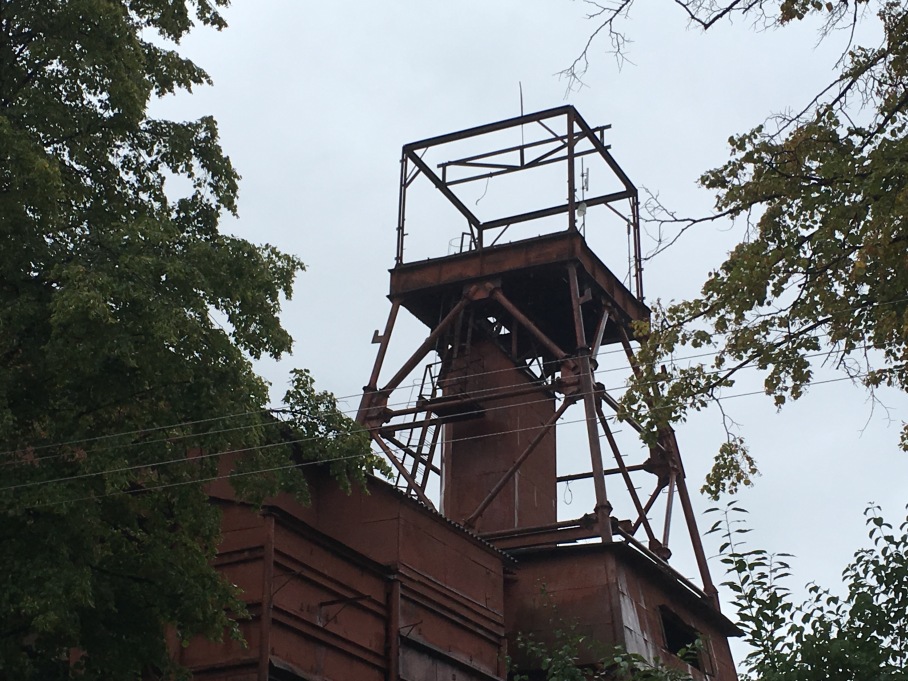
Boyslav was known since the 19th century to have an abundance of Ozokerite and petroleum. At one point, Boryslav mines provided 5% of all global petroleum. Ozokerite from Boryslav was used on the Transatlantic Railroad.
Upon entering Boryslav we first traveled to the neighborhood of Wolanka, which was incorporated into Boryslav in 1935 along with with three adjacent cities: Gubiche, Tustanowice, and Mrazhnica. Max Eidex was from Wolanka.
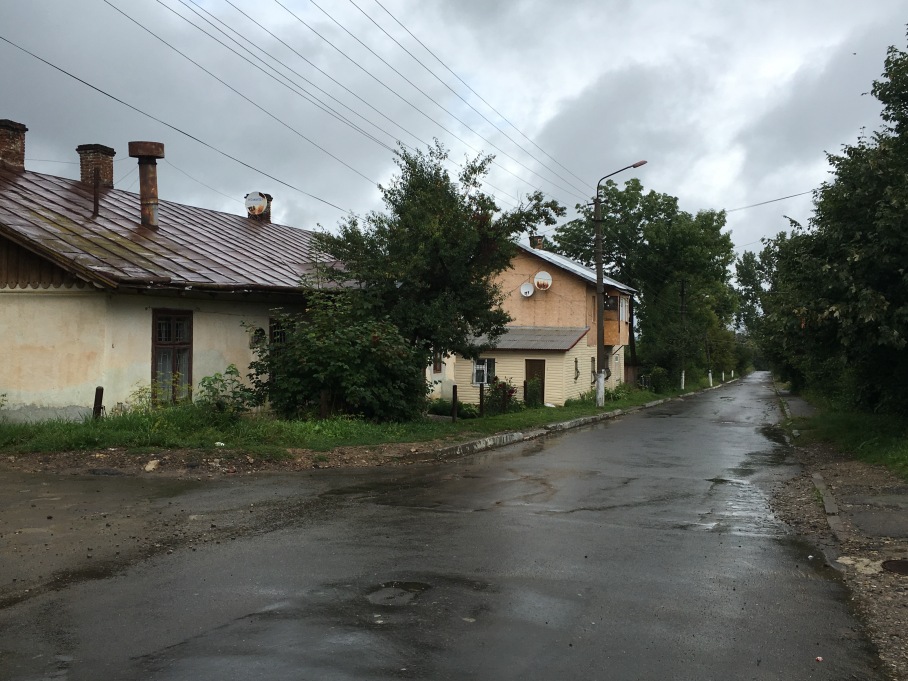
Wolanka was comprised of just one street: Volomyr-Velyiky. Tanya informed me that it was the poorest of all Boryslav neighborhoods.
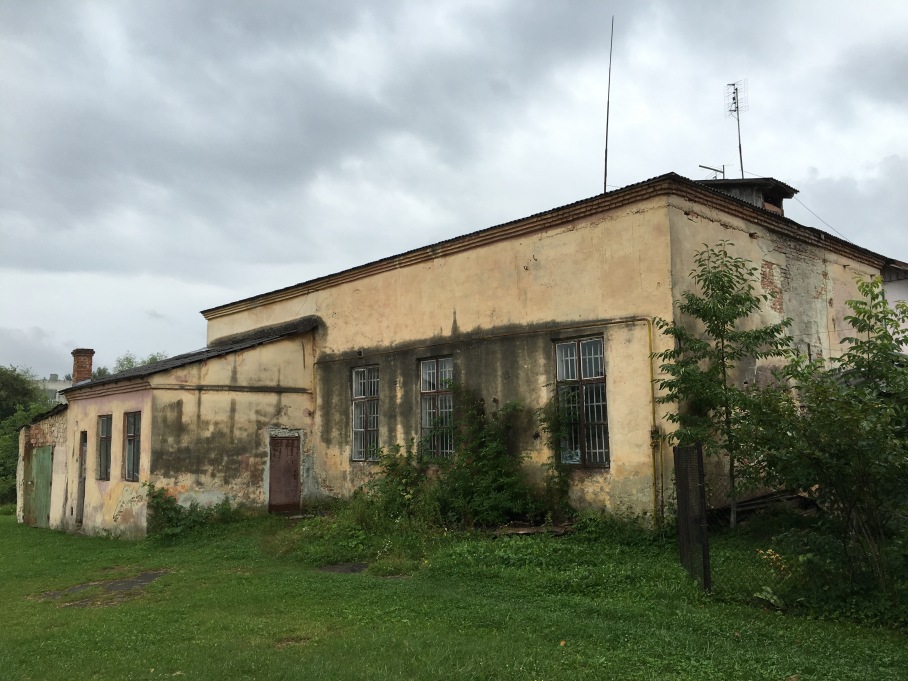
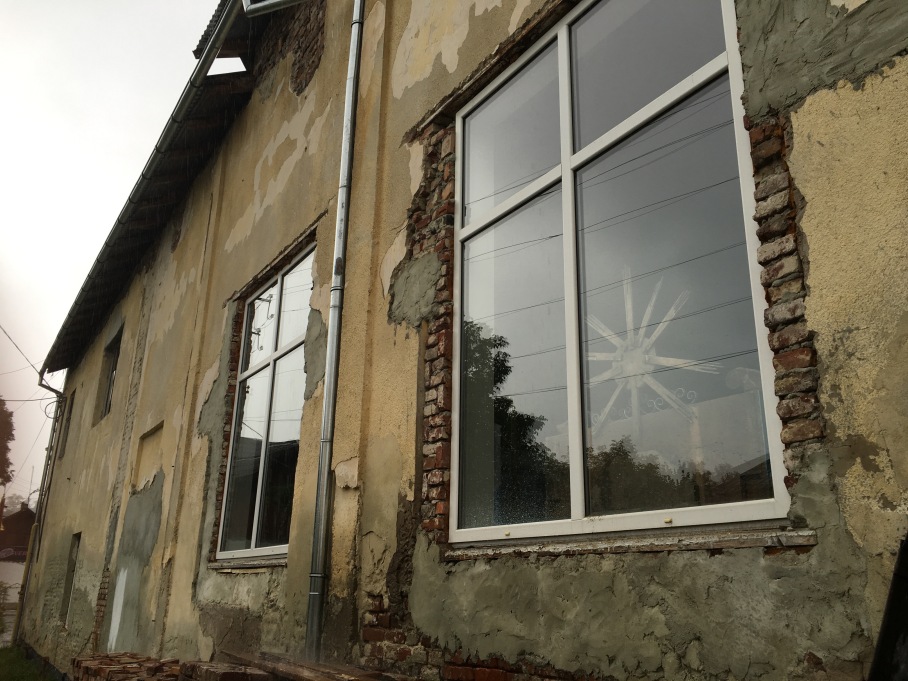
Only a few months before my arrival, a visitor and former resident pointed out the Wolanka synagogue to Tanya. It had been converted into a gym.
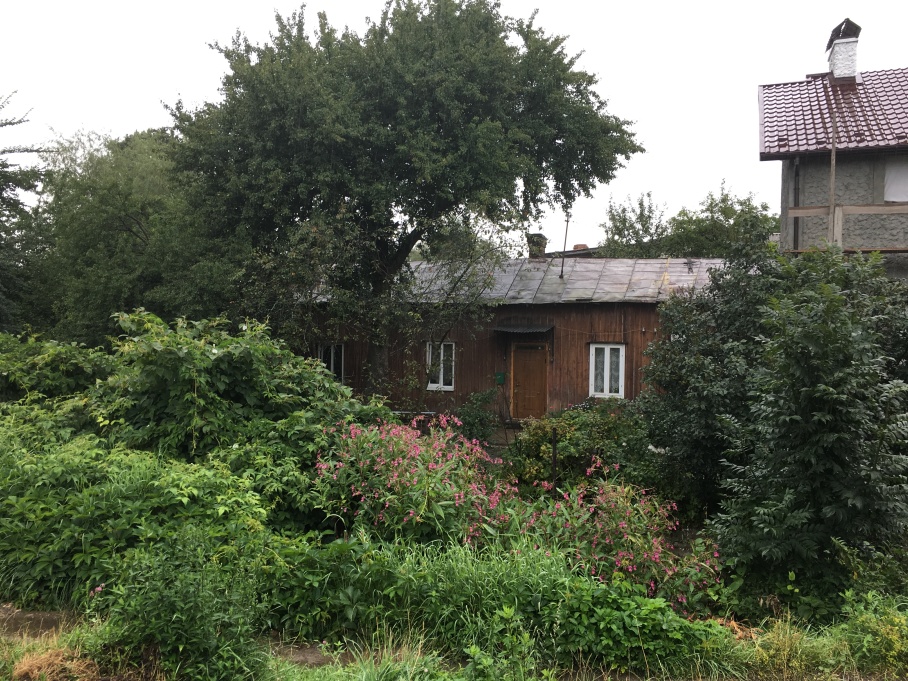
Most homes in Wolanka were made of wood and plaster.
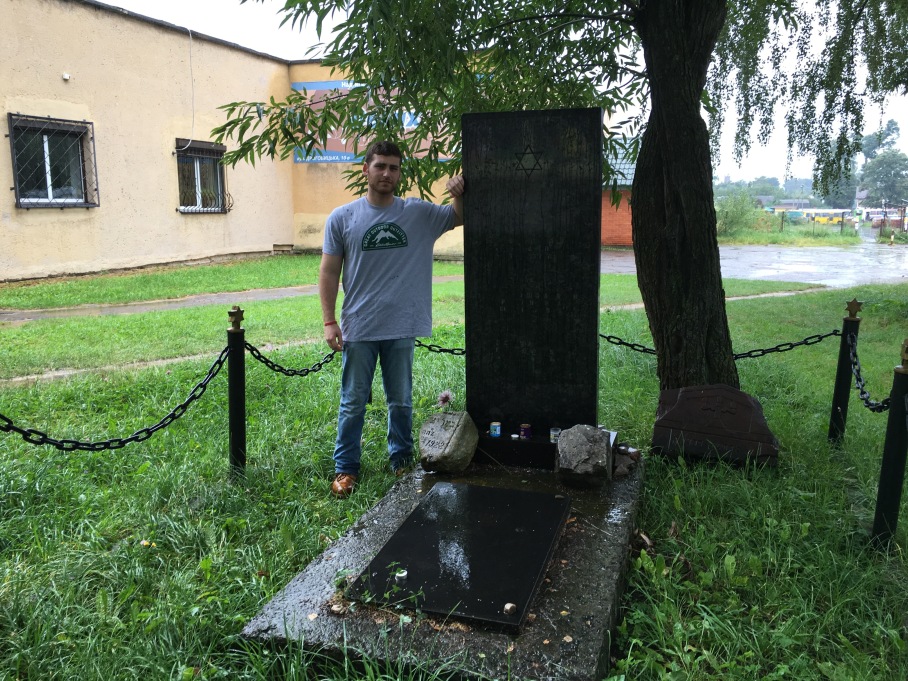
We left Wolanka for the Jewish cemetery in Gubiche. It had been destroyed by the Soviets in 1959, but a memorial stood there. I said Kaddish for my ancestors buried there, Aaron Eidex and his wife, Chaia Rachel Frommer.
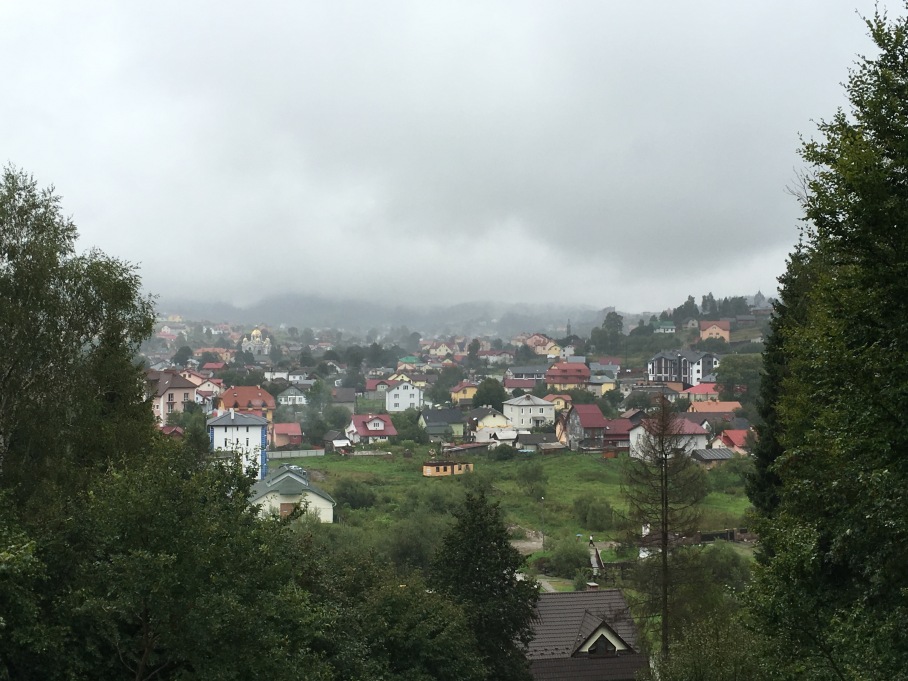
From Gubiche we traveled to the nearby Carpathian town of Skhodnitsa. It was a picturesque resort town, built up by Russian and Western investors in the past few decades.
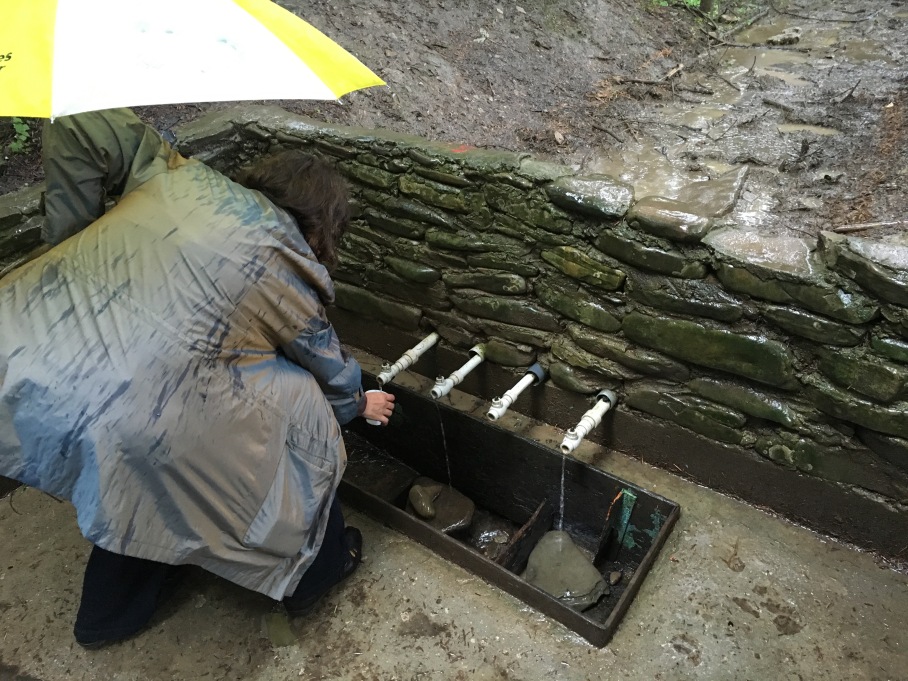
Like Truskavets, it is also a popular spa destination for those with kidney ailments, who are advised to drink from the springs three times a day for a couple of weeks. Yuri Andropov was apparently a visitor. The water smelled and tasted like rotten eggs, testament to the sulfur.
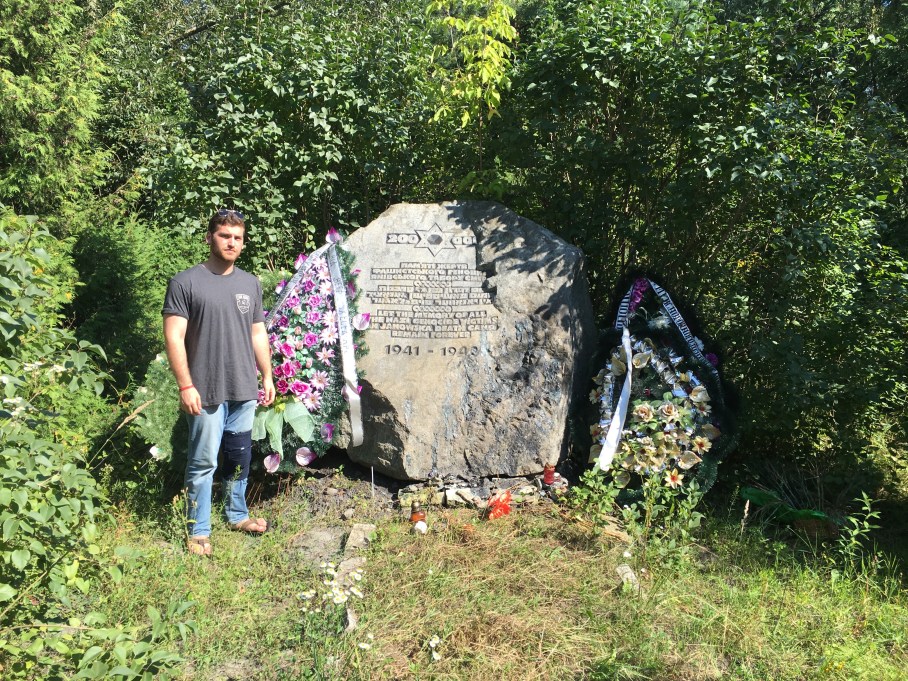
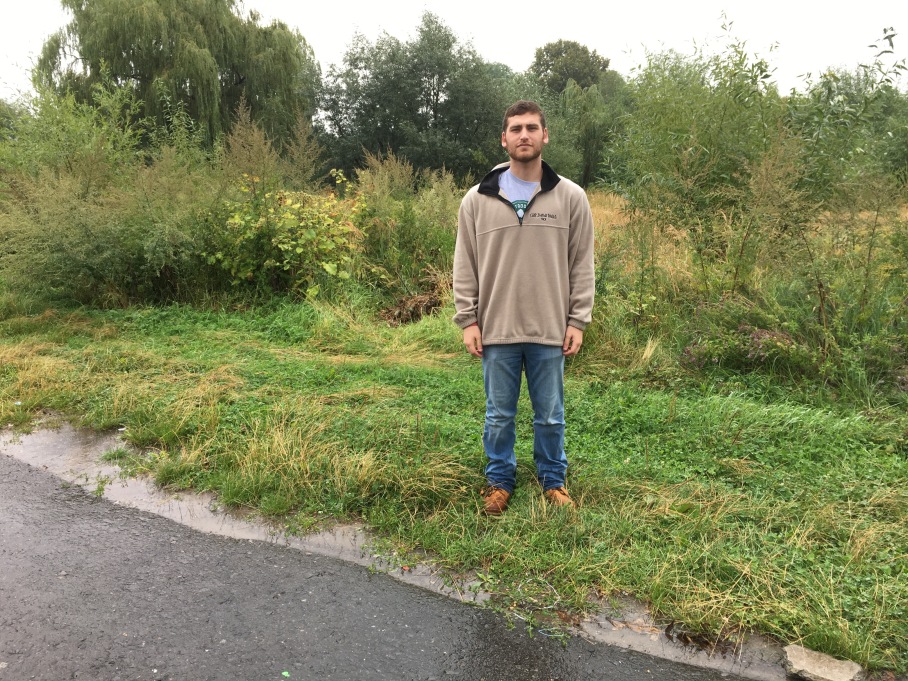
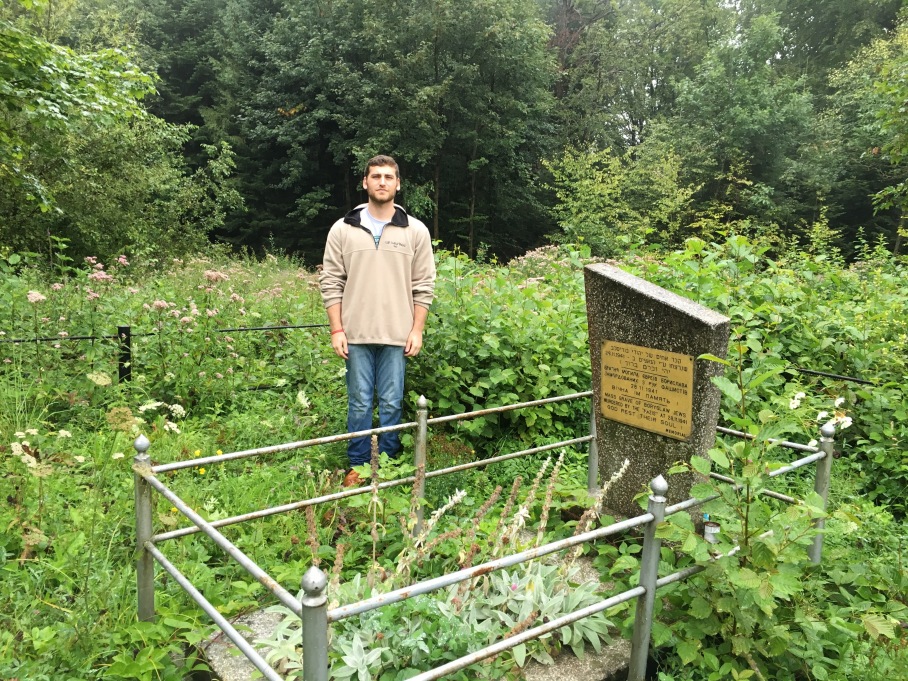
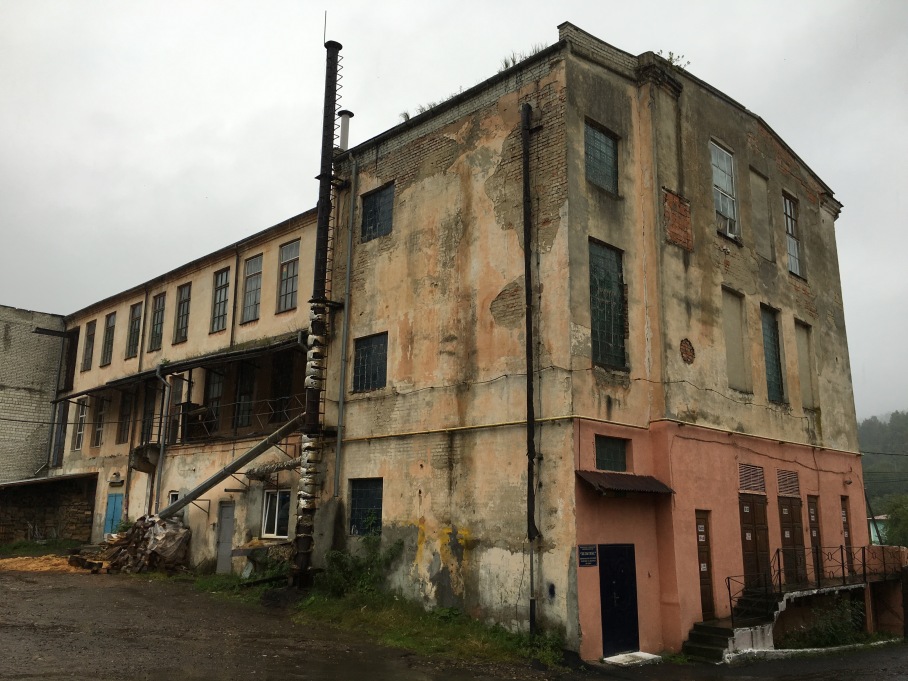
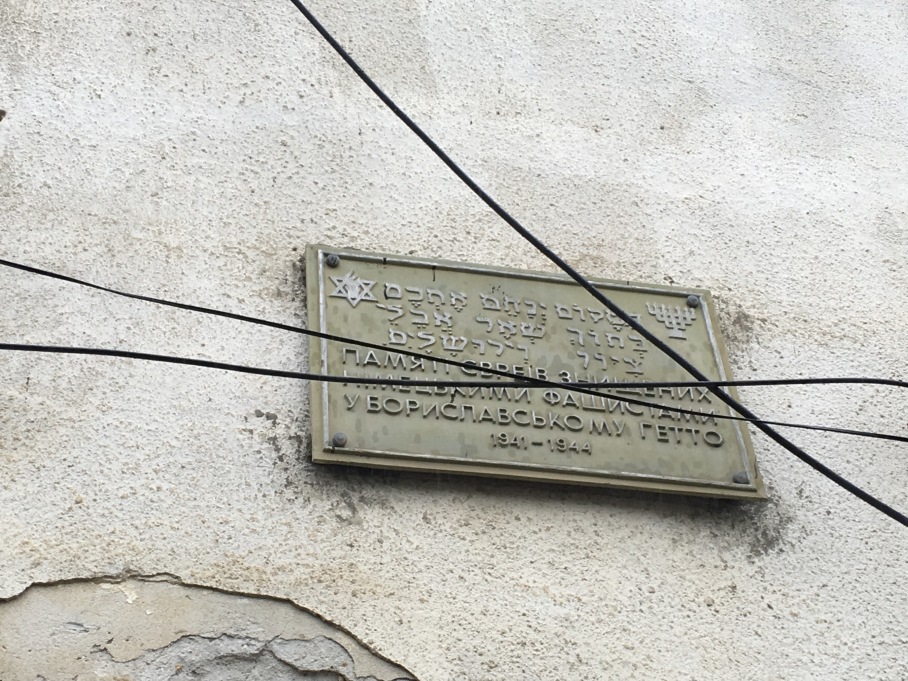
On the way back from Skhodnitsa we stopped at the mass grave of Jews murdered by Nazis and local collaborators in November 1941. 2000 Jews were massacred there. Like most of Boryslav, it was simultaneously haunting and beautiful.
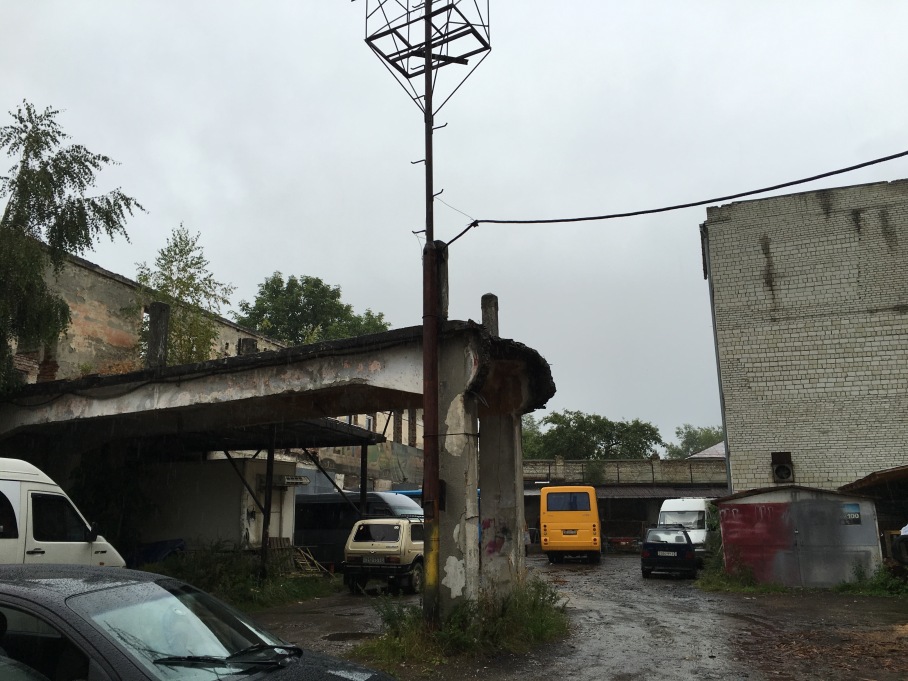
We drove through Mrazhnica on the way back to Boryslav proper. We visited the Boryslav Labor Camp in the Carpatin Oil building. The camp was managed by Bertolt Beitz, who Tanya compared to Schindler.
Some Jews were transported to the camp daily, others lived there in cramped barracks.
Tanya pointed out the bridge where locals would throw bread to the doomed.
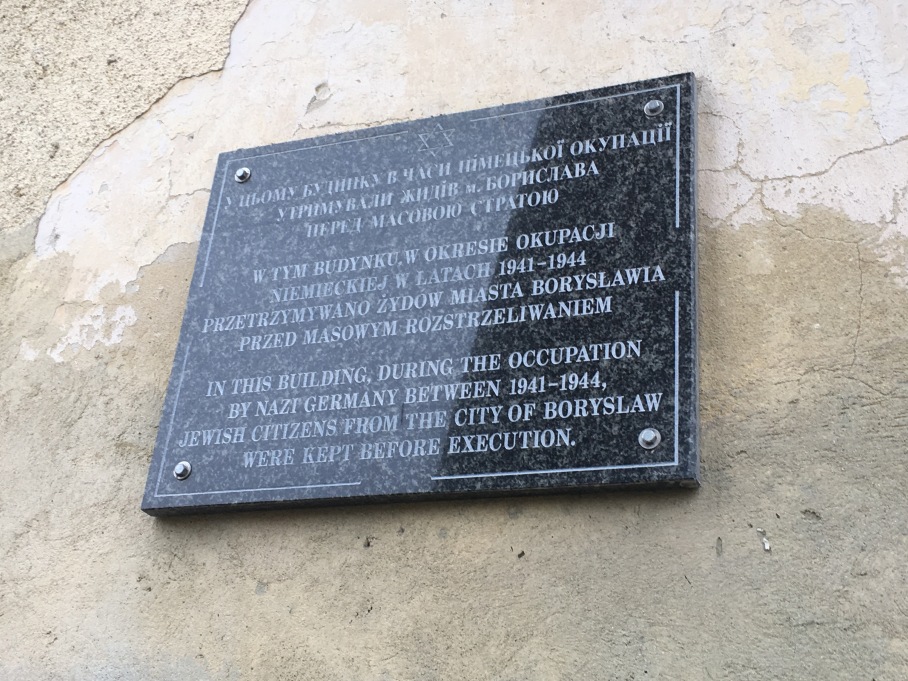
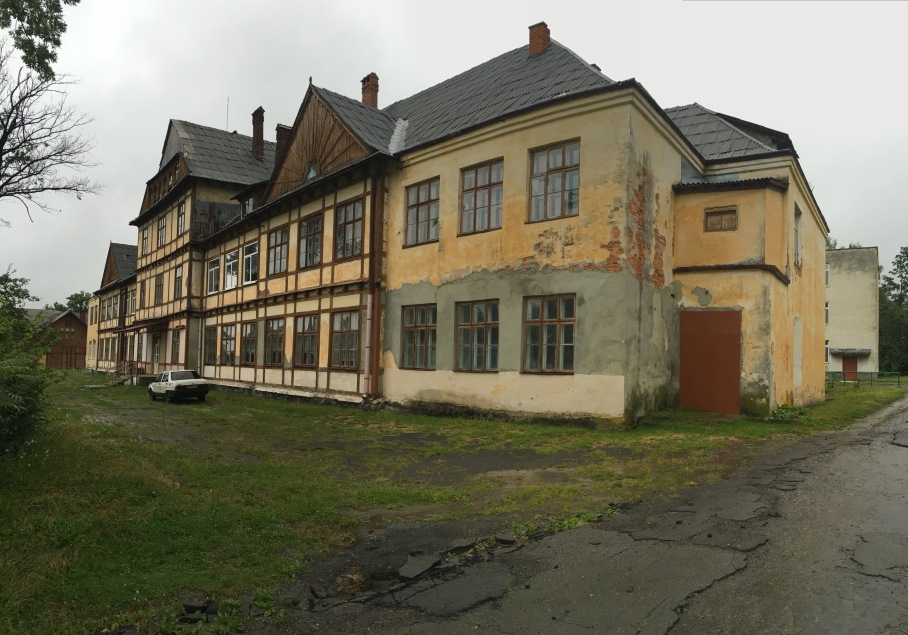
We stopped at the Colosseum Cinema, where the Jews were held for three weeks prior to their transport to the mass grave in the Skhodnitsa forests.
Of the 40,000 inhabitants before the war, 67% were Jewish. 200 Jews survived the Holocaust.
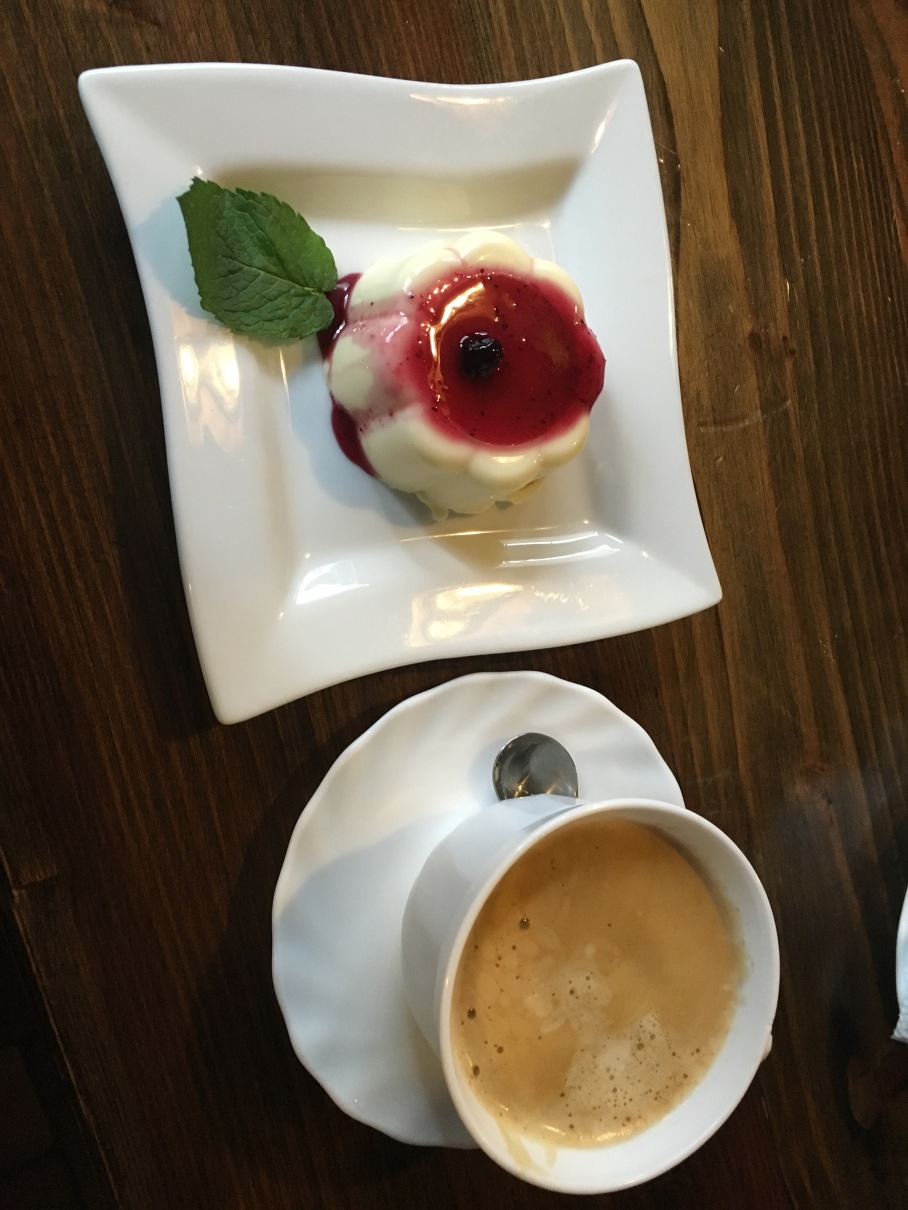
Afterwards, we had coffee and cake at the Baraba Bridge Cafe in town square. It was a quaint little place along the river that divides Boryslav, filled with old pictures.
We briefly stopped by the Gymnasium, which has been in use since the early 20th century. Jews, Poles, and Ukrainians alike studied there.
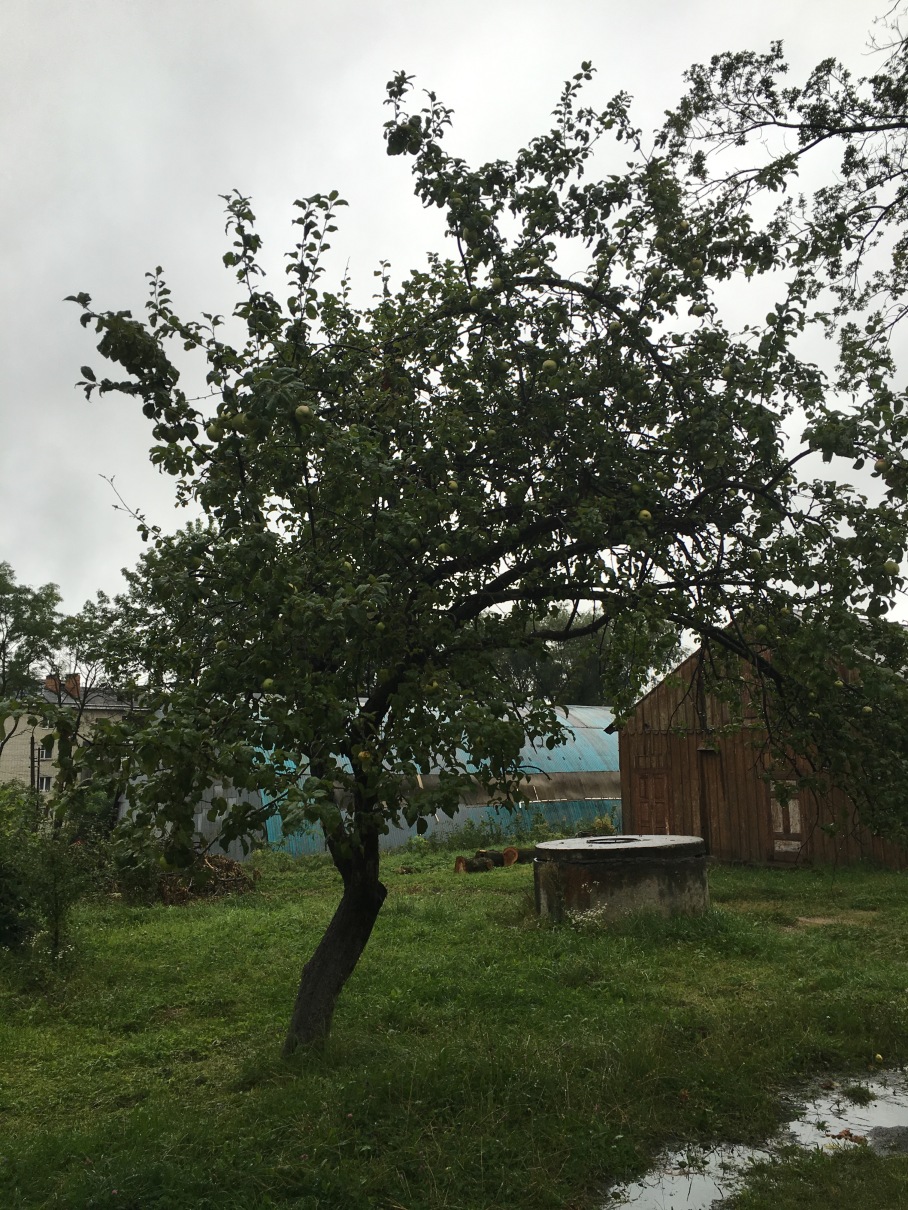
I picked an apple from a nearby tree. Apple trees are abundant in Boryslav.
We passed through Wolanka one more time on our way back to Truskavets. I learned that water only runs four hours a day, 6:00-8:00 am and 6:00-8:00 pm. We looked for the house number found on an old family document, 266, but could only pinpoint 265 and 267.
On the road to Truskavets, Tanya pointed out a gigantic rig as well as the Jewish Ghetto.
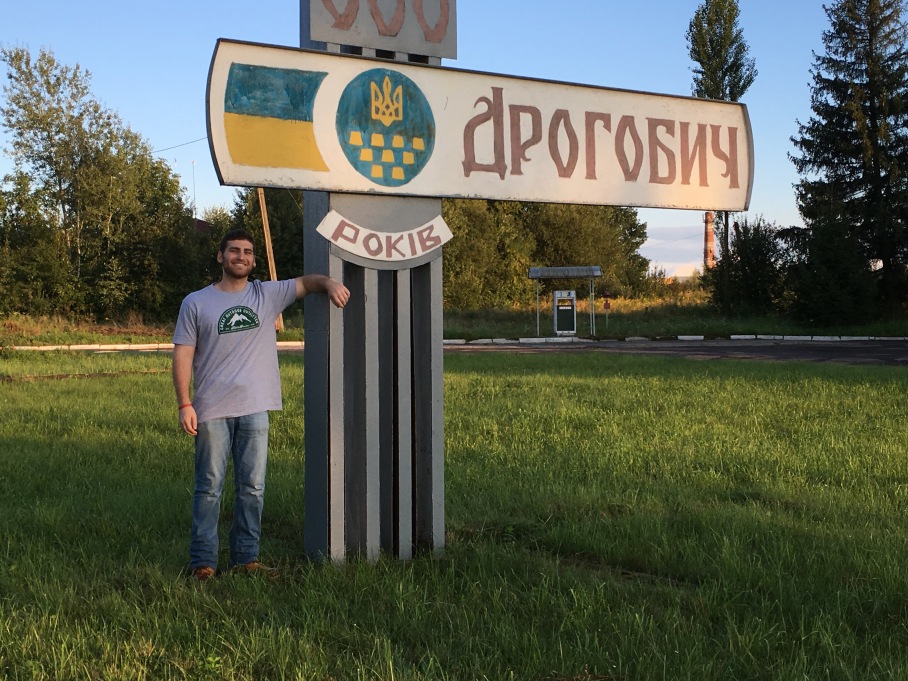
In Truskavets we quickly moved my car to a secure parking lot so as to avoid a parking ticket. From there she drove me to Drohobycz (around 6:00). Tanya refers to Drohobycz, Boryslav, and Truskavets as the ‘Bermuda Triangle’, a reference to their proximity and vanished Jewish communities.
Drohobycz was significantly wealthier than Boryslav. It had been founded in the 900s, well before Lviv, when salt was found there. The homes there were large and beautiful, but clearly in need in renovation, a testament to the prosperity of the town that vanished along with the Jewish community.
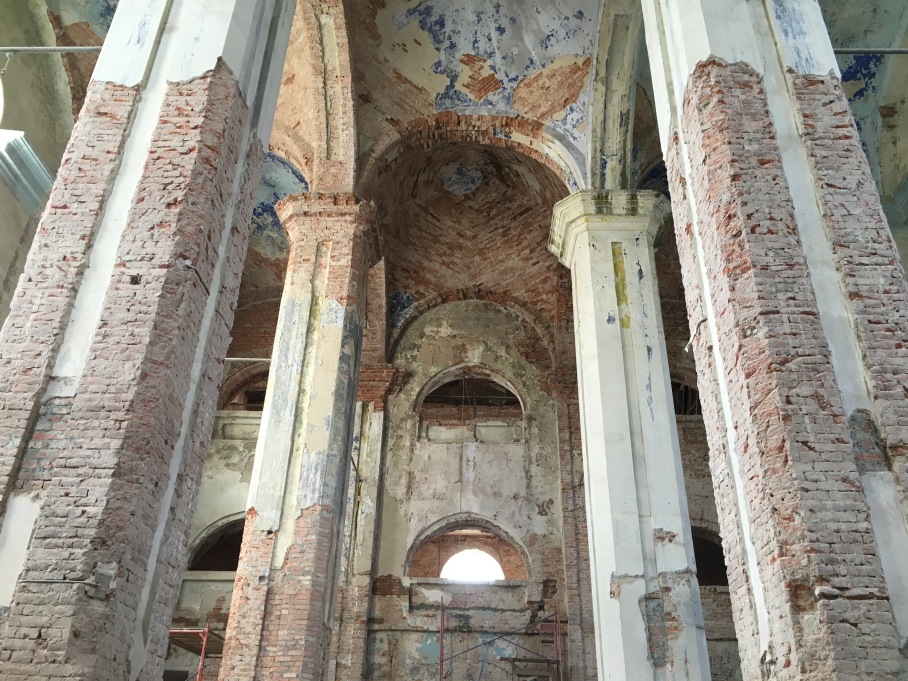
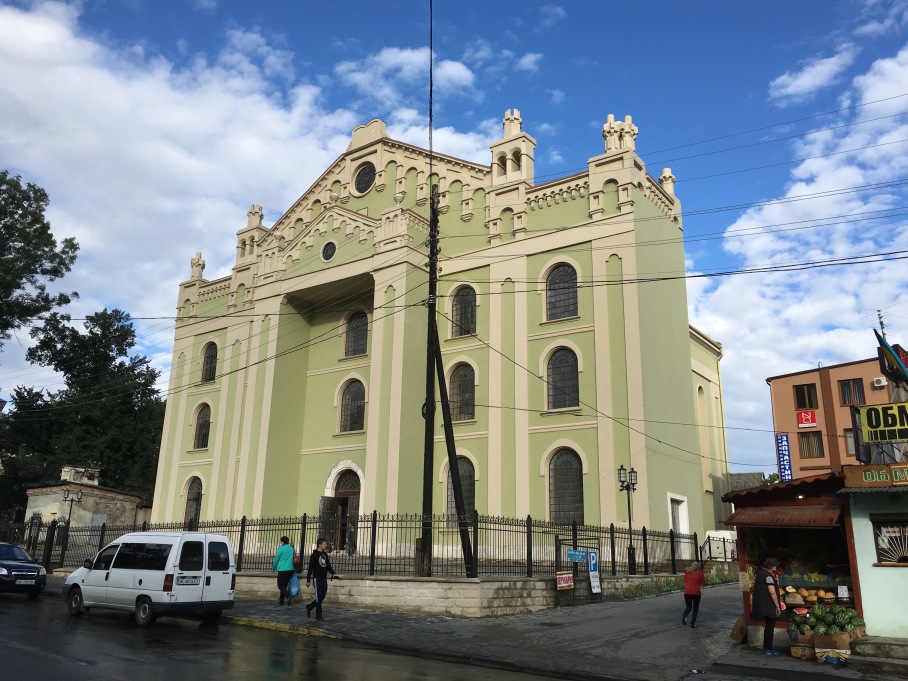
She first took me to the Jewish synagogue, which is currently under renovation. It is said to be the largest synagogue in Eastern Galicia.
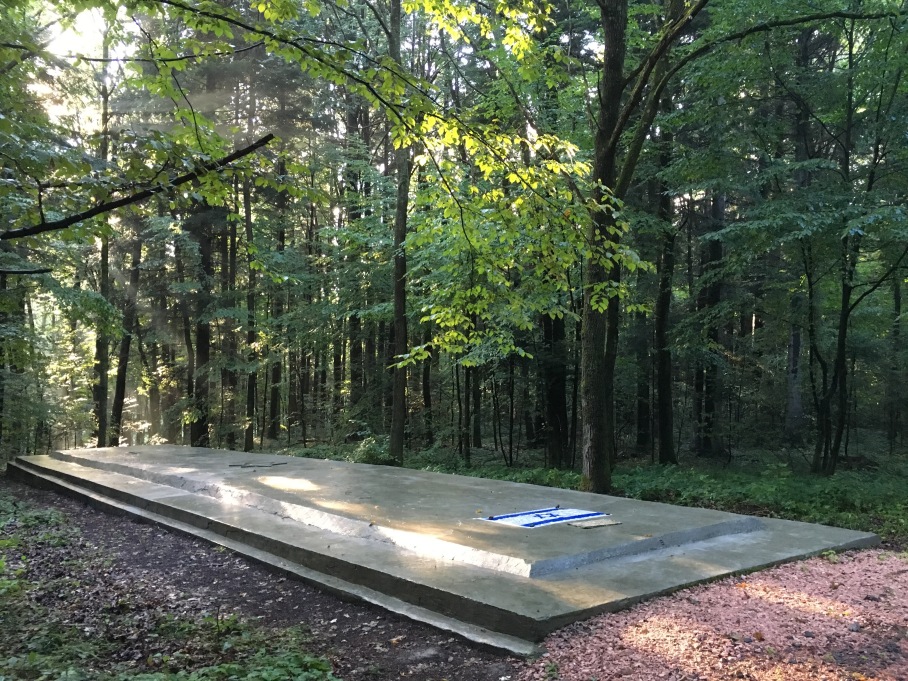
From there she took me to Bronitza forest, where about 10,000 Jews were murdered in November 1941. 9 Large stones covered the mounds left by Jewish bodies. There were 13.5 thousand Jews in Drohobycz before the Holocaust. 400 Jews survived.
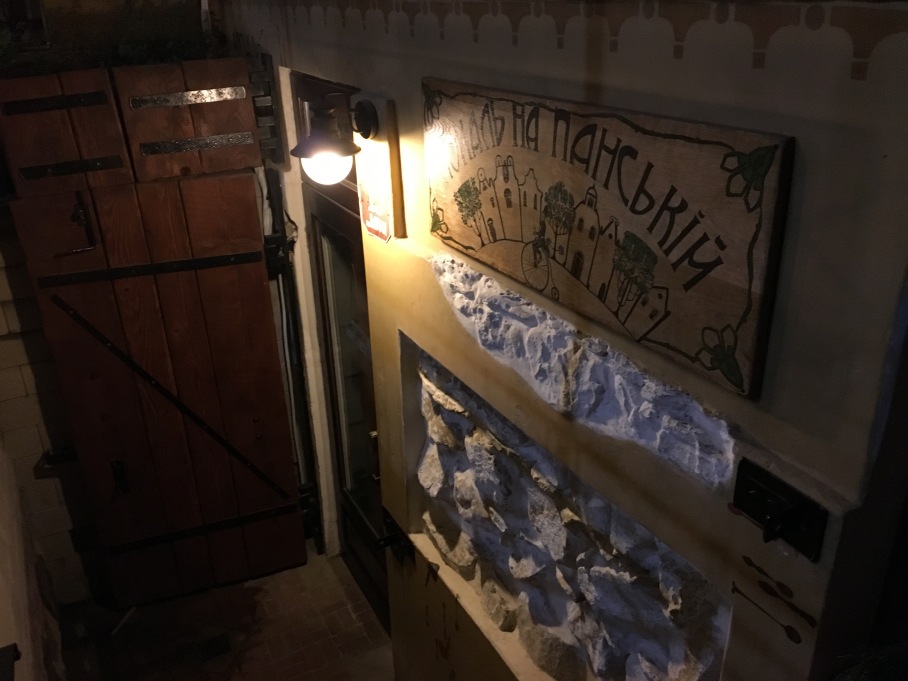
We then traveled to Panska Street, which was and remains the wealthiest street in Drohobycz. It was abundant with formerly Jewish owned homes. The Jews owned a disproportionate amount of the wealth, mostly related to oil production. The Maurycy Gottliebs and Dombergers were just a few such families.
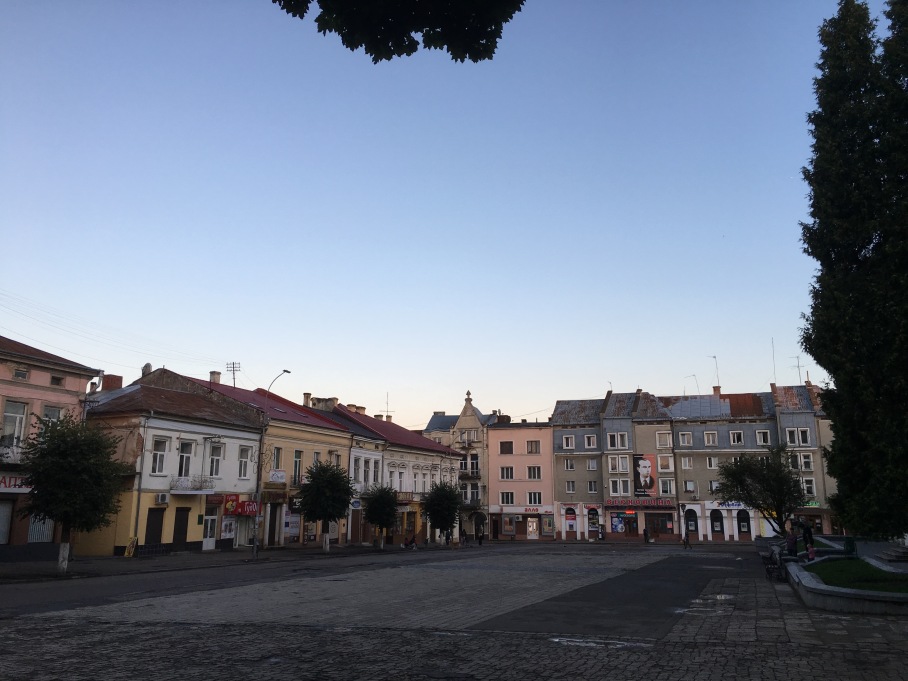
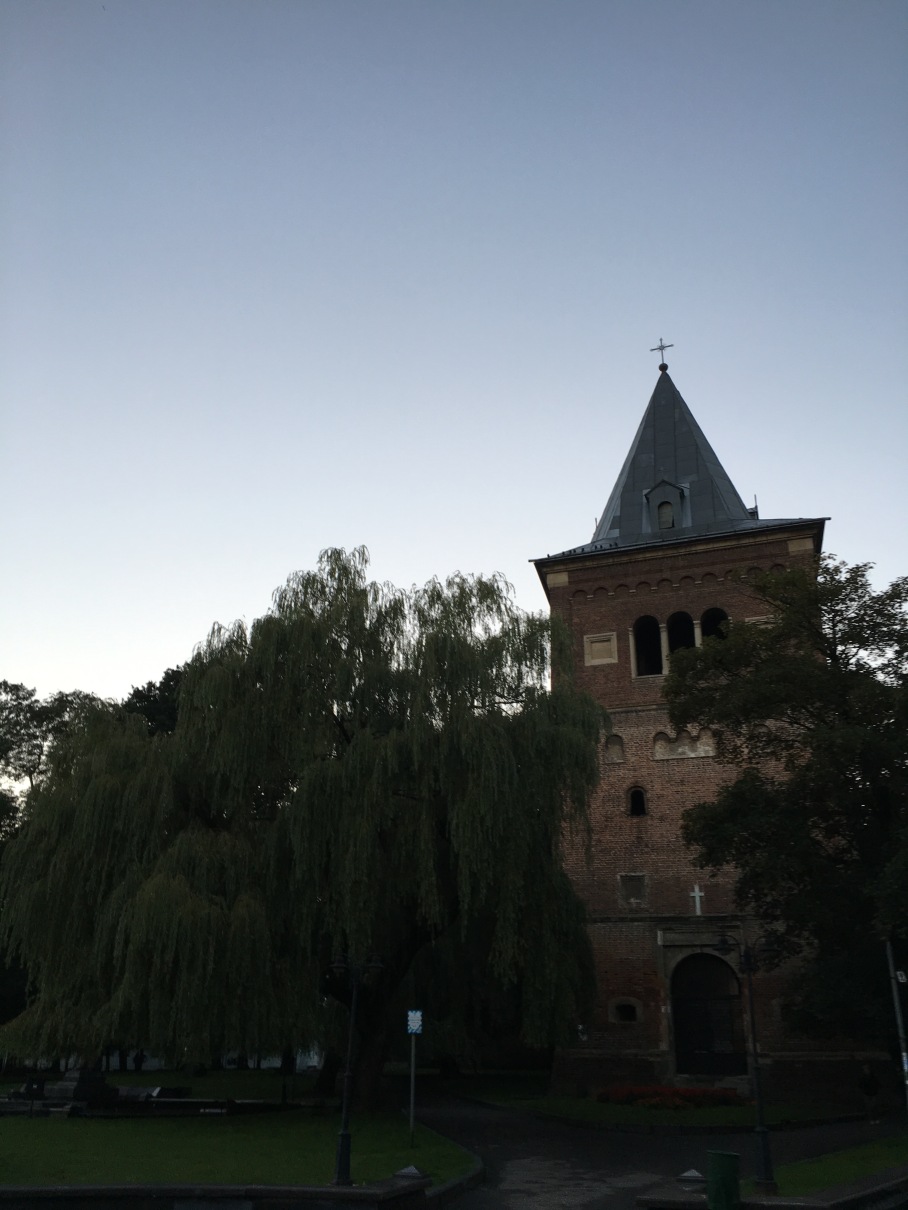
Just around the corner was the town square, on one side of which stood the Bartolomeo Church, which has been standing since the 14th century.
She showed me a few more synagogues. At least ten remained in the city, all inactive of course. About 100 Jews, most of mixed-heritage, still reside in Drohobycz.
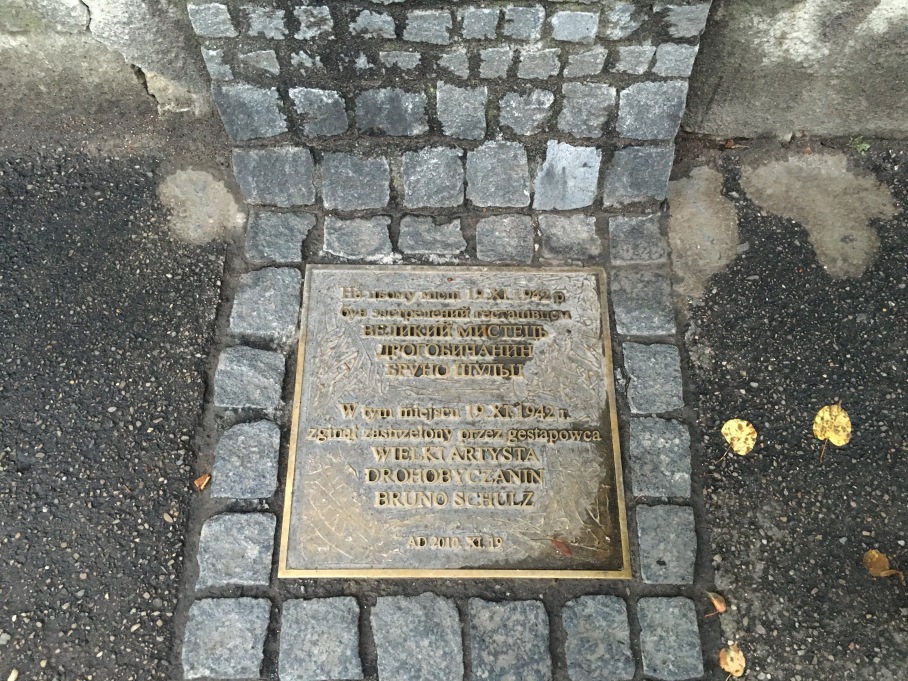
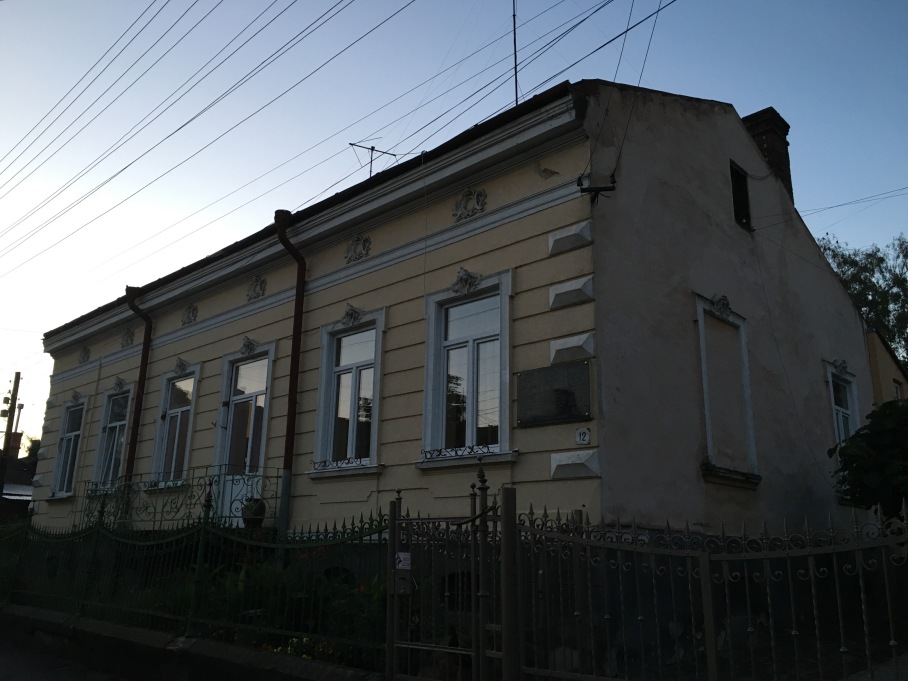
To end our journey, Tanya pointed out the remnants of the life of Bruno Schultz- the school he attended as a child, the school he taught at, his residence, and the place where he was shot and killed. Schultz is the most prestigious resident of Drohobycz, but did not achieve fame during his lifetime.
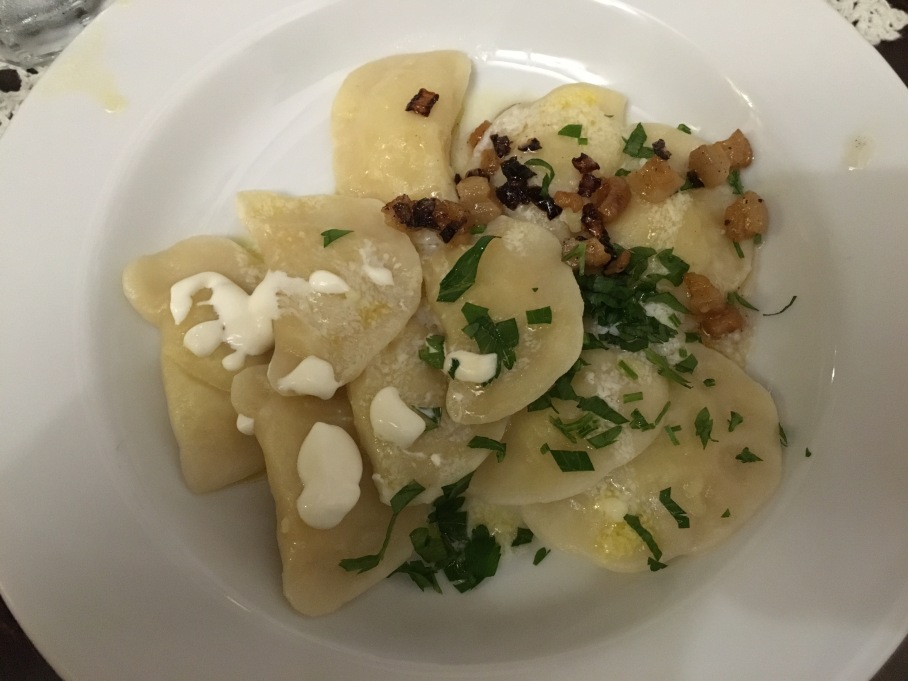
We had dinner in a cafe back on Panska street. I had a traditional Ukrainian dish called Vareniki. It was so delicious. Tanya provided a wealth of insight on various topics, as she had through out the day. I was very interested to learn about the rising nationalist fervor, which had been visible throughout the day. Even the playgrounds were painted blue and yellow.
She drove me back to Hotel Nabi in Truskavets for the night.
I woke up Monday morning eager to avoid the magnitude of the day. I packed up and cleaned up, and after running out of chores to preoccupy my mind, I called an Uber to the airport.
I arrived at Dulles around noon, six hours before my scheduled departure to Lviv. I did some last minute shopping, but mostly paced the halls in frantic anticipation.
My flight to Munich was delayed an hour, of course, and I missed my connection to Lviv. Thankfully, I’m trying this new thing where I don’t get upset by things that are out of my control.
After an eight hour flight of partially watched movies, I arrived at the disturbingly clean airport in Munich.
I marched promptly to the Lufthansa desk, where they had already arranged a new flight to Lviv- via Kiev…
I’d planned to pick up a rental in Lviv at 1:00, drive straight to my first ’shtetl stop’ , and meet a tour guide there. That was now out of the question. I instead arranged to stay the night in Lviv, pick up my rental Wednesday morning, and meet my guide later that morning.
I arrived at the Kiev airport at 3:30pm. It was dark and dilapidated. I was low-key terrified. I sat like a brick in domestic departures for two hours, trying to avoid attention. I listened to the familiar voices on NPR to calm myself. I was told in Munich that my bags would transfer to Lviv, but I became quickly concerned that I should’ve done it myself.
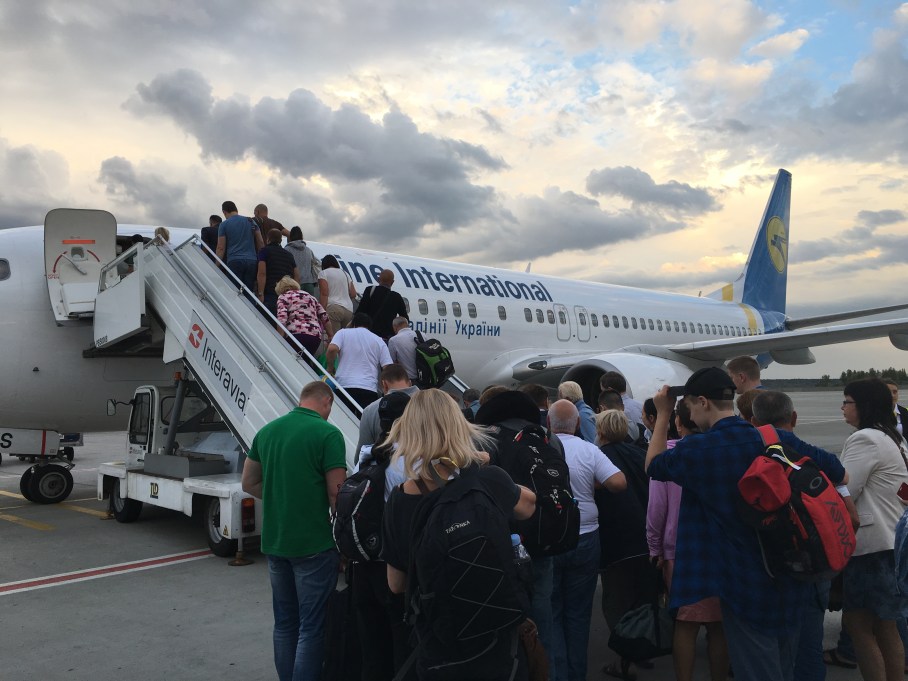
I boarded the plane to Lviv at 7:15.
I sat next to a very friendly (and very beautiful) college student from New Jersey, Christina, on her way to visit family in a village near Ternopil. She provided me with a wealth of practical advice and briefly soothed my anxiety.
I was so excited to see my luggage.
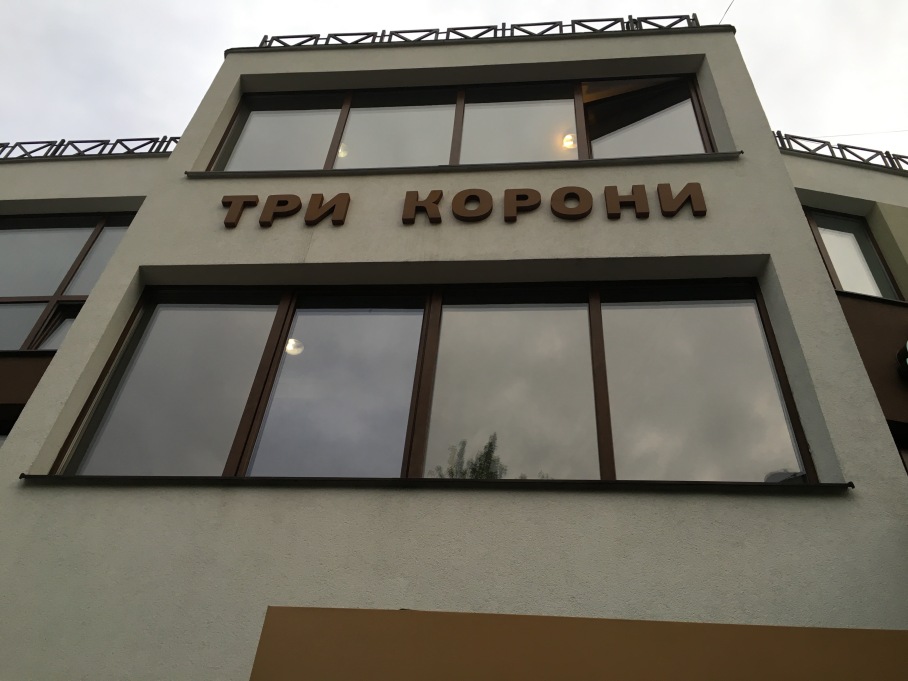
I took a taxi to the “Three Crowns Hotel”. The driver was so thankful for my 2USD tip. From what I understand, the average wage here is ~100USD a month, or 2000UAH.
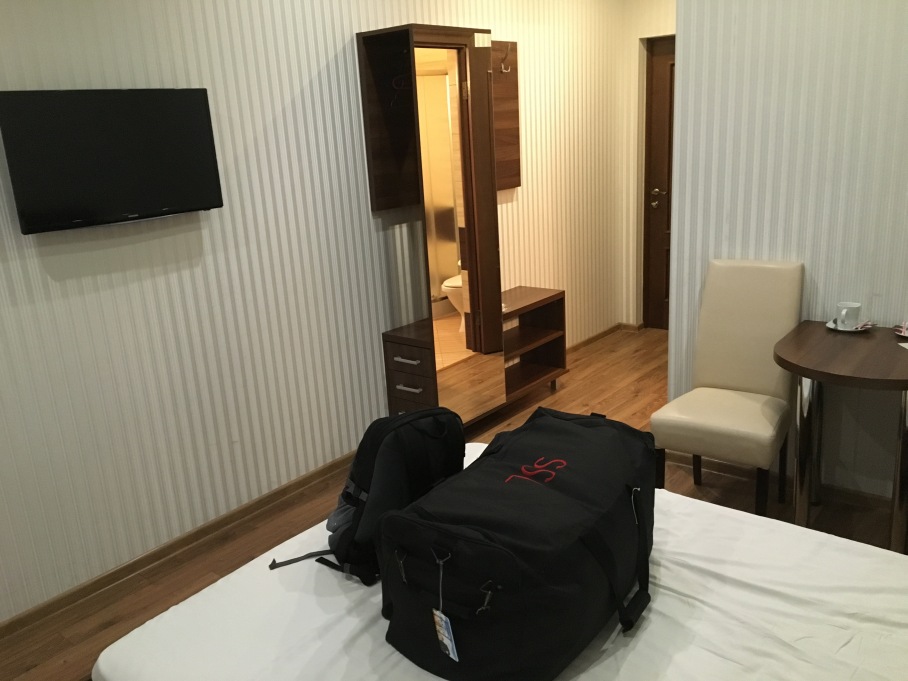
The room was nice. I organized my things and went promptly to sleep.



























































 The Shtetl Shlepper