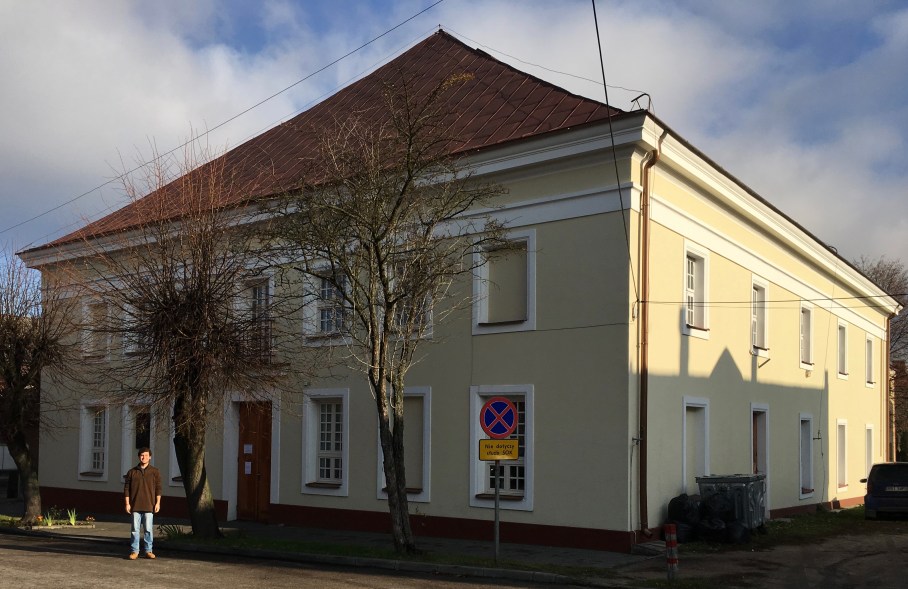
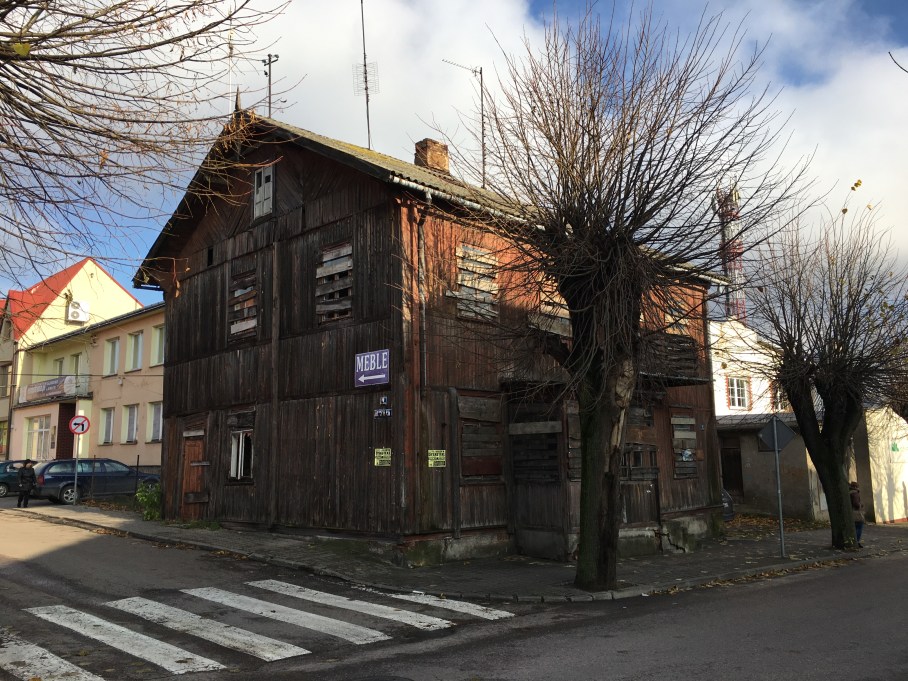
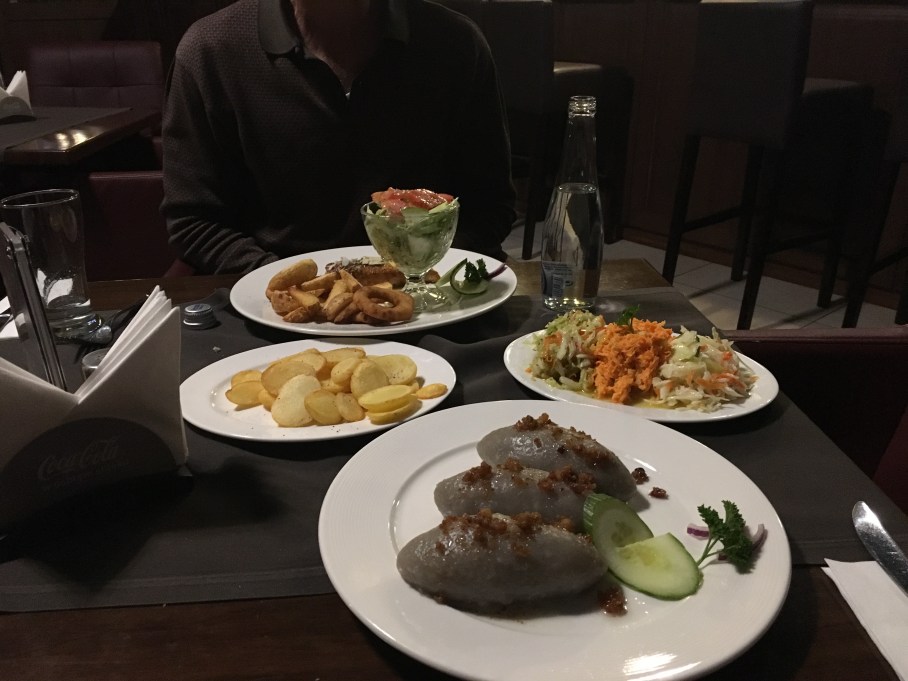
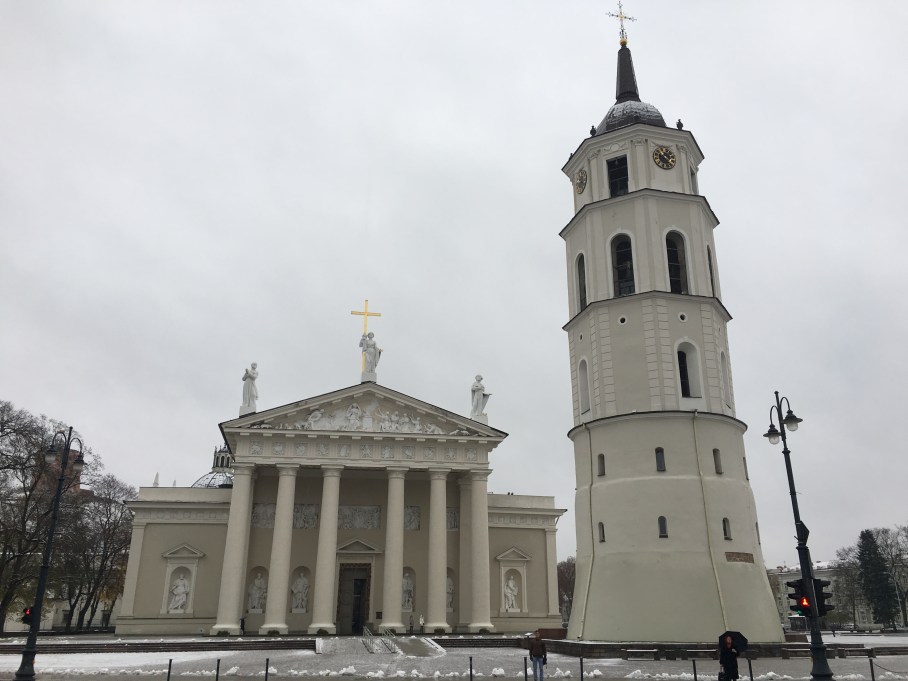
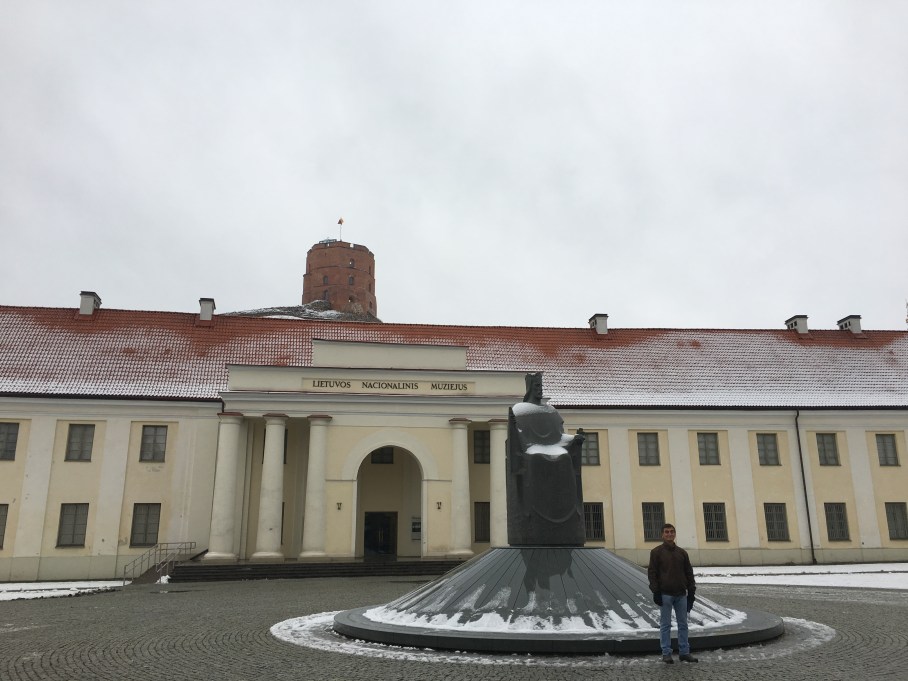
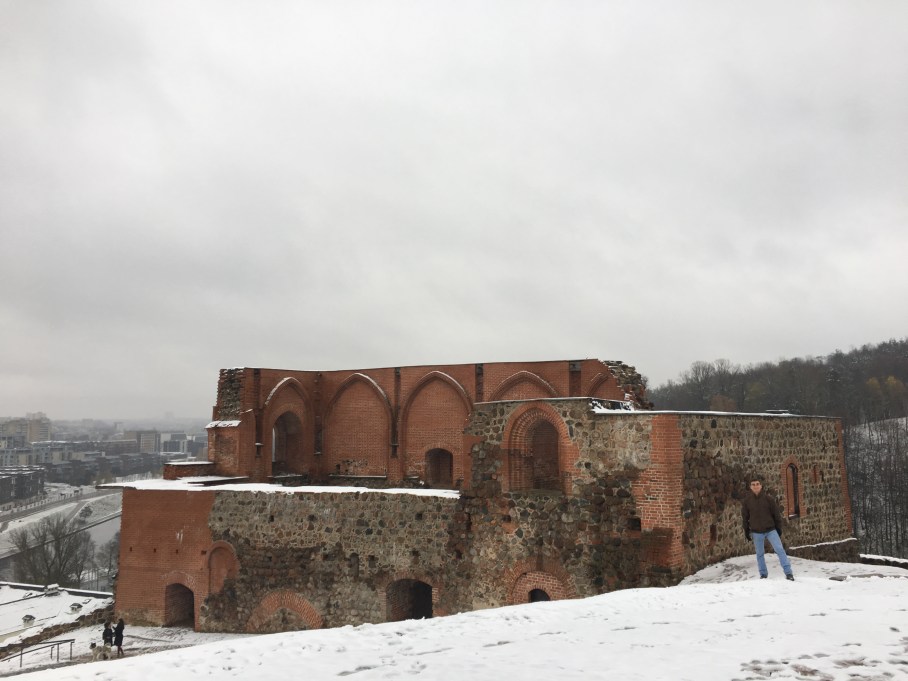
13 November 2016

Dad and I said our goodbyes as he left for the airport early this morning. Dropped my things at concierge and had a quick breakfast before heading out.
img_0972

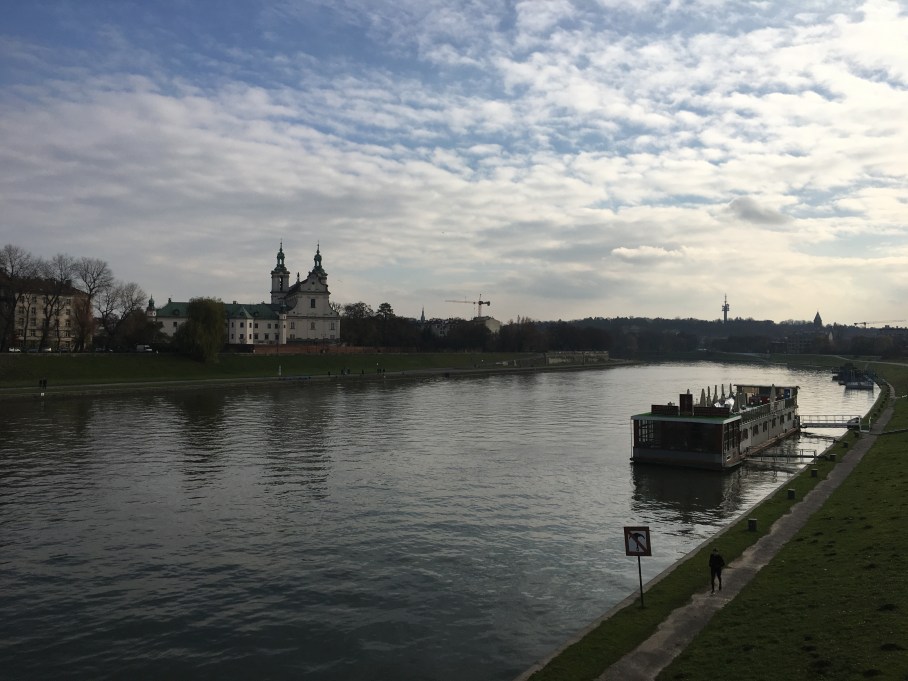
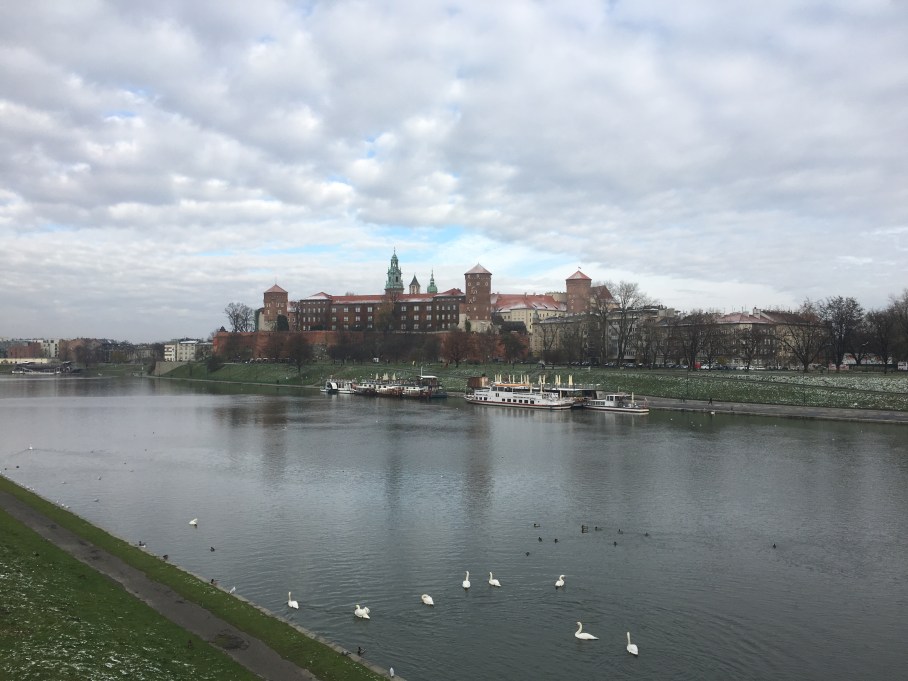
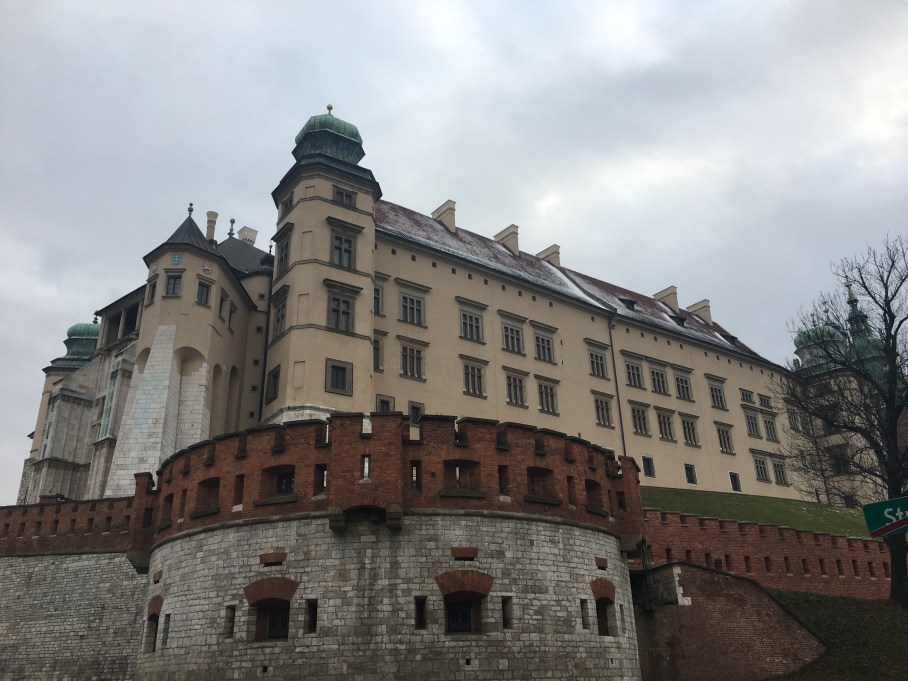
Walked to Wawel Hill, which I’d been looking forward to visiting for months. It was already the seat of Polish monarchs for centuries before Grand Duke Jogaila married Queen Jadwiga of Poland, thus merging the two into a personal union until their confederation in 1569 at the Union of Lublin. Only a few decades later the seat was moved to Warsaw- relatively equidistant between the two historic capitals. The constituent parts of the complex are the castle and the cathedral.
img_1109

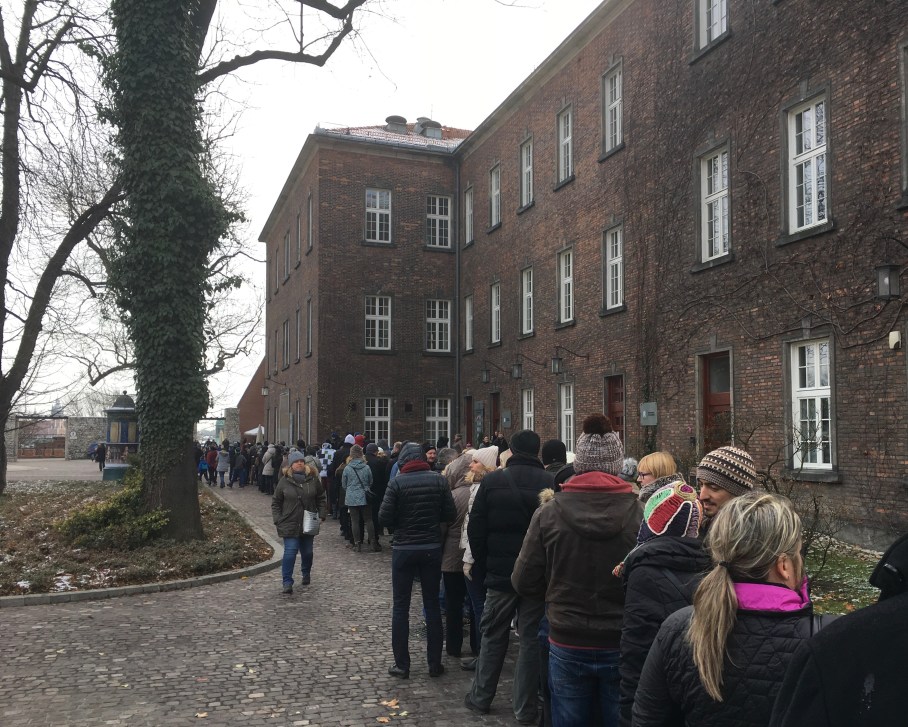
The line to purchase tickets to the castle stretched well outside the door- free admission for the week in honor of Independence Day. I was scared I’d waste the entire day in line, but I had my tickets within thirty minutes.
img_0974

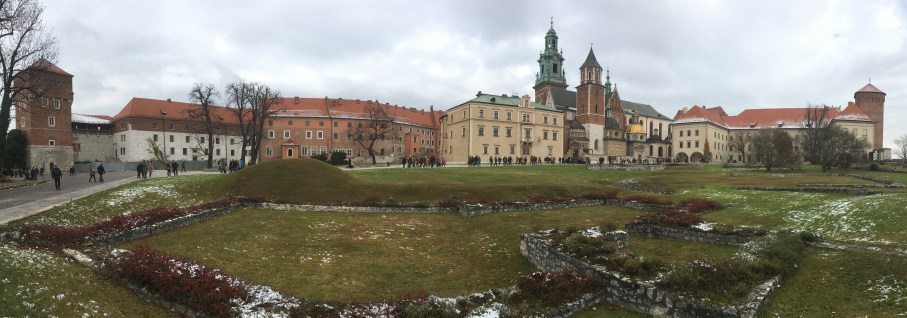
My admission time wasn’t for a couple hours so I figured I’d visit the cathedral in the meantime. It was closed for services, of course. Wandered the complex courtyard until services let out.
img_0975

Purchased a headset and then started my tour at half past noon.
img_1001

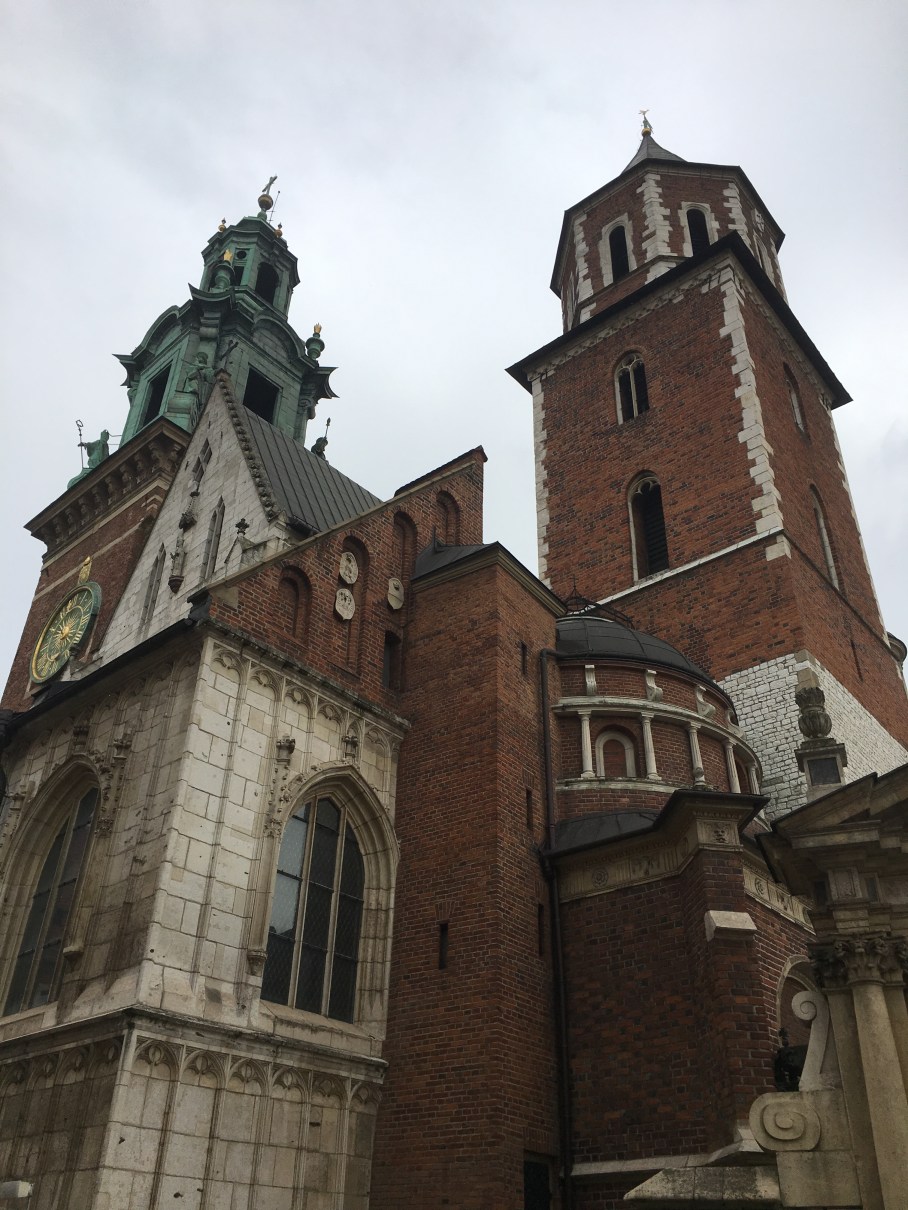
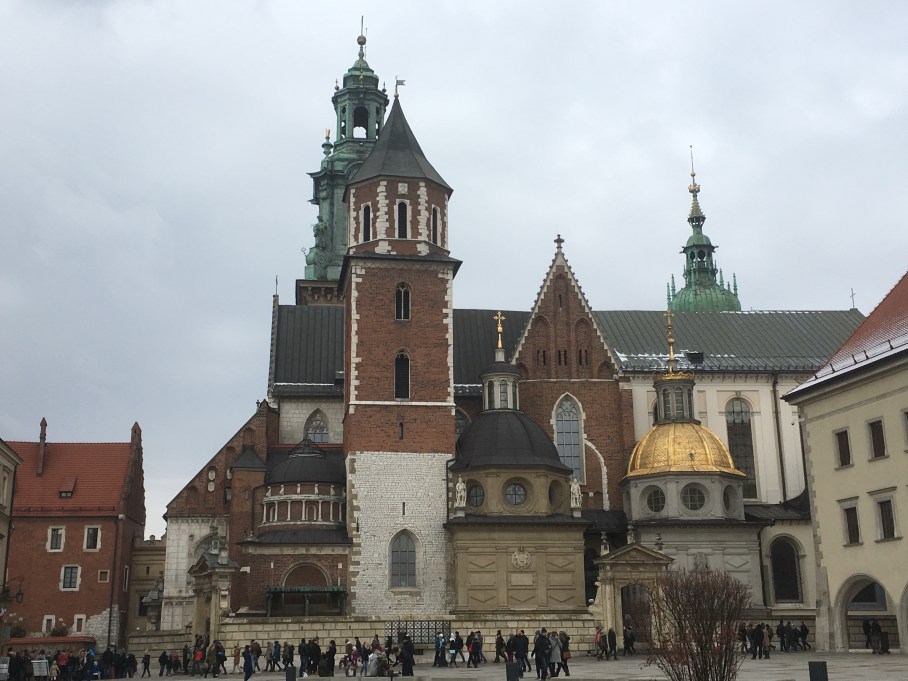
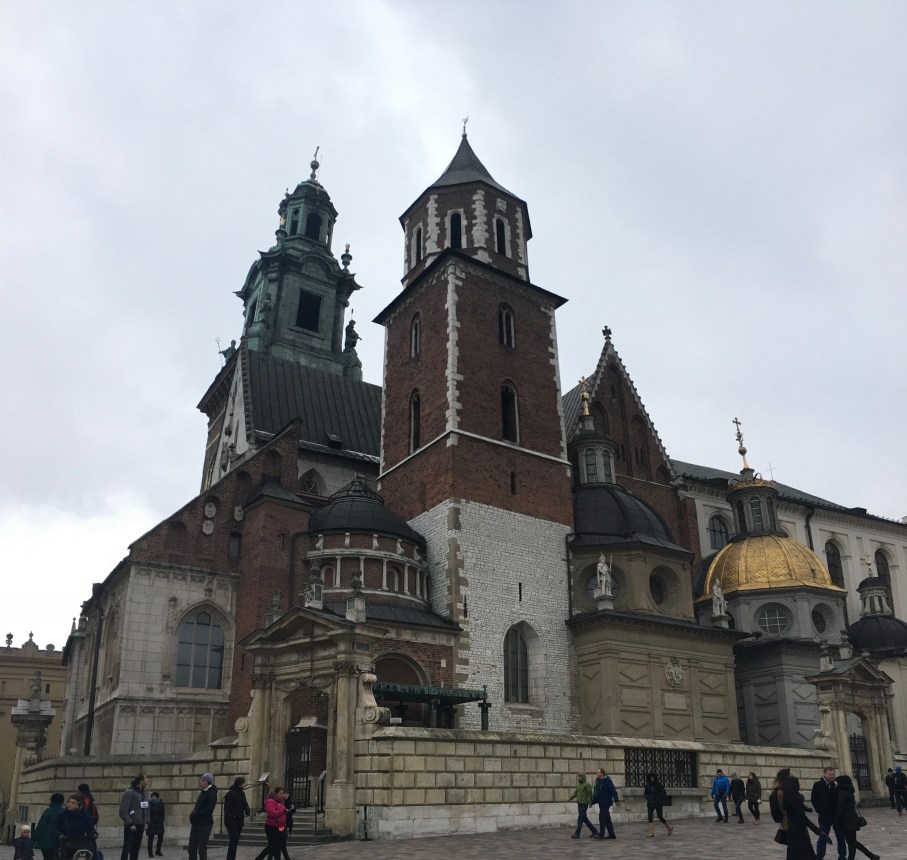
A readily apparent variety of architectural styles is testament to the centuries of additions and renovations that make Wawel Cathedral an incongruent masterpiece.
img_0978

It is surely a favorite of the structures I’ve visited thus far.
img_1076

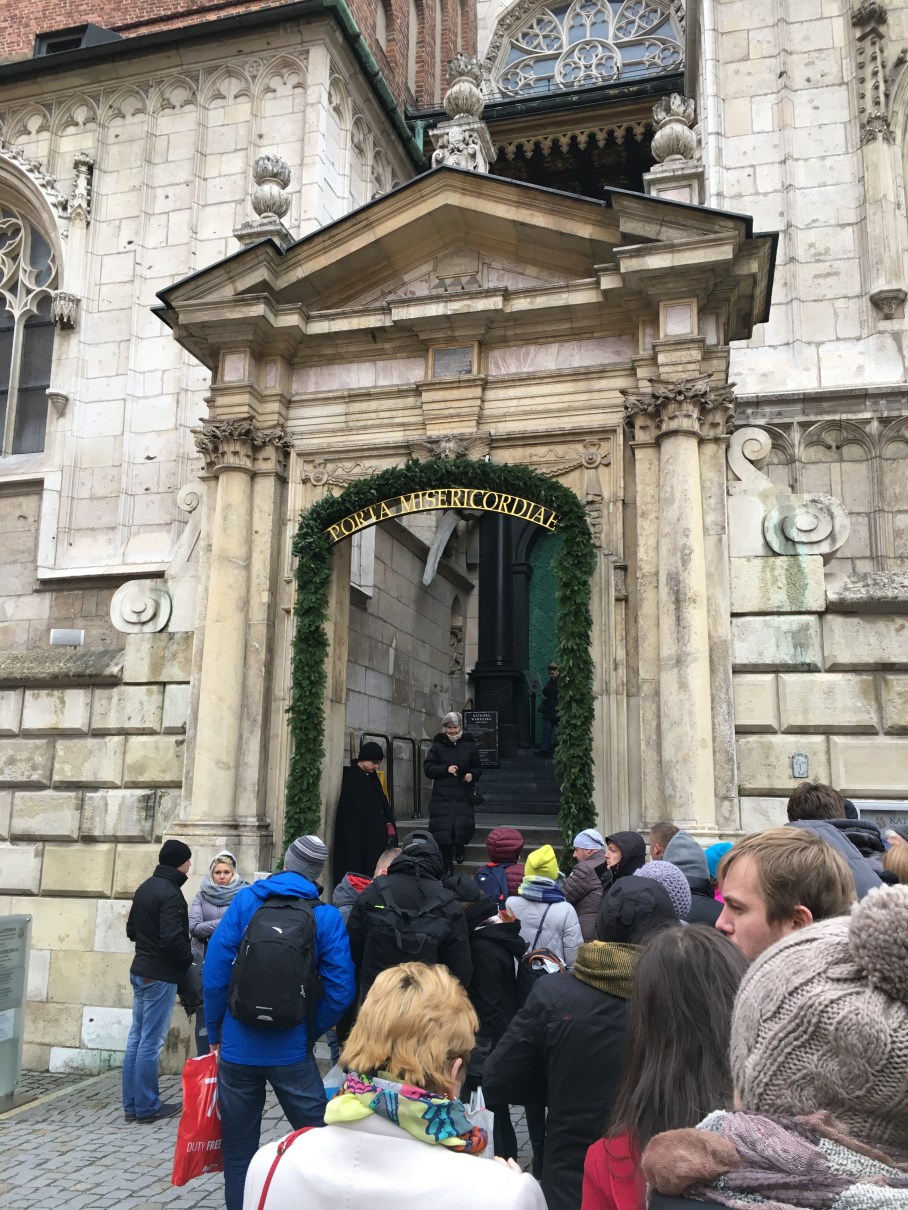
Pictures were strictly forbidden, but I didn’t let that stop me. I’d waited too long for this.
img_1002

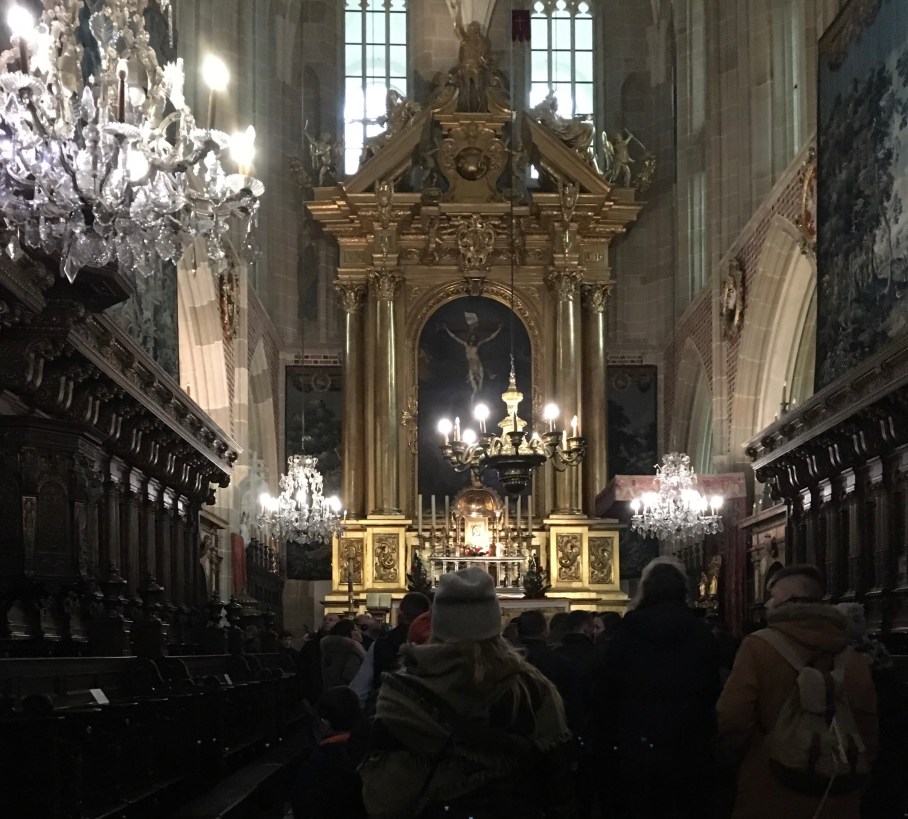
The cathedral is officially known as the ‘Royal Archcathedral Basilica of Saints Stanislaus and Wenceslaus on the Wawel Hill’, named in part for Saint Stanislaus whose mausoleum is the focal point upon entrance. Stanislaus was the Archbishop of Krakow in the 11th century, killed at the hands of King Boleslaw II for his vocal opposition to corruption. He served at Wawel Cathedral, as have all Archbishops of Krakow since before his time until present day.

Directly in front stands the high altar, the site of all royal baptisms, weddings, funerals, and coronations since King Wladyslaw I the Short reunified Poland in 1320 until the Partitions of Poland in the 18th century. A separate coronation took place at Vilnius Cathedral from the Union of Krewo (established personal union in 1385) until the Union of Lublin (established real union in 1569).
img_1005

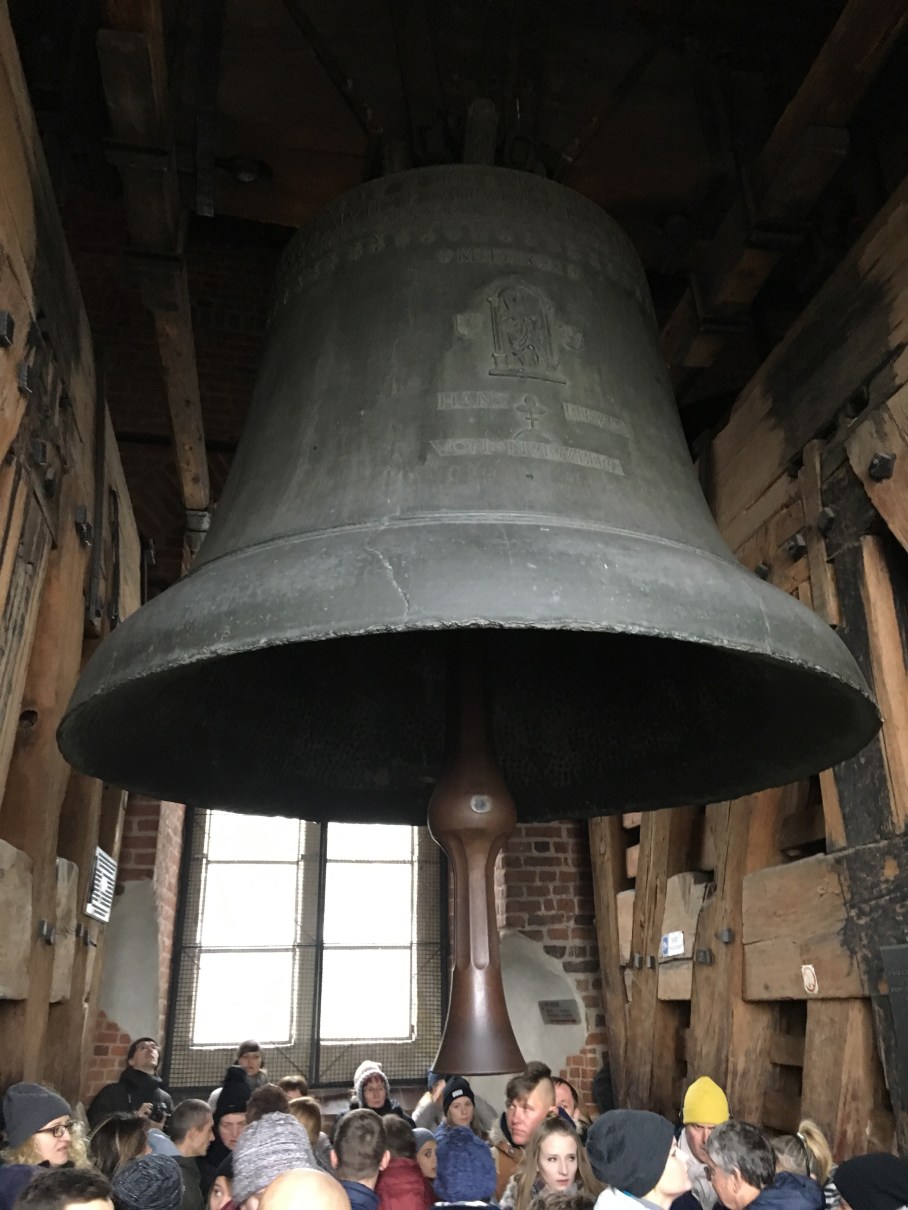
From the altar I was lead to Sigismund Tower. A lengthy flight of stairs took me to Sigismund Bell, the largest of five bells. It was cast in 1520 and named for King Sigismund I who commissioned it. It weighs almost 28,000 pounds and takes 12 ringers to swing it, but it only tolls on special occasions.
img_1008

The view of the from atop the tower was incredible.

img_1016

Walked back down to reach ‘Bards Crypt’, which contains the tombs of 19th century poets Julius Slowacki and Adam Mickiewicz, the latter considered to be the national poet of Poland.

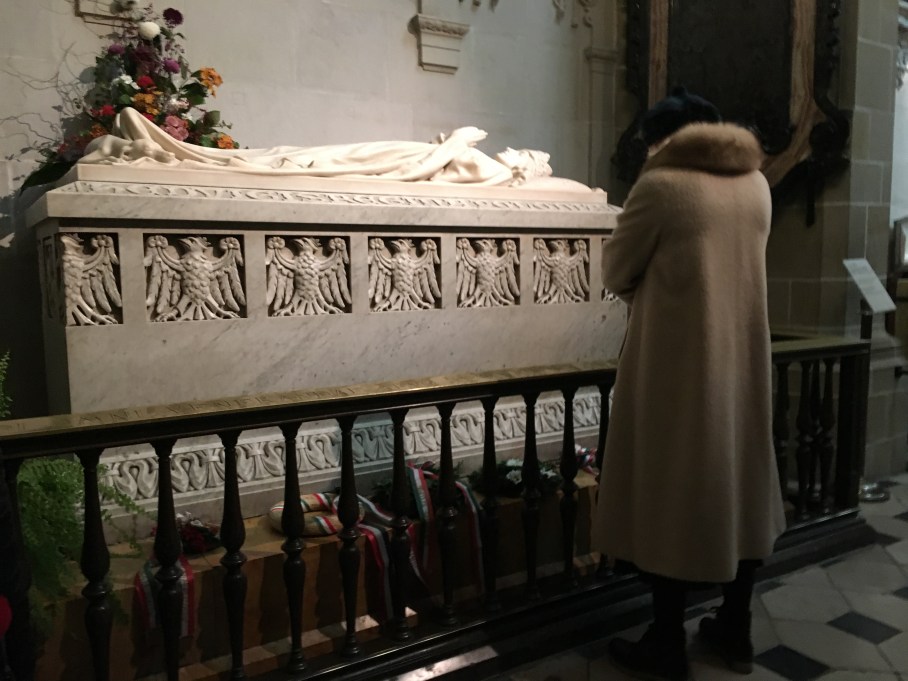
The remainder of the tour took me through the various chapels and by the royal tombs. The earliest rulers are interred in the cathedral itself, while later rulers lie in the crypt underneath. It was an unbelievable experience to stand in the presence of the kings and queens I’ve read so much about, I tried my best to inconspicuously photograph. I was particularly excited to visit the final resting place of Grand Duke Jogaila and Queen Jadwiga, whose marriage in 1386 established the basis for the Polish-Lithuanian Commonwealth.

img_1034img_1024

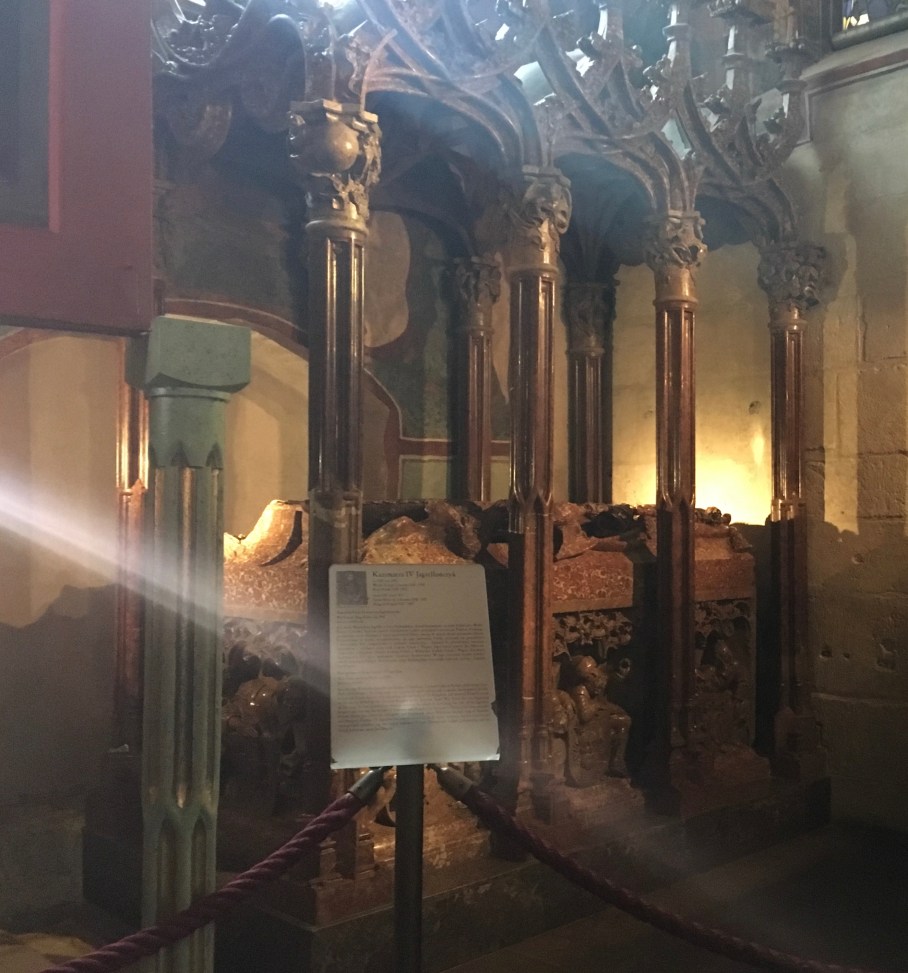
Their son, King/Grand-Duke Casimir IV, rests in a chapel opposite the nave.
img_1035

The entrance to the royal crypt, known as ‘Saint Leonards’, is located nearby. In addition to the later monarchs, it holds the remains of multiple national heroes including Tadeusz Kosciuszko who fought in the American Revolution before leading the efforts against partition.

img_1039

I was particularly excited to see the tomb of King Stephen Bartory who founded Vilnius University.
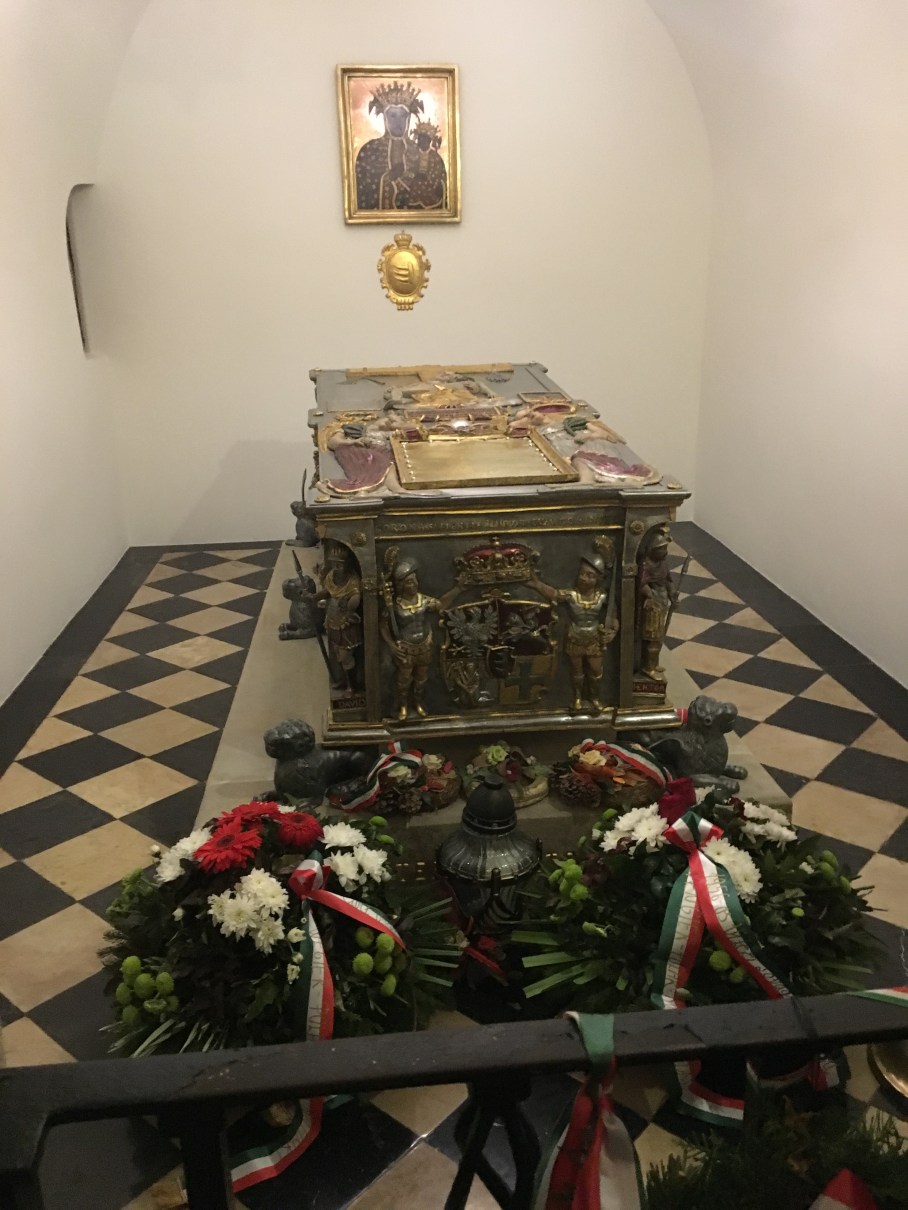
img_1041

Towards the exit stand the sarcophagi of two Polish leaders from the past century. Marshal Joseph Pilsudski was the independence leader who ruled Poland during the interbellum.
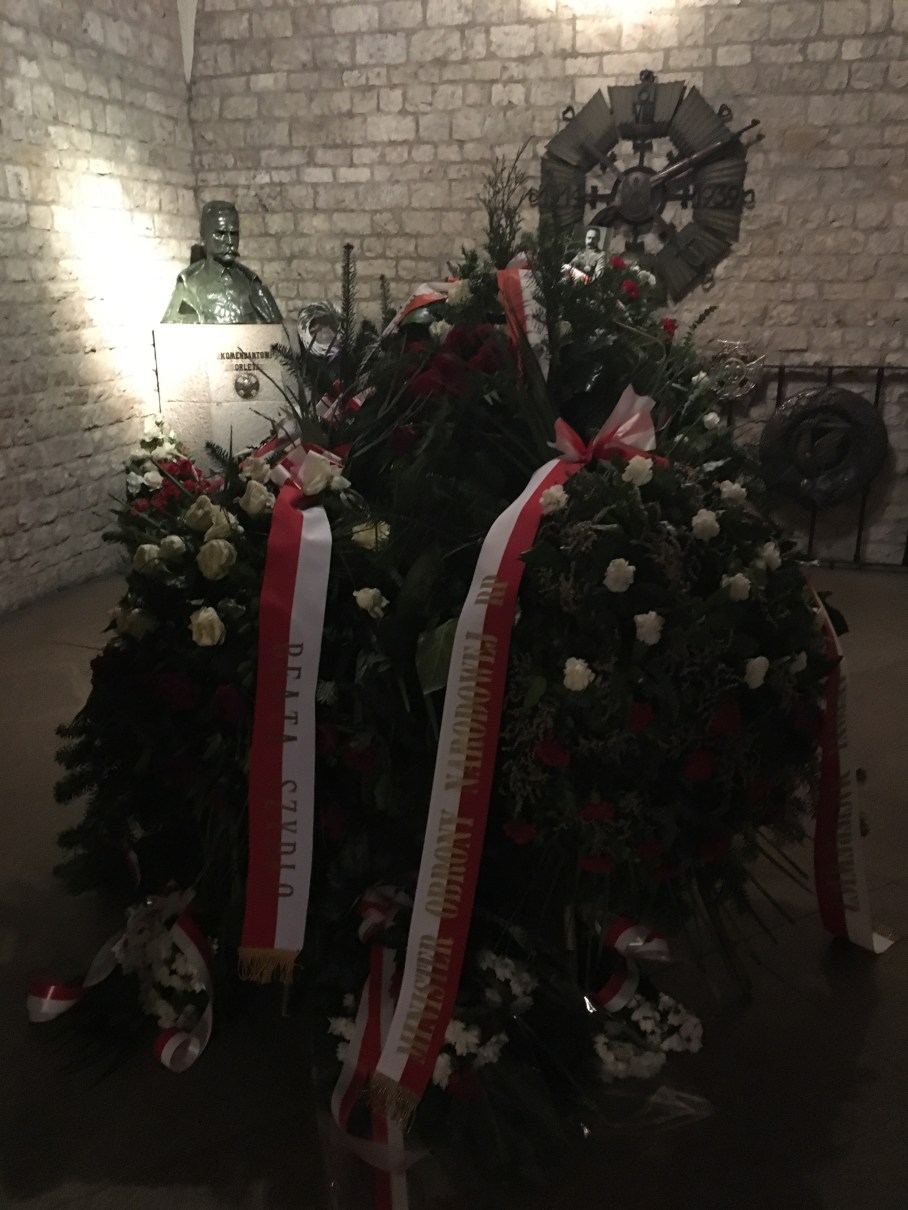
img_1054

Lech Kaczynski served as President of Poland from 2005 until his 2010 death in a plane crash.
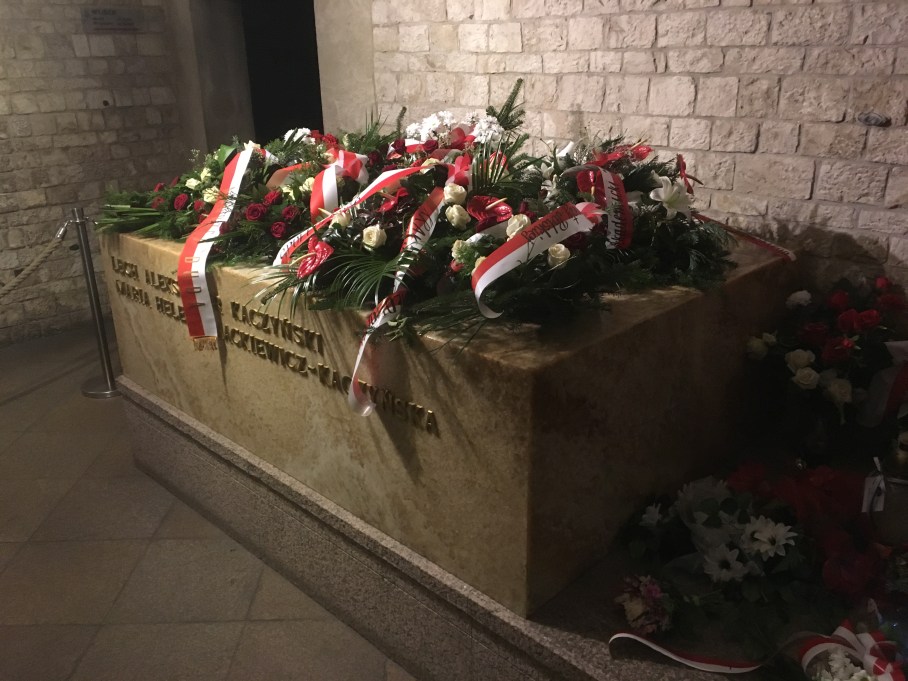
img_0997

Just outside the cathedral stands a monument to her most famous of archbishops- Pope John Paul II. The only Pole to serve as Pope, Karol Jozef Wojtyla was born just outside Krakow in 1920 and served as archbishop from 1964 until his papacy began in 1978.
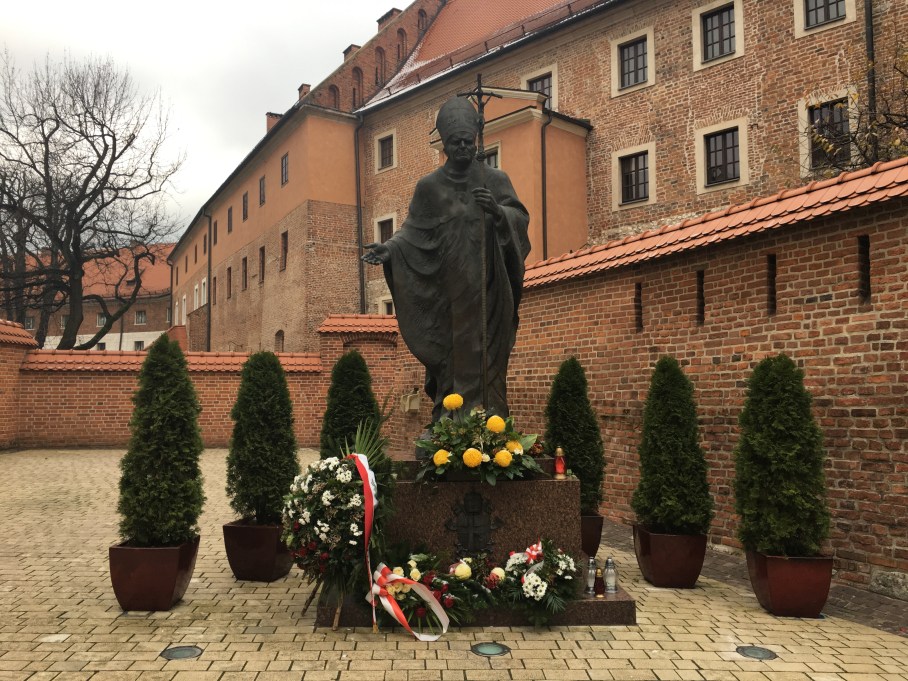
img_1062

Wandered the castle courtyard until my tour began at 2:00.
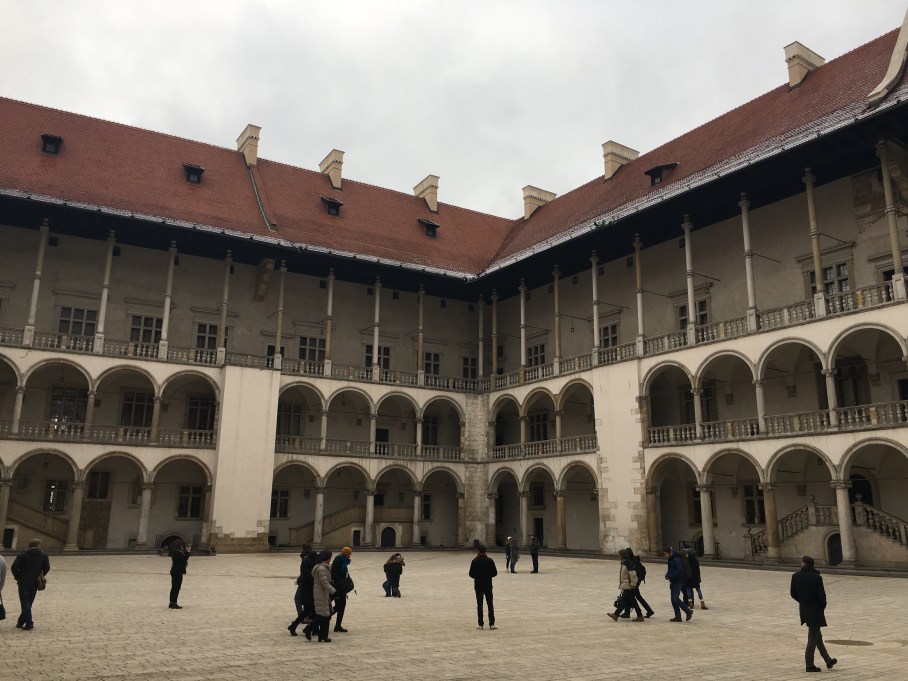
img_1090

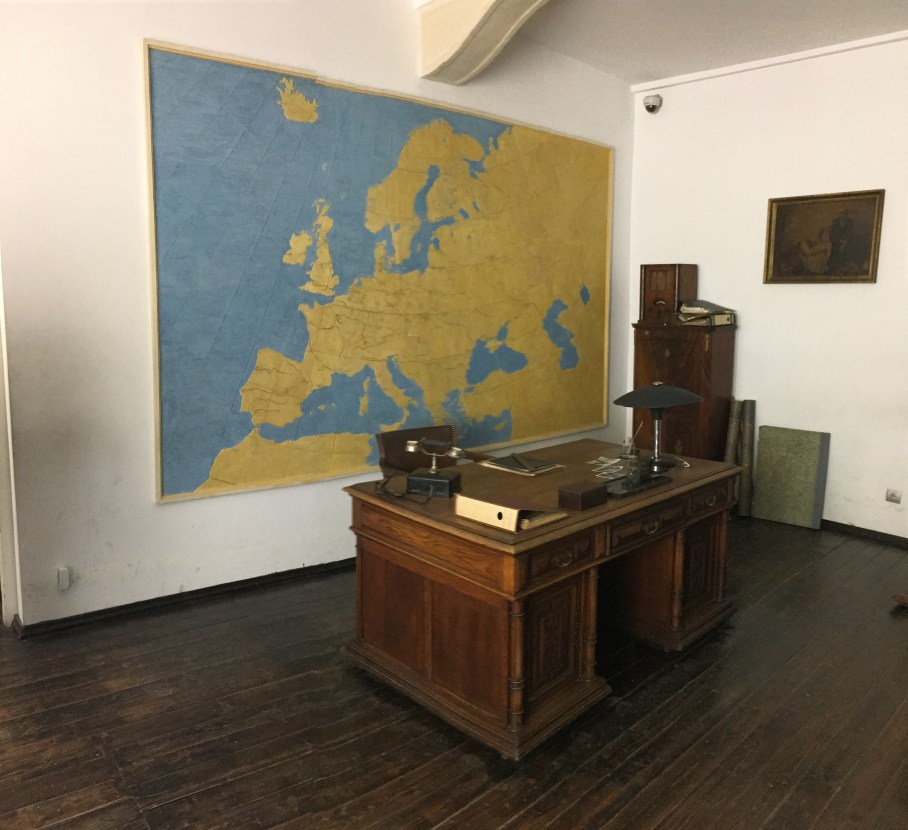
Unfortunately the only part open to visitors was the State Rooms, where Polish monarchs entertained their guests and met with the Sejm (parliament). Pictures were not allowed, but I took a discrete photograph of the primary hall where state functions were held. It was covered in tapestries from the collection of King Sigismund II Augustus that related the biblical story of Noah.
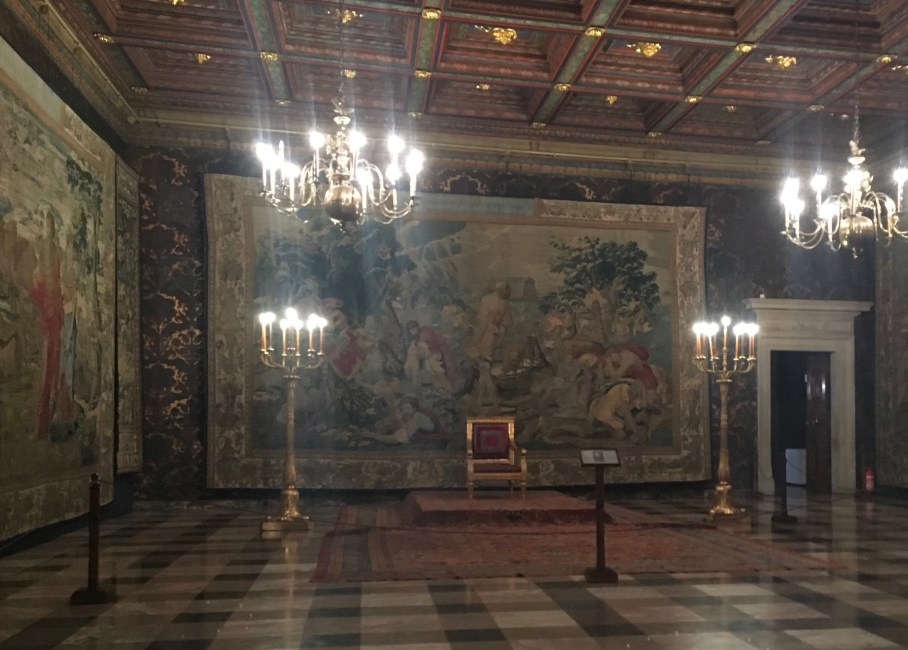
img_1097

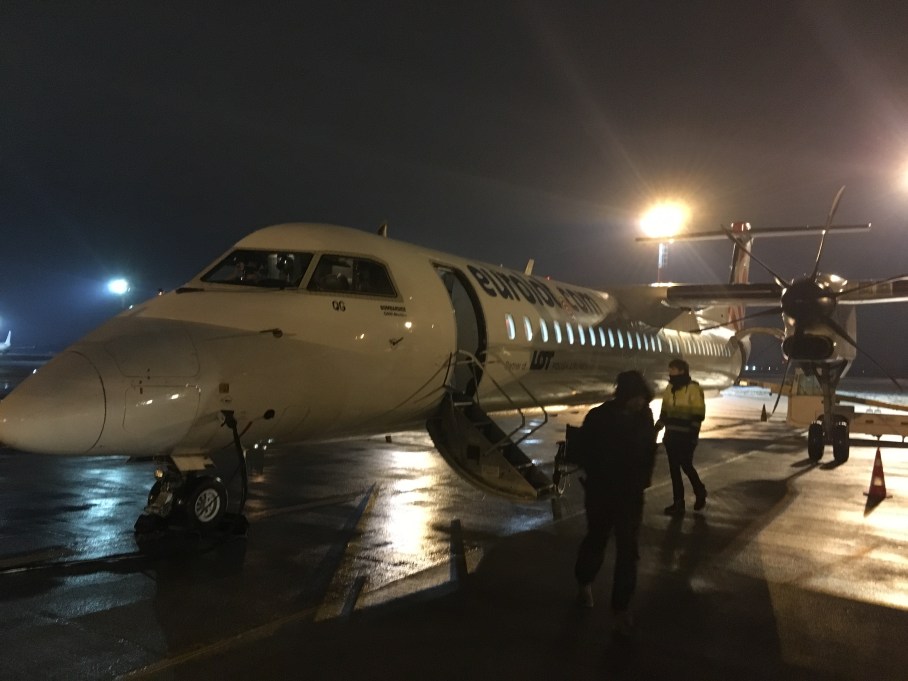
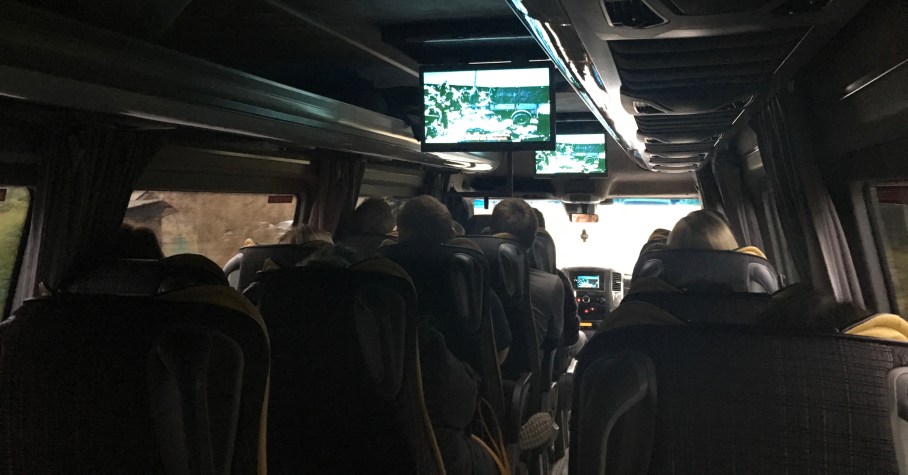
With that, I walked the old town a bit before heading to the hotel. Gathered my things and made my way to the station. Had lunch before my train left at 4:30. I managed to sleep a bit, I arrived in Warsaw at 7:00 and taxied to the airport. Blogged until my flight via propellor plane at 10:30. I arrived in Vilnius at 1:00 in the morning.
img_1121

12 November 2016

Went for a run before our bus picked us up from the hotel at 9:00. We watched a film about the liberation en route to Auschwitz.

img_0854

At 10:30 we arrived in the ancient town of Oswiecim, of which Auschwitz is the German derivative. Dad was angry that the town (independent of the camp) had the audacity to exist after the war.

Our guide was Emily, she couldn’t have been more than a few years older than me. I was blown away by her sensitivity, eloquence and knowledge.

We started our tour at the famed ‘Arbeit Macht Frei’ sign, under which prisoners of ‘Auschwitz I’ passed each day on their way to and from labor assignments. The earliest prisoners of Auschwitz were Polish soldiers and academics, interred following the invasion of 1939.

img_0857

The infrastructure had previously been used as barracks by Polish and Austrian armies.

img_3381

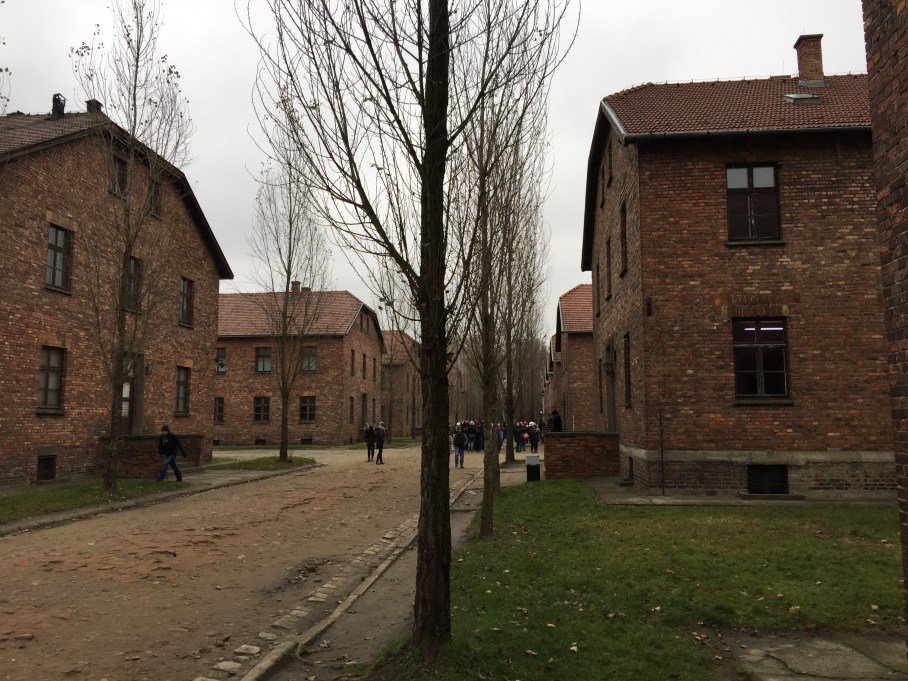
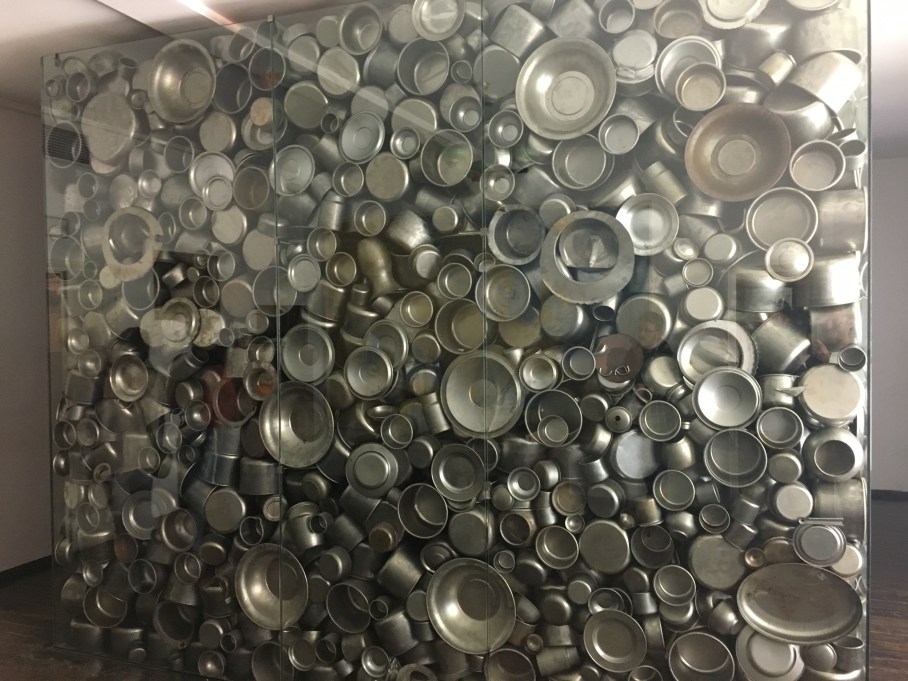
The first building we entered functioned as a museum. It provided a chronological overview of the complex as well as an overview of the prisoner experience from transport to death. We walked through rooms filled with confiscated shoes, suitcases, silverware, but surely the most powerful was a two ton mound of curly brown human hair.

img_3378

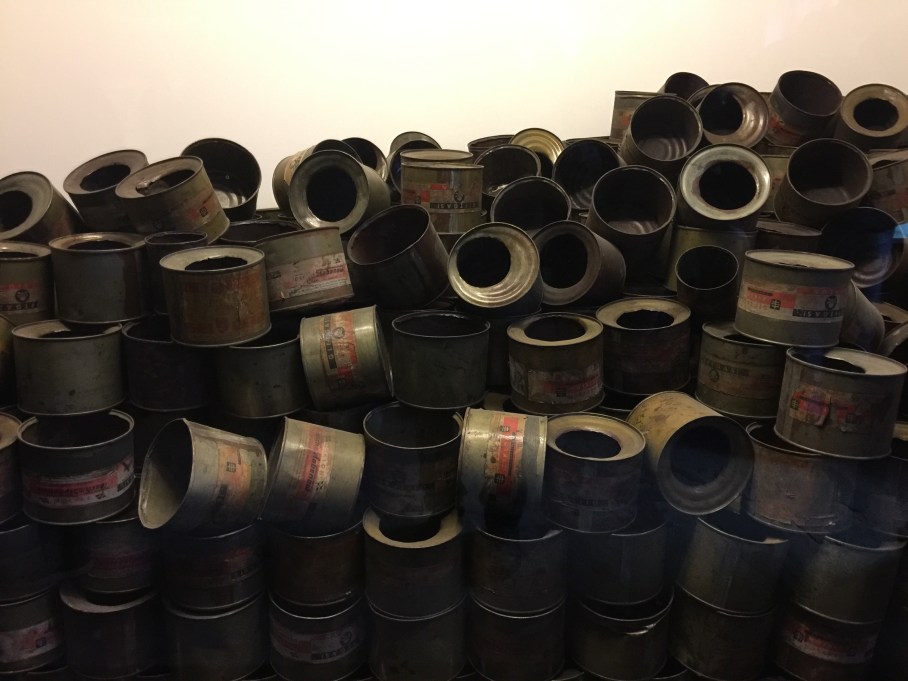
We visited the various rooms in Block 11 where political prisoners were subject to different methods of torture. It was the first place where attempts were made to kill humans with Zyklon B, previously used to exterminate insects.

img_3376

Out back stands a reconstruction of the wall where thousands of prisoners were executed by firing squad.

img_0867

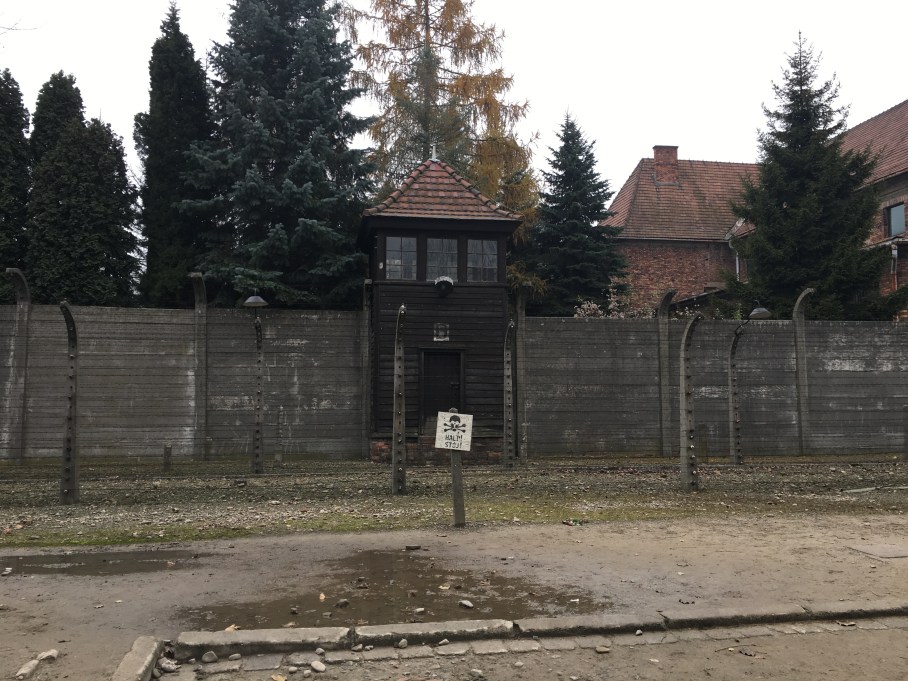
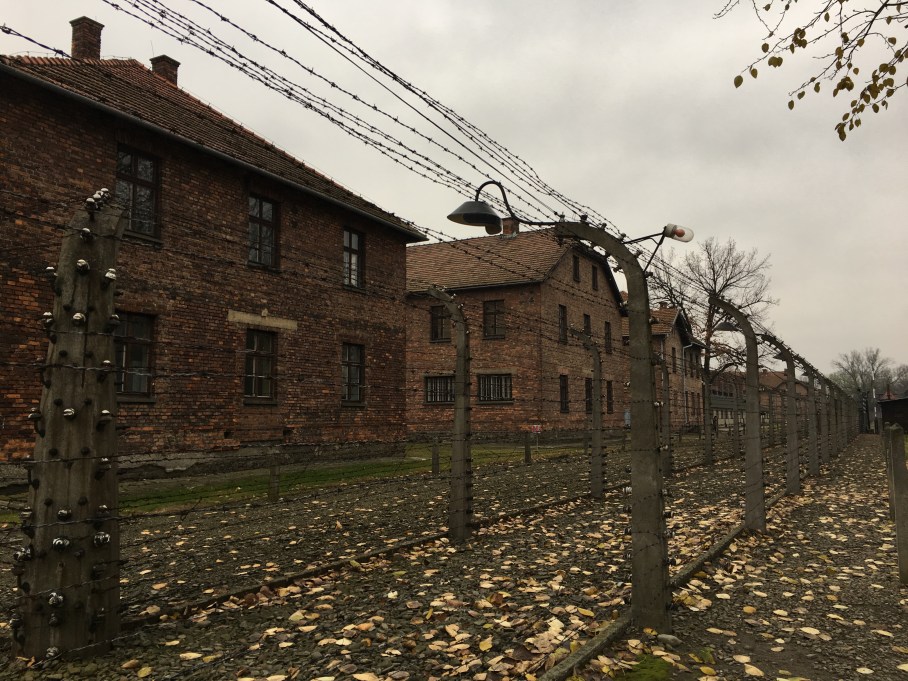
As we walked past the electrified fence where thousands threw themselves to death, we learned about the various medical experiments conducted on prisoners. Women were administered painful injections in order to develop methods for mass sterilization. Dr. Josef Mengele had a particular fascination with young sets of twins and triplets, on whom he performed torturous experiments that overwhelmingly resulted in death.

img_0864

As we continued our walk we were told the story of Maximilian Kolbe. Camp rules dictated that if a prisoner escaped, ten men from his bunker were to be chosen at random to be executed in his stead. During one such occurrence, a young man chosen begged for his life- he had a wife and many children that needed his support. Father Kolbe offered to go in his place, as he was old and had no children. The guards agreed- Kolbe died in Block 11 and was canonized by Pope John Paul II in 1982.  The young man survived the war and lived for fifty more years.

img_0874

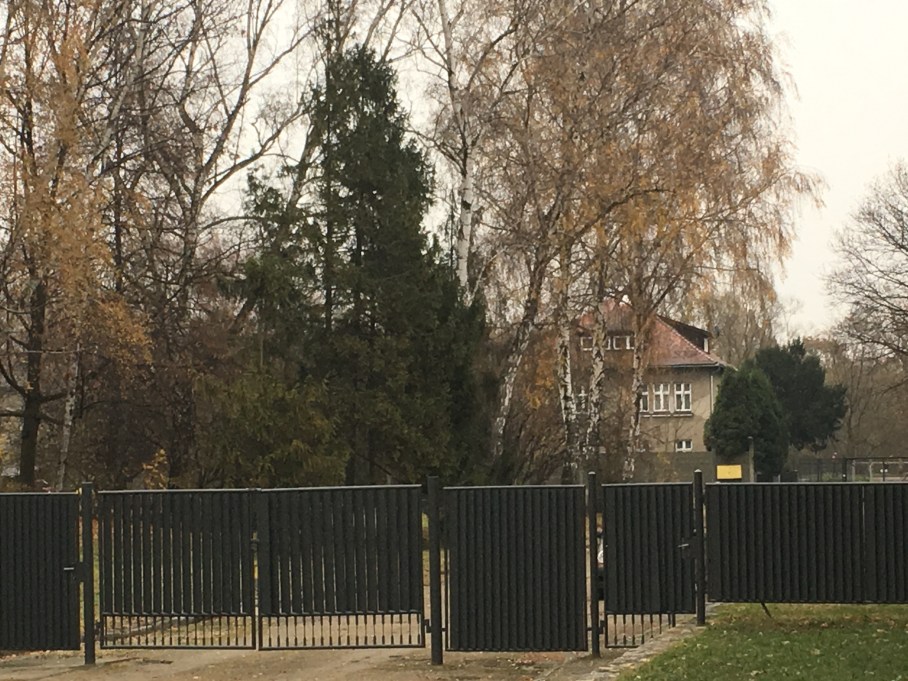
As we exited the prison our guide pointed out the residence of camp commandant Rudolf Hoss who oversaw daily operations. Hoss’ wife was reportedly distraught when her husband was promoted to work in Berlin- she loved her residence.

img_0868

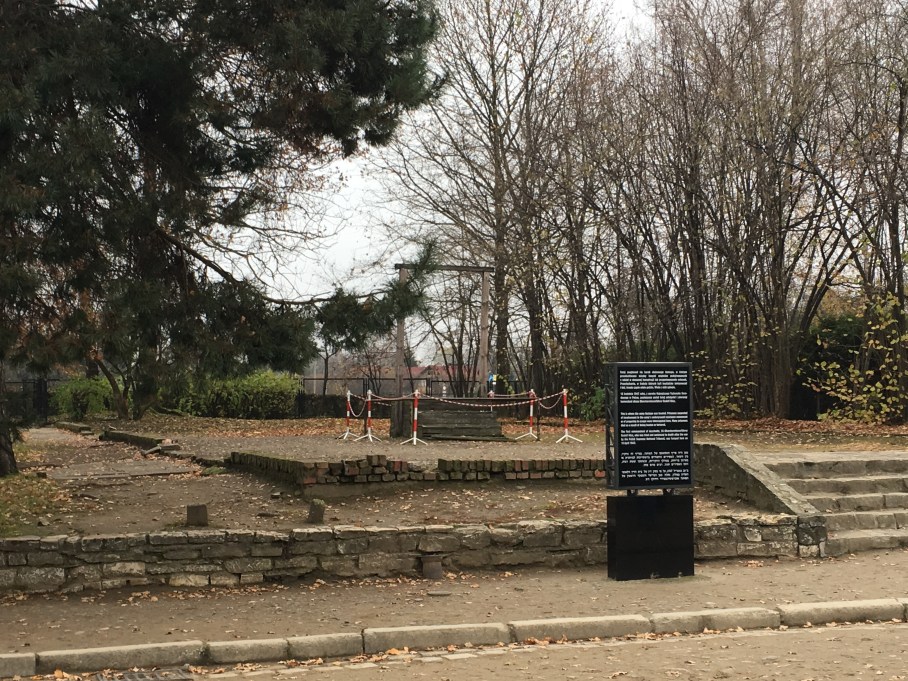
Adjacent stood a replica of the gallows where Hoss was hung in 1947 following his conviction at the Nuremberg Trials.

img_0871

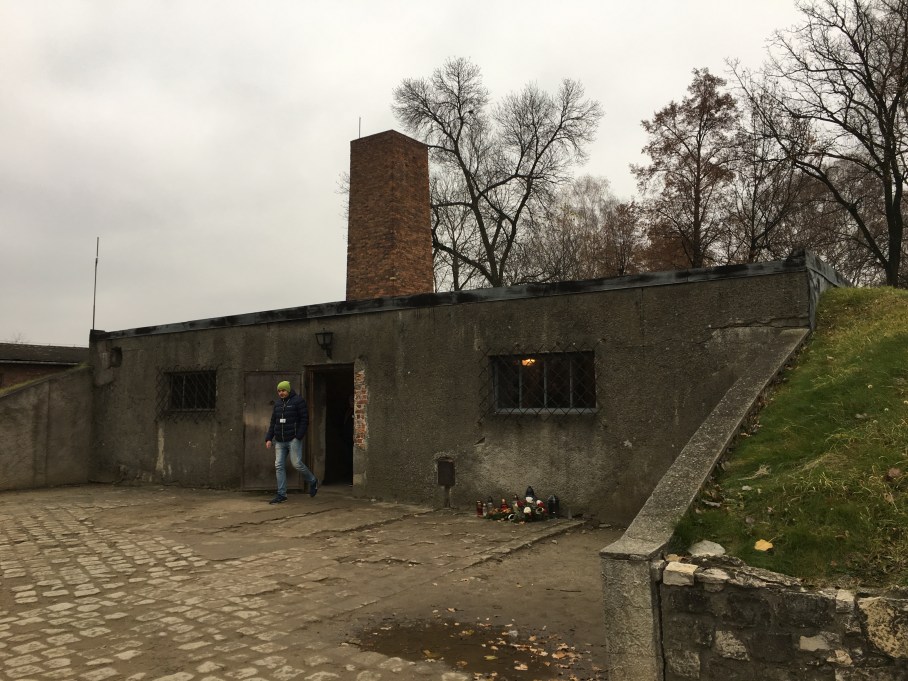
Nearby stood the only intact gas chamber from the entire Auschwitz complex. Its capacity was significantly less than those at Auschwitz II (Birkenau). It could only kill 700 people at a time. Our guide waited outside as we walked through in silence.

img_0872

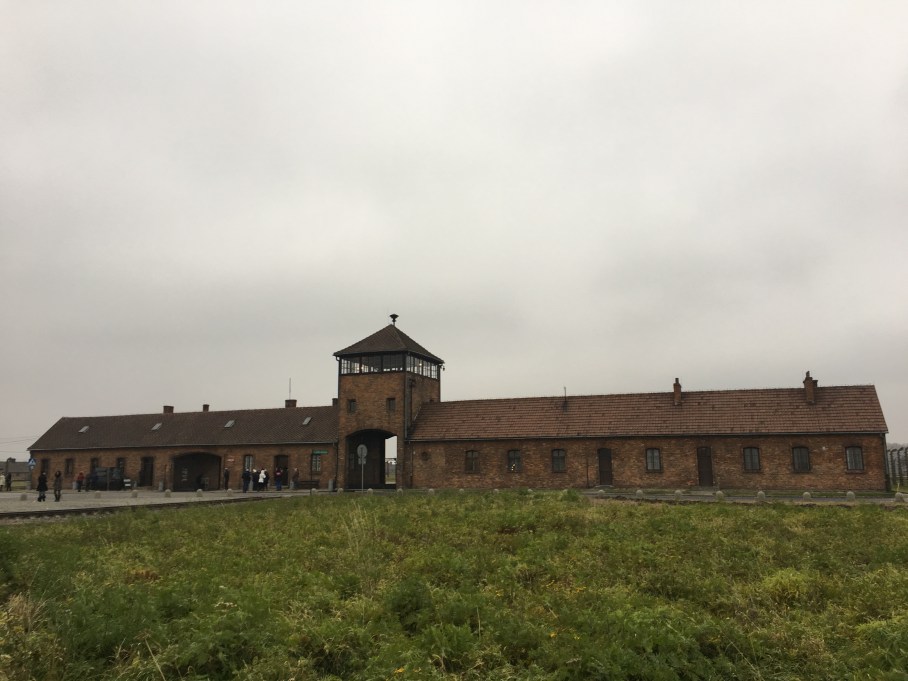
With that, we boarded the bus for the short drive to Auschwitz II, otherwise known as Birkenau. It was built a year after Auschwitz in order to accommodate for the rapid influx or Jews from across the continent, resulting from Hitler’s ‘Final Solution’. Whereas Auschwitz I held about 30,000 prisoners, Birkenau had a capacity of 100,000.

img_0877

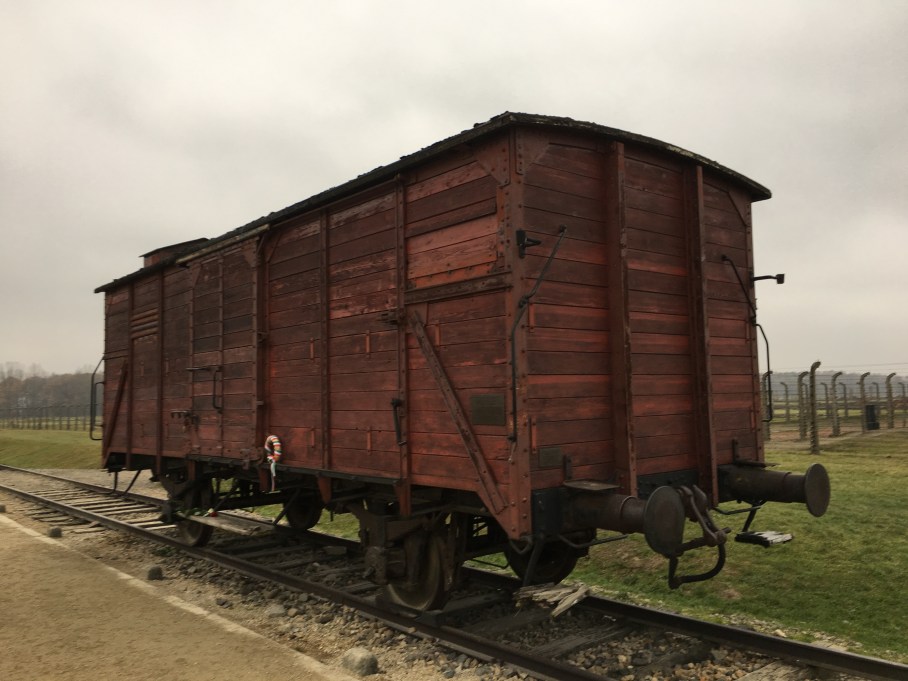
The first Jews were deported to Auschwitz in overcrowded cattle cars from liquidated ghettos in 1942.

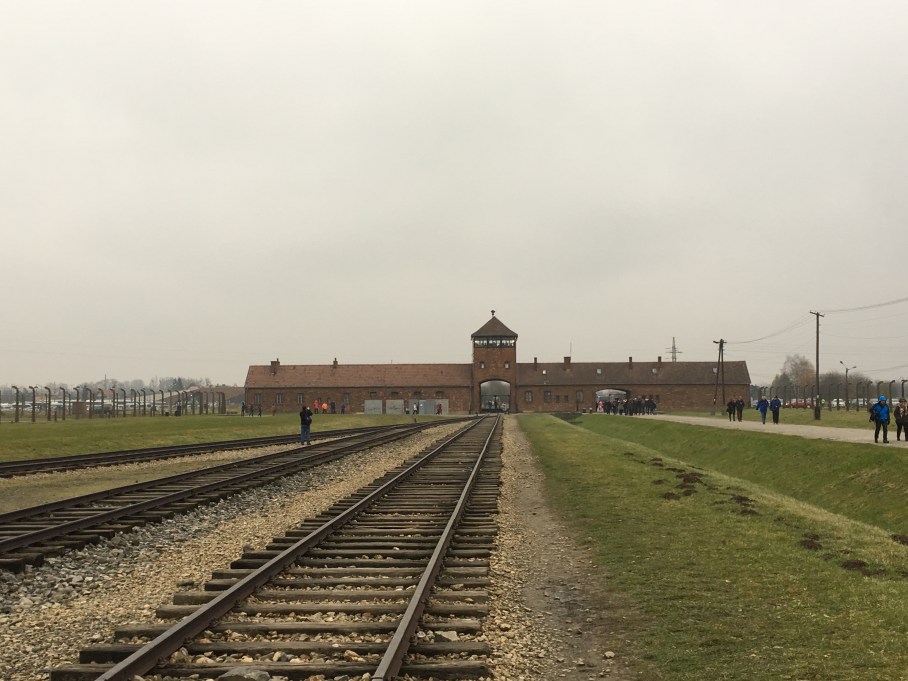
img_0896

Their fate was determined with a flick of a finger immediately upon arrival: those healthy enough to work were directed to the barracks, while young children, many women, most elderly, and all handicapped were directed to the gas chamber. It is estimated that around 75% of inmates were sorted into the latter line.

img_0889

The tracks were the last place most inmates saw their loved ones. I couldn’t help but think about my thirteen year old sister, as I had throughout the day.

img_0898

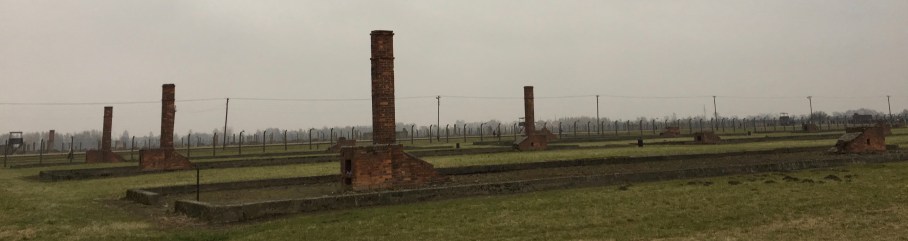
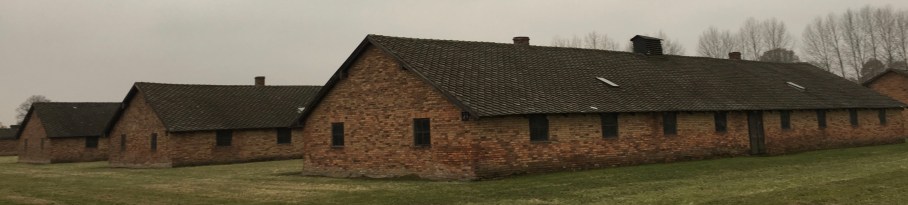
The vast majority of barracks were destroyed as the Nazis fled so as to conceal their crimes. On one side of the tracks, there were rows of brick chimneys as far as the eye can see.

img_0890img_0917

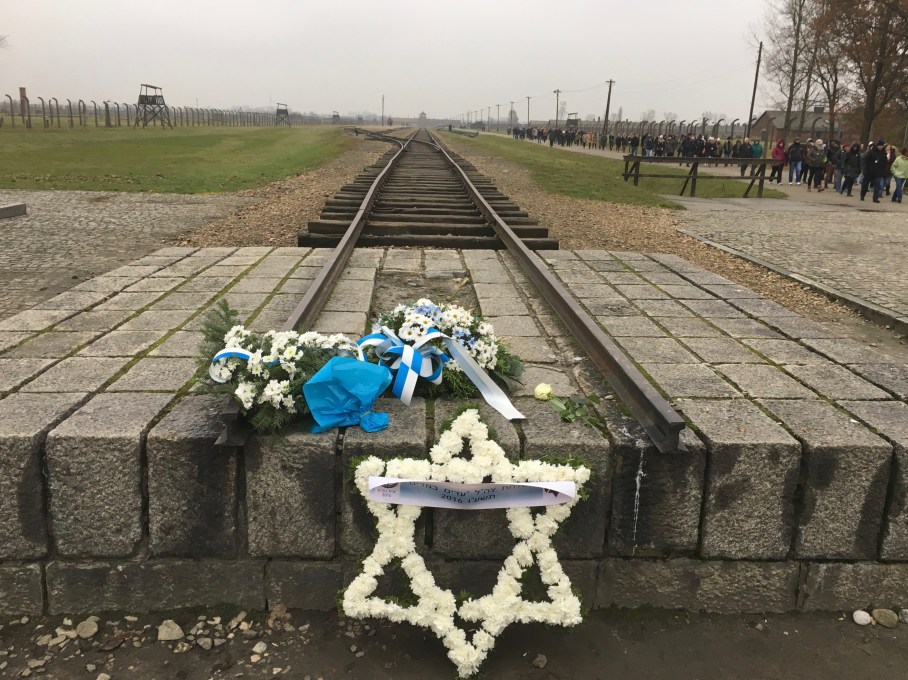
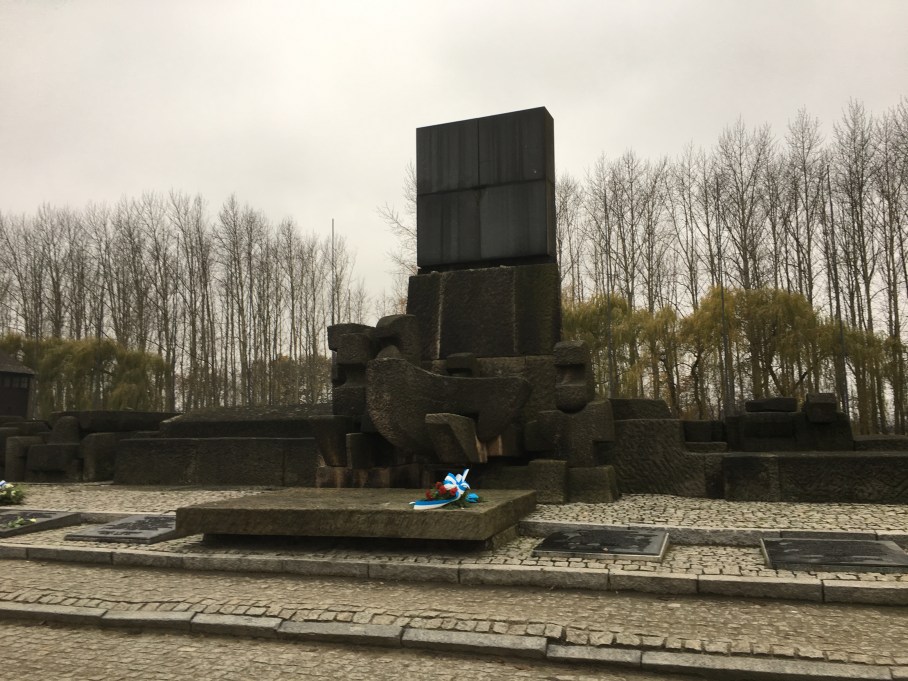
A memorial to the victims stands just beyond the end of the tracks.

img_0900

Plaques relaying the horrors in various languages lied in front. 1,300,000 people were deported to Auschwitz, including 1,100,000 Jews. Over a sixth of all Jews murdered in the Holocaust perished at Auschwitz.

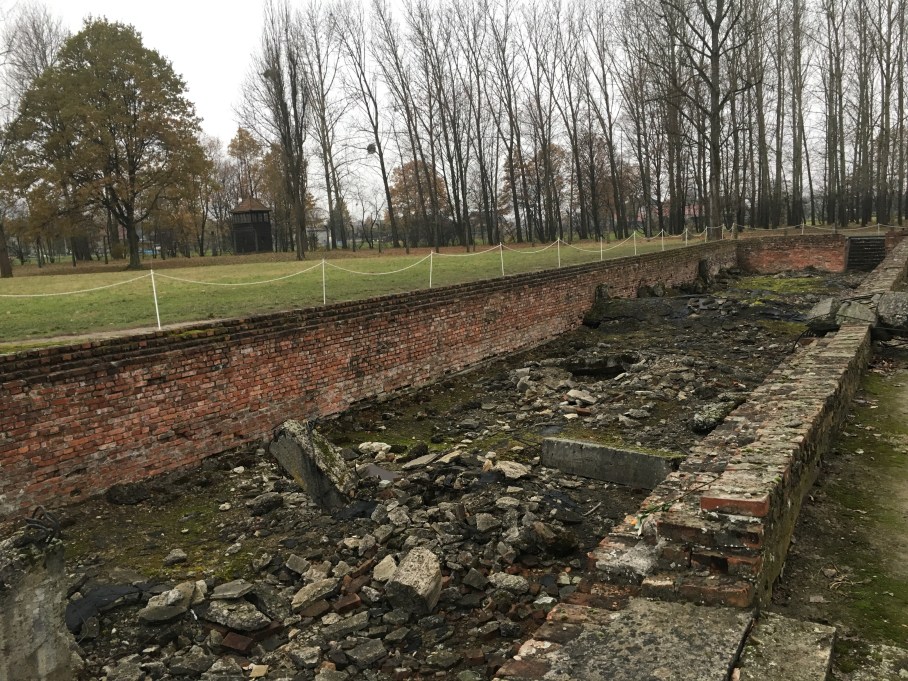
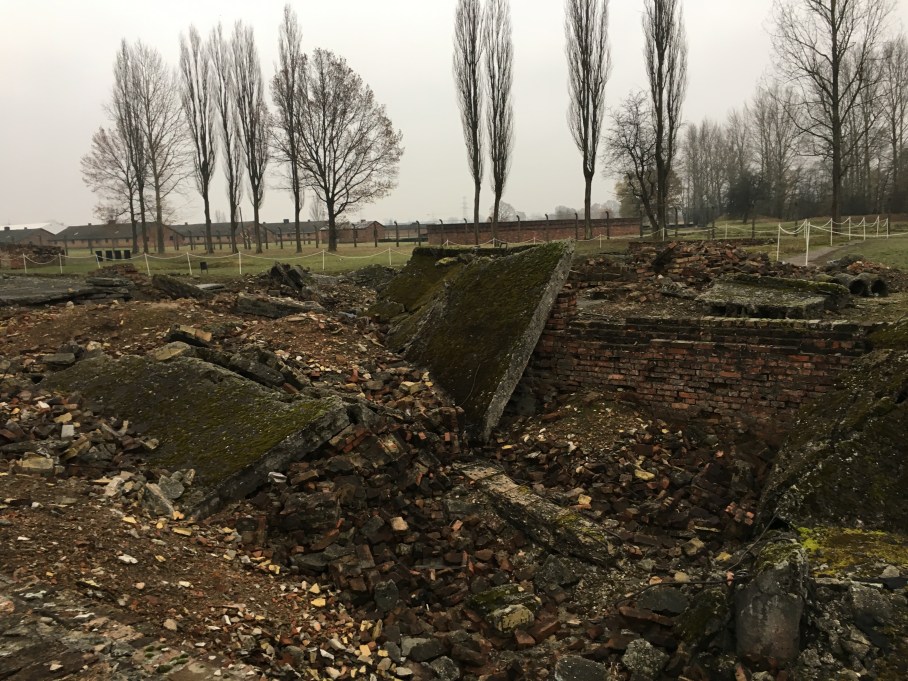
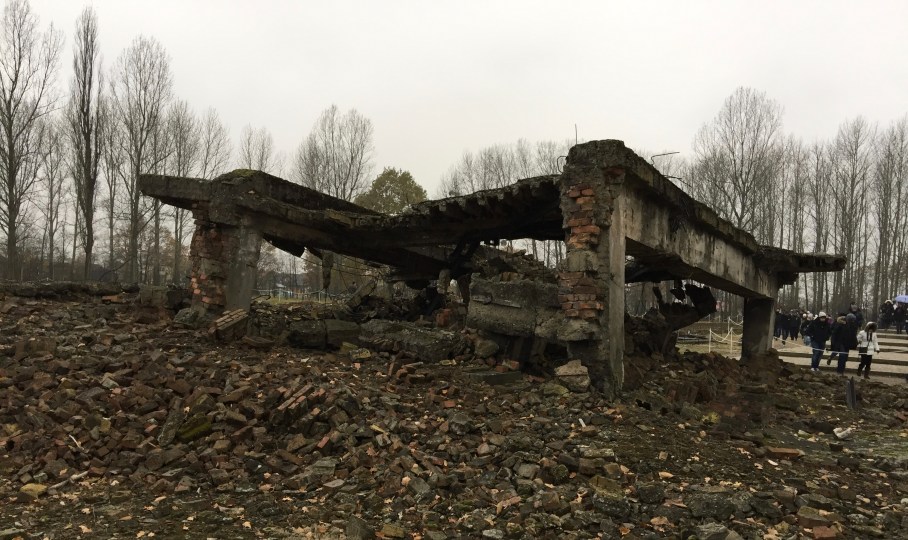
Nearby rested the ruins of one of four gas chambers. Each had the capacity to kill 2,000 people at a time. At one end stood the room where men, women and children were forced to undress in the presence of one another.

img_0911

They were then shoved into the adjacent dark chamber, where they were told to expect a shower before internment. Zyklon B (hydrogen cyanide) pellets were dropped from above. The death was excruciating and often lasted fifteen minutes.

img_0908

Their bodies were then dragged next door to the crematorium. With that, the millennium of European Jewry that I’ve spent the past few months exploring came to an abrupt end.

img_3400

We then walked the length of the tracks, lined with barracks, to reach one we could enter.

img_0920img_0923

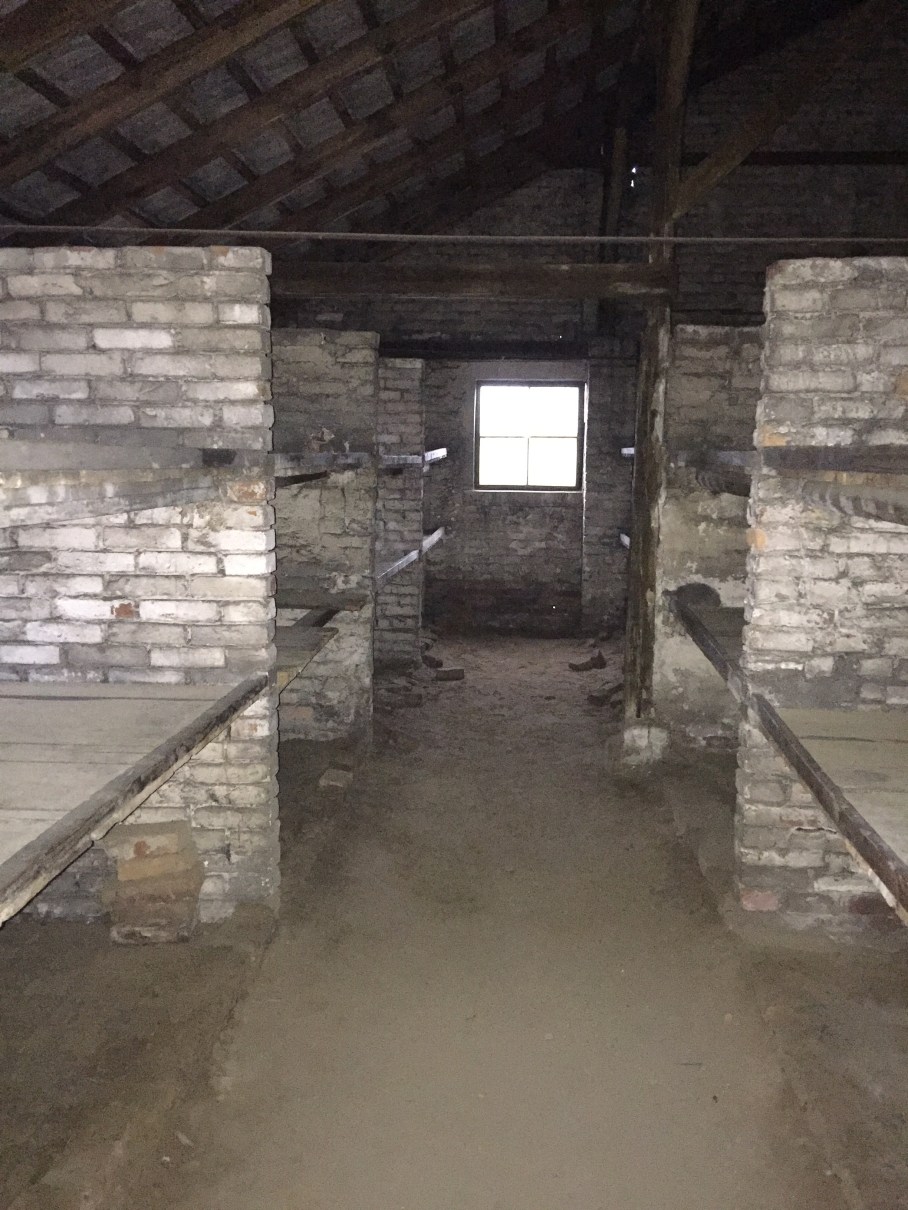
Each barrack held over 700 people.

img_3409

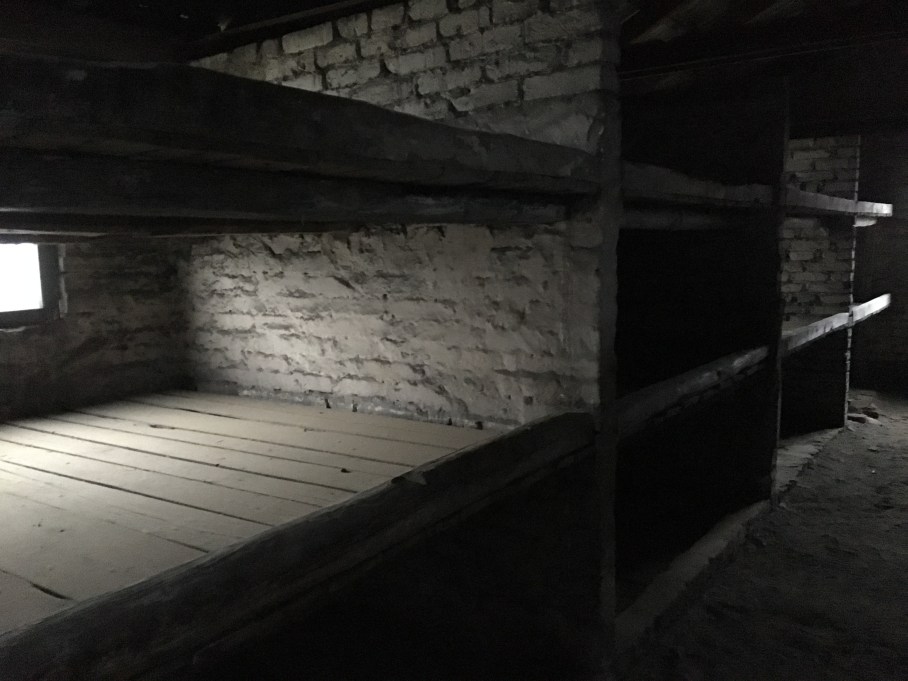
Each bunk had three levels, the top two were wooden and the bottom was the floor- hardened earth that turned to mud with moisture.

img_0932

As we stood in the barracks our guide left us with the words of renowned writer and Auschwitz survivor, Primo Levi:

From whatever country you

look at the ruins of the camp.

Think, and do all you can,

so your pilgrimage

be not in vain,

as was not in vain our death…

For you and your children,

the ashes of Auschwitz are

a warning.
Act so that the terrible fruit

of hatred,

whose traces are visible here,

will never grow again a seed

neither tomorrow, nor ever!

I couldn’t help but think of that seed of hatred growing in America.

img_0940

With that we loaded the bus back to Krakow. I don’t believe anyone who claims to fully grasp the magnitude of the horror. It was unbearable putting what I witnessed in the context my family alone. I surely don’t believe anyone who lacks a decent understanding of the culture, history and everyday life stolen from those massacred and wiped from our collective memory.

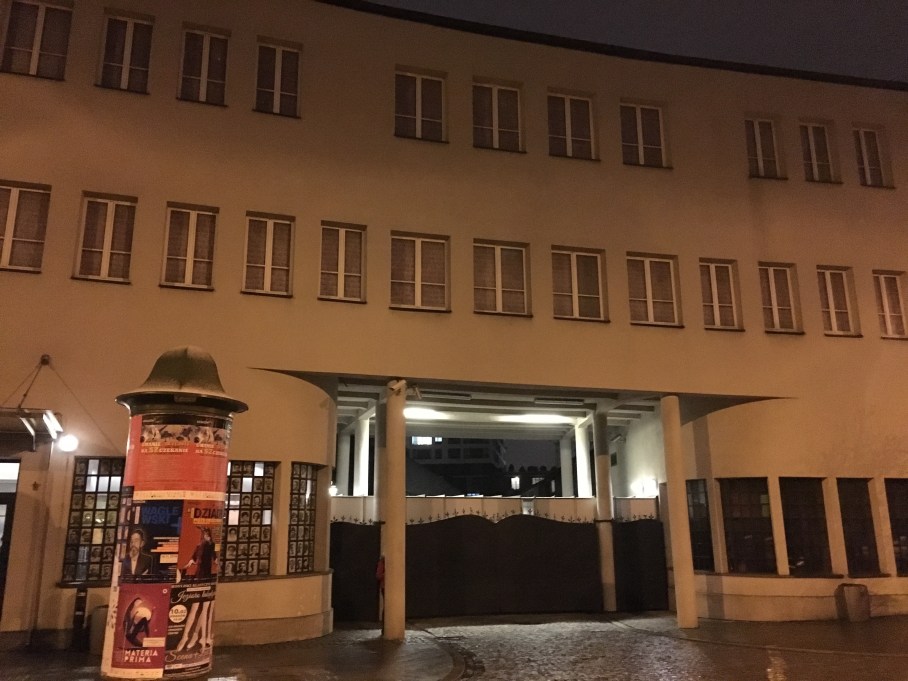
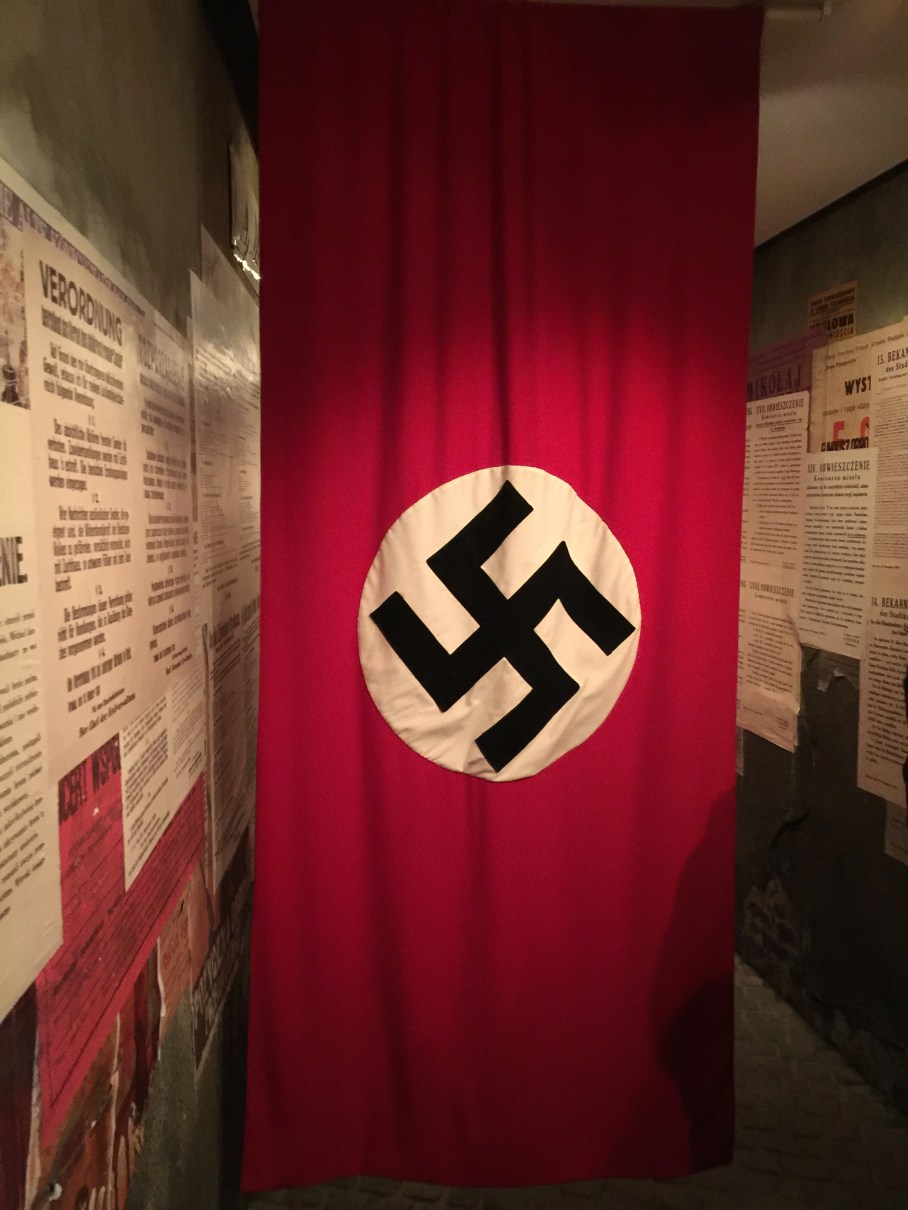
We took a taxi to the other side of Kazimierz, the suburb of Podgorze. We visited the enamelware factory of Oskar Schindler, which now houses an exhibition of Nazi-occupied Krakow.

img_0968

In March of 1941 all Jews were evicted from Krakow to Podgorze, and in April walls were built around the city. It was one of five major metropolitan ghettos in Nazi Poland. The exhibition relayed the horrors of life in the ghetto.

img_3412

Only a tiny portion of the exhibit was dedicated to Schindler, who saved the lives of 1200 of Jews by employing them in his factory.

img_0956

Their descendants now number almost 9,000. His efforts were immortalized in the 1993 Steven Spielberg film.

img_0961

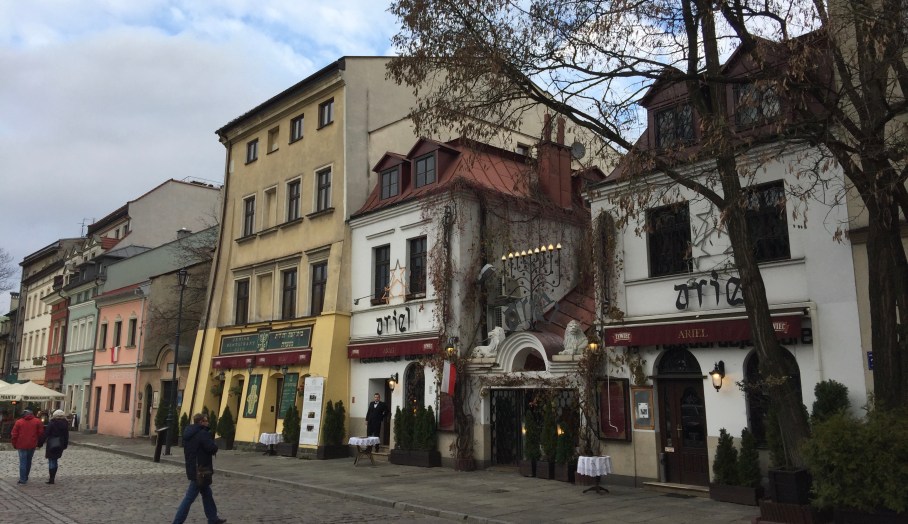
Afterwards, we taxied to Szeroka Square where snow had accumulated. We noshed on gefilte fish and matzoh-ball soup at ‘Ariel’ before our reservation at 7:30.

img_3422

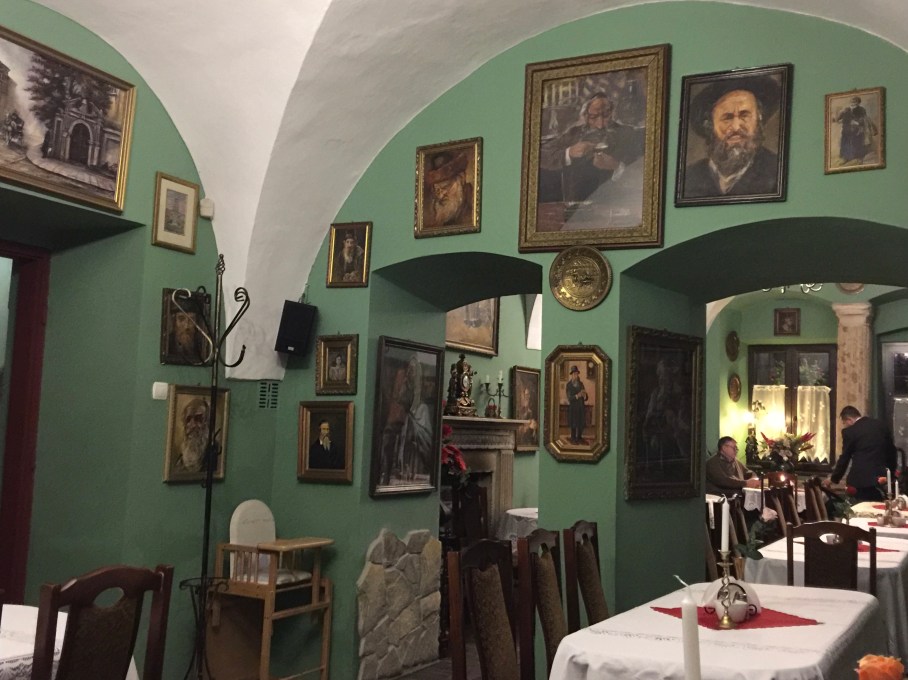
We had dinner at Klezmer Hois, which is housed in the former mikveh.

img_3156

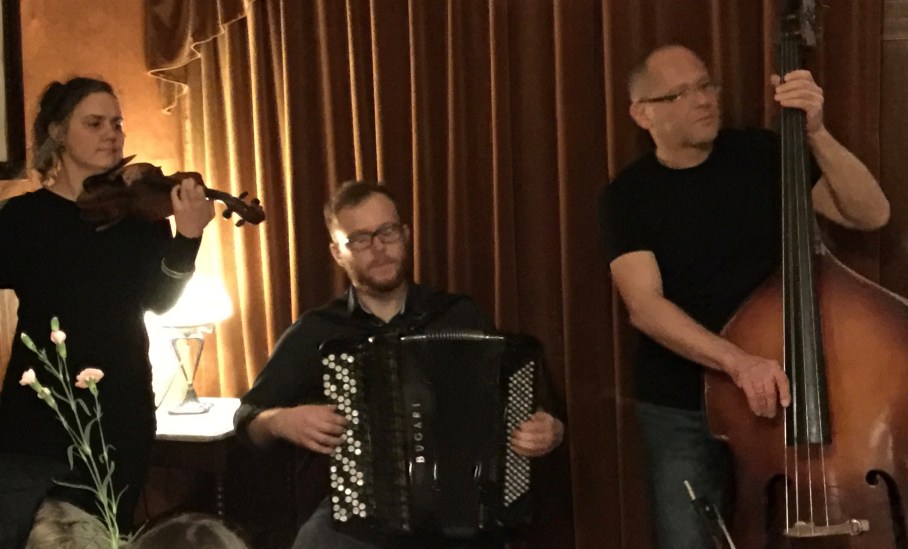
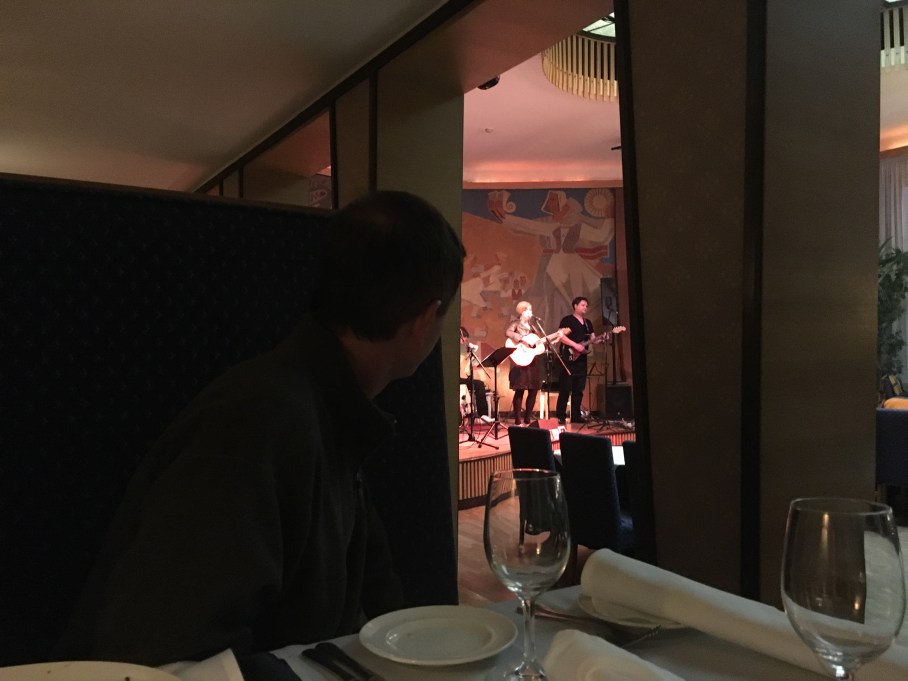
We ate traditional yiddisher food before the klezmer performance began.

img_3430

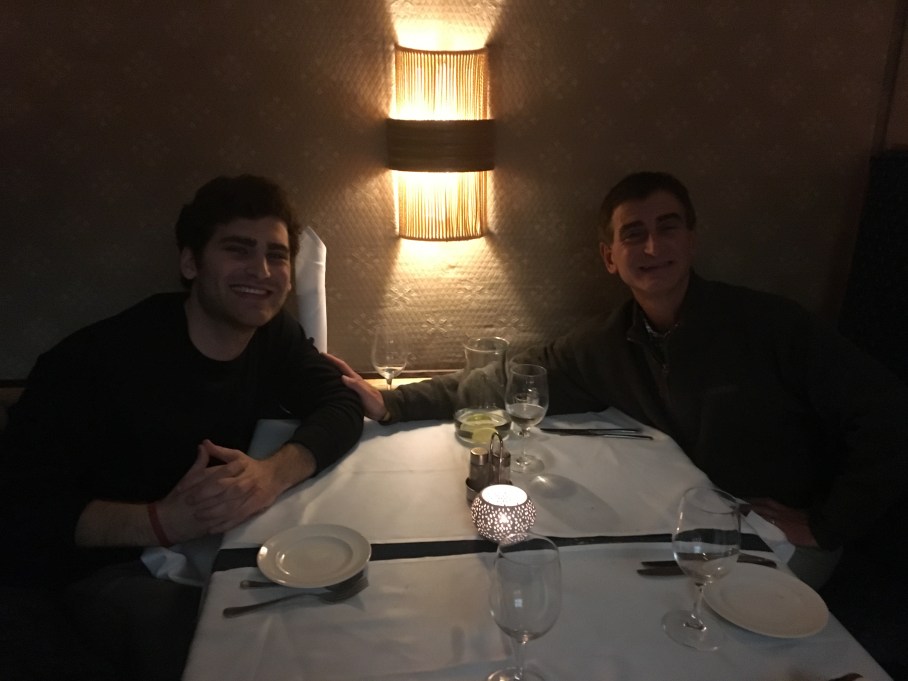
Dad was overjoyed. They even played some familiar tunes.

img_3432

It was definitely special to hear our traditional music played in our ancestral land.

Taxied back to the hotel, went to sleep.

11 November 2016

Slept in and had a nice breakfast.

img_0800

Krakow is divided by Wawel Hill into two districts: Old Town and Kazimierz. We started in Kazimierz, where Jews have resided since they first arrived from Germany in the early 14th century.

img_0802

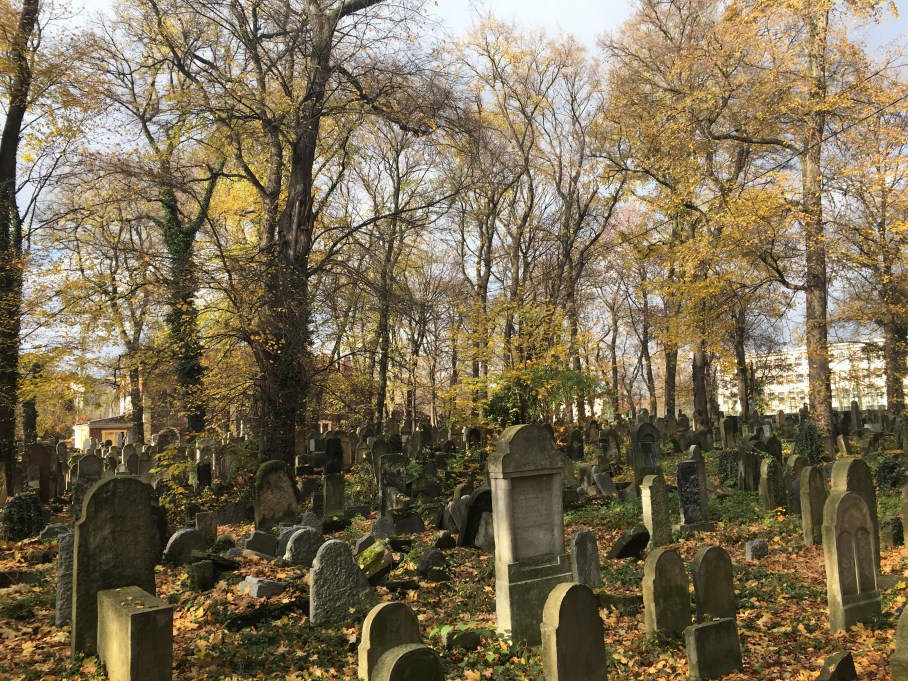
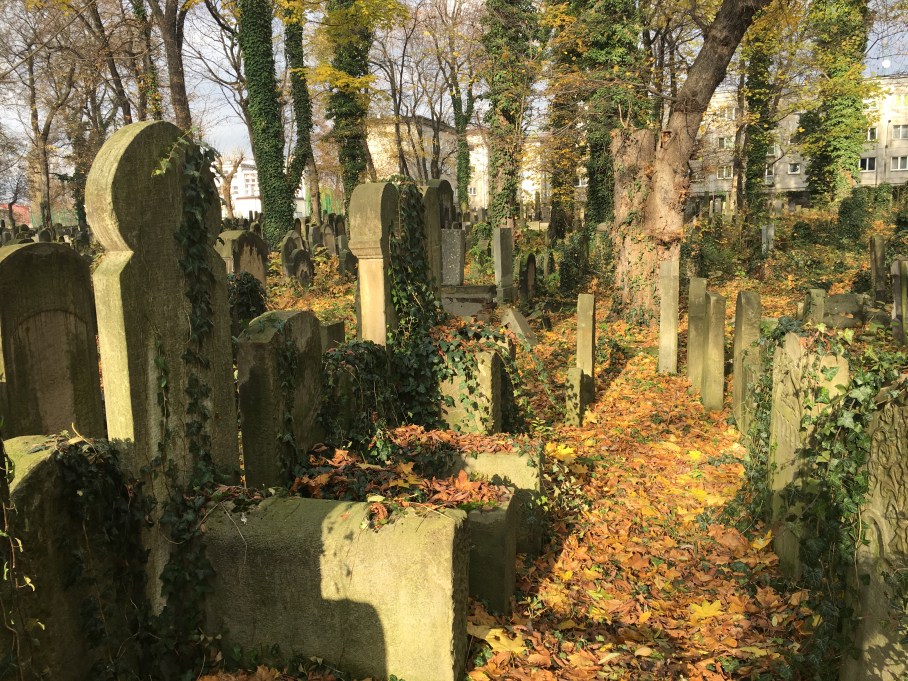
Our tour began at the eastern tip of Kazimierz, where the New Jewish Cemetery was established in 1800. Burials ceased in 1932.

img_0813

Renowned painter Maurycy Gottlieb was buried there at age 23 in 1879. I’d visited his childhood home in Drohobycz, Ukraine.

img_0818

The Galicia Jewish Museum stands nearby- I don’t think it was unreasonable to expect a discussion of Galitzianer Jewry. I was disappointed to find only a contemporary photograph exhibit of Jewish remnants in Poland.  Had to forcibly pull Dad out- I’ve developed a pace for my travels that he has yet to adopt.

img_0827

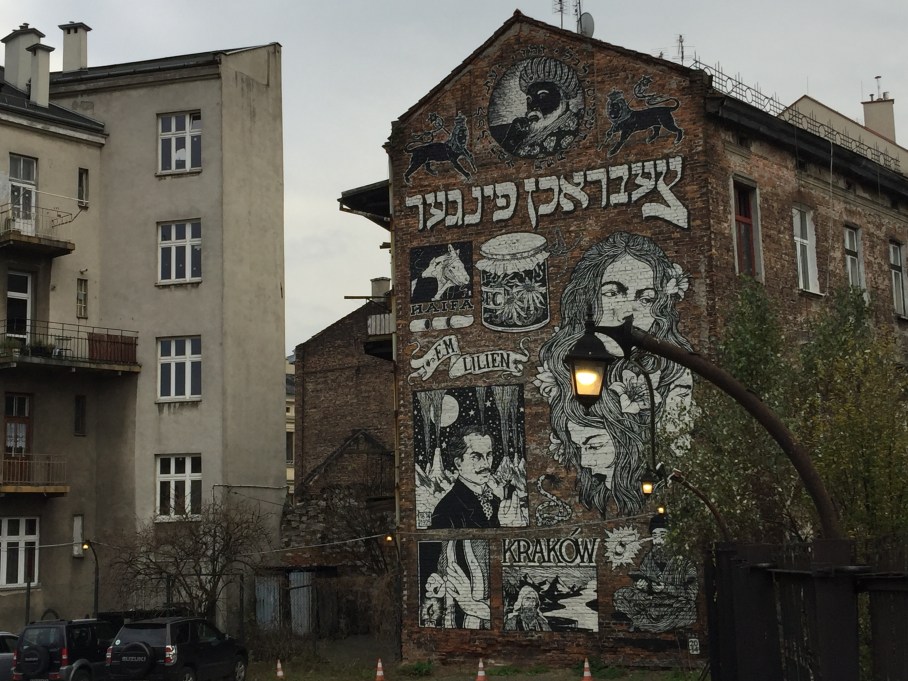
There was an impressive mural on the building opposite, one of many testaments to the omnipresent Jewish spirit that envelopes Kazimierz.

img_3145

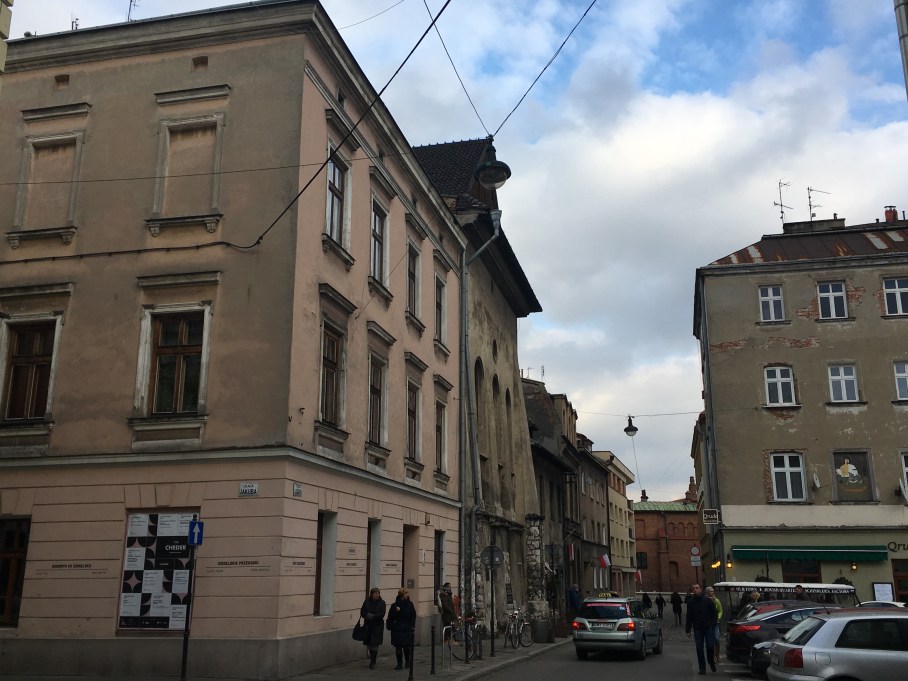
A few blocks down stands the third synagogue erected in Krakow.

img_0836

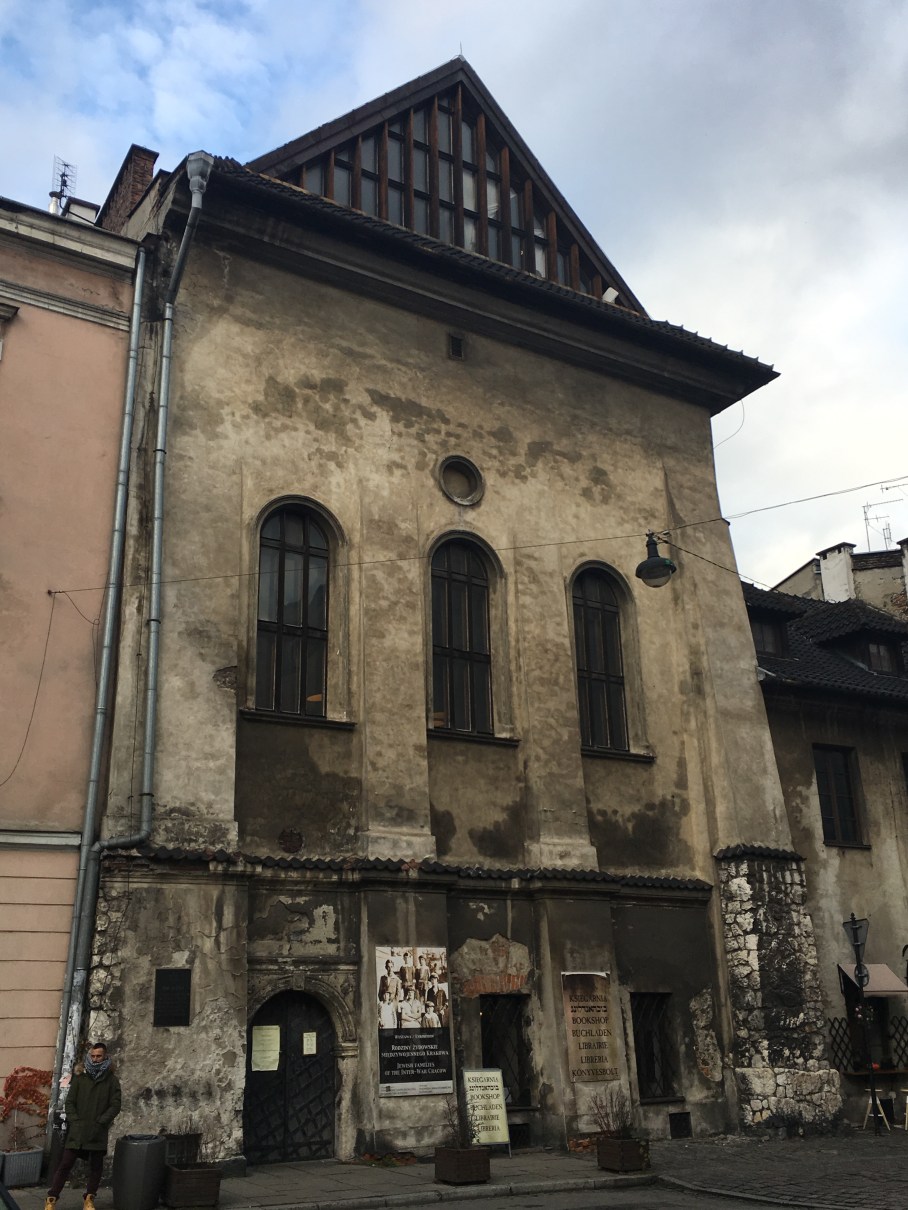
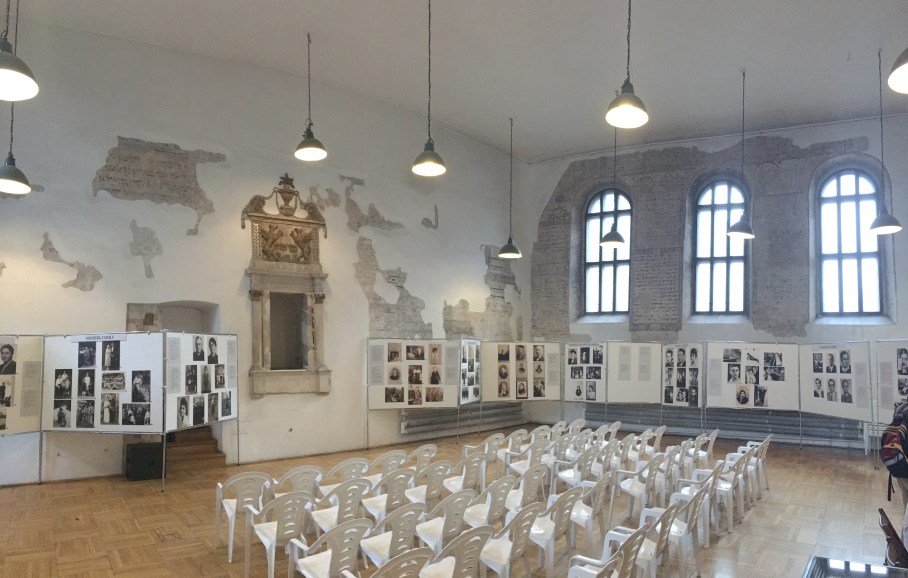
The High Synagogue was the tallest building in Krakow upon completion in 1563.

img_0838

It marked the entrance to the Jewish Quarter until her westward expansion in the following century.

img_0832

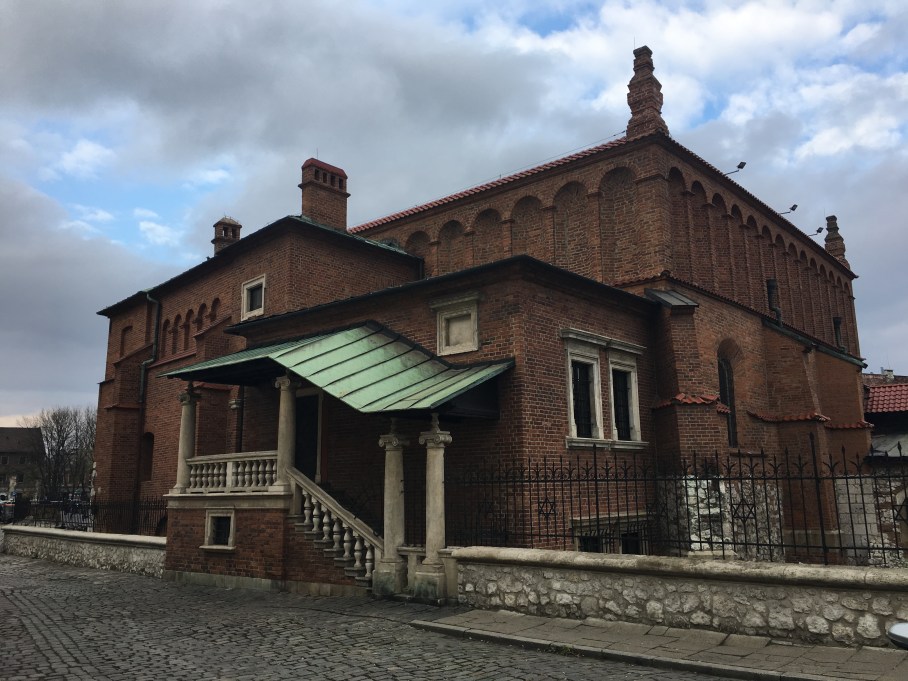
It was a couple steps to the oldest synagogue in all of Poland. Built in the early-15th century, the Old Synagogue served as the religious and administrative center of the Jewish community until WWII. National hero Tadeusz Kosciusko spoke from the bimah in 1794 to rally Jews against Russian encroachment- The Jews proved to the world that whenever humanity can gain, they would not spare themselves.

img_0851

The Old Synagogue occupies the eastern end of Szeroka Square, the traditional epicenter of Jewish life in Krakow. It is surrounded by Jewish restaurants, Jewish book stores, etc.

img_3148

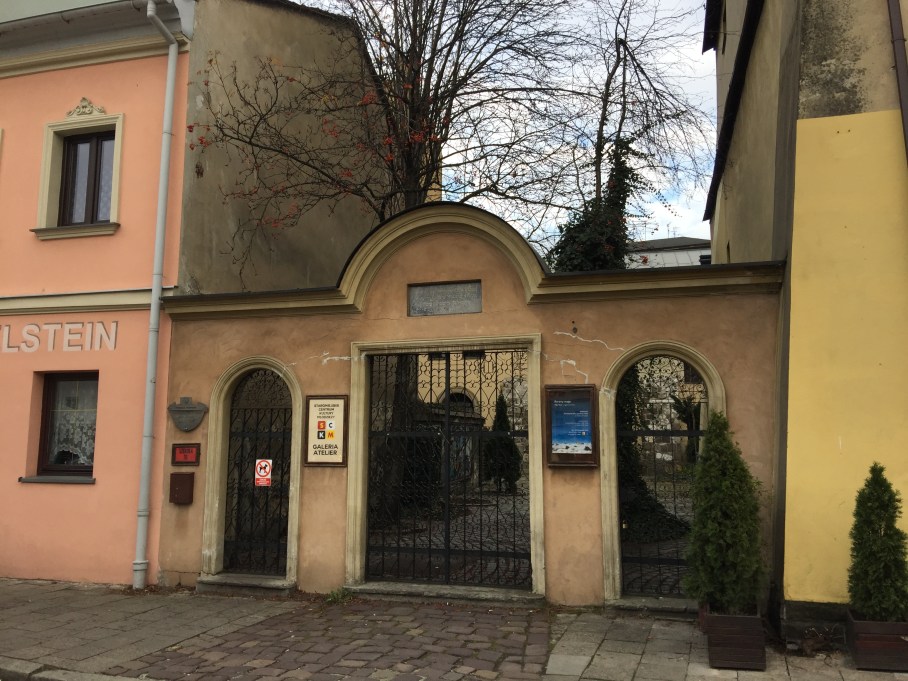
At the northern tip of her western side stands the Remu Synagogue. Upon completion in 1557 it was simply referred to as the ‘New Synagogue’, but later named for her founder- Rabbi Moses Isserles (abbreviated ’Remu’). His influence was so great that Ashkenazi became synonymous with adherents of his commentary on the Shulchan Aruch.

img_3164

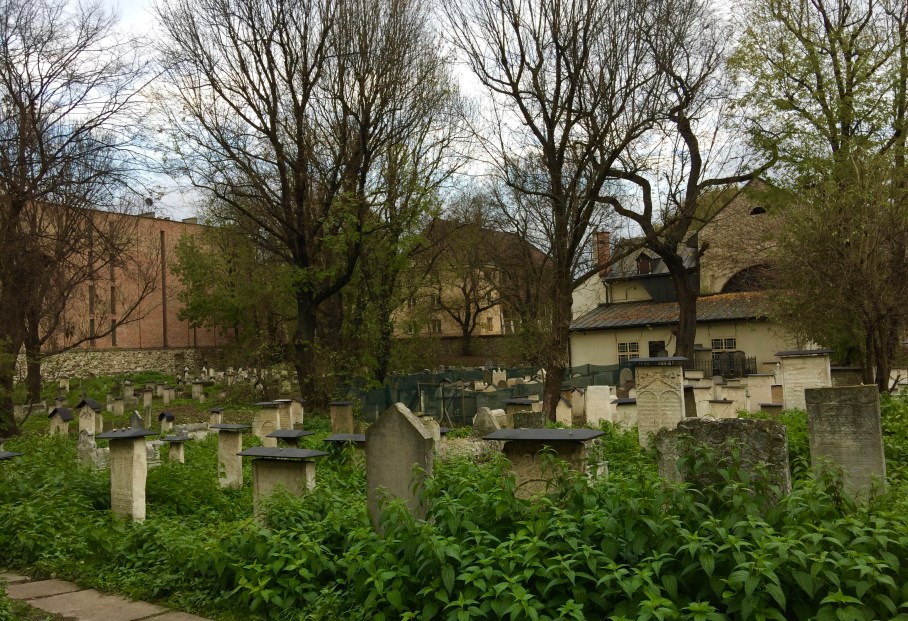
Just behind the synagogue lies the Old Cemetery (est. 1535), which carries the hallowed remains of Rabbi Isserles. Both the cemetery and synagogue were unfortunately closed for independence day.

img_3165

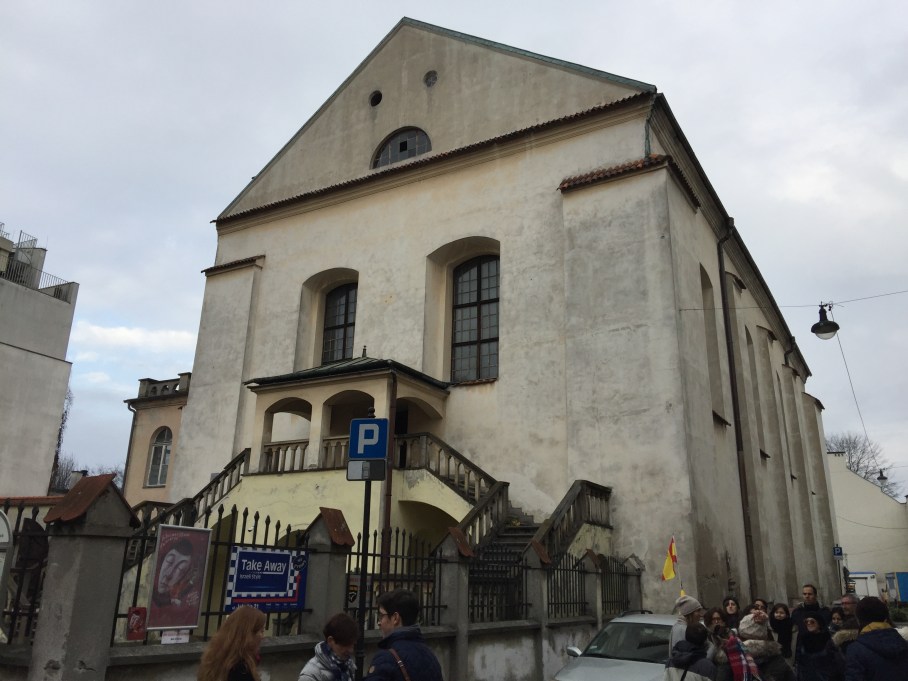
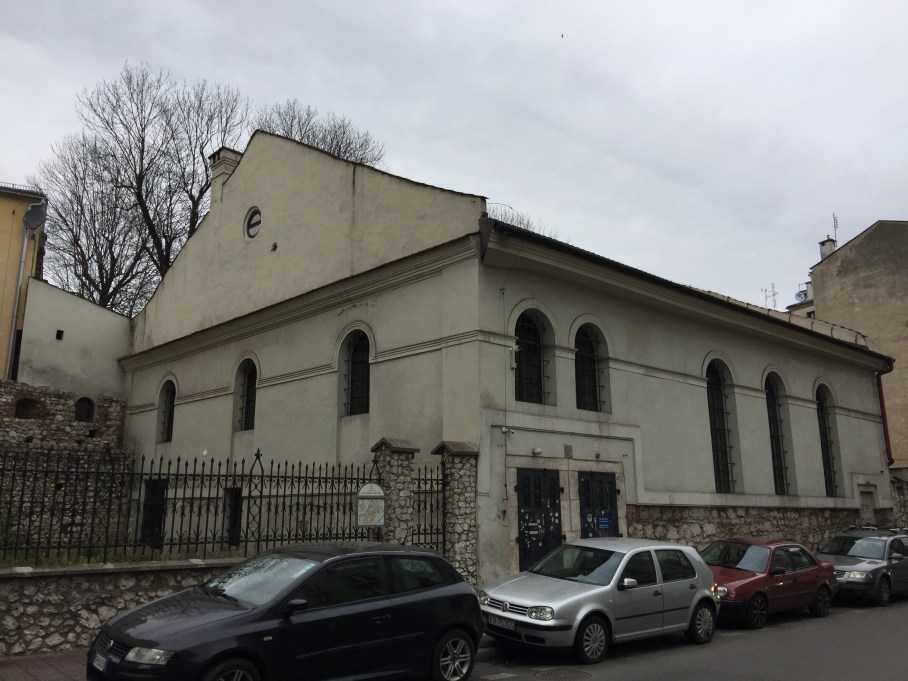
We passed a triad of 17th century synagogues (Popper, Isaac, Kupa) en route to Plac Nowy.

img_3151img_3171img_3174

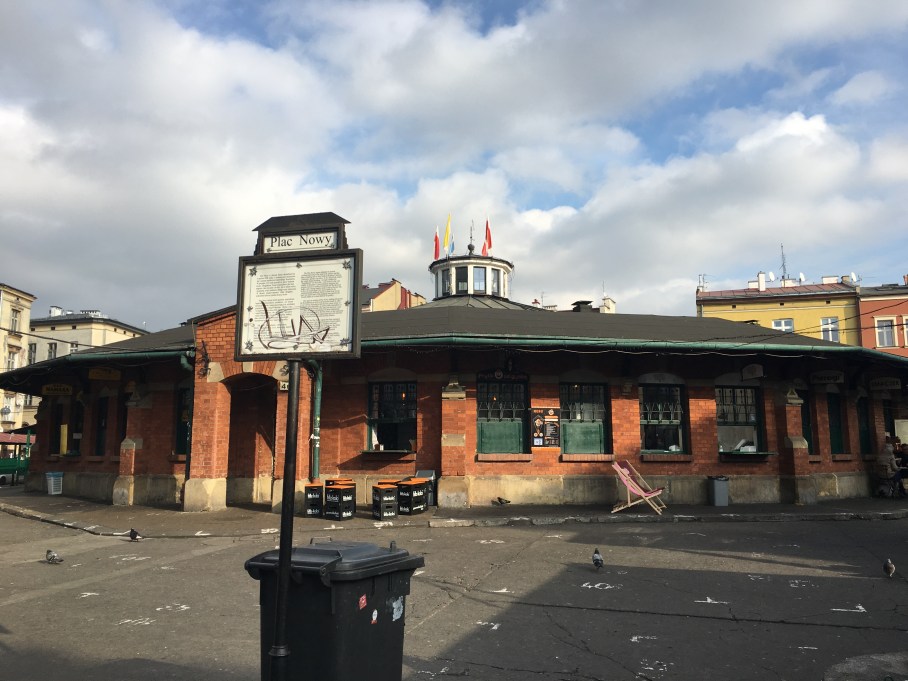
Plac Nowy (New Square) was incorporated into the Jewish District during her 17th century expansion. It served as the primary marketplace. In 1900 a rotunda was erected to serve as a ritual slaughterhouse, which functioned right up until Nazi occupation. In recent decades it has served as the heart of a Krakow subculture with a bustling alternative market.

img_0804

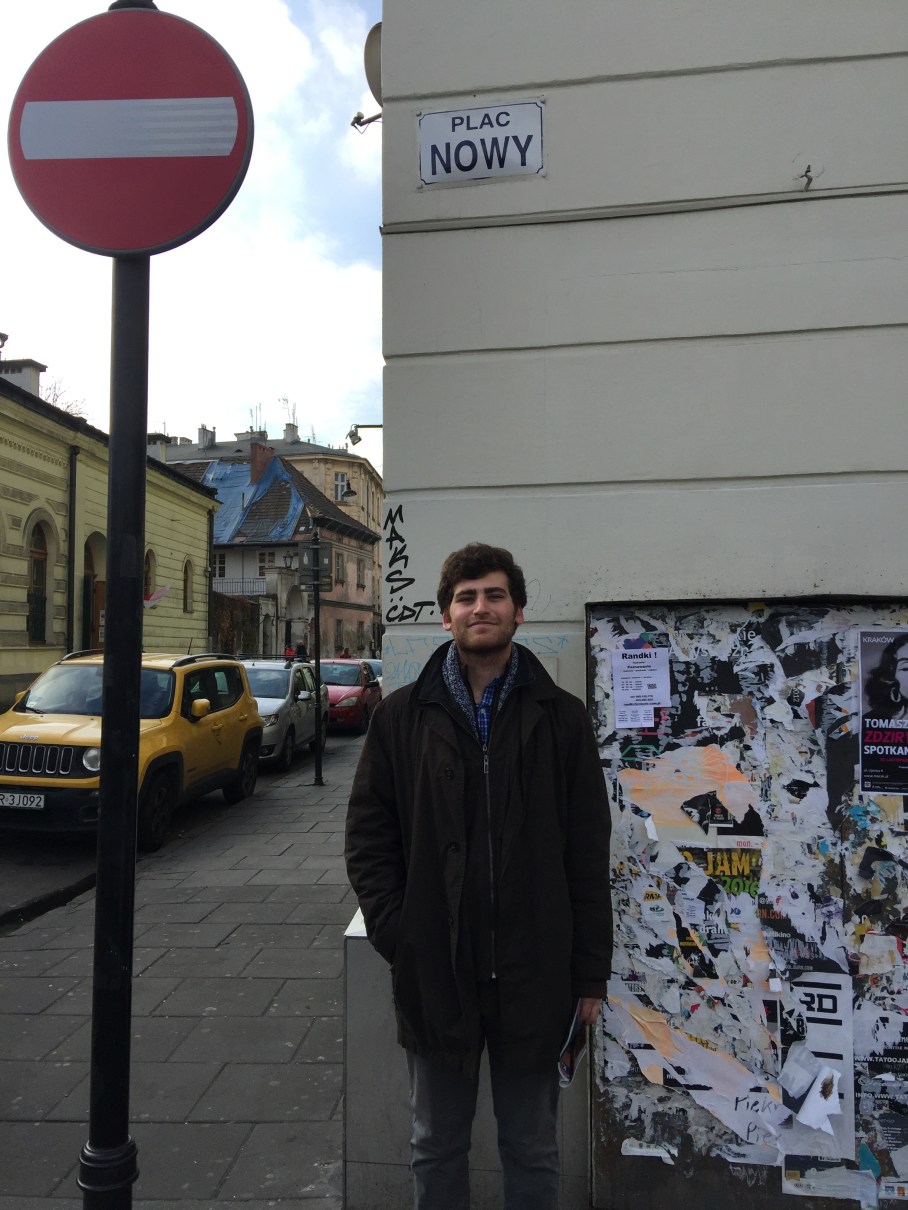
Dad was particularly excited, because my family often refers to me as ‘Nowy’.

img_3113

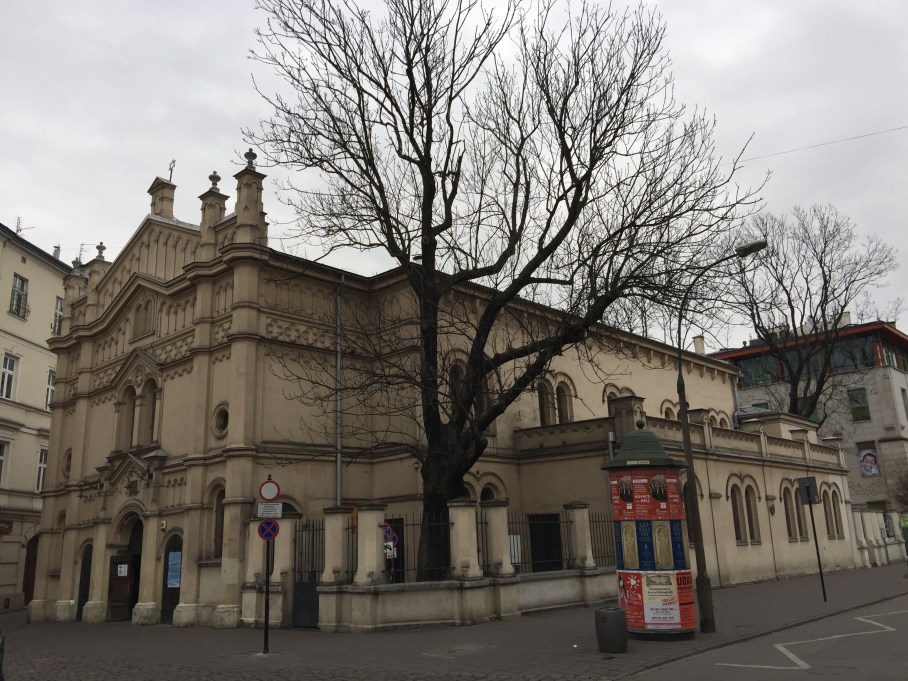
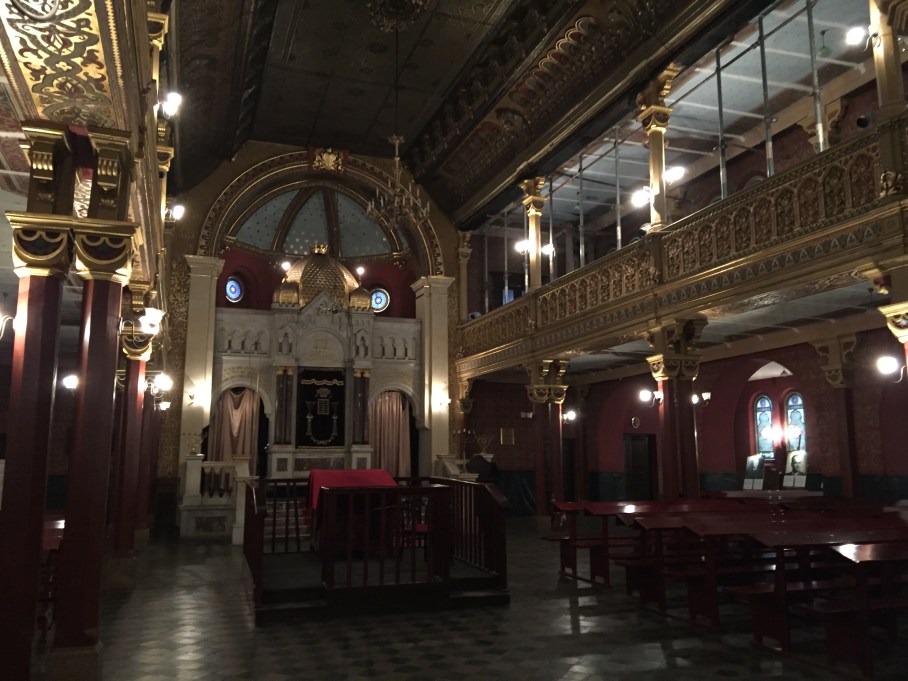
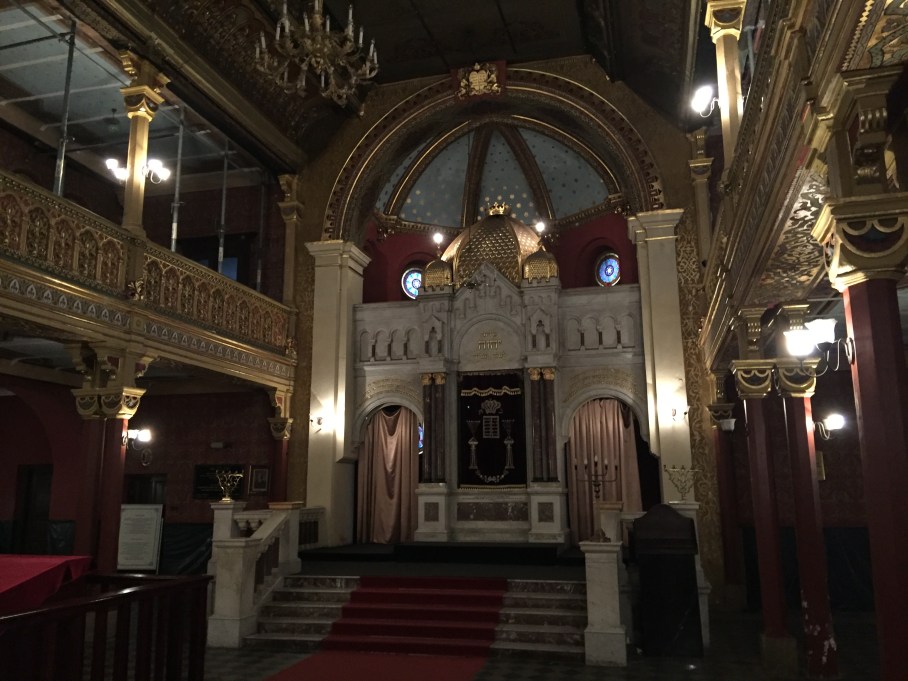
Temple Synagogue was our last and favorite, built in 1860 by Jewish intellectuals for the growing progressive community.

img_3180

It surely has one of the most beautiful interiors of any synagogue I’ve visited.

img_3182

It now hosts cultural events, both Jewish and secular.

img_3190

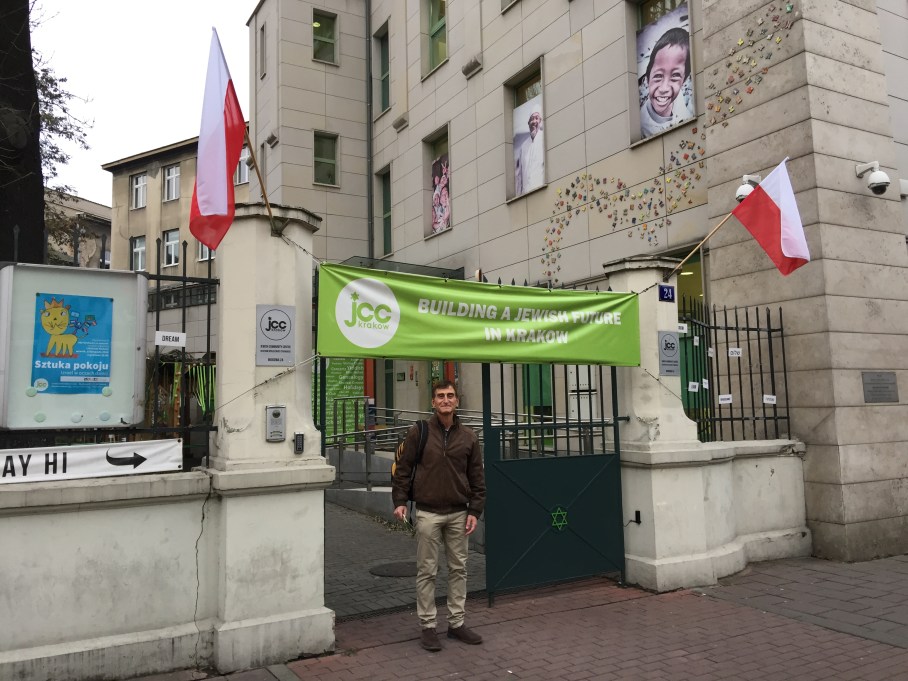
Dad insisted on visiting the Jewish Community Center that stands just behind. He inquired with the receptionist about recruiting teenagers to participate in the 2017 Maccabi Games, which are for the first time being held in Birmingham, Alabama.

img_3194

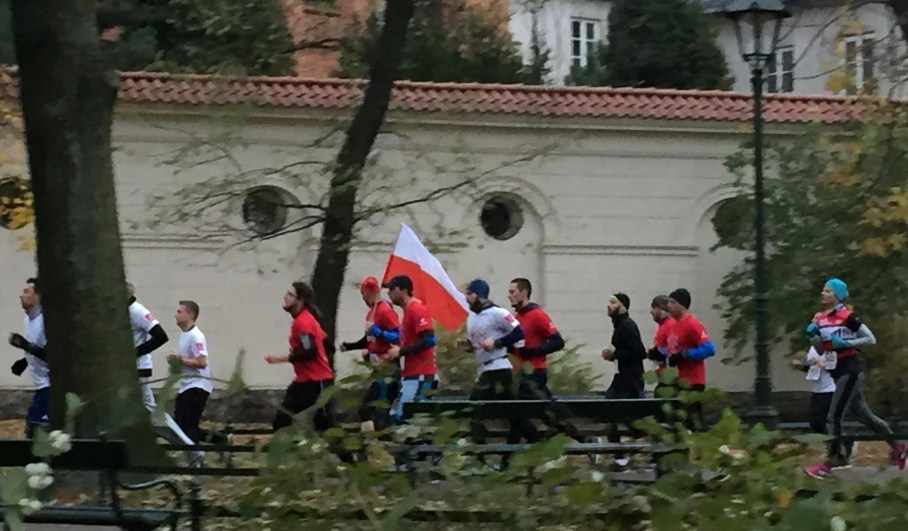
En route to Old Town we passed an Independence Day run. Dad was upset as he would’ve liked to participate.

img_3219

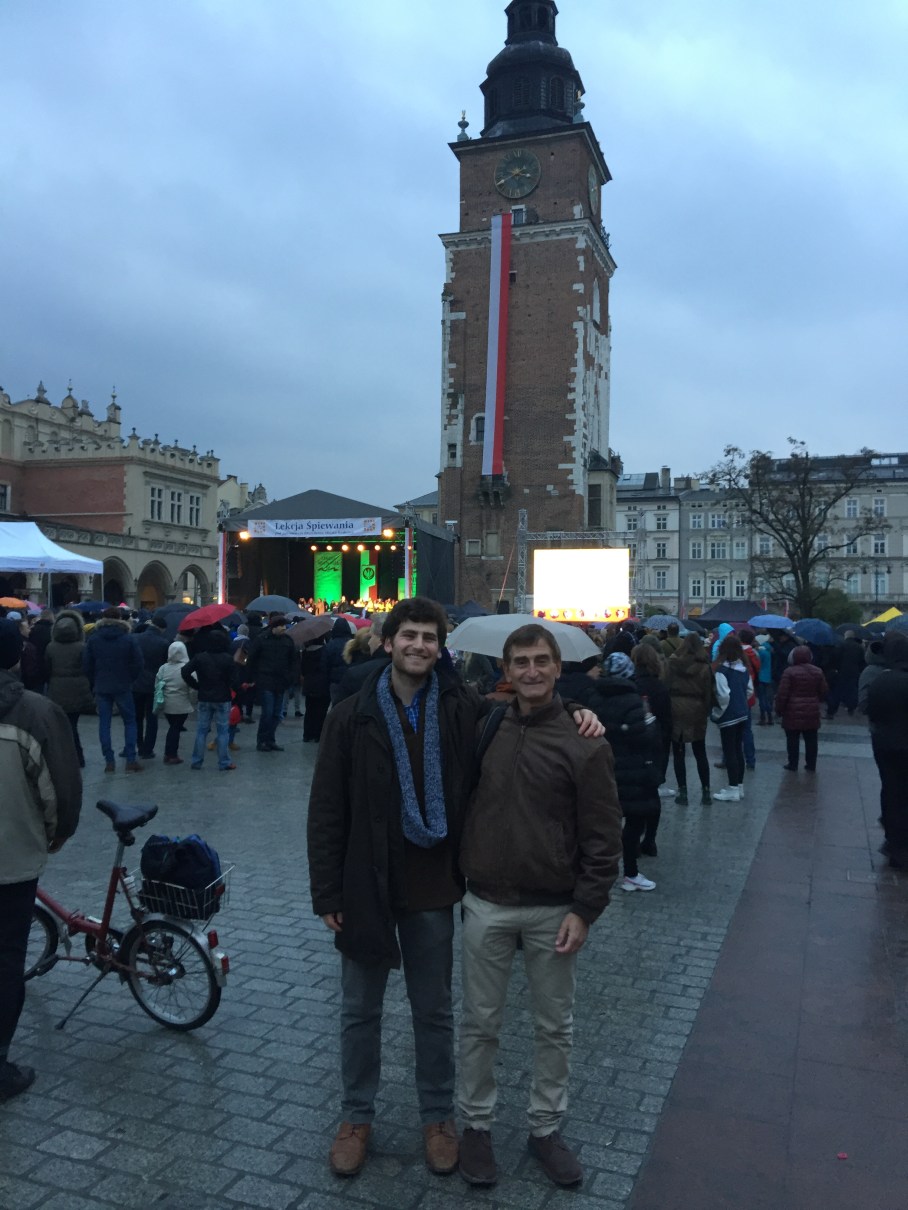
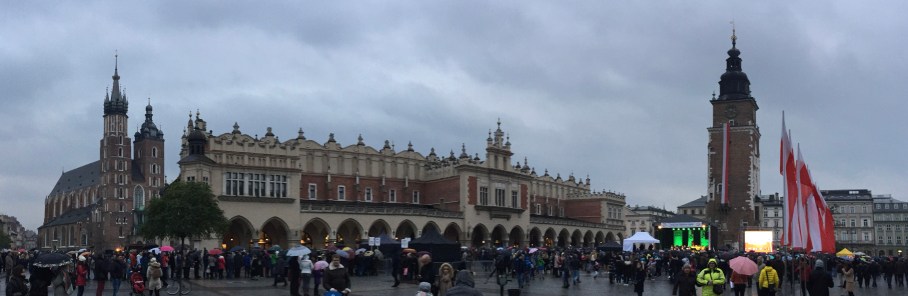
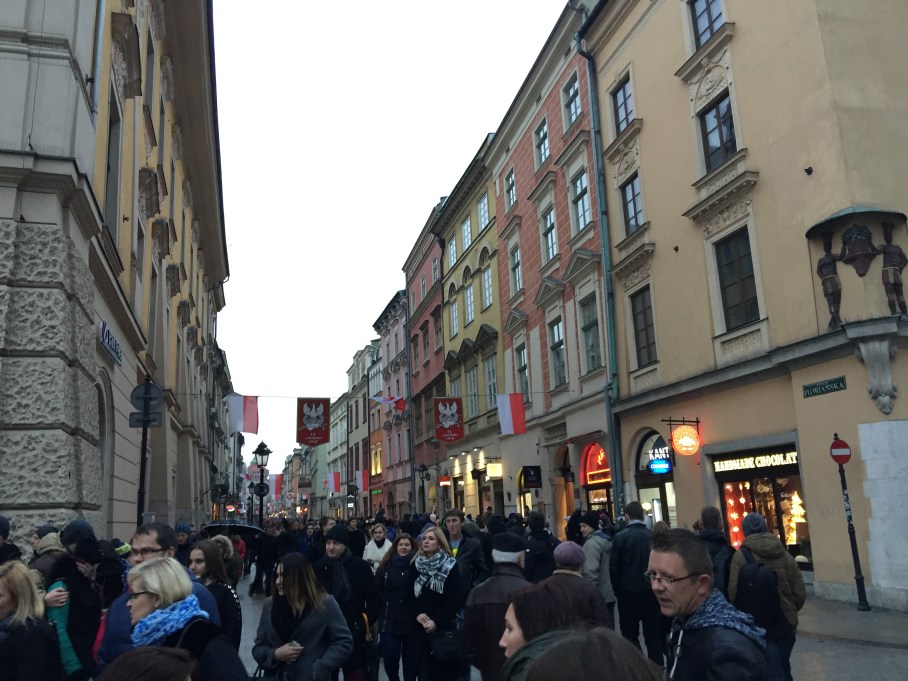
In town square we found a huge crowd gathered to celebrate Independence Day, the anniversary of the restoration of Poland’s sovereignty in 1918.

img_3252

The crowd stood between various historical markers.

img_3257

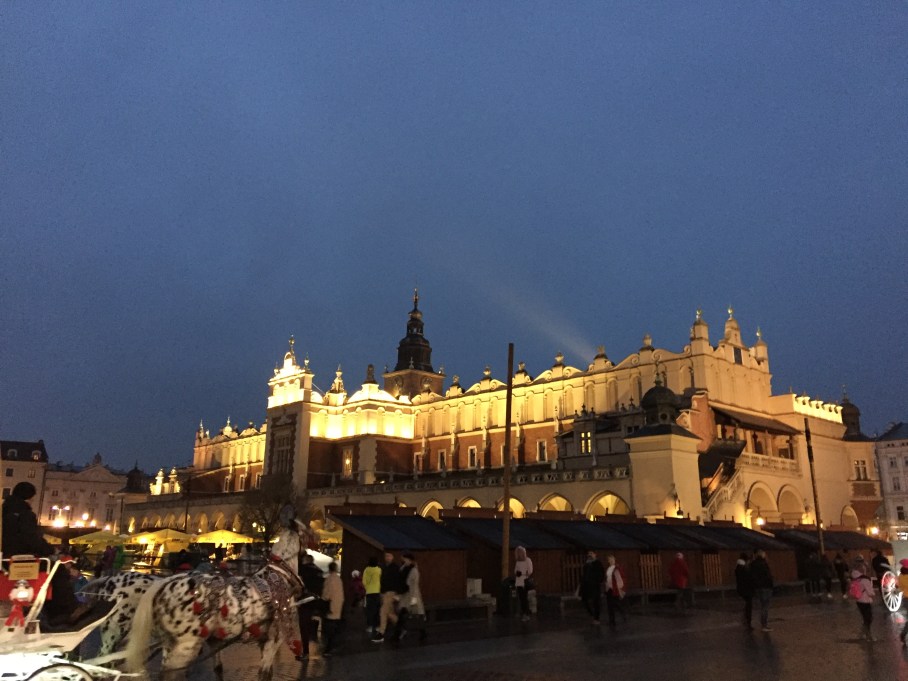
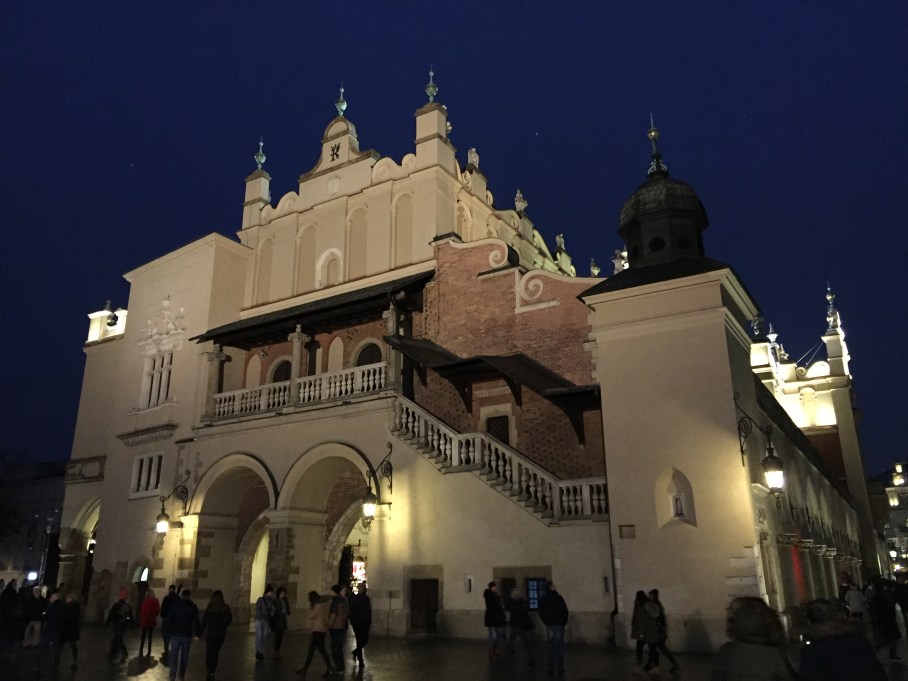
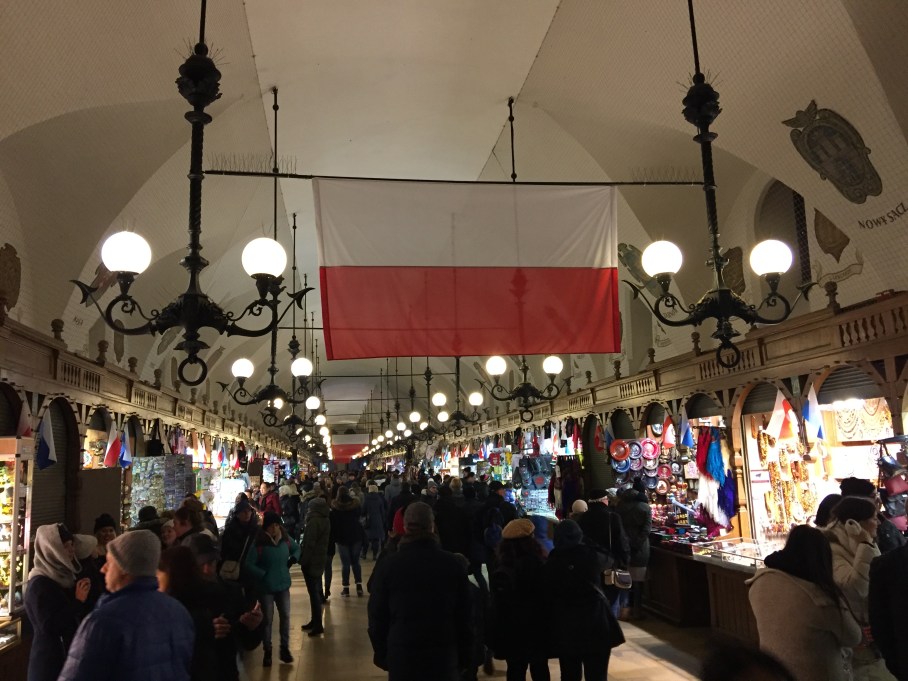
Cloth Hall is arguably the world’s oldest shopping mall, the first stalls erected as early as 1300.

img_3304img_3326

In later centuries it functioned as a major center of international trade. It was renovated many times, the most recent form assumed under Austrian rule in the 19th century.

img_3319

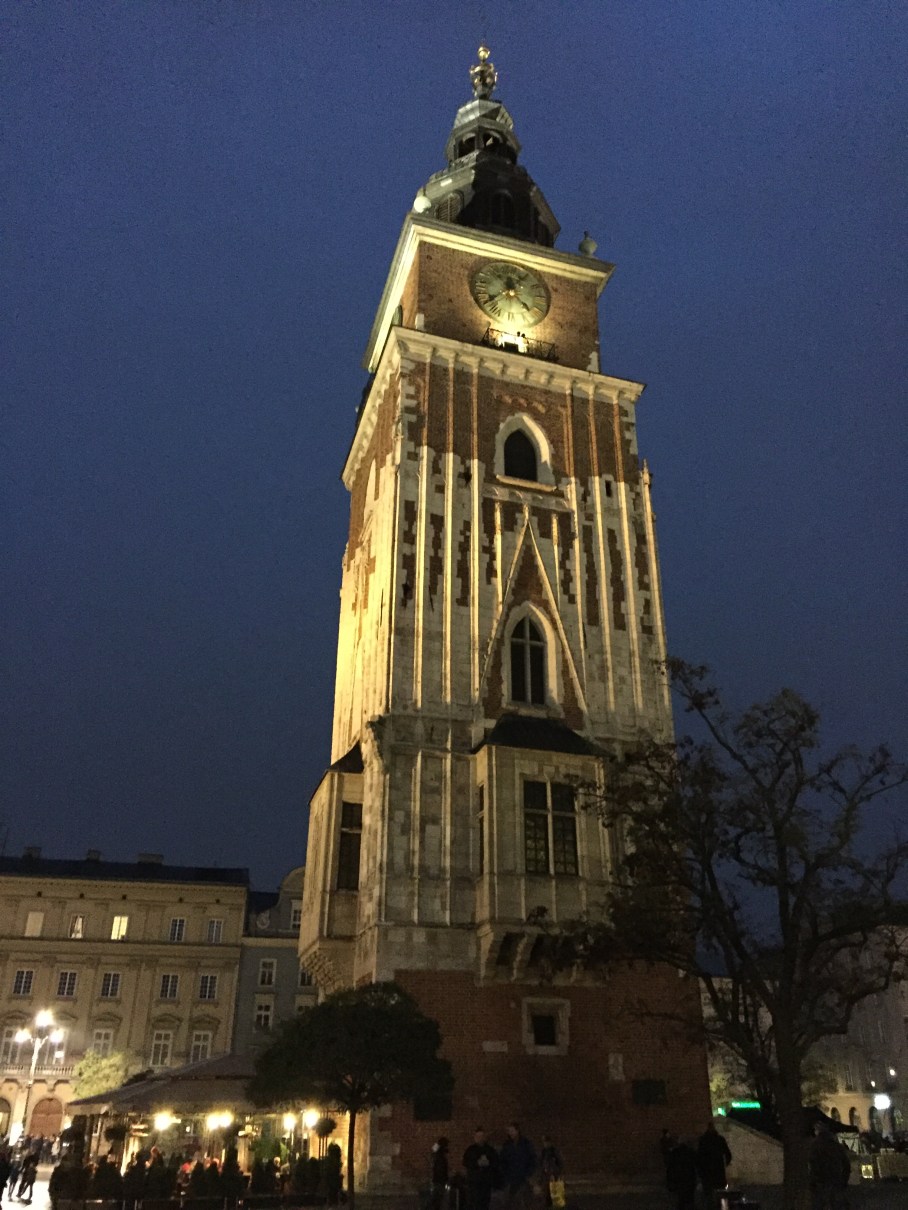
The Town Hall Tower is the only surviving part of the old town hall, which was the seat of the city administration until her destruction under Austrian rule in 1820.

img_3323

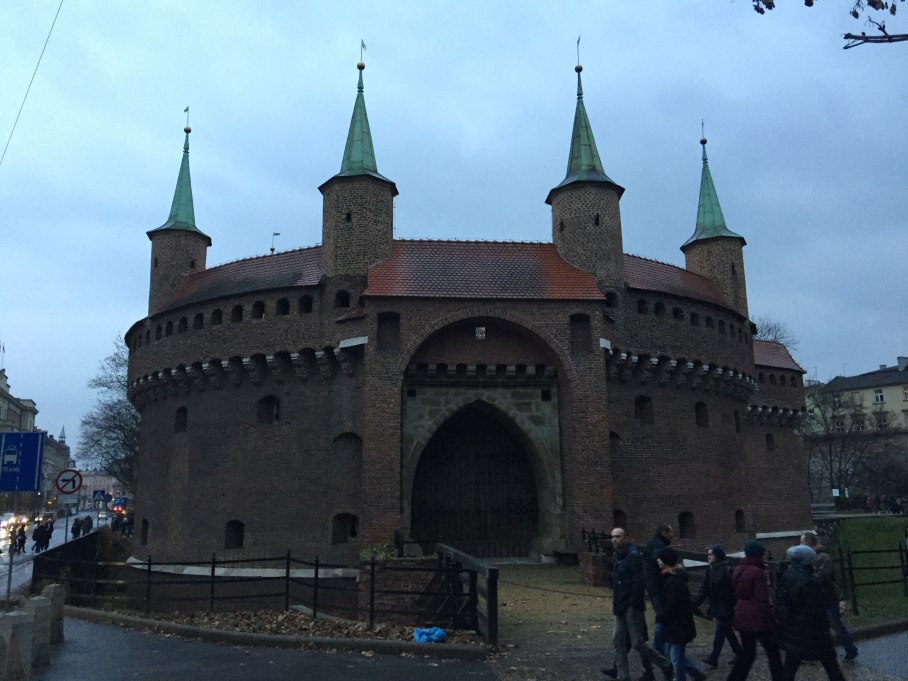
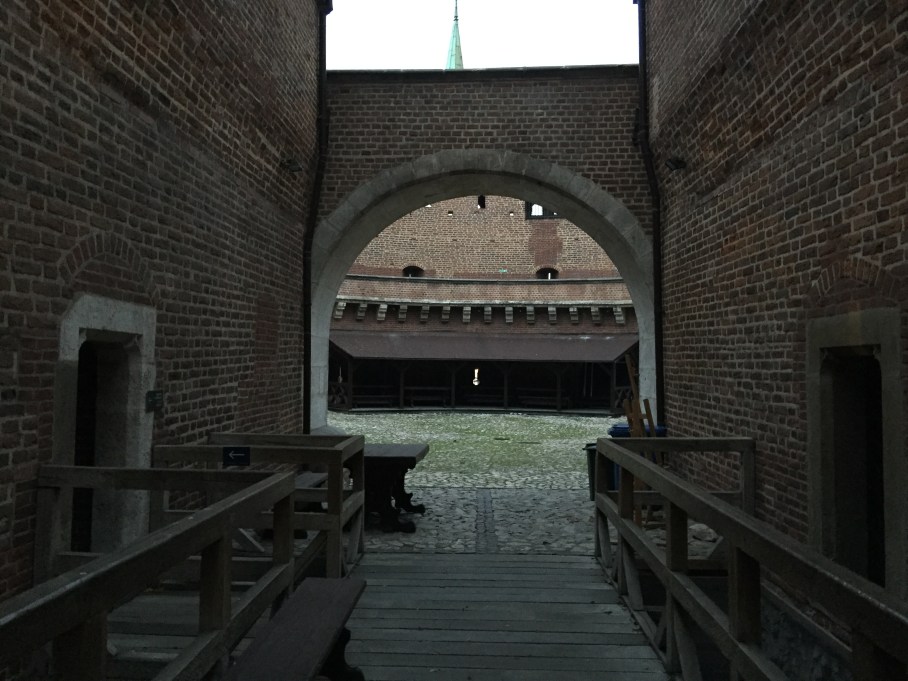
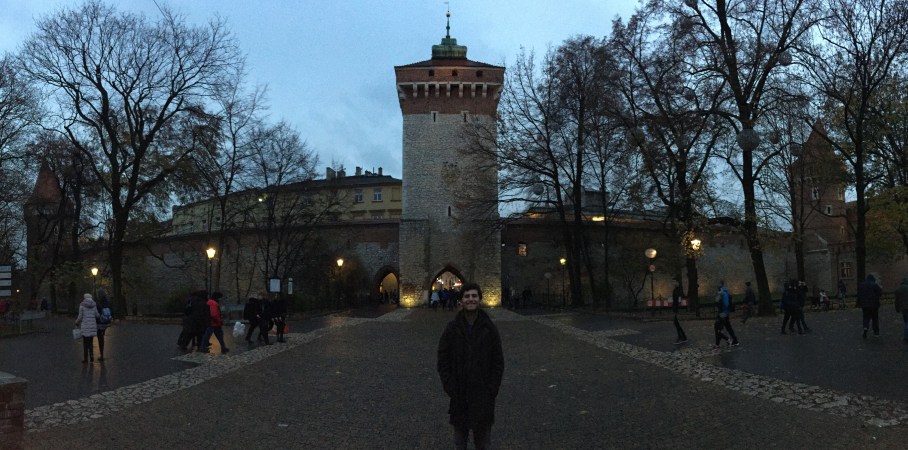
A short walk north brought us to the fifteenth century barbican, which guards the entrance to Old Town. It is the best preserved relic of the massive network of fortifications that once surrounded Krakow.

img_3262img_3274

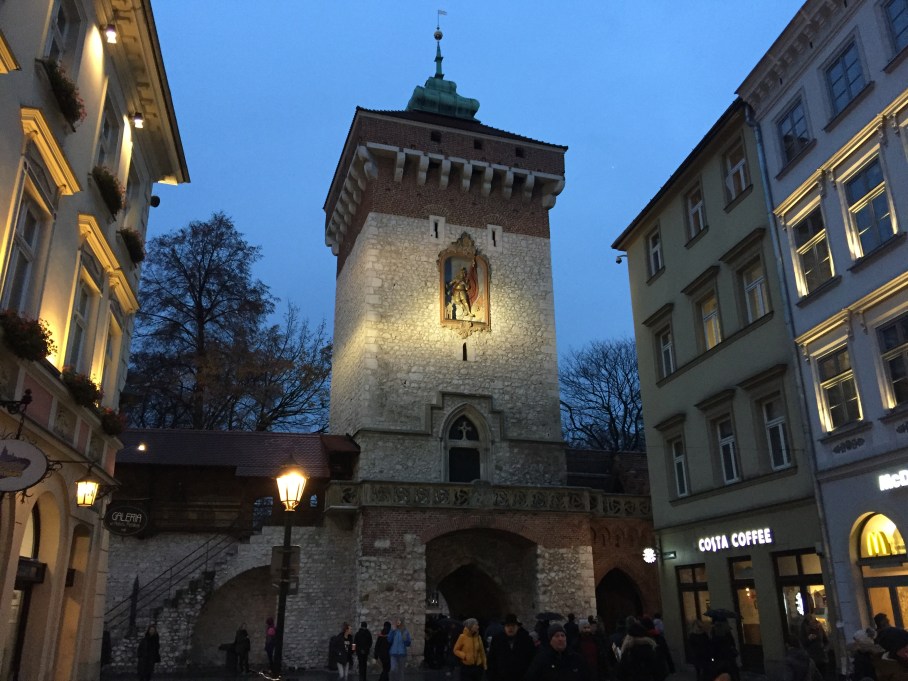
Only a few meters in front stands Saint Florian’s Gate, built in the fourteenth century.

img_3284

It is only gate that remains of the eight originally incorporated into the city wall.

img_3294

It marked the start of the Royal Route, along which future monarchs walked en route to their coronation.

img_3220

The home of influential Polish painter Jan Matejko (1838-1893) stands along the royal route.

img_3297

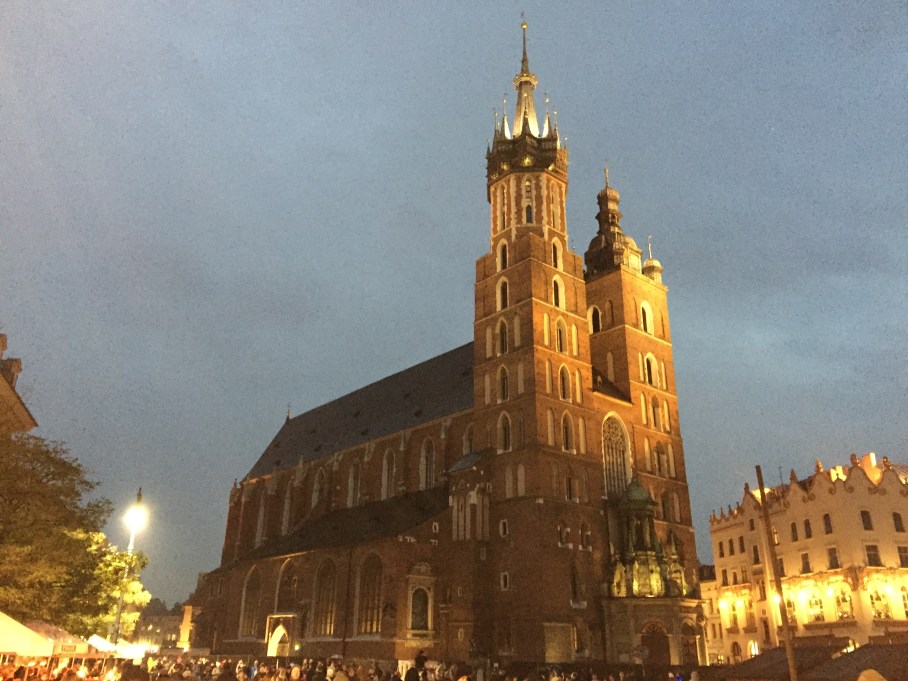
Further down route, on the edge of town square, rests Saint Mary’s Basilica- a 13th Gothic century church rebuilt in 14th century.

img_3312

We then schlepped to the Opera where Dad was hoping to purchase tickets for tonight’s performance of La Traviata. We were informed that they were completely sold out.

We taxied frustrated back to town square to the most massive sing-a-long I’ve ever had the pleasure of witnessing. Dad tried his best to participate.


Afterwards, we ate a delicious dinner at La Grande Mama. Dad chose the restaurant solely by name- he called his grandmother ‘grandmama’.

Taxied back to the hotel. Dad took a sauna while I blogged before going to sleep.

10 November 2016

Ran. Ate breakfast. Dropped our bags at concierge.

img_0619

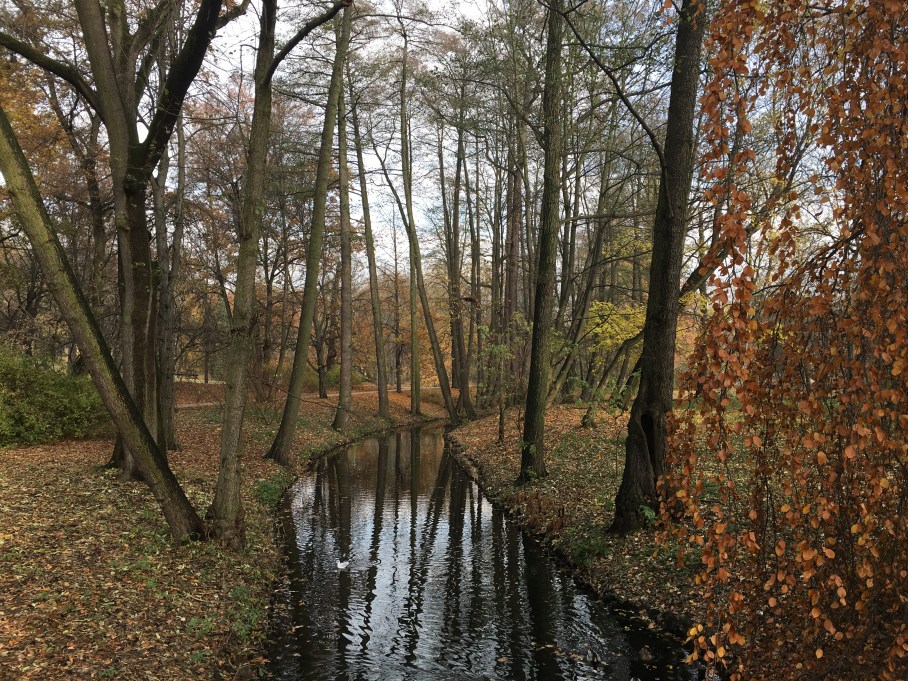
Warsaw gained prominence in the mid-16th century as an equidistant alternative to the constituent capitals of Vilnius and Krakow. As a result, Queen Bona Sforza built there a wooden estate- destroyed, but succeeded by a pantheon of royal residences. The site came to be known as Lazienki Park, the largest in all of Warsaw.

img_0624

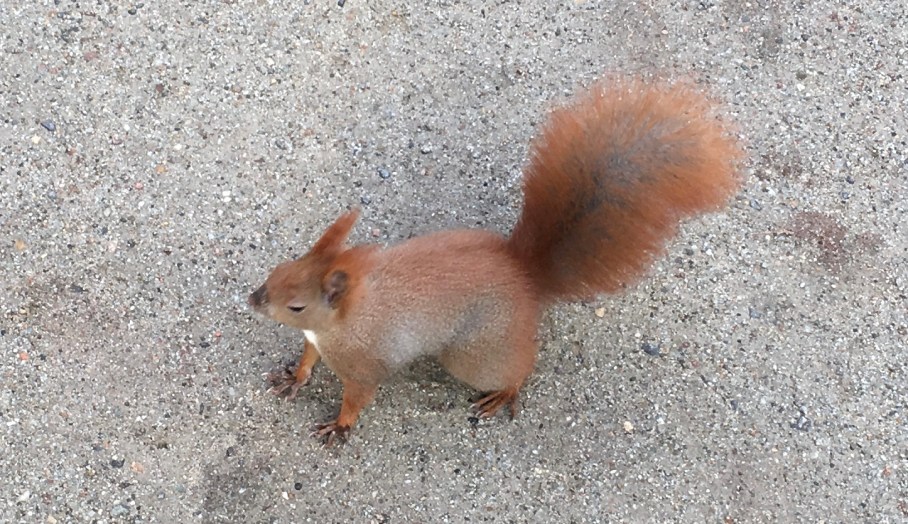
Started our tour there at 11:00. We spotted a couple of red-haired squirrels, unlike anything I’d ever seen.

img_0625

The Kingdom of Poland regained sovereignty at the Congress of Vienna (1815) which sought to rebuild Europe after the fall of Napoleon. Alas, Poland was granted to her liberator, Tsar Alexander I of Russia, who appointed his younger brother (Grand Duke Constantine) to rule over it. A palace was built for him in 1819 atop the ruins of the Bona Sforza estate known as Belvedere. Constantine fled in 1830 as a result of the November Uprising, which eliminated any morsel of autonomy that Poland had left. Poland was effectively incorporated into the Russian Empire.

img_0629

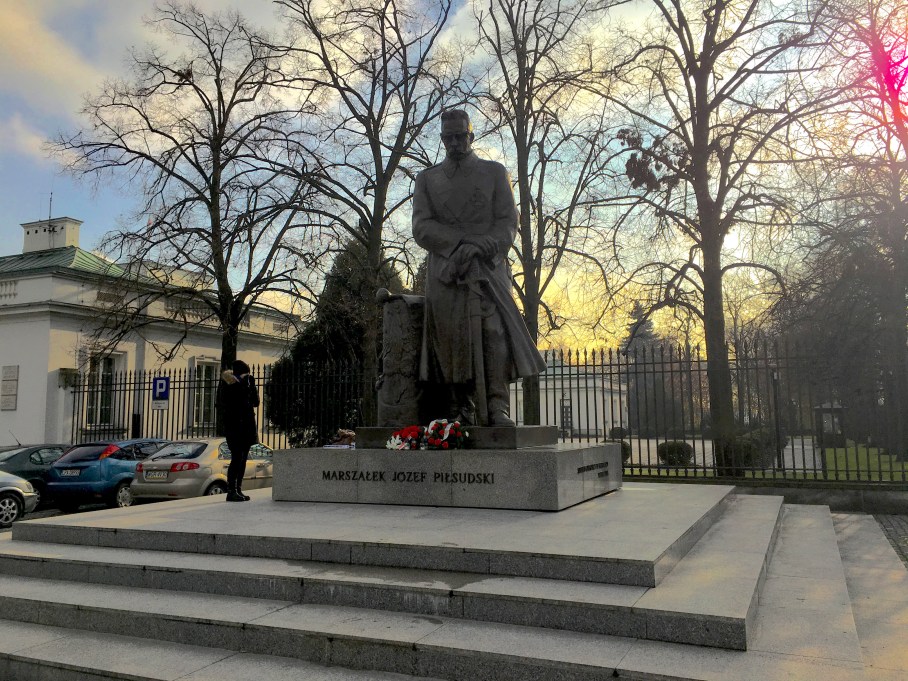
After WWI Belvedere became the residence of Marshal Jozef Pilsudski, who led the nation to independence and then ruled over it until his death in 1935. While beloved by Poles, Pilsudski is hated by Lithuanians for his occupation of their historic capital (Vilnius). His statue stands just outside the palace.

img_0633

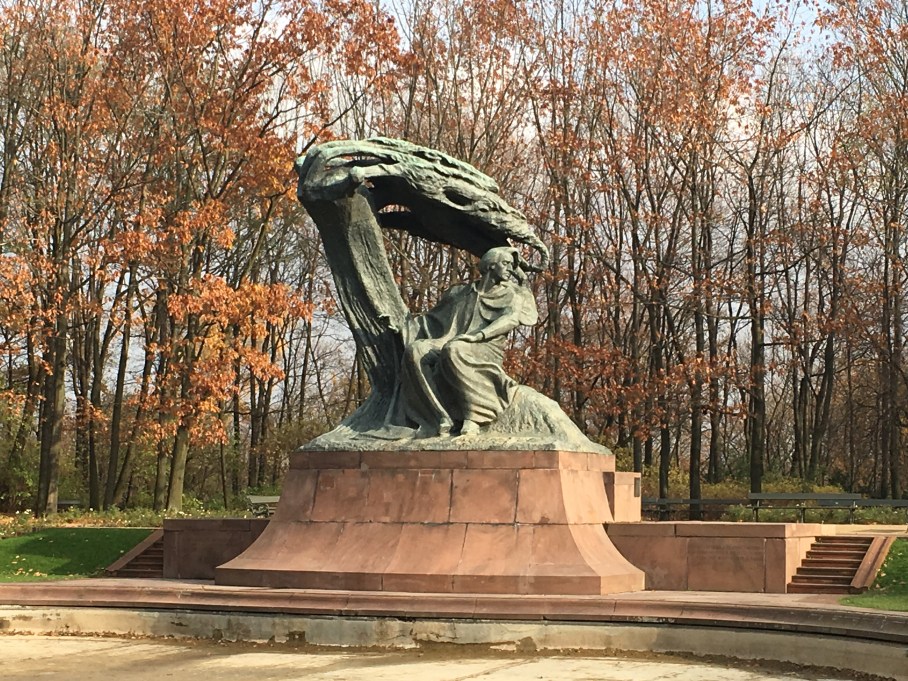
A statue of Warsaw’s favorite son stands not far behind.

img_0637

Frederic Chopin was born during the French occupation and fled for France just before the November Uprising of 1830. He wrote mostly for solo piano, he became a leading symbol of romanticism.

img_0639

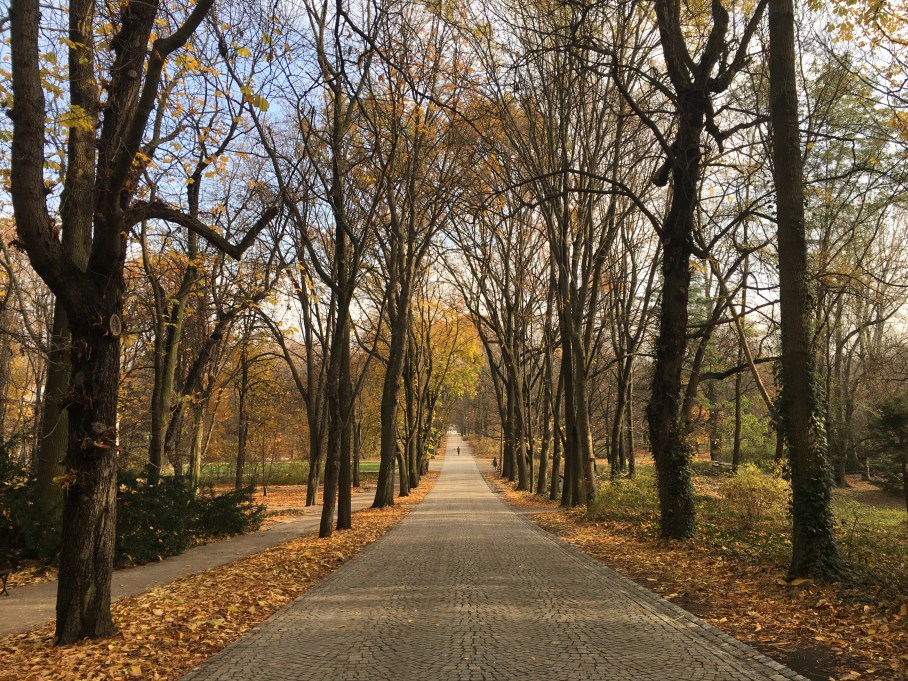
A path worthy of royalty leads to the gem of the park, located at the heart of it.

img_0640

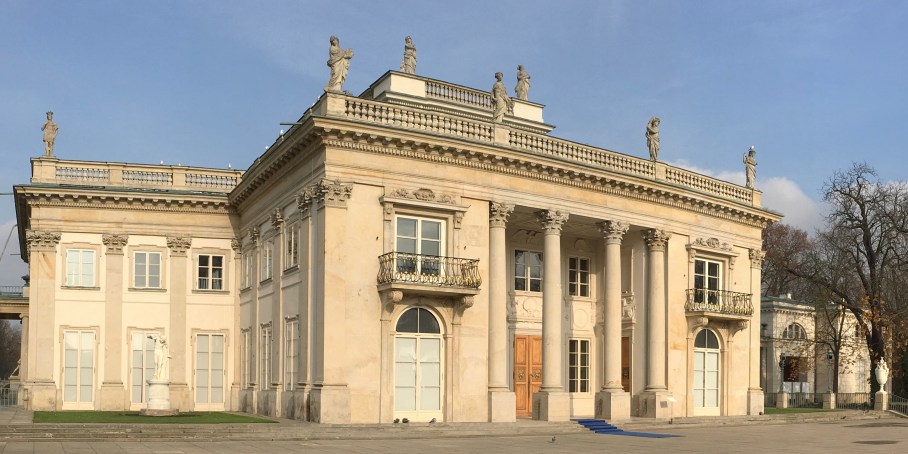
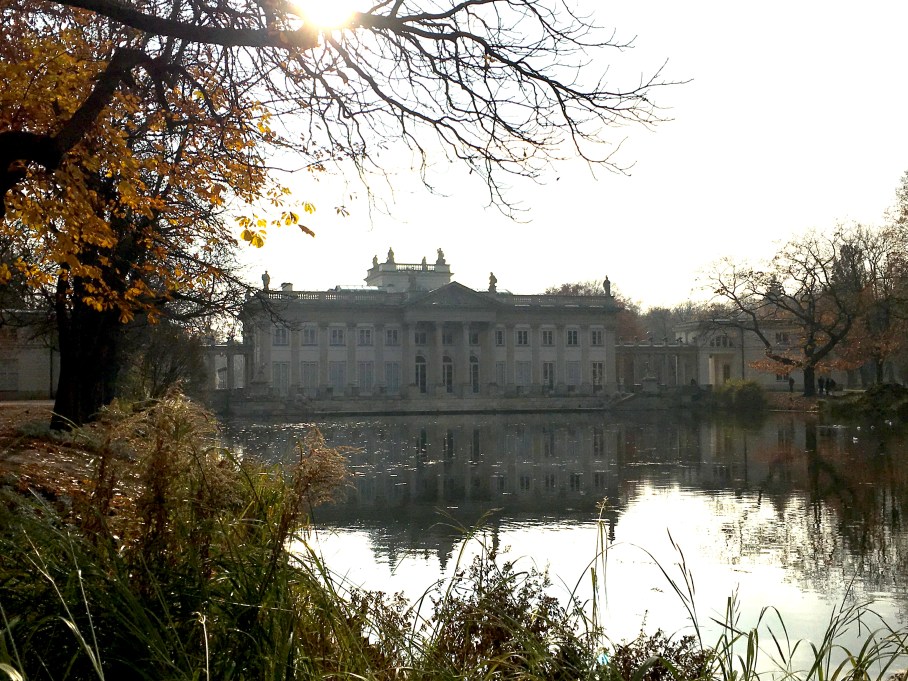
The Palace on the Isle was built by Grand Crown Marshal Stanislaw Lubomirski in the late 17th century as a bathhouse for his Ujazdow Castle. He dubbed it lazienki meaning ‘royal bath’.

img_0655

The castle was acquired in 1766 by the last King of Poland, Stanislaw II Augustus, who established his residence in the bathhouse, which he thought more lovely.

img_0652

Classical in style and reasonable in size, it lies picturesque atop a still canal.

img_0663

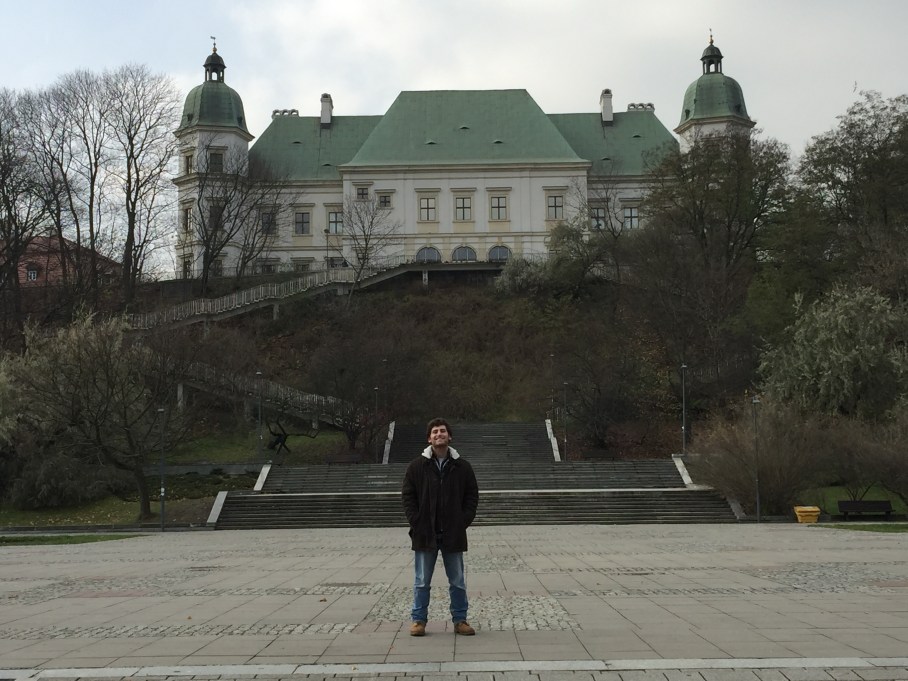
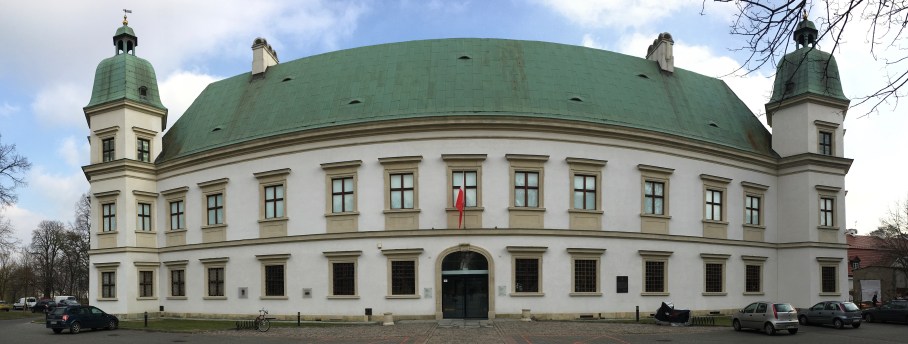
Her imposing and inferior predecessor stands up a long flight of stairs. The Ujazdow Castle was built for King Sigismund III Vasa who moved the royal seat from Krakow to Warsaw in the late 16th century following the Union of Lublin, which united Poland and Lithuania into a single state having previously functioned as a personal union.

img_3076

After his death the Palace was purchased by Lubomirski who later leased it to King Augustus II Wettin, one of many to be elected monarch between the Vasa dynasty and the Partitions.

img_0670

With that we taxied to Old Town, where we spent the latter half of our day. In his last will and testament of 1138, Duke Boleslaw III divided Poland into five constituent duchies for his four sons. The Seniorate Duchy was to always pass to the eldest duke, who would also reign supreme. Centuries of fragmentation followed instead. One duchy established was Masovia with her seat in Warsaw. Old Town grew around the royal castle.

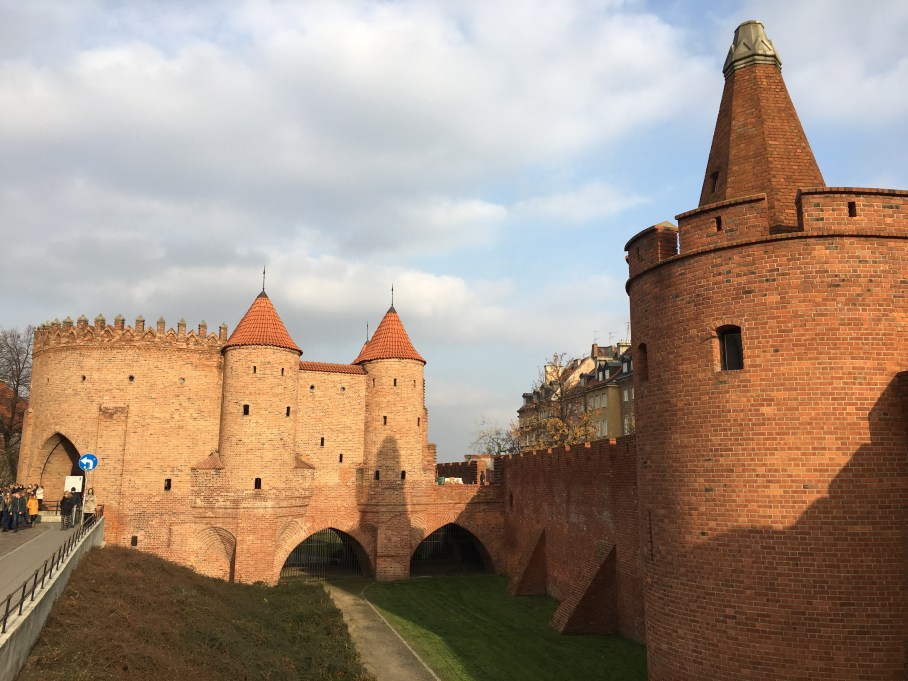
We entered Old Town through a 16th century outpost known as a ‘barbican’, which once lied along the city walls. Along with the bulk of Old Town, the barbican was destroyed during the war and rebuilt afterwards.

img_0675

The Warsaw Uprising of 1944 was the single largest military effort taken by any European resistance movement during WWII- 200,000 civilians perished and 25% of Warsaw was destroyed. As retaliation, German troops leveled another 35% of Warsaw. Combined with earlier damage caused by the 1939 invasion, 85% of Warsaw was destroyed during the war… but you would never know it. Old Town was entirely rebuilt during the Soviet era based on sketches and using authentic materials.

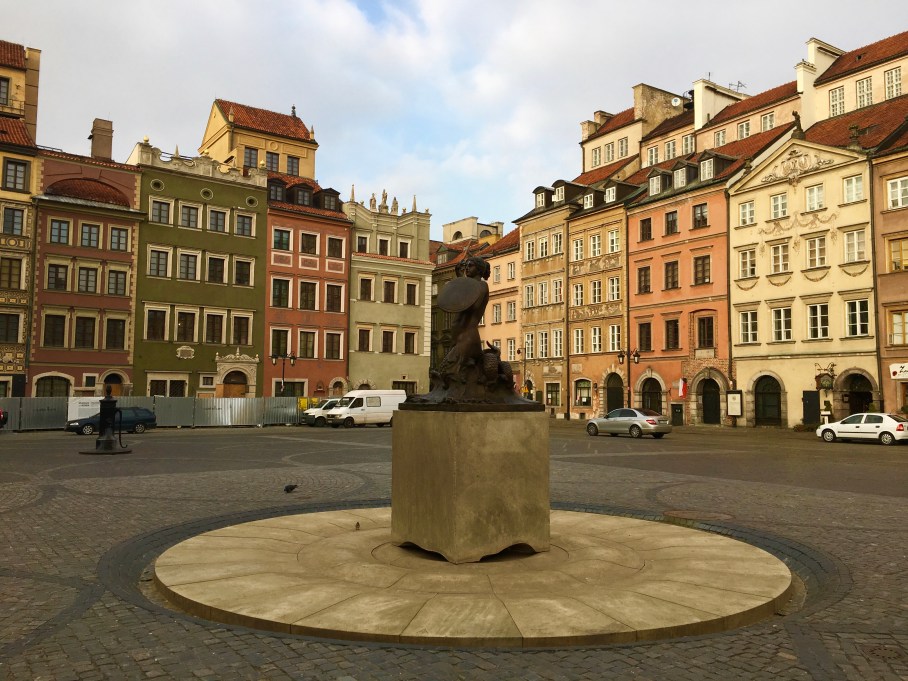
It wasn’t far to market square, which dates to the founding of Warsaw. In the middle stands a 19th century statue of a sword-wielding mermaid, the symbol of Warsaw for centuries.

img_0698

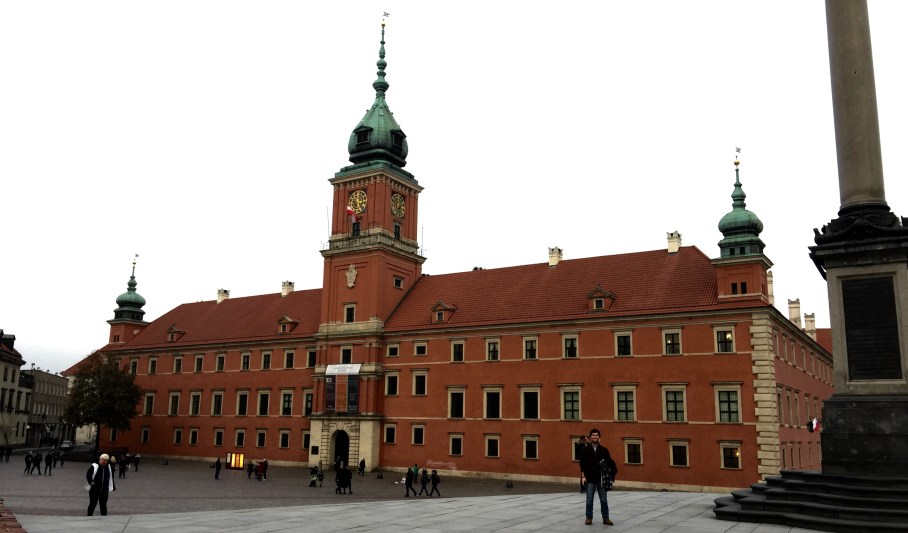
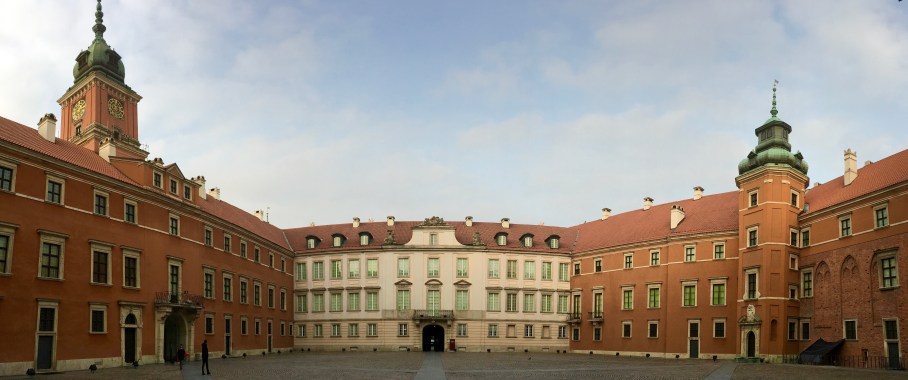
We had lunch along the square before walking to the Royal Castle. The complex was constructed for the Dukes of Masovia and later became the seat of the Polish-Lithuanian Sejm (parliament). It was one of the first buildings in Europe dedicated to parliamentary purposes.

img_3090

A royal residence was built on premises for the king to reside during parliamentary sessions. It became the primary royal residence when Warsaw became the capital, but monarchs often resided in nearby palaces such as Lazienki.

img_0716

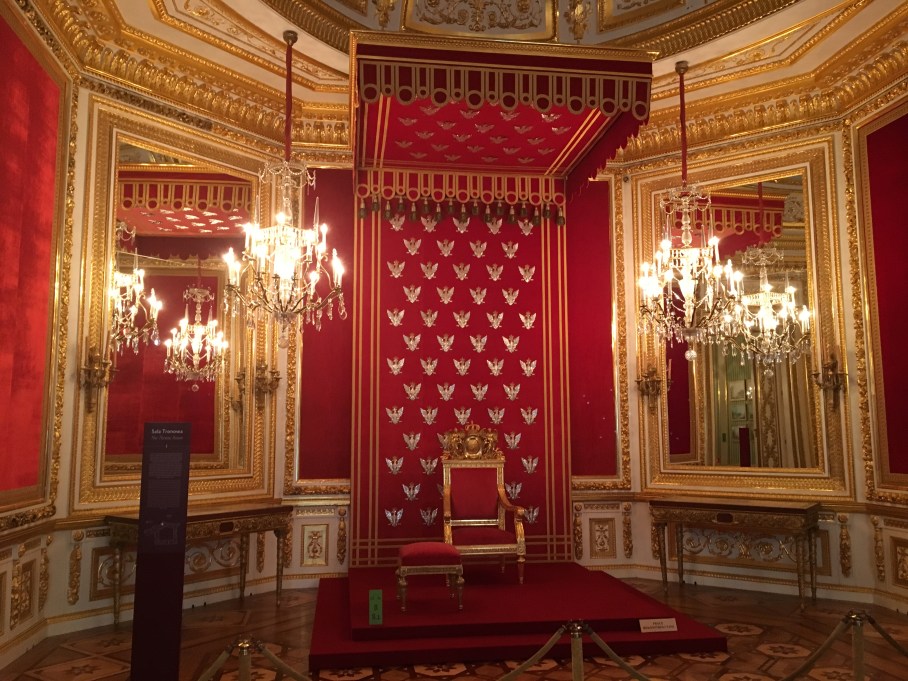
I was particularly impressed by the throne room, where the king met with his parliament.

img_0738

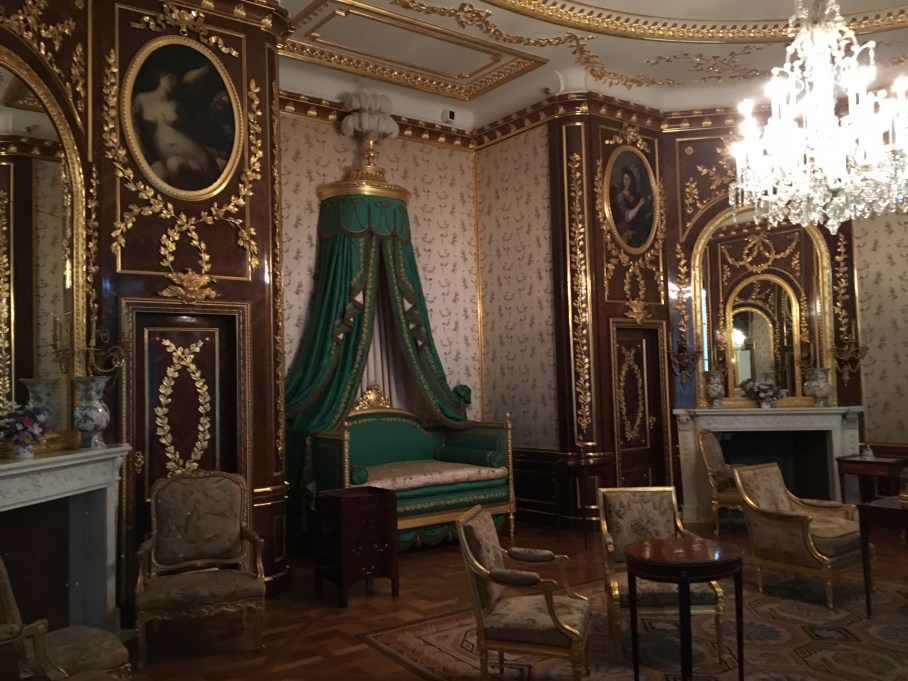
The royal bedroom was also spectacular.

img_0753

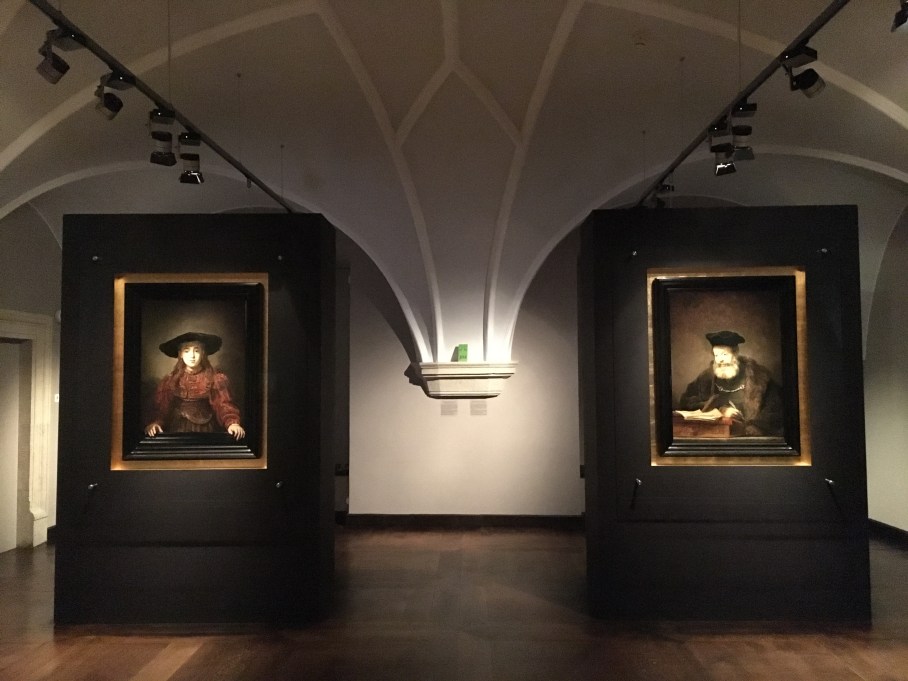
The highlight was surely two Rembrandts that belonged to the last king, Stanislaw II Augustus. Interestingly enough, they were The Father of the Jewish Bride and The Jewish Bride.

img_0766

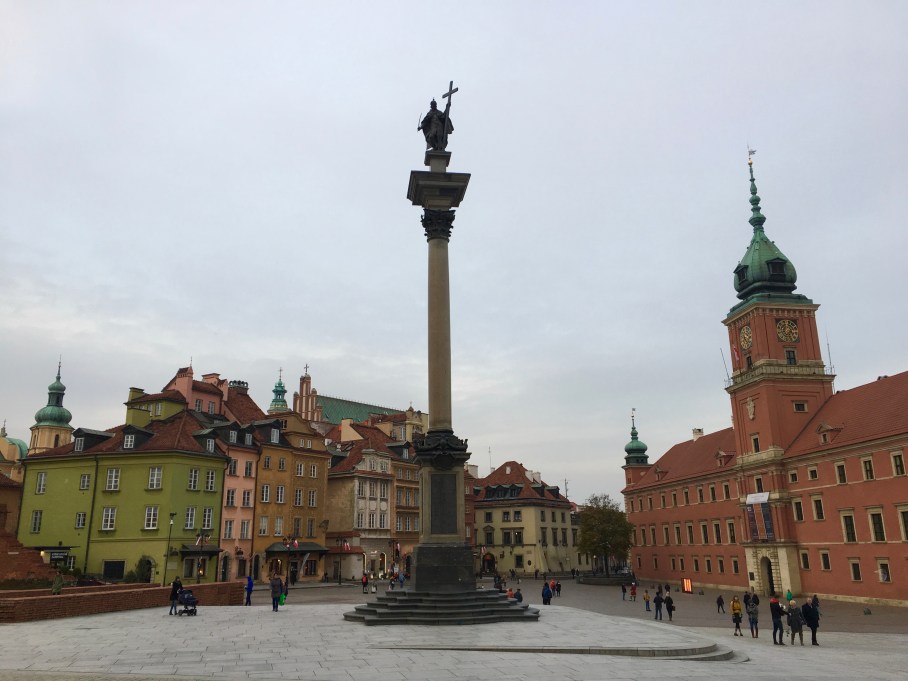
In the center of Castle Square stands the tall ‘Sigismund’s Column’, which was erected in 1644 to commemorate King Sigismund III Vasa who in 1596 moved the capital to Warsaw.

img_0770

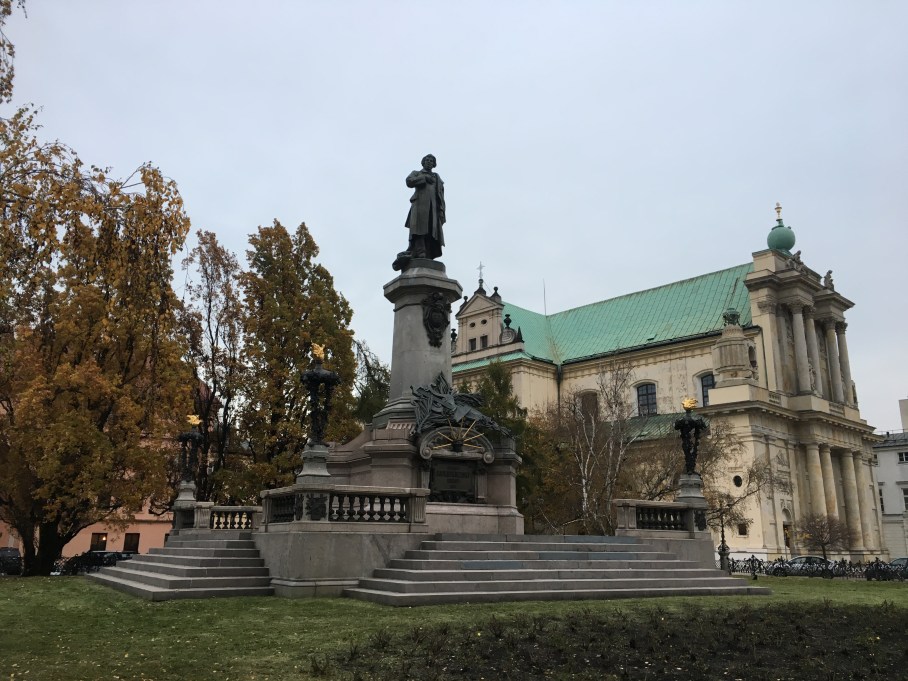
En route we found an impressive statue of Adam Mickiewicz, the national poet of Poland.

img_0774

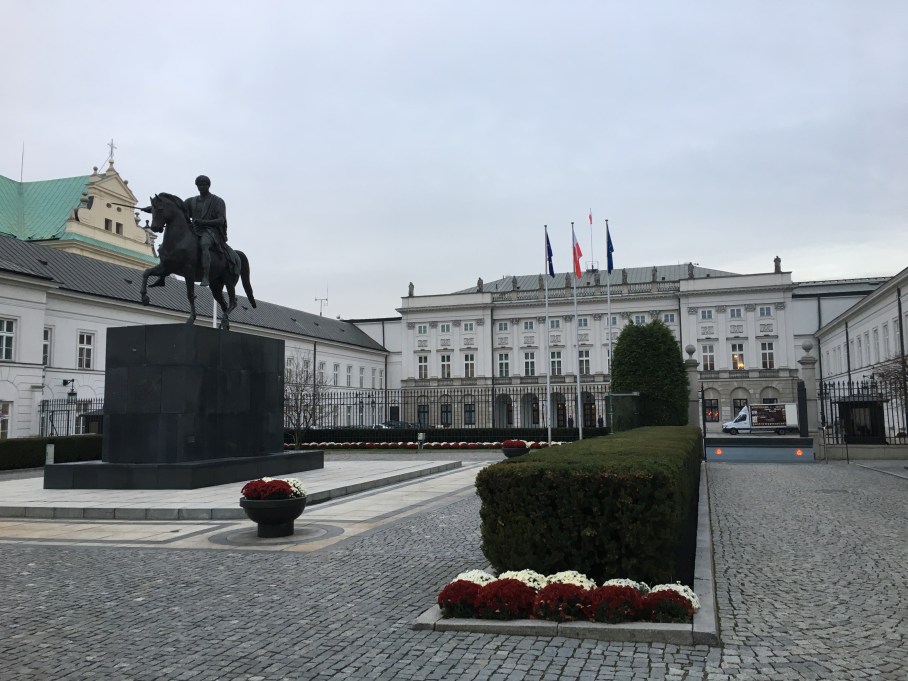
Nearby stands the Presidential Palace, built for nobility in the 17th century. During the interwar period it housed the Council of Ministers (leaders of parliament) and again after the war. Since the fall of the Soviet union it has served as the residence of the President of Poland, who commands the military and holds veto power over parliament.

img_0782

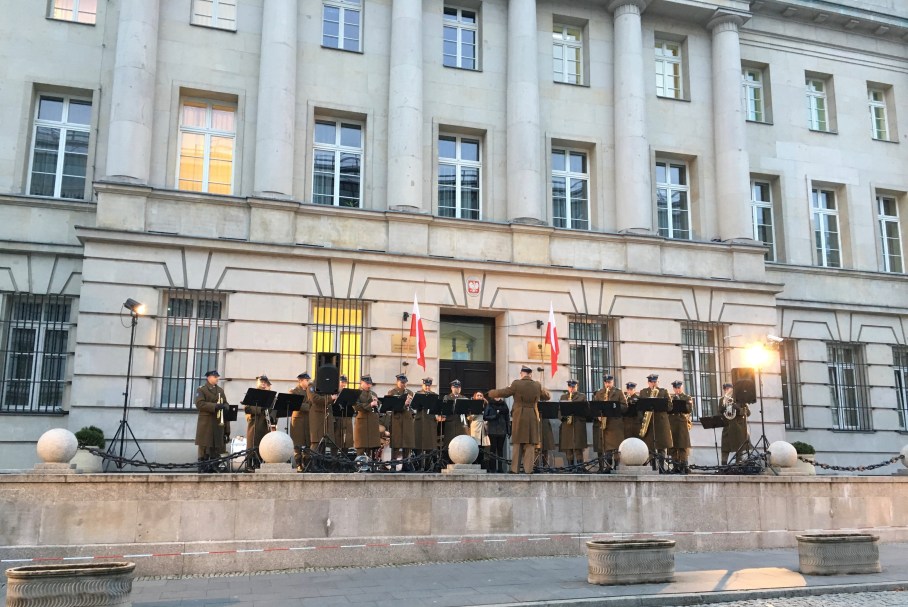
Just across the street we found a military ensemble preparing for tomorrow’s Independence Day celebrations.

img_0787

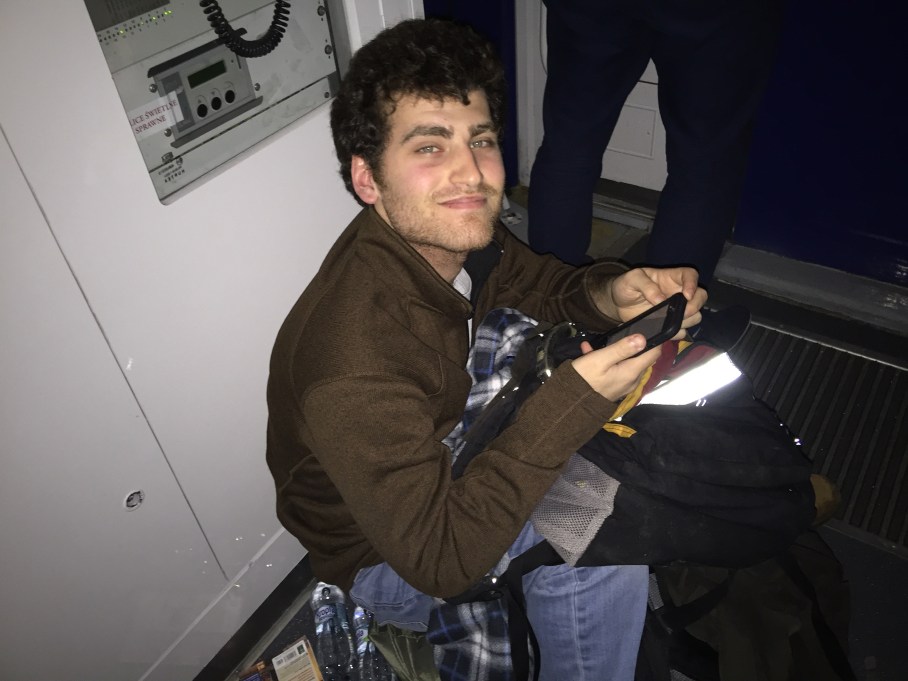
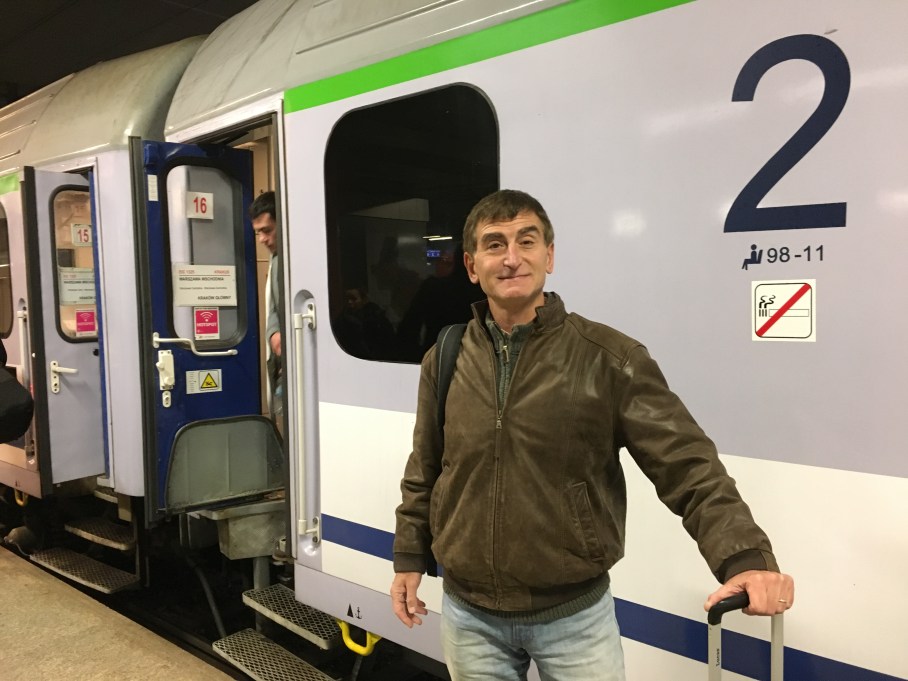
Hitched a taxi to the hotel where we grabbed our bags before rushing to the station to catch our train at 5:00. All seats were sold, but we were offered standing tickets for an exorbitant price. We had no other choice. Quickly boarded the train, fortunately there was room to set our bags down to sit on. Blogged on my phone most of the way.

img_3110

Arrived in Krakow pretty late. Upgraded to a nicer hotel per Dad’s request. Was too late to go out for dinner so we ate at the hotel. It was pretty good… Hotel restaurants seem to be the thing in Eastern Europe.

img_0798

09 November 2016

I made the worst decision to check my phone when I woke up at 3:00. After I read that Trump was gaining on Hillary I tried futilely to fall asleep. The rest of the night was a tense haze.

Broke the news to Dad around 7:30. I went to the gym and ran as I watched Trump give his victory speech. The anger and despair made for a very powerful run, which did not make the rest of the day any more bearable as I had hoped it would.

I felt frankly embarrassed as I’d promised so many friends and relatives that a Trump win was impossible- he’d marginalized too many people and our country had made too much progress in terms of social awareness to elect such a hateful demagogue who uses the vocabulary and grammar of a spoiled toddler. Needless to say, it did not help that our day was spent tracing the history of Jews in Warsaw, focused on their utter annihilation at the hands of a hateful demagogue who campaigned on making Germany great again at the expense of minorities.

Our personal tour guide was Pawel, he said we could call him Paul. Paul led us to his car under a light snow in a dense fog. He kindly took us to a French cafe where we bought breakfast before starting the tour. He pointed out a nearby Soviet complex and explained that it was quickly built with practicality in mind so as to house those who lost their homes during the war. I’d never considered that to be the reason for the consistent hideousness of Soviet structures.

img_0466

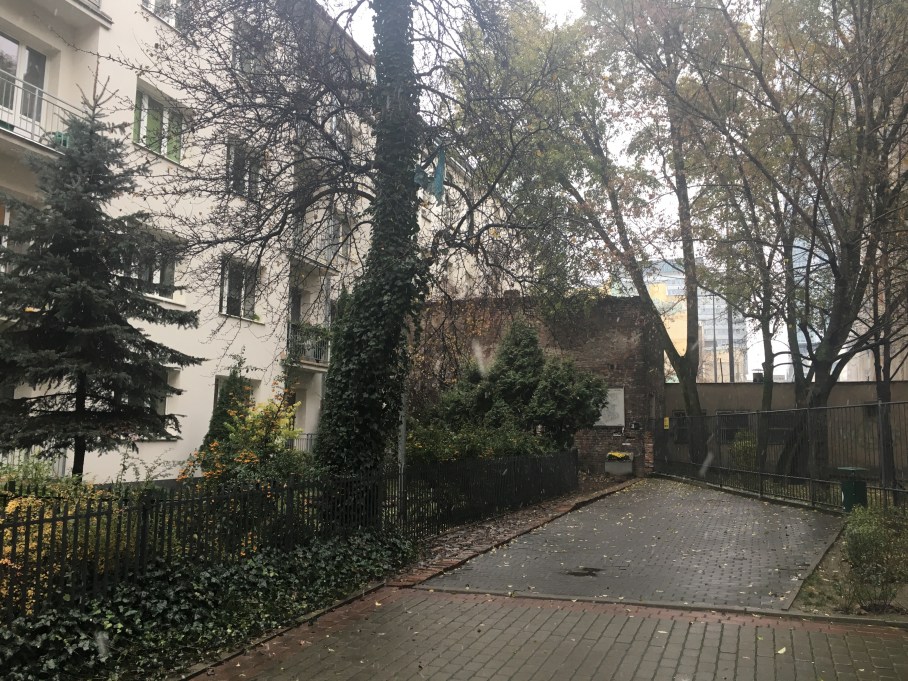
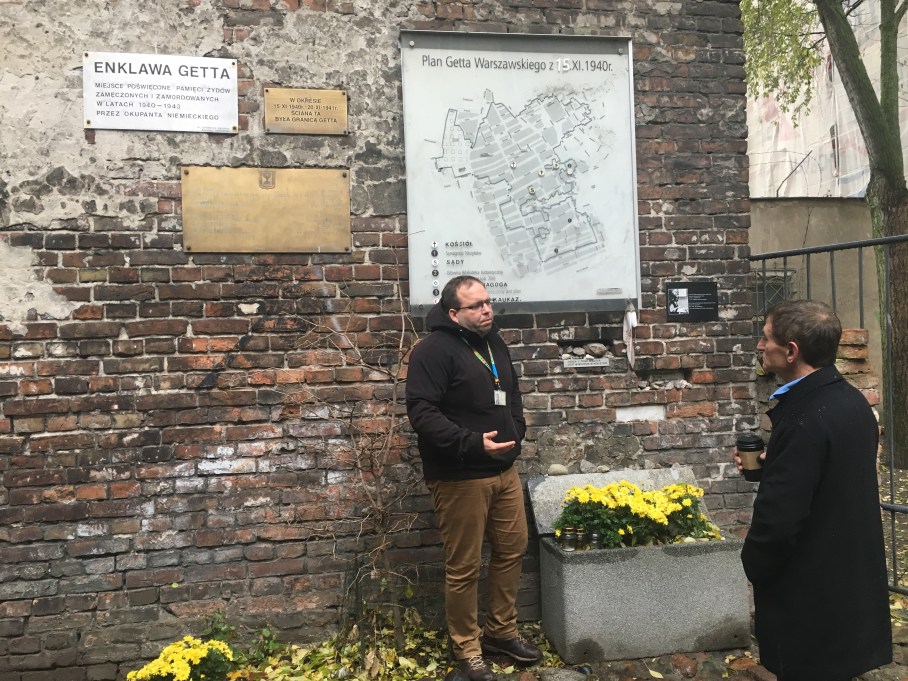
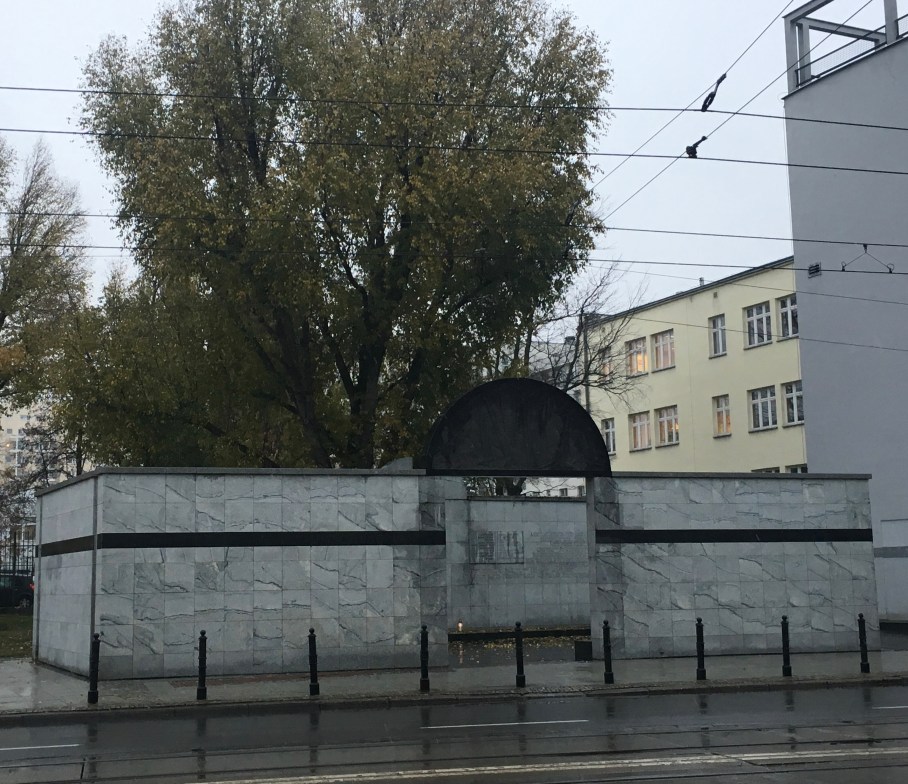
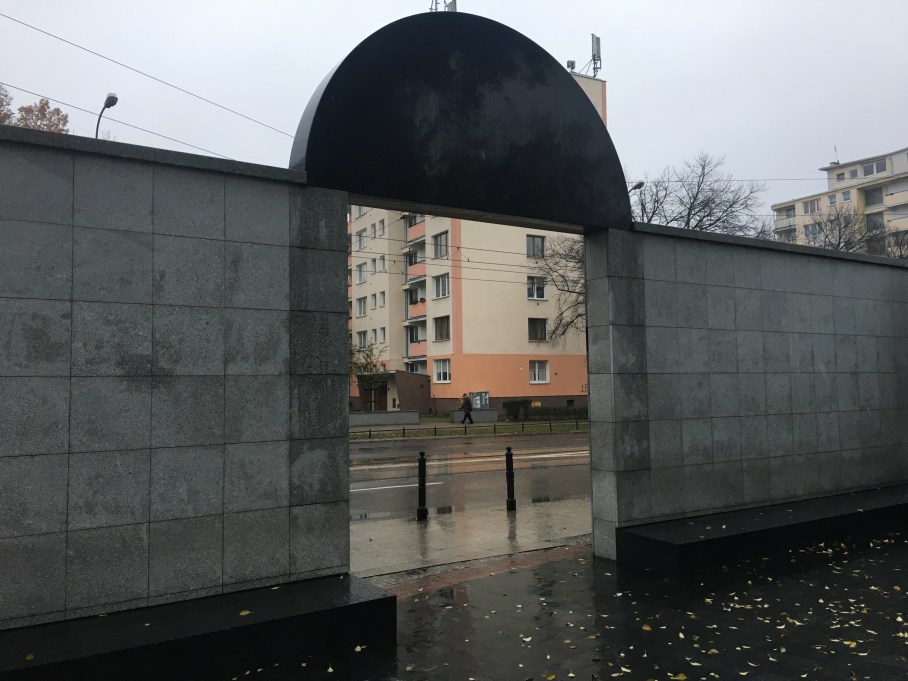
We started our tour at the only standing fragment of the ghetto wall.

img_0474

In the early 20th century, Jews accounted for over 90% of Warsaw with a population of over 800,000. It was then the second largest Jewish community in the world after New York City. By the eve of the Holocaust the Jewish population had shrunk by almost half due to emigration. The Jews that remained made up the vast majority of the ghetto, the rest were shipped there from around the region.

img_0471

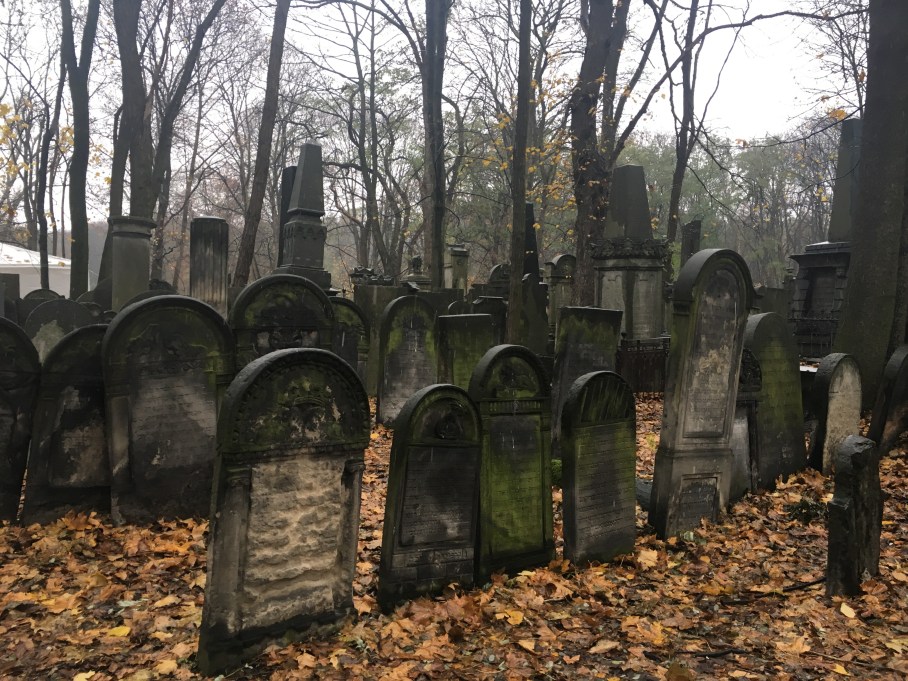
Our next stop was the Okopowa Street Cemetery, one of the largest Jewish cemeteries in the world with over 200,000 interred. It was established in 1806, only a decade after Jews were given the right to resettle in Warsaw. They had lived there since the late 14th century, but were exiled in 1526 until Prussia gained control as a result of the Partition of 1795.

img_0477

Unfortunately we had only twenty minutes to browse as it was to close soon. Paul showed us some highlights though, including what he believed to be one of the most ornate monuments with reliefs on either side depicting psalms.

img_0478

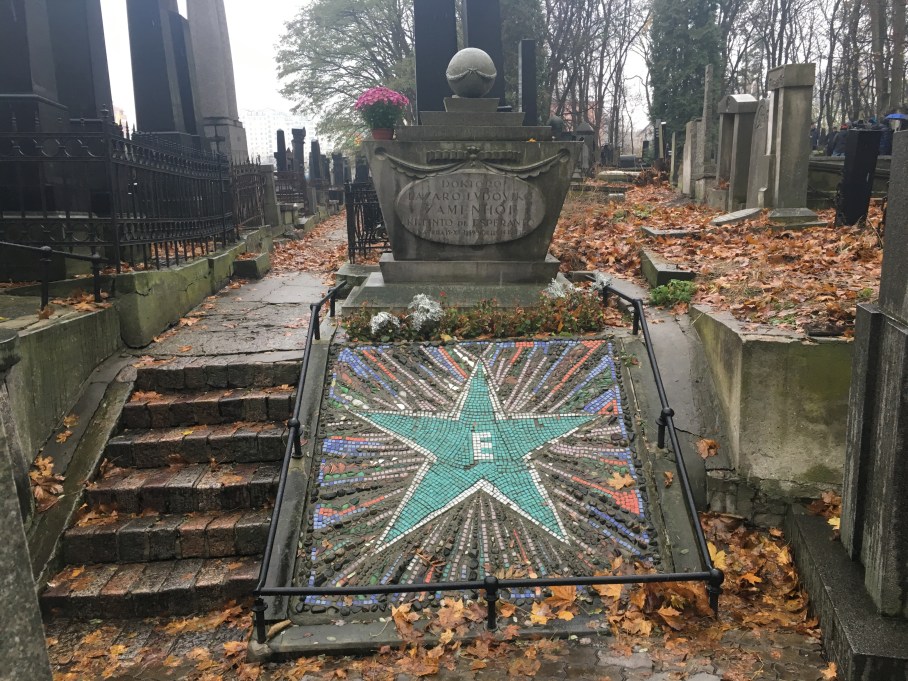
He pointed out the grave of Ludwik Zamenhof, the founder of Esperanto whose roots we explored in Bialystok.

img_0486

Near the gate we found a memorial to the hundreds of Jewish children murdered while trying to smuggle food and other essential goods through the cemetery into the ghetto.

img_0488

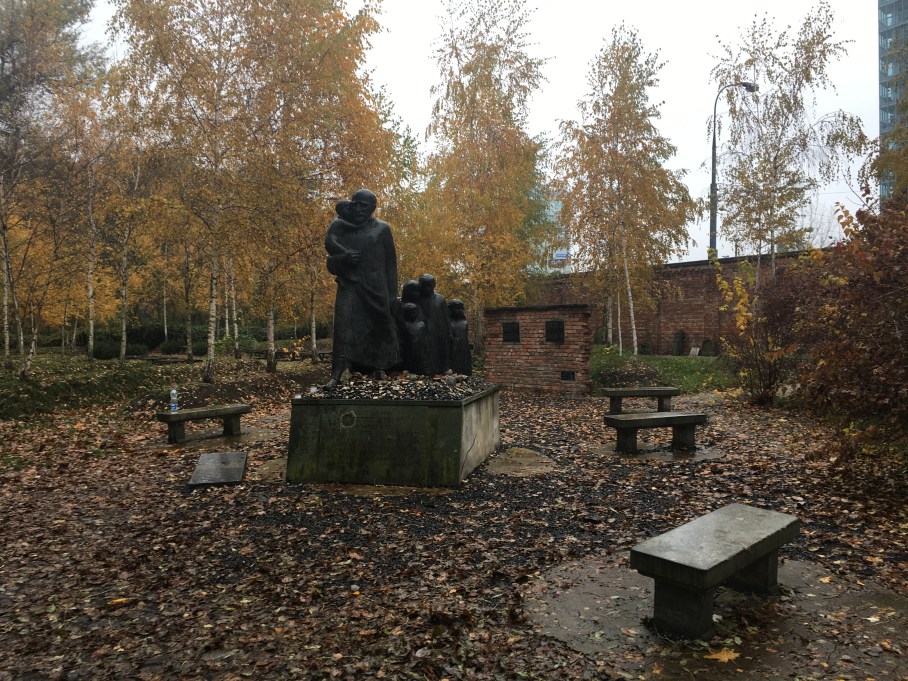
Another monument commemorated Janusz Korczak, the author, doctor, and director of an orphanage in Warsaw who given the option to either stay in Warsaw or go with his orphans to Treblinka Death Camp chose the latter. He was murdered there in 1942.

img_0489

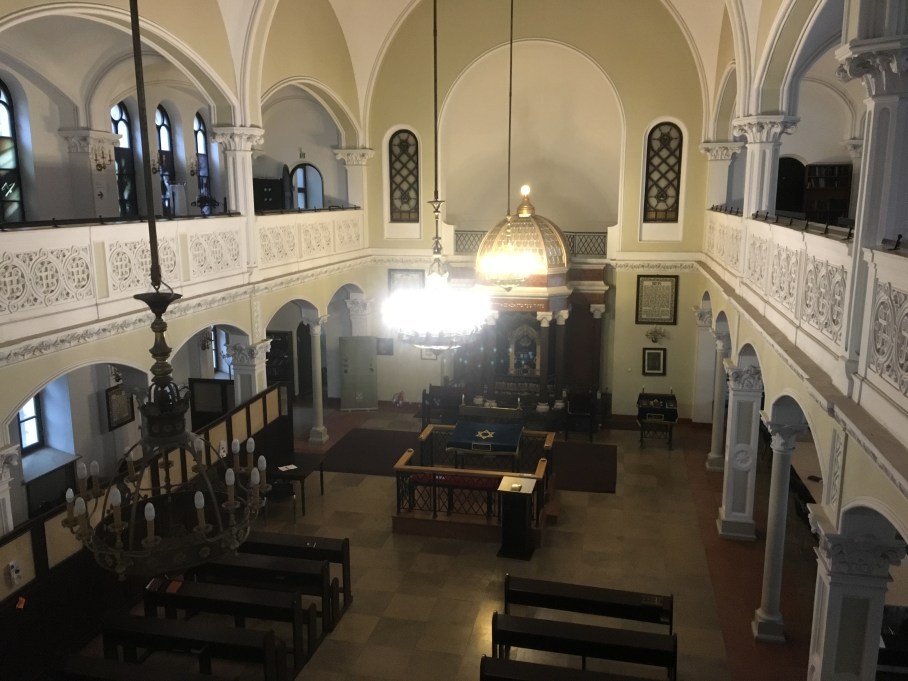
From the cemetery we took a brief dip into the only synagogue to survive the war. The Nozyk Synagogue was built in 1898 by successful Jewish merchants Zalman and Rebecca Nozyk.

img_0508

Whereas the Great Synagogue (largest in the world at time of construction in 1878) served the progressive community, the Nozyk synagogue served the traditional.

img_0501

Weekly services are not held there, rather it is used on special occasions. I was quite frustrated with the extensive amount of time that Paul took at each site, there was so much else to see.

img_0498

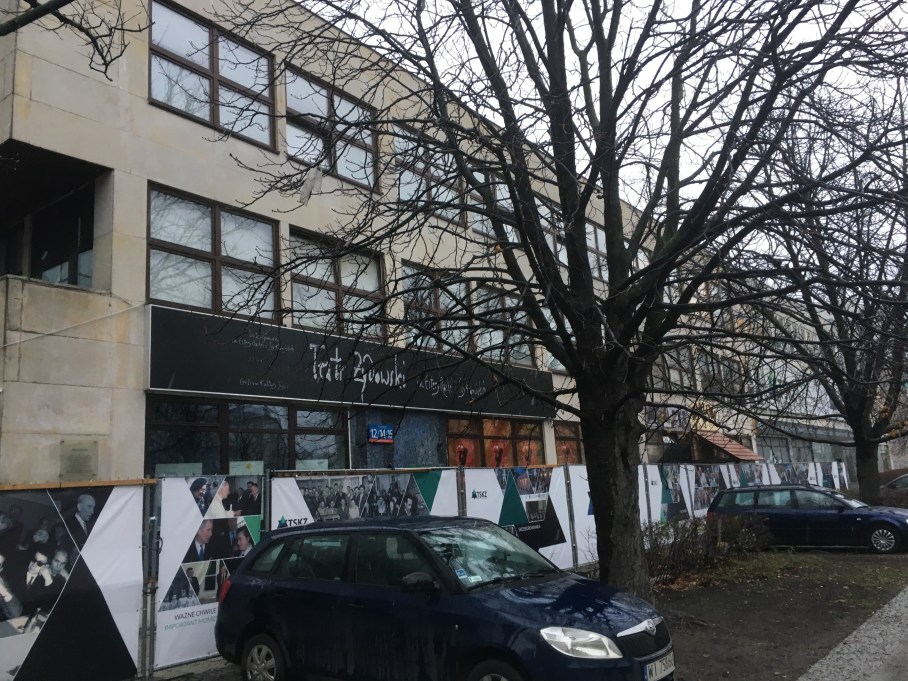
The Jewish community administration was based in a building nearby that also houses a Jewish theater and Jewish restaurants.

img_0526

With that we traveled to the Footbridge of Memory, which once connected the ‘big ghetto’ from the ‘small ghetto’.

img_0529

Organized in 1940, the Warsaw Ghetto took up a large central chunk of the city. The smaller portion housed elites and intellectuals.

img_0534

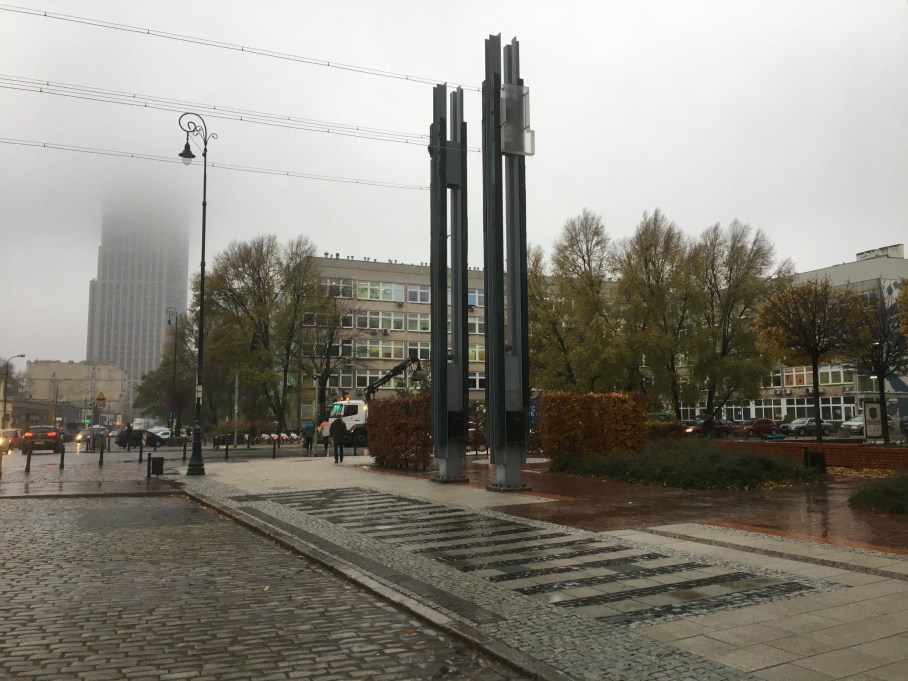
Our last stop was the Umschlagplatz monument.

img_0563

It marked the platform where 300,000 Jews were herded into train cars for transit to their death in gas chambers.

img_0552

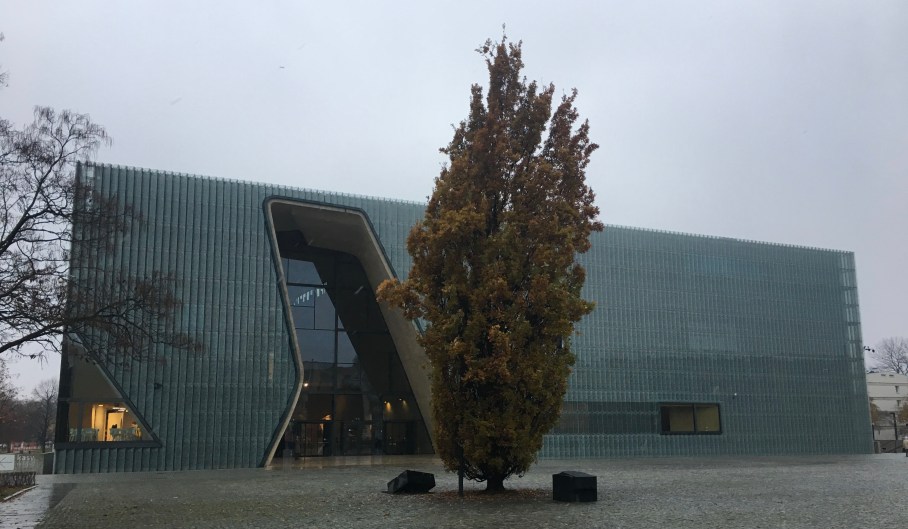
Paul kindly dropped us off back at the Polin Museum before parting ways. He’d often come up short with answers to my questions about Jewish history, and often said things that I knew to be blatantly inaccurate. He did however seem to command a decent understanding of the Holocaust in Warsaw.

img_0570

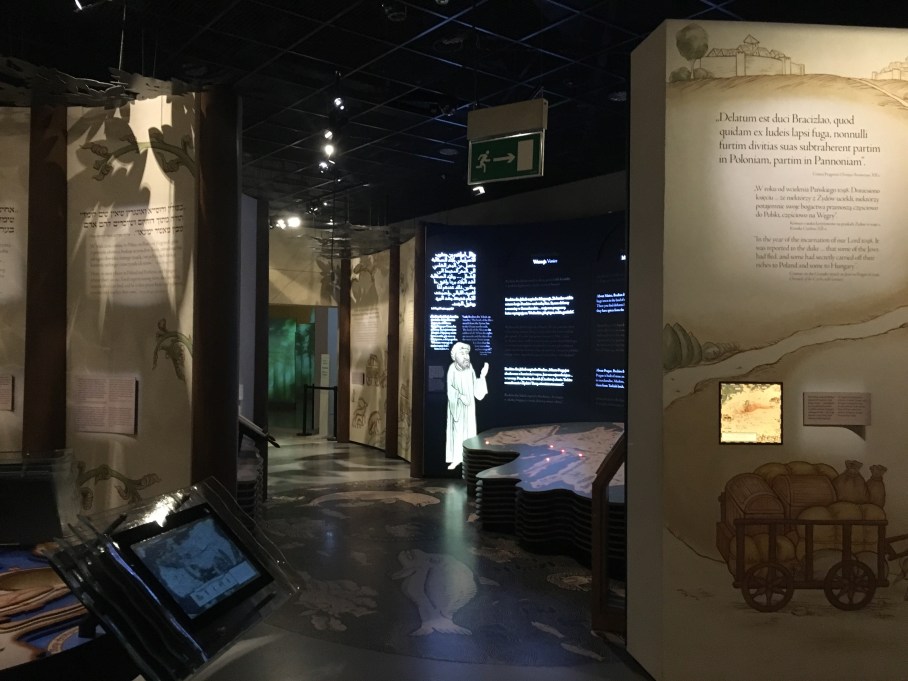
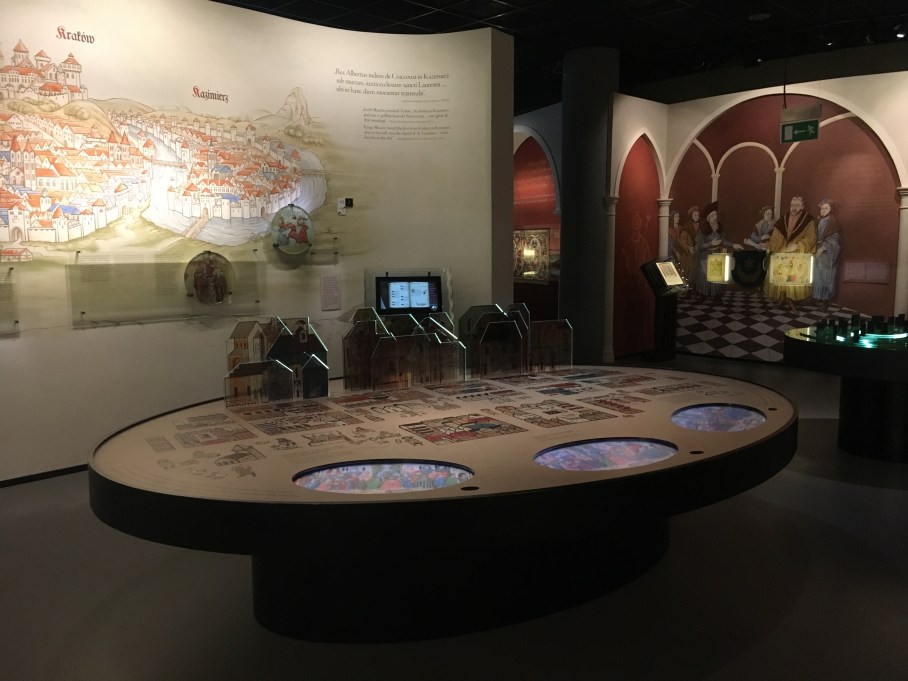
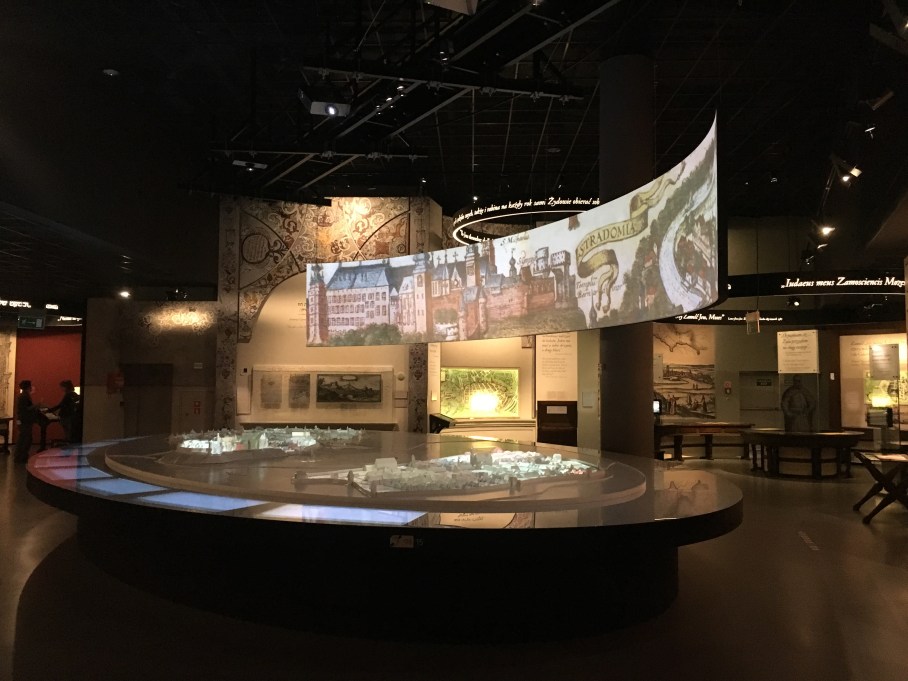
We grabbed a quick lunch and then started our tour. The museum opened in 2013 with the mission of preserving and sharing the history of Jews in Poland. The exhibit was organized in a relatively chronological order, but didn’t exactly offer a historical narrative. Rather, each section focused on specific aspects of Jewish society in that era.

img_0573

The exhibit naturally began with the migration of Jews to Poland from Germany, where they had formed a pigeon language between Hebrew and German known as Yiddish. There was a brief overview of the various edicts issued by Polish and Lithuanian monarchs that welcomed Jews to settle.

img_0578

Other sections discussed Jewish printing, the Khmelnitsky Massacre, shtetl-life, Hassidism etc.

img_0579

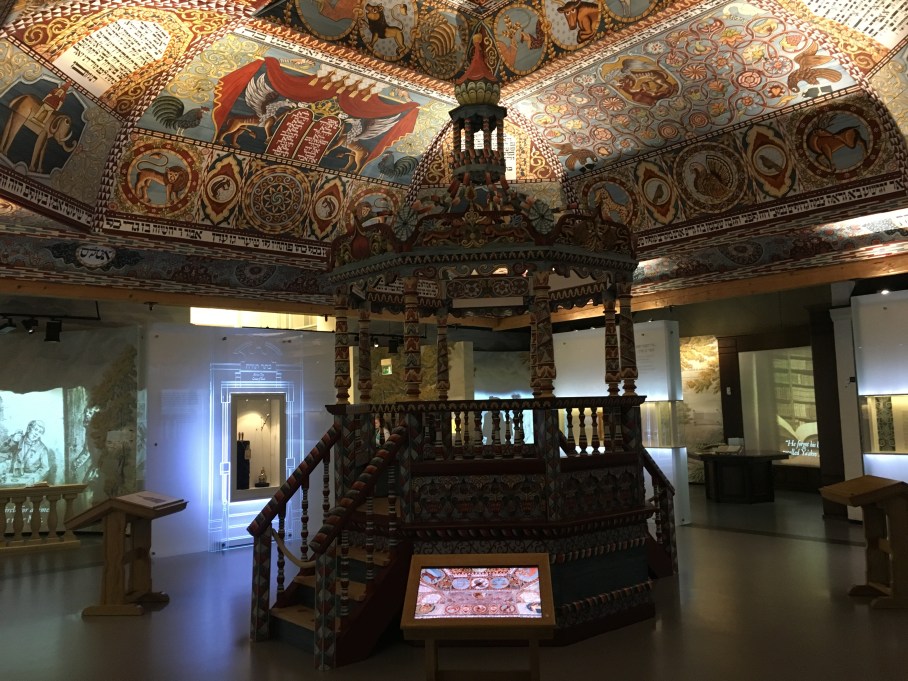
The crown jewel of the museum was a replica of the colorful Gwozdziec Synagogue, built in 1640 and destroyed by the Nazis.

img_0583img_0591

My favorite exhibit discussed the Yiddishist movement of the interwar period, in particular their cultural output of films, newspapers, art, music, novels, poetry. There was also an extensive Holocaust exhibit and overview of Jewish life in post-war Poland that Dad and I had to rush through.

Just outside stands the Monument to the Ghetto Heroes. The Warsaw Ghetto Uprising took place in April of 1943 soon after 265,000 Jews were deported to their deaths over the course of a few months. An armed struggle was organized by those remaining, which resulted in the deaths of 300 Nazis and 13,000 Jews. The ghetto was burned, culminating in the destruction of the Great Synagogue. The monument was created by the renowned sculptor and Warsaw native Nathan Rapoport only five years after the uprising took place.

img_0601

Around 7:30 we took a taxi back to the hotel. Our driver emphatically proclaimed his hatred for Germans among other flamboyant diatribes. Dad appreciated his openness so very much that he asked to shake his hand before we exited. It turns out the fifty zloty bill that he gave us in change has not been in circulation for decades.

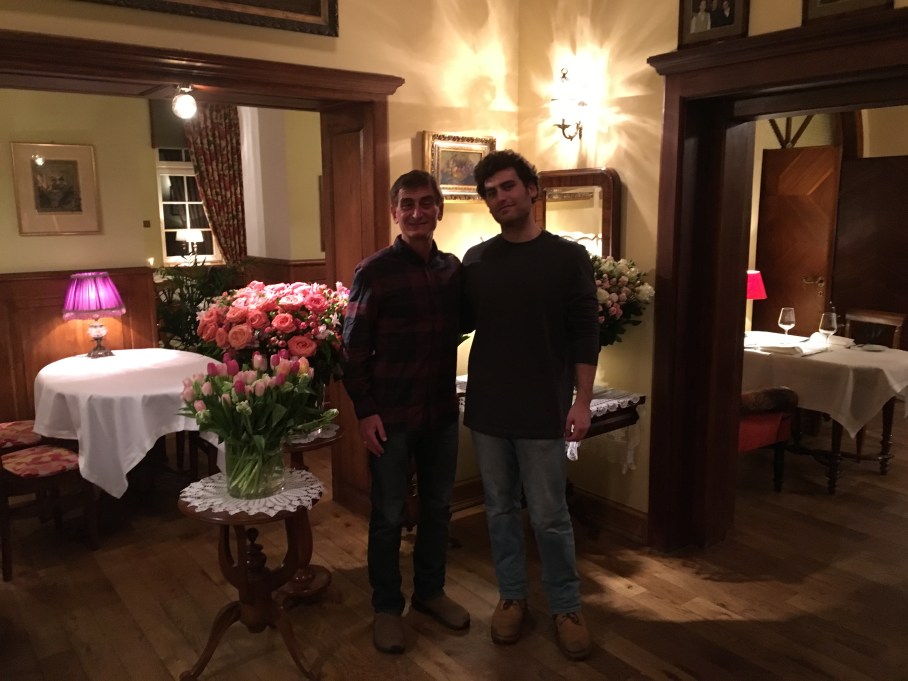
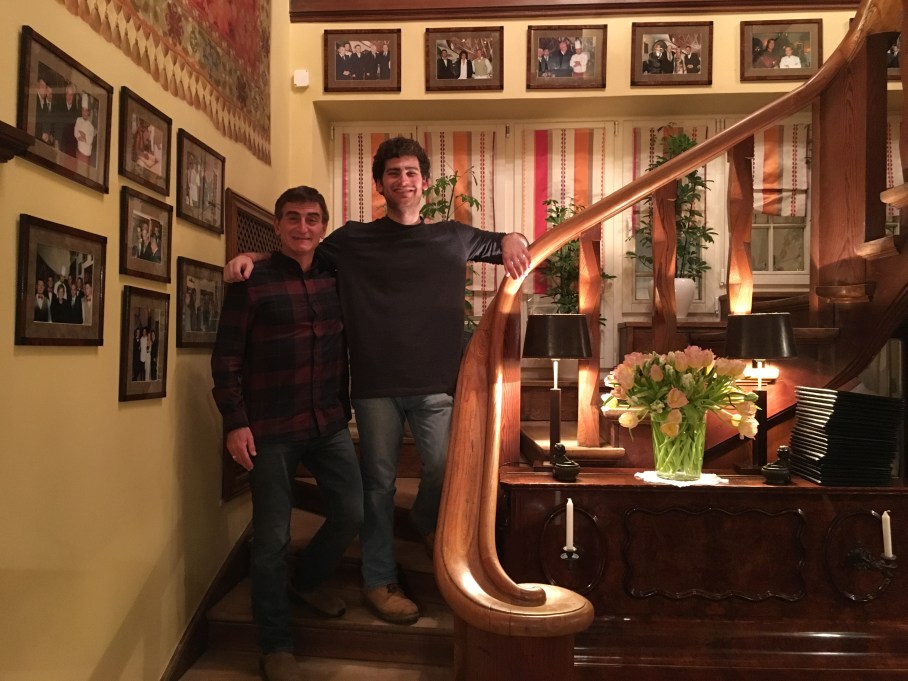
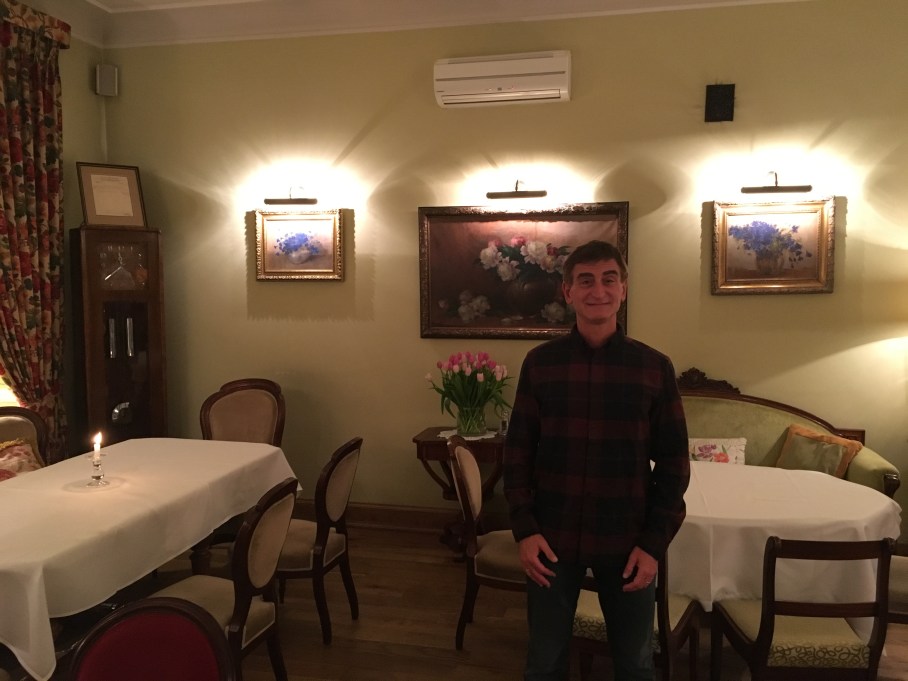
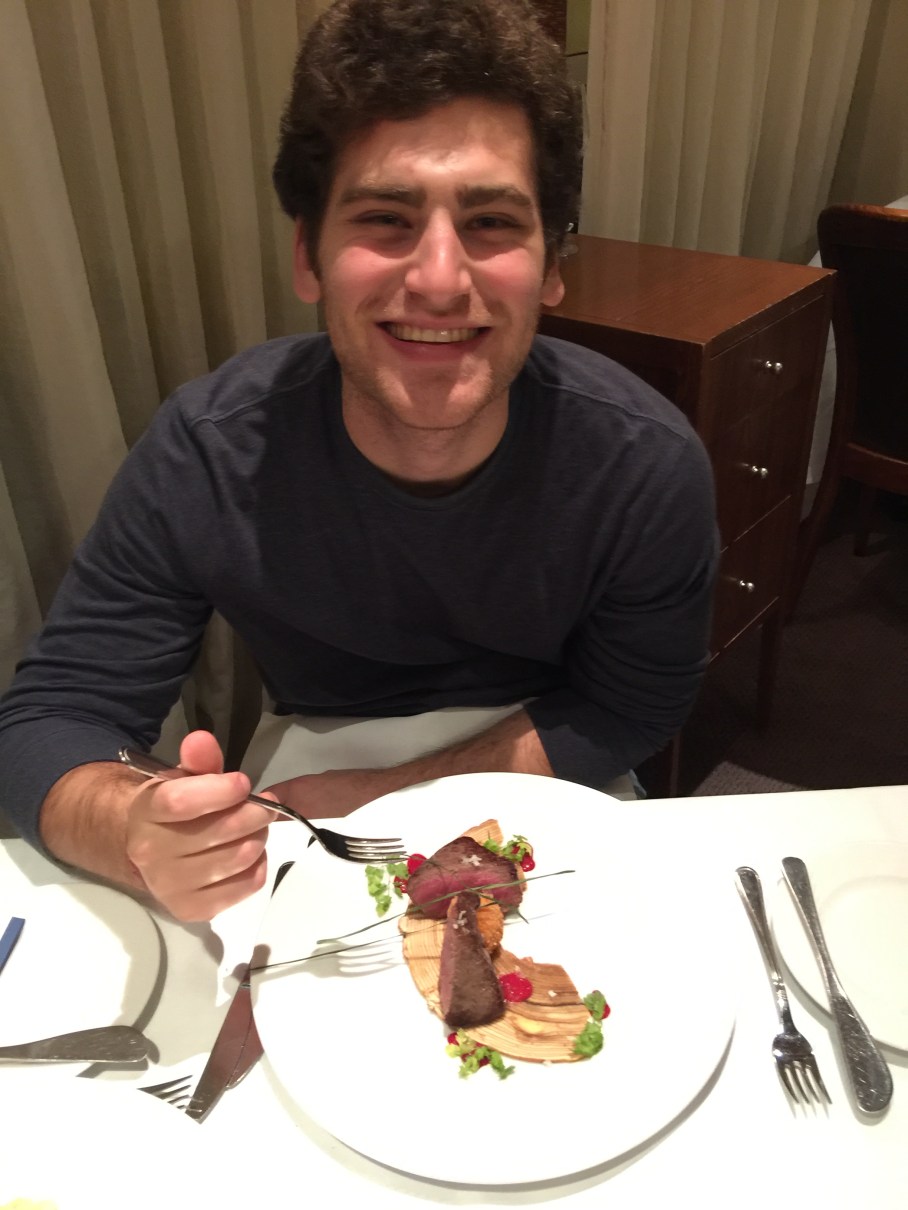
Blogged a bit at the hotel before heading to dinner. The restaurant was lovely and the food was delicious. Dad asked the waiter for a photograph, we got a photoshoot.

img_0606img_0611img_0613

Walked back to the hotel and blogged a bit more before falling asleep.

08 November 2016

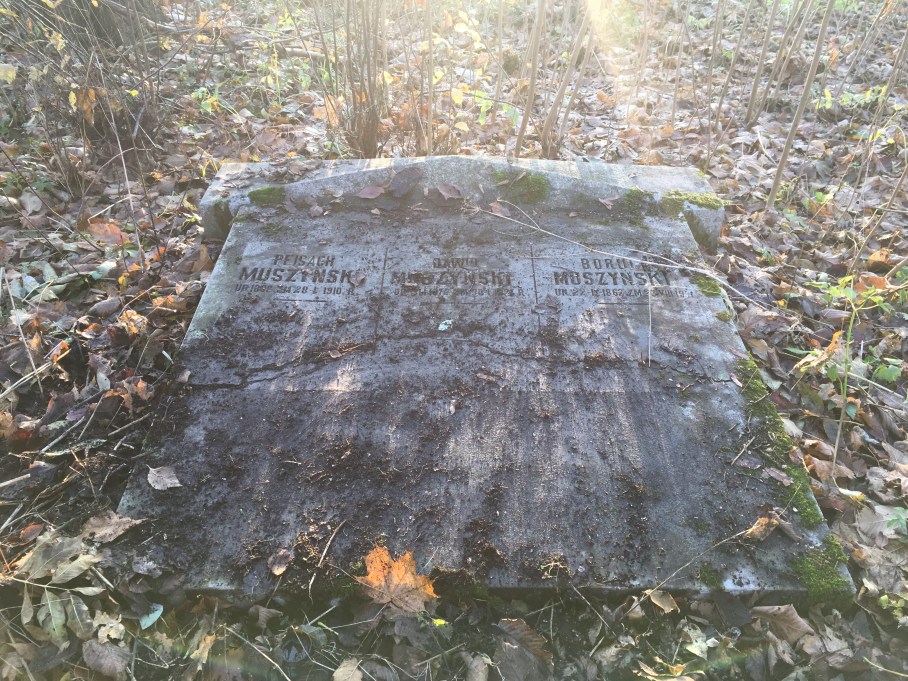
I woke up this morning in Siemiatycze, which for the past ten years had been a constant in the repertoire of my imagination. My great-grandfather (Maurice Davis) was the only one of his siblings not born in Siemiatycze. He was rather born in Birmingham in 1907- one year after his mother (Rachel nee Sokol) was reunited there with her husband (Elias Davis) after three years apart.

The handy guide that I found online completely eviscerated the need for a tour guide. It is a shame that these guides, which have been developed for shtetlach across Poland, have not been developed for Lithuania.

Like Bialystok, Siemiatycze was the property of magnates until the Partitions. She underwent her greatest development under the proprietorship of the Sapieha family (of Lithuanian and Ruthenian origin), in particular under Anna Sapieha Jablonowski in the latter half of the 18th century.

She built a luxurious palace, but unfortunately it was burned to the ground in the January Uprising of 1863 during the Battle of Siemiatycze. All that remains are the two stone sphinxes that guarded either side of the road leading to the entrance. Just behind it we were thankful to find an information center, where we were able to obtain a map that made the rest of our day significantly easier.

img_0119

The road to her palace was called Palacowa, it still stretches from the sphinxes all the way to the city square. On Palacowa we found some fine examples of classicist homes, which dominated the city before the war.

img_0122img_0127

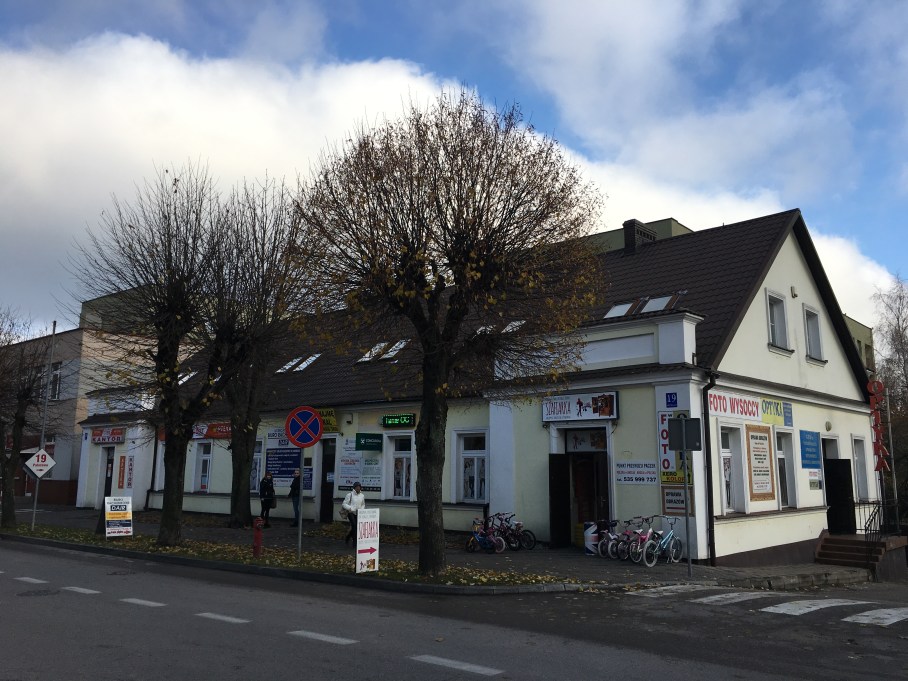
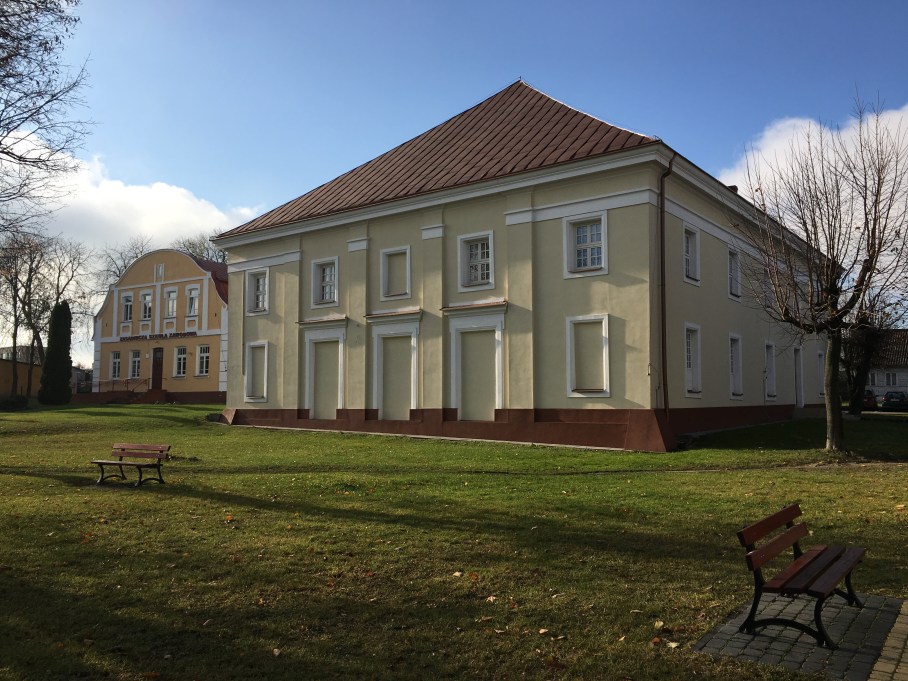
Still on Palacowa, just before the square, we found the still standing synagogue and beit-midrash (house of learning).

img_0140

Records show that there were Jews in Siemiatycze as early as the late 16th century, when they were invited from Lithuania by the magnate of the time. They were then subject to the Kahal (Jewish administration) of Tykocin, but were able to free themselves in 1730.

img_0200

When deciding to built the alley to her palace (later Palacowa), Jablonowski gave no consideration to the Jewish cemetery through which it ran. The Jewish community revolted in sadness and anger at the disruption of the eternal rest of their forefathers. To appease their frustration (a necessity as they then made up 70% of the city), Jablonowski commissioned the construction of a synagogue along her ornate alley.

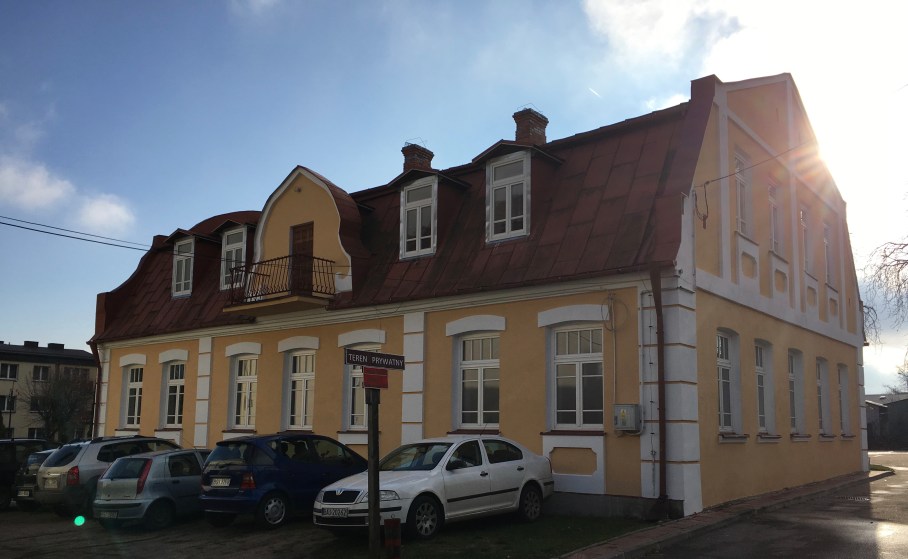
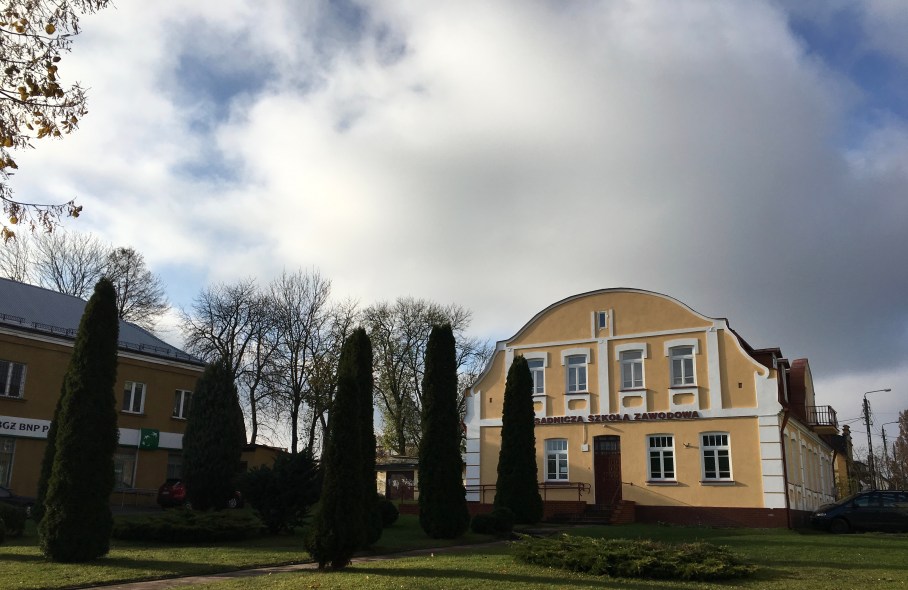
The beit-midrash was perhaps even more impressive than the synagogue. It now houses a technical school, which has surely contributed to her preservation.

img_0156

The grounds in front were also kept very nicely.

img_0134

The synagogues’ rather inconspicuous appearance is the only reason for her endurance of the Nazi atrocities, which destroyed a good bit of the town. The building now belongs to the city and functions as her cultural center.

img_0192

We entered to find a crowd gathered in her main hall for what appeared to be a meeting of sorts. Behind the speaker hung a massive screen, where once stood the bimah.

img_0169

Plaques commemorating her storied past hung both inside and outside.

On the top floor we were welcomed by a friendly women with no English language skills. Using Google Translate (as I had in Nadvirna) she kindly walked us around the exhibit of Siemiatycze artifacts. The first room we entered housed a collection of paintings by Jozef Charyton (1909-1975) that depicted Jewish life in Siemiatycze.

img_0179

They were put to good use in my imagination of pre-war Siemiatycze.

Another portion housed materials from the World Wars, and another of a traditional loom.

img_0182img_0187

Our friend described the balcony (where we stood) as the place where the women prayed, per traditional Jewish custom.

img_0190

She described the area around the synagogue as historically an area where Jews resided.

img_0197

With that we made the short walk to town square, another place of historically Jewish residence.

img_0201

There was a nice town sign, which I always love to see.

In the center stood a monument to the town heroine, Anna Jablonowski.

At the far corner of the park we found the beautiful early-18th century baroque Church of the Assumption of the Blessed Virgin Mary. Such a structure definitely did not exist in my baseless expectations of Siemiatycze.

img_0221

Next door stands the former monastary.

img_0239

We grabbed some lunch materials from our hotel complex before heading across the Bug River to the Jewish cemetery.

img_0116

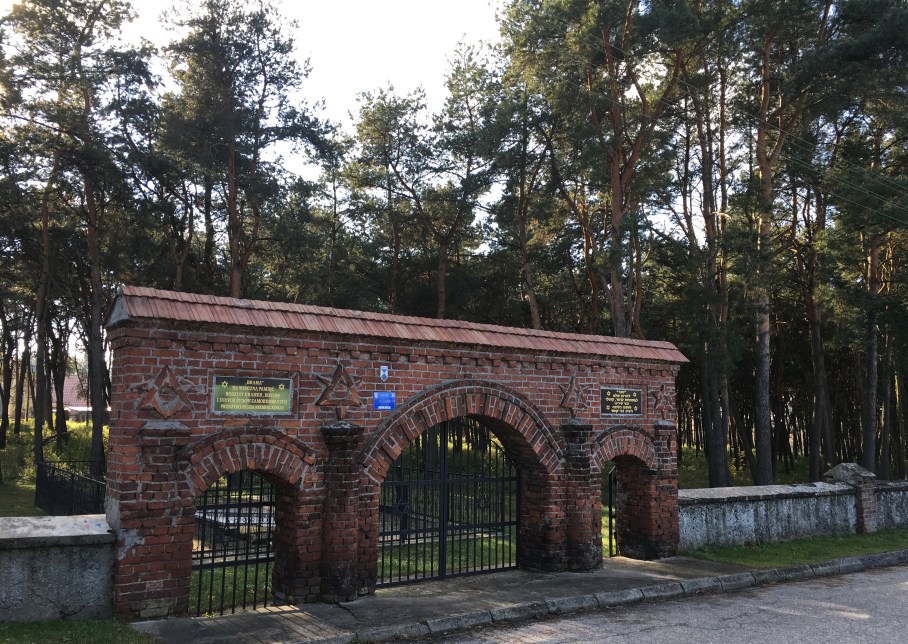
A red-brick gate with memorial plaques guards the entrance.

img_0247

A lapidarium of the twenty or so surviving stones stands just inside.

img_0250img_0254

The remainder is inhabited by a rather serene forest.

img_3011

The cemetery was founded in the 18th century to replace that destroyed by Jablonowsky.

img_0284

My guide suggests that ‘the number of the tees growing in the [cemetery] now, corresponds to the number of matzevot in the past’.

img_0282

With that, we started the hour long drive to Miedzyrzec Podlaski, south of Siemiatycze on the way to Lublin. Miedzyrzec also lies along the road from Warsaw to Brest, Belarus. A native of Miedzyrzec, Kayla Holtzman married Moshe Shlomo Szkolnik of Siemiatycze there in 1862. Some children and most grandchildren ended up in Birmingham where they used the surname Sokol.

cropped-11755150_10153106230833412_6764156121326989204_n

Thankfully I found another listing of relevant sights.

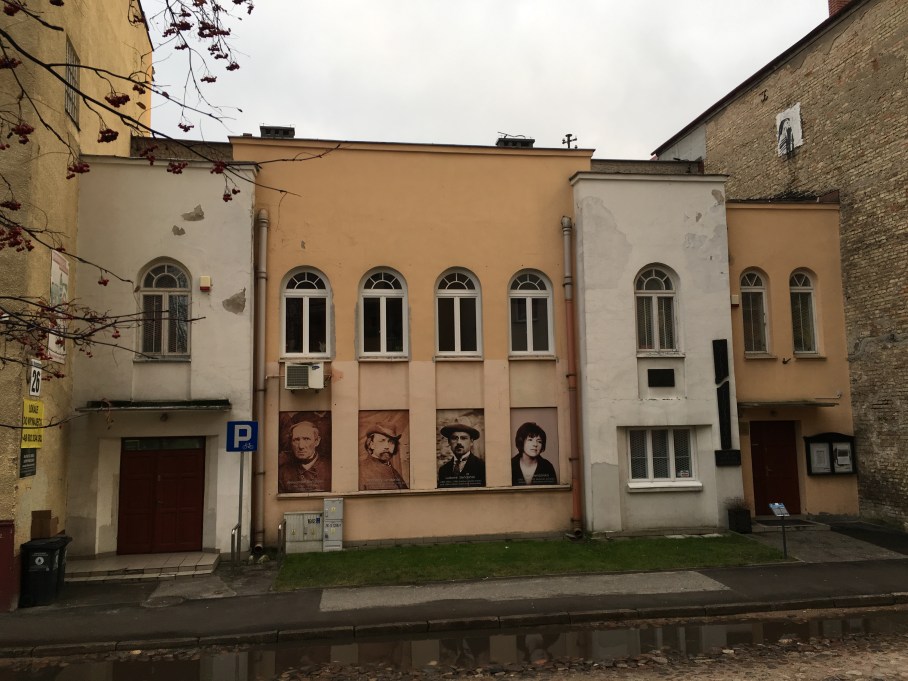
We started at the former Jewish gymnasium, which still functions as a gymnasium.

img_0290

Similarly, the former Jewish hospital (which took a frustrating amount of time to locate) still functions as a hospital. It was established in 1929 with the support of American Jews. On the 25th of August 1942, the Nazis shot all sick Jews in their beds.

img_0452

Town square was delightful.

img_0298

On one side ran Lubelska Street, which was once constantly packed with Jews, but entirely empty on Shabbes.

img_0302

North of the square we found the Jewish cemetery. Built in 1810, it replaced the former Jewish cemetery that presumably accommodated Jews since their arrival to the city in 1512.

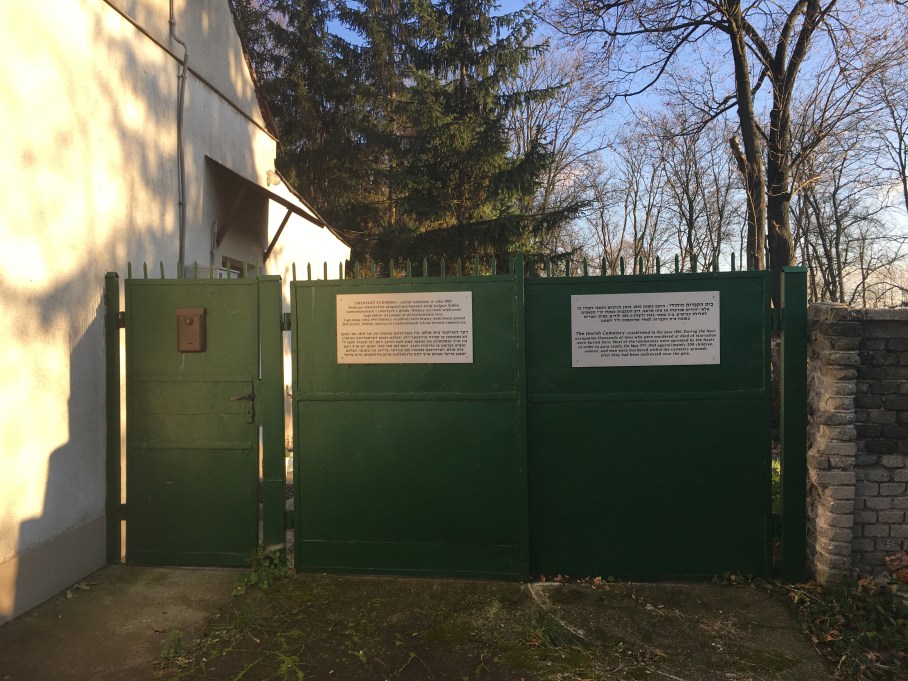
img_0306

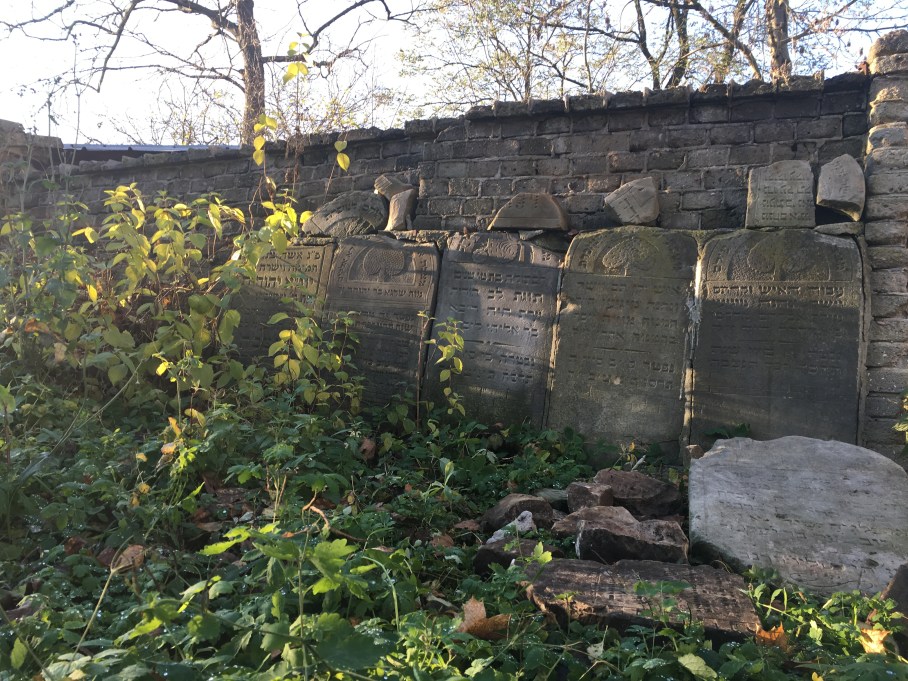
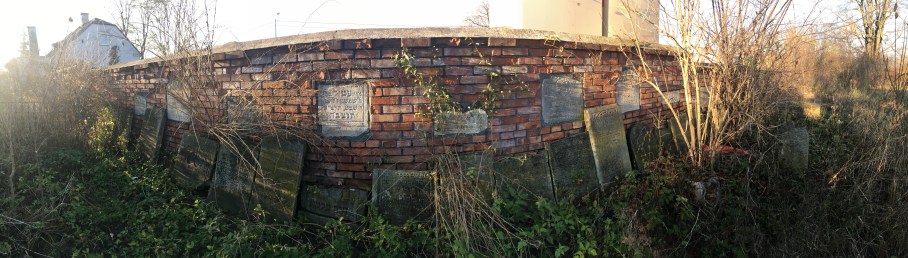
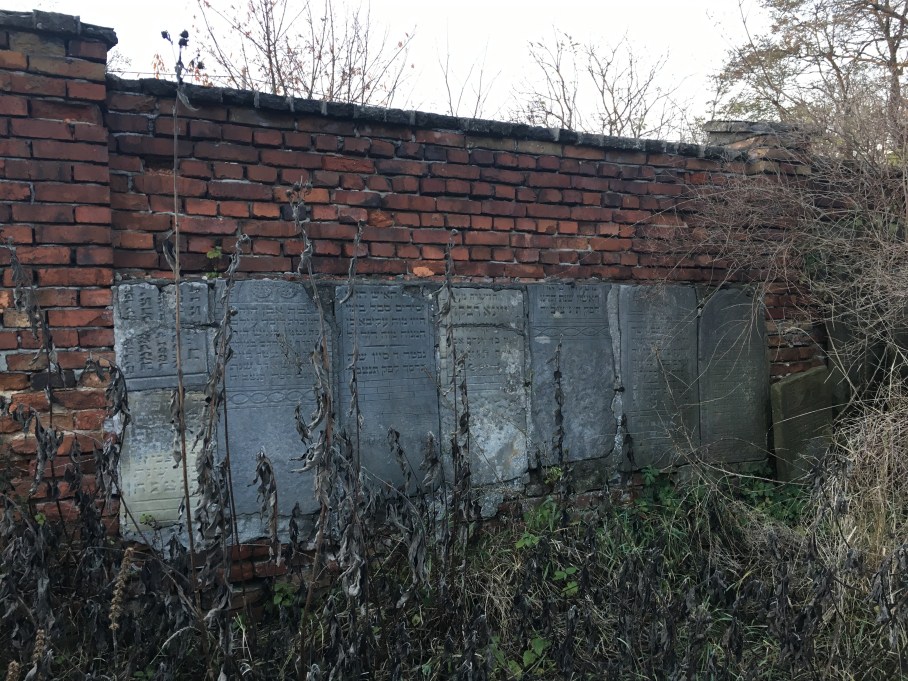
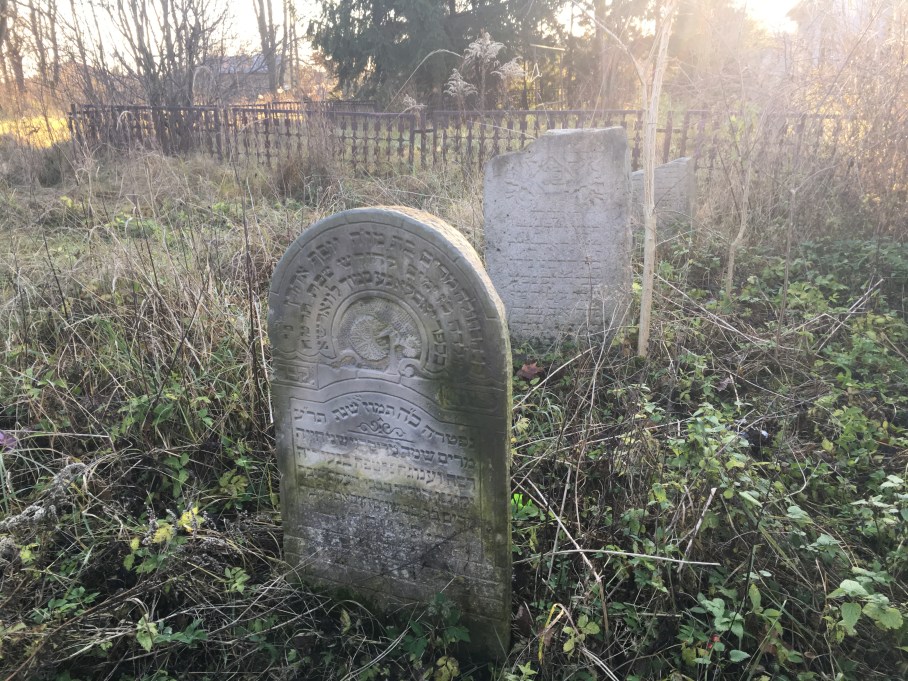
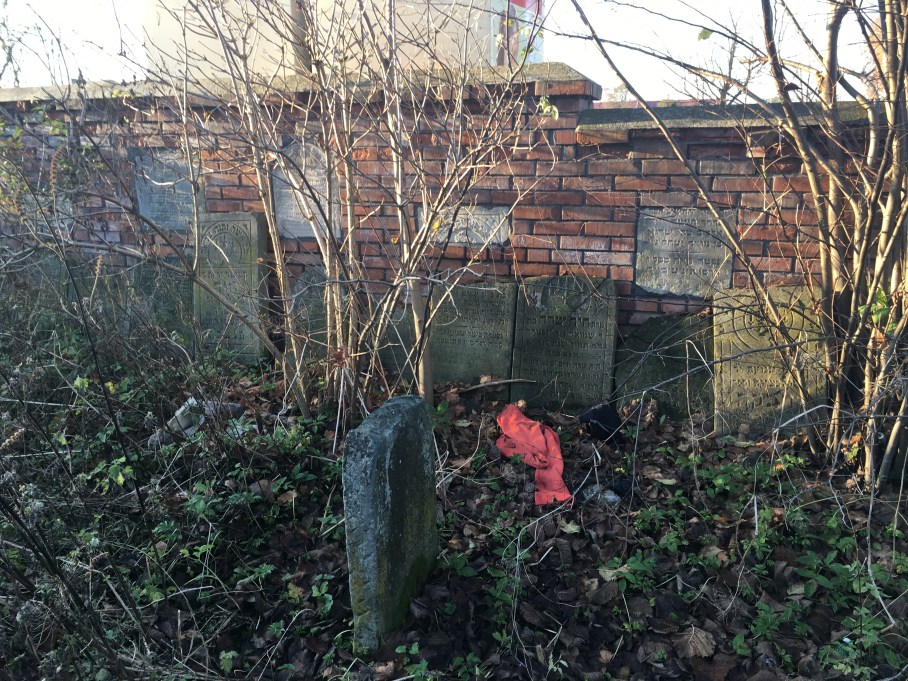
The walls were lined with headstones, and filled with remnants.

img_0311img_0327

img_0443

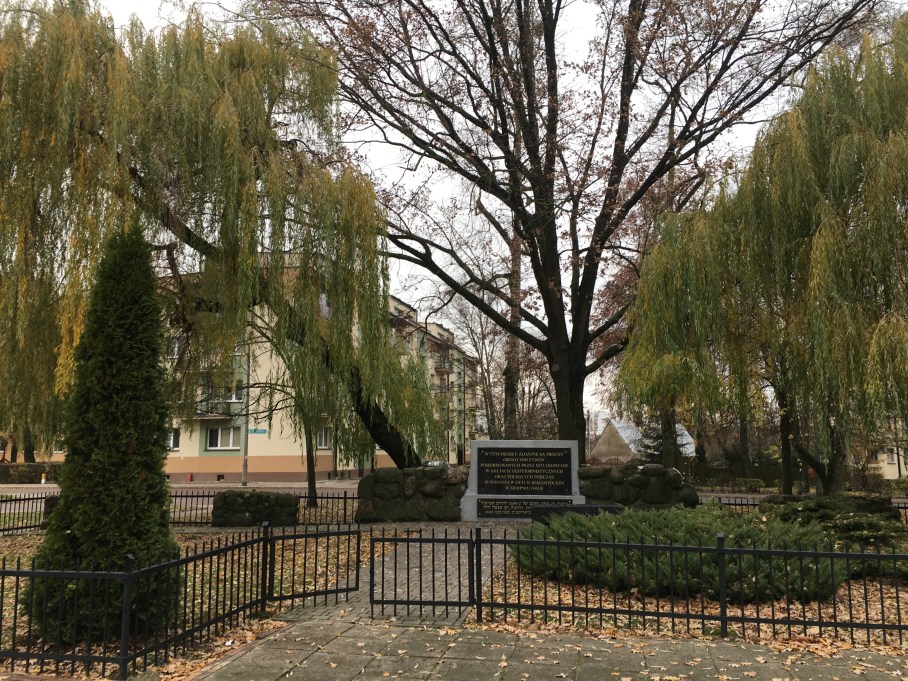
A memorial to the 150 Jewish women and children murdered by local Poles stood just inside the gate.

img_0446

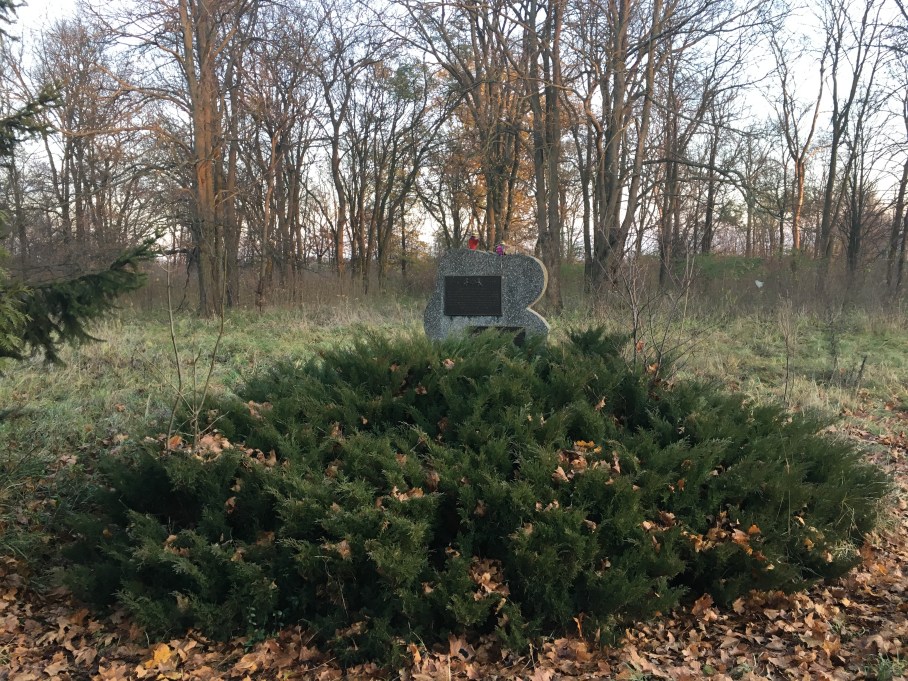
The northwest corner was the best preserved, but unfortunately flooded with garbage.

img_0330img_0331

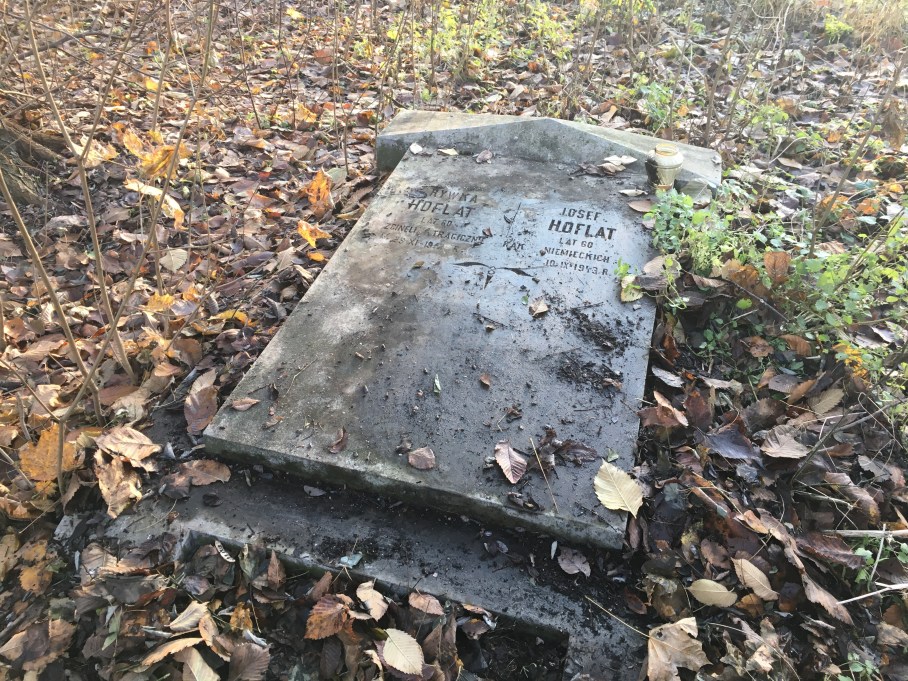
I spotted a couple stones across the open field. Dad and I walked there to find a large flat stone that commemorated two folks who died during the war.

img_0335

I assumed it was erected after the cemetery was already destroyed in memory of loved ones murdered- confirmed when we found multiple large stones just like it scattered throughout the field.

img_0344img_0351

One in particular was very difficult to clear off, unlike the others it was made of metal. Dad and I spent some time trying to clear it off and reorganize the broken pieces.

img_0359

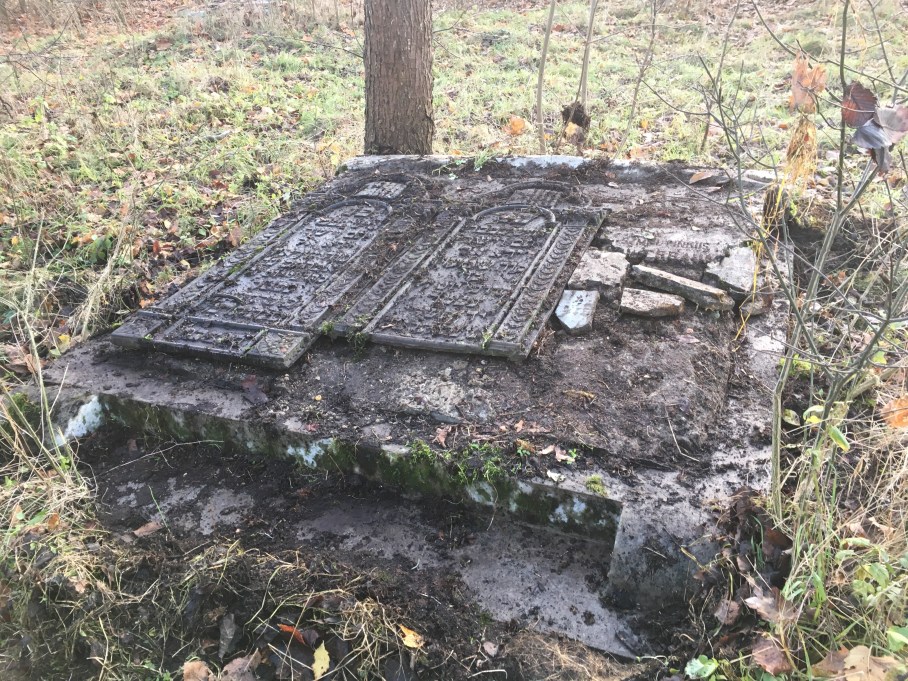
To reach town square we walked down Grabarska Street, once a thoroughfare of the ghetto, which housed 20,000 Jews before liquidation in 1942 and 1943. All were killed in mass shootings or sent to concentration camps, all remnants are destroyed.

img_0450

We arrived in town square just before sun down. Passed by the old fire station, endowed by American Jews.

img_0458

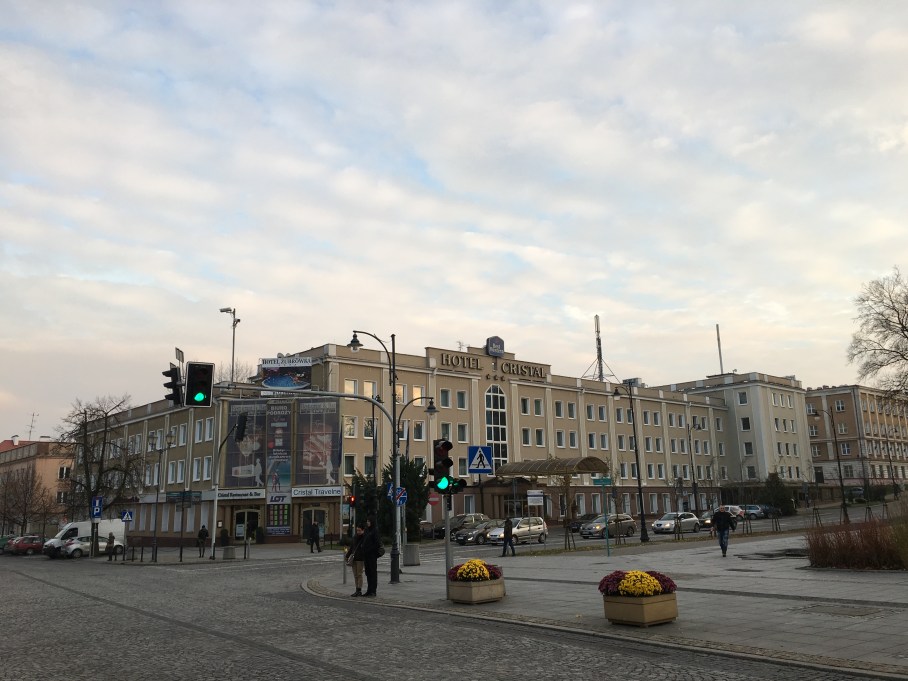
When we started our drive to Warsaw at 3:30 it was already getting dark. Encountered a good bit of traffic on the way into town and had an ordeal at Avis.

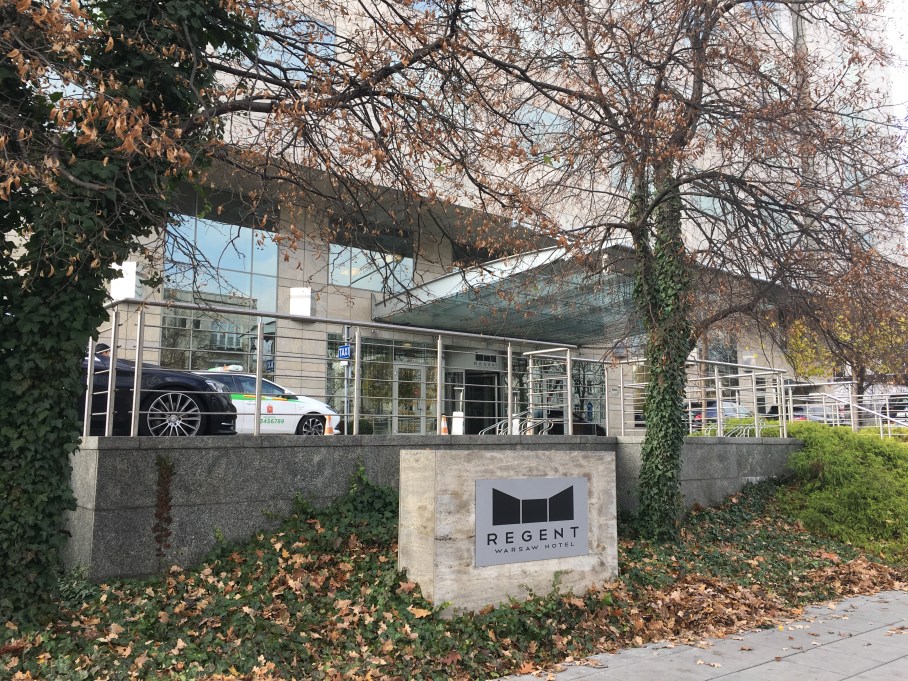
Didn’t get to the hotel until 8:30. The Regent is luxurious. Took an amazing shower and had a delicious dinner. It won’t be easy going back to the dormitory.

img_0463

07 November 2016

After another delicious meal at the hotel restaurant we started our tour of Bialystok, the largest city in northeastern Poland and center of the Podlaski voivodeship.

Bialystok was first recorded in the 16th century, property of the Wiesiolowski family near Tykocin. After the death of heirless Krzysztof Wiesiolowski, Grand Marshal of Lithuania, Bialystok was assumed by the state. Soon after it was absorbed into Tykocin, which was granted to the Hetman (top military officer) of Poland- Stefan Czarniecki. It was the dowry to his son-in-law, Jan Klemens Branicki, also the Hetman of Poland. Jan’s son, Stefan Branicki, obtained city rights for Bialystok thus dividing it from Tykocin.

Stefan’s son was Jan Klemens Branicki, Hetman of Poland and brother-in-law of Stanislaw II August (last monarch of the Polish-Lithuanian Commonwealth). Jan built Bialystok into a city worthy of a contester for the kingship, just before it was occupied by Russia in the late 18th century. The structures he commissioned are the basis for Bialystok today and were thus the basis for our route through the city.

img_9978

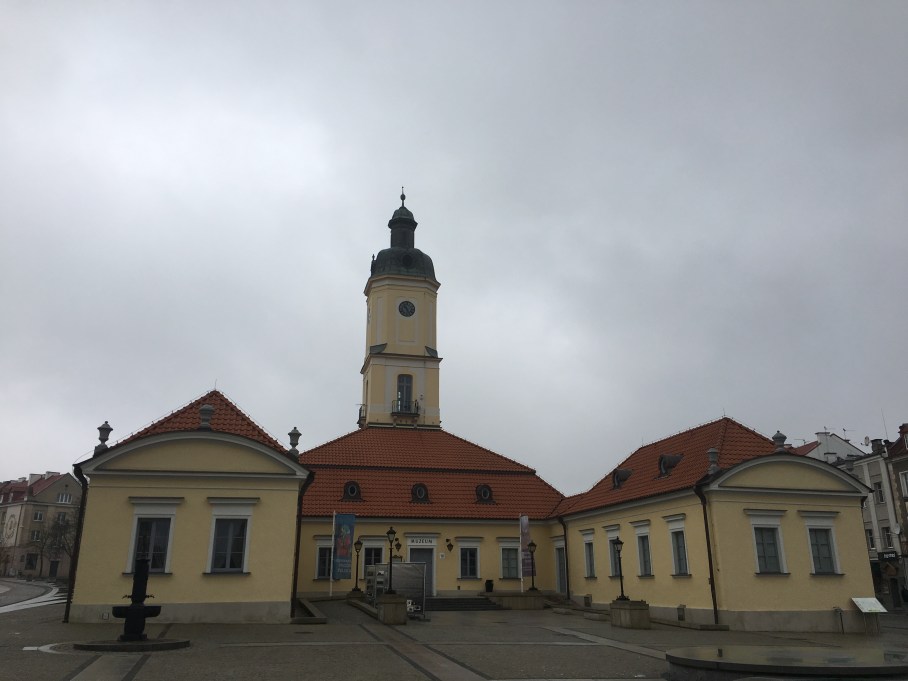
We started at city hall near the top of the cobblestone city square. It was endowed by Branicki in the mid-18th century, destroyed during the war, and rebuilt by the Soviets.

img_9953

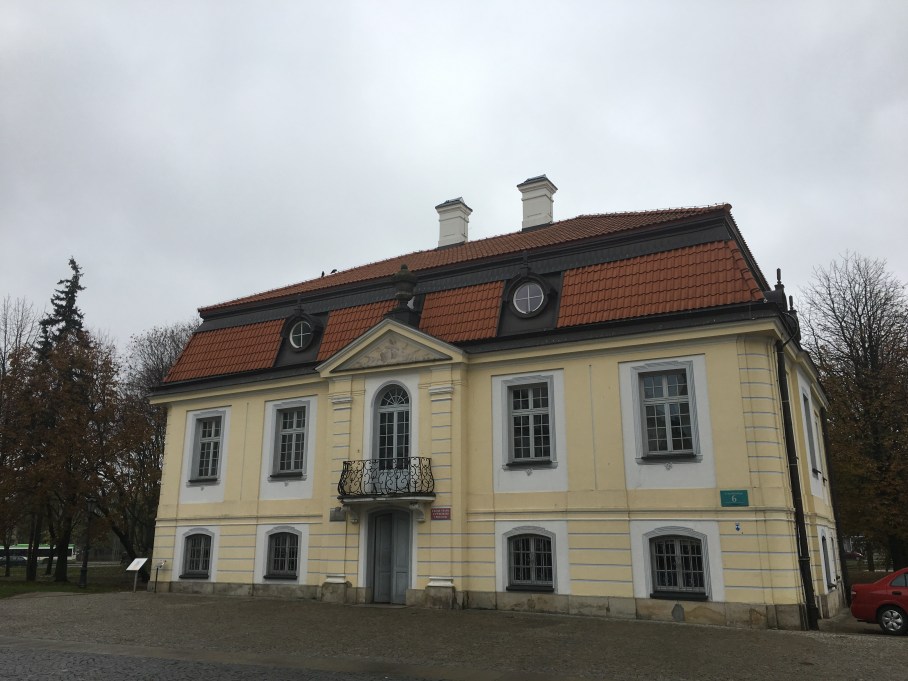
An identical timeline can be applied to three Branicki buildings surrounding the bottom portion of city square. They were easily identifiable due to their consistent off-yellow color, red roof, and baroque-classicist structure. They were a former inn, the arsenal (now an annex of the National Archive), and St. Vincent de Paul Monastery of the Sisters of Mercy.

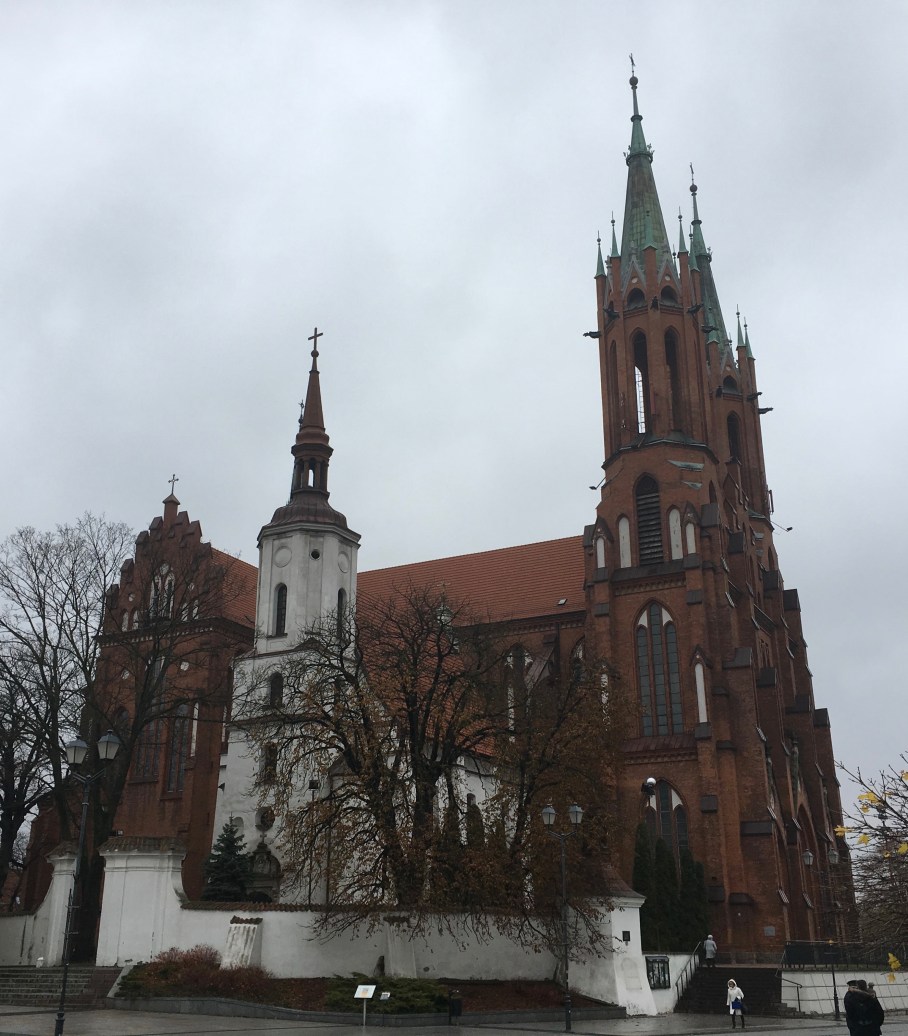
At the end of the square stands the oldest structure in Bialystok- the ‘White Church’, built by Grand Marshal Krzysztof Wiesiolowski in the early 17th century.

img_9975

We were only able to peak inside. The hearts of the earliest Branickis were laid to rest there, as well as the body of Izabella Poniatowski Branicki- sister of King Stanislaw II August.

img_9964

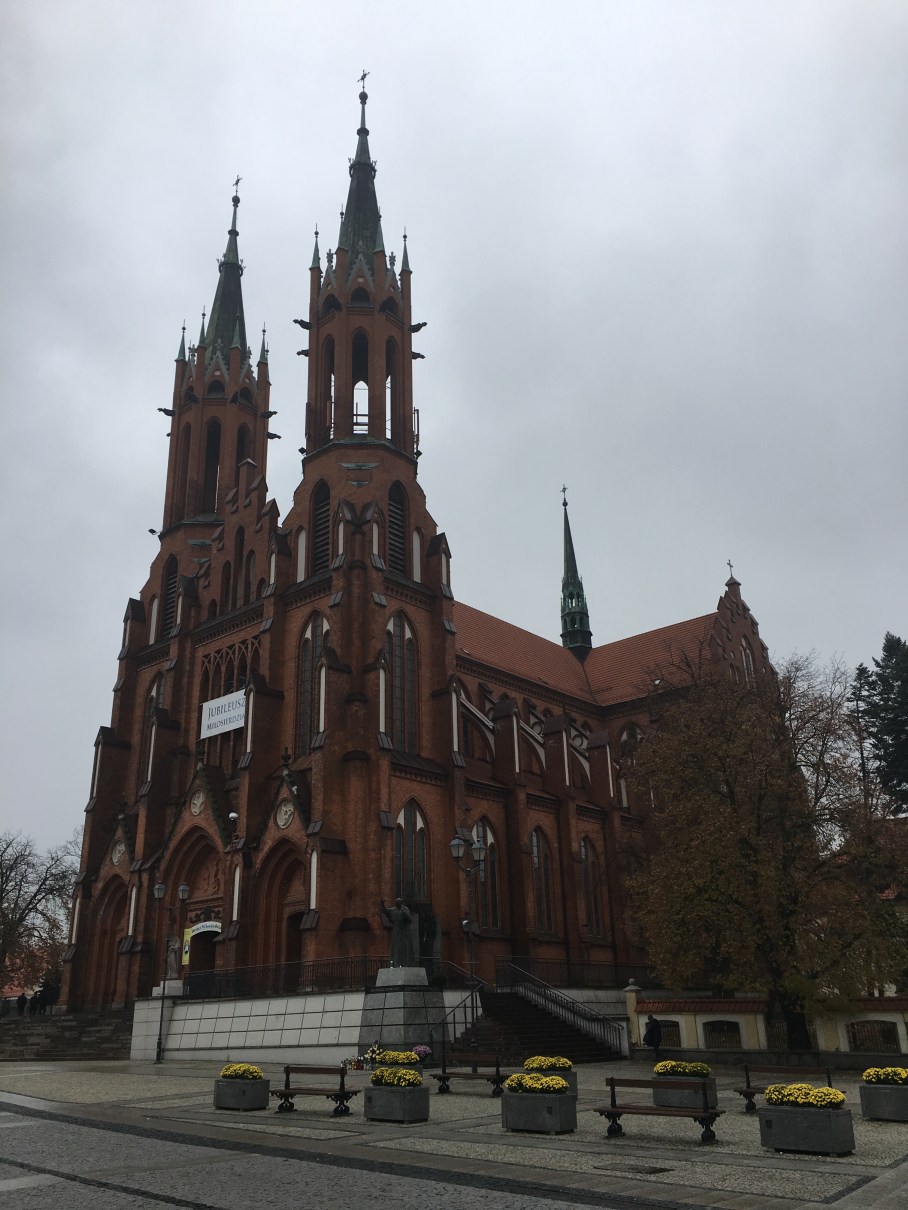
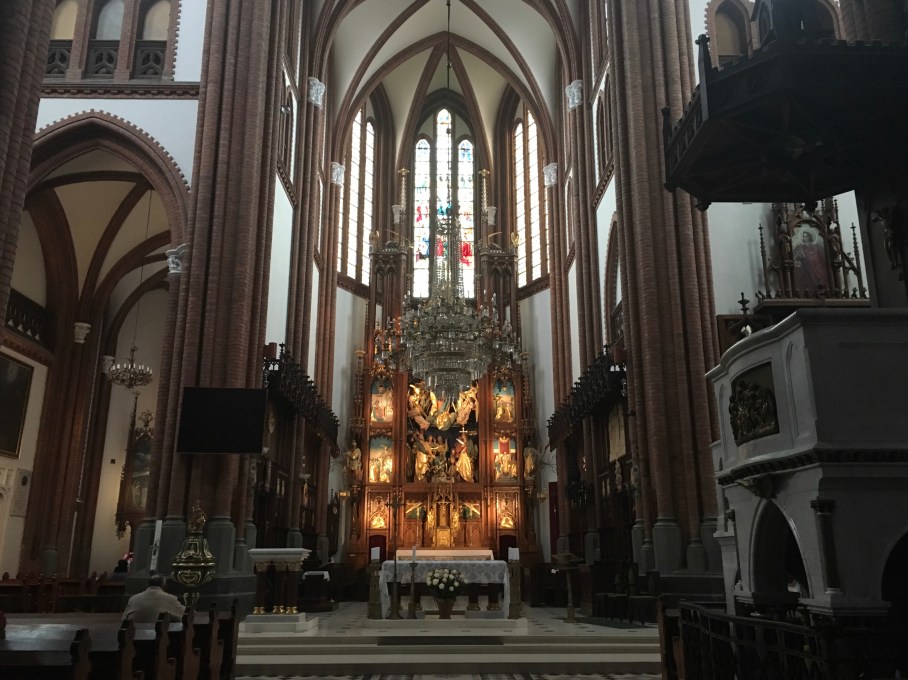
For nearly 300 years the ‘White Church’ was the only church in Bialystok, until one was built just behind it- the Cathedral of the Assumption of the Blessed Virgin Mary (1900).

img_9994

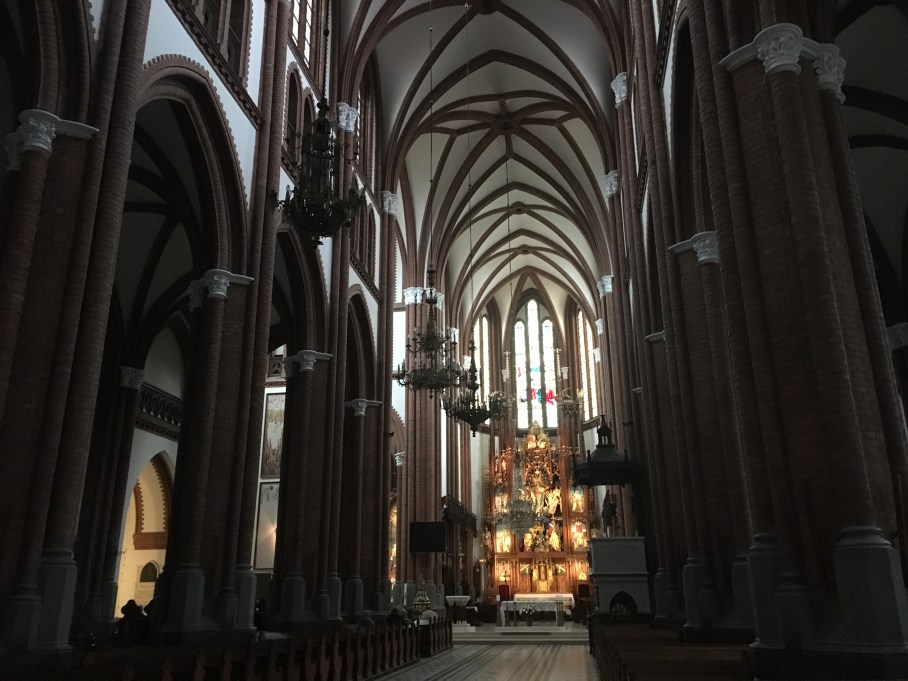
Neo-gothic in style, we spent a bit of time inside. It was rather magnificent.

img_9990img_9983

A few streets back we found the guest house, very easy to identify. Same timeline as the others.

img_9996

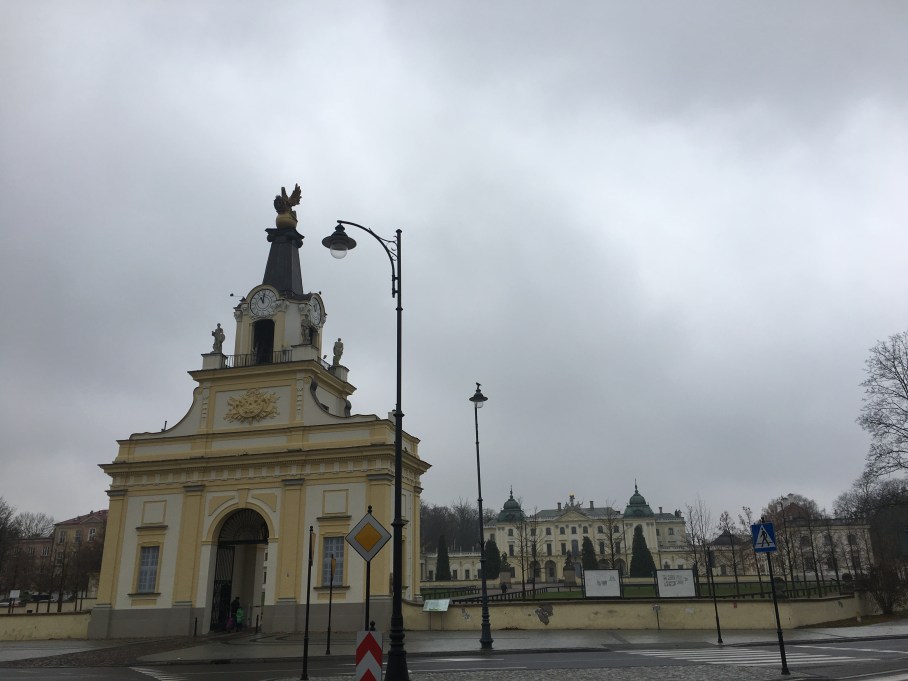
The gem of Bialystok is the Branicki Palace, where originally stood a 16th-century castle of the Wiesiolowski family. Stefan Branicki transferred the family residence there in the 17th century, and it was entirely renovated by his son Jan. It was heavily damaged during the War, but repaired soon after.

img_9999

For her imitation of French models, with an intricate complex spanning across the city, Bialystok earned the monicker ‘Versailles of Poland’. The palace now houses the Medical University of Bialystok.

img_0004

Dad kindly waited as I sat on a park bench and planned the Jewish portion of our tour based on a dense guide that I found online.

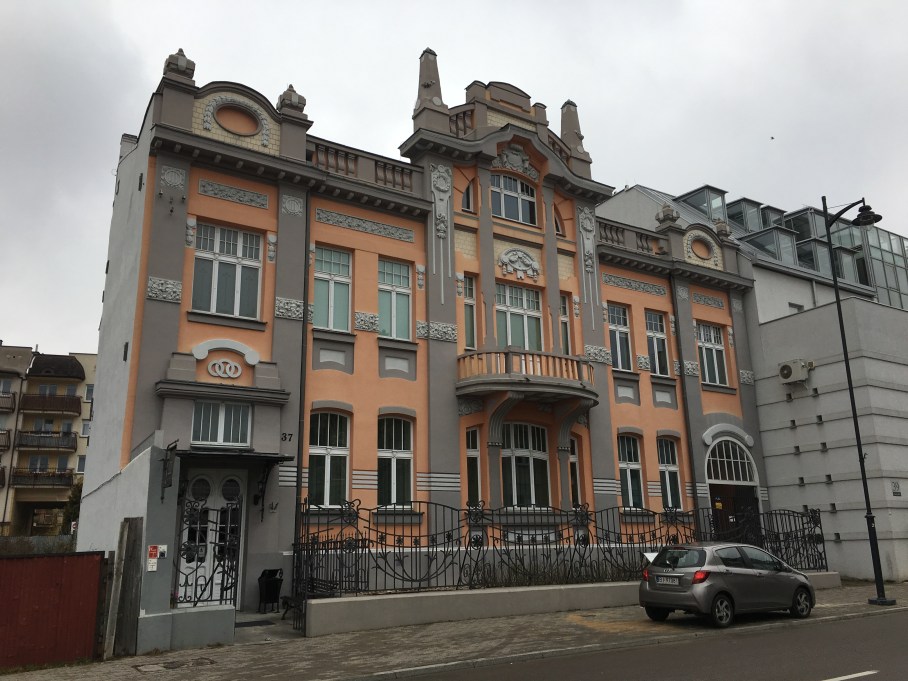
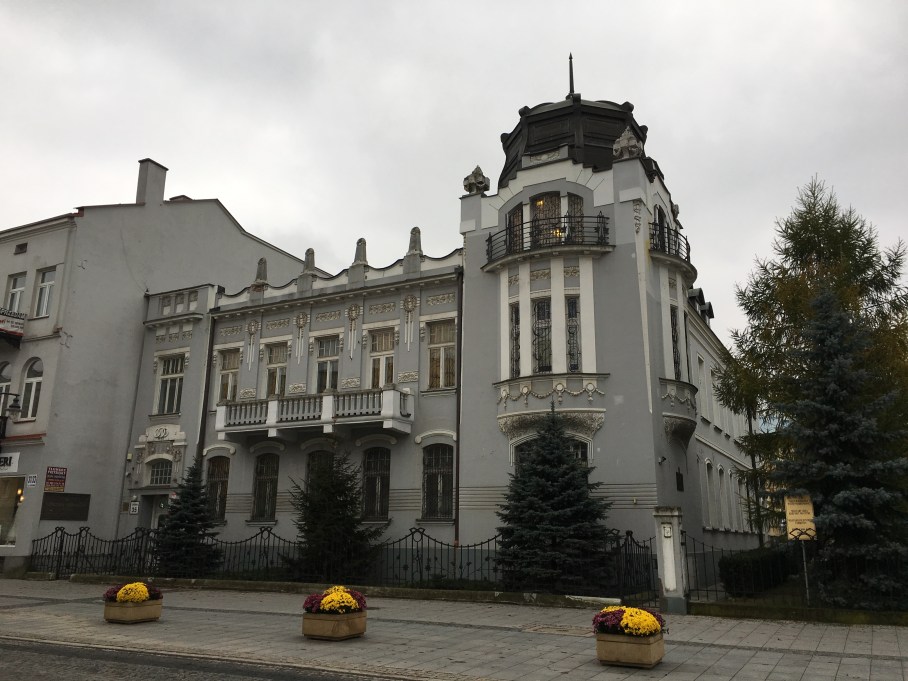
We started at the 19th century palace of Samuel Cytron, one of many residences erected by Jewish manufacturers in Bialystok. It now houses the Historical Museum. Unfortunately we could only peak inside. It is closed on Mondays, as are many of Bialystok’s attractions… not sure what that’s about.

img_0007

We continued down Warszawska (what is presumably the southern end of old town) to the Ludwik Zamenhof center. Zamenhof was born in Bialystok to a religious Jewish family in 1859. Bialystok at the time was a multilingual town of Jews, Poles, Belarusians, Russians, Germans, Tartars, Lithuanians and others. Zamenhof expressed frustration at the inability of these groups to coexist harmoniously, which inspired him to develop a universal language. Known as Esperanto, it is the most widely spoken constructed language in the world with anywhere between 200,000 and 2,000,000 speakers, as well as 1,000 or so native speakers.

img_0015

The gymnasium that he attended was just across the street.

img_0023

Nearby on Warszawska is the 19th century palace of Chaim Trylling, who belonged to a Jewish family that manufactured quilts and fabrics. Chaim’s grandfather was Joshua, a Seirijai native, whose aunt was Rose Trylling nee Ivry- a sister to my great-great-great-great-grandmother (Dora Avner nee Ivry).

img_0029

Made our way back towards city center where we found the headquarters of the Linas Challim Charitable Organization (1893-1943), meaning literally ‘one who heals the sick’. With an annual budget of no more than 6000 rubels, the organization supported over 12,000 of Bialystok’s Jews. They eventually opened an emergency facility and ambulatory. Many of the manufacturers whose homes we visited provided the essential funds to support the organization.

img_0034

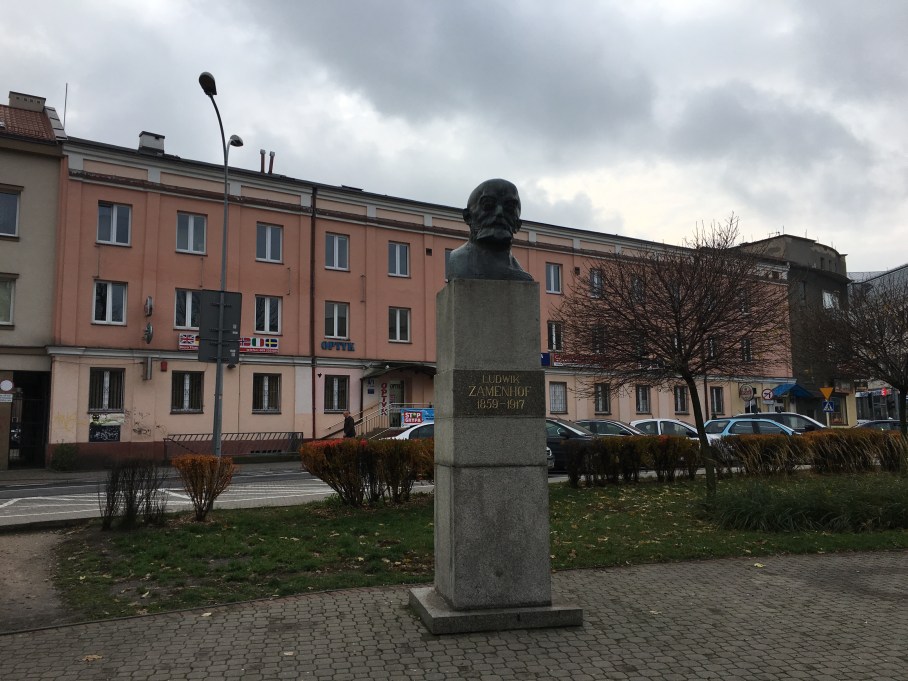
It was a short walk to the statue of Ludwik Zamenhof near city hall.

img_0036

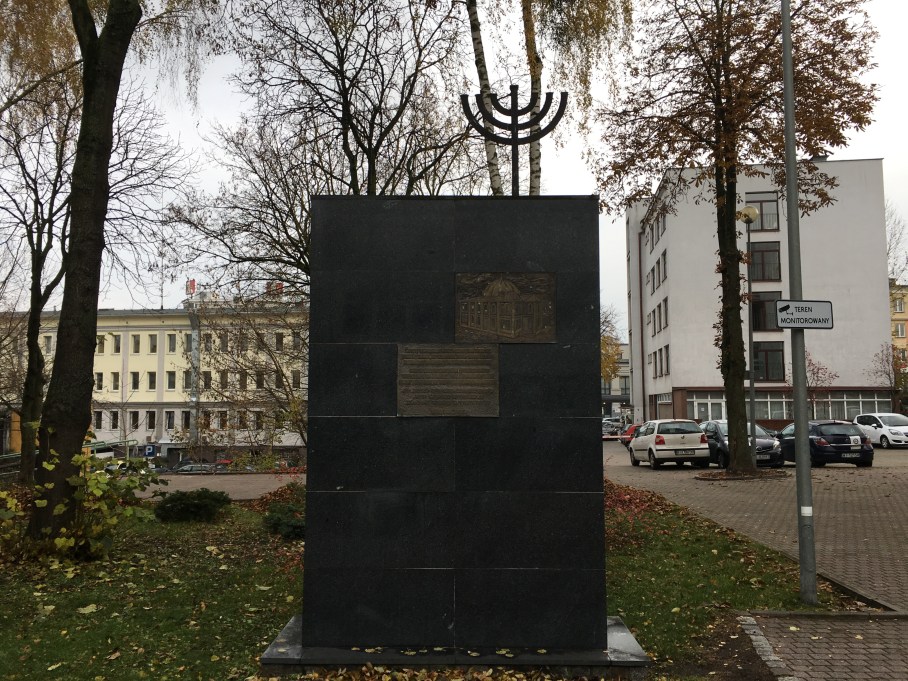
It took a little bit of investigation to find the site of the Great Synagogue. Her predecessor was built with assistance by  Izabella Branicki nee Poniatawski.  At the time of construction in 1771 it served a Jewish community of no more than 800. By the early 20th century, the Jewish community had outgrown the synagogue- they numbered almost 60,000. The old synagogue was demolished in 1905 and the construction of the Great Synagogue immediately commenced. The project was funded by the Jewish manufacturers of the city, but delayed due to the revolution. It was completed in 1912 and consecrated in 1913 by Rabbi Joseph Mohilever, grandson of renowned rabbi Samuel Mohilever, both of whom served as chief rabbi in Bialystok.

img_0041

The plaque reads: Our splendid sanctuary fell victim to the flames on June 27, 1941. 2000 Jews were burnt alive in it by the German Nazi Murderers.

img_0053

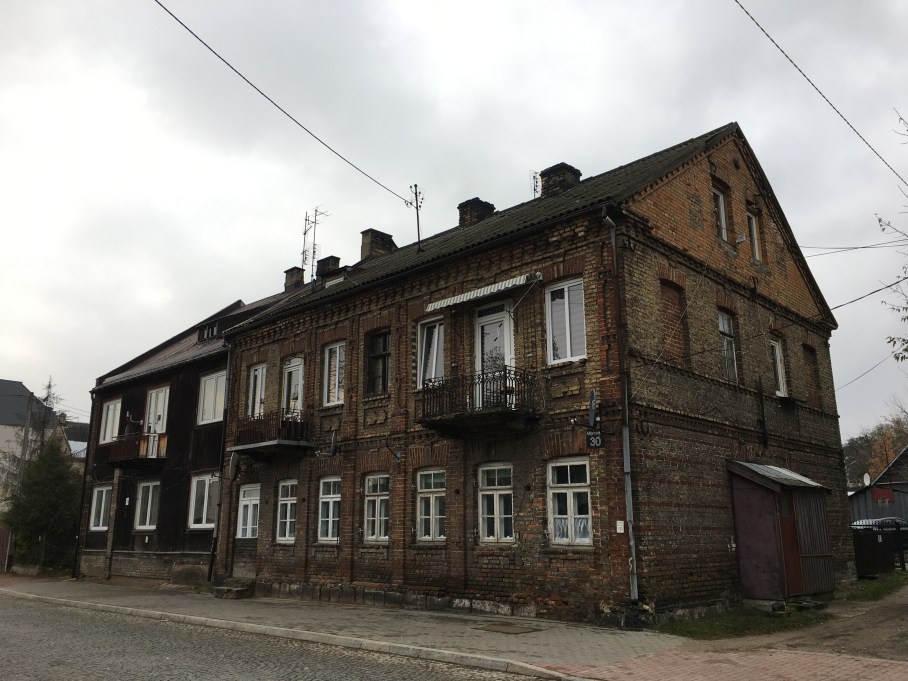
A few blocks down we found one of two remaining synagogues in the city. Named after its location in the Jewish district of Piaski, the Piaskower Synagogue was built in 1891.

img_0058

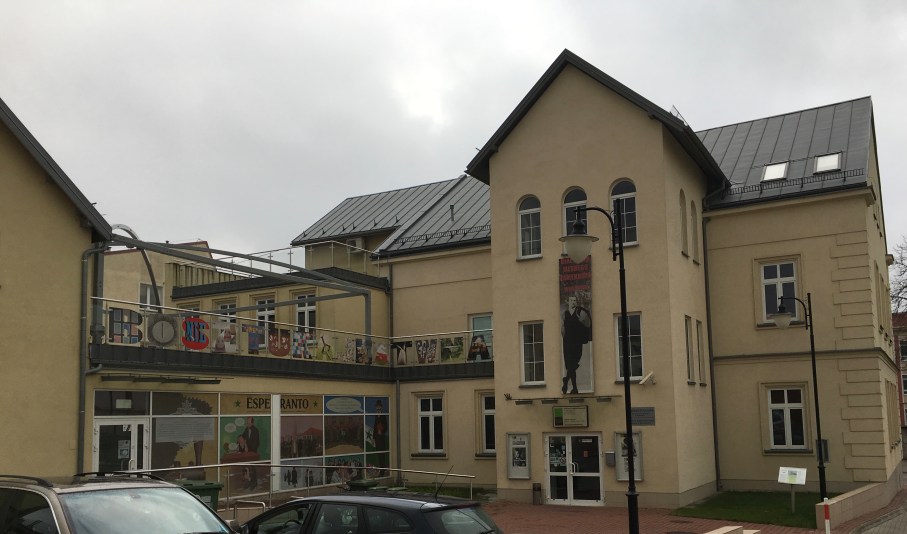
It now houses the Bialystok Association of Esperantists.

img_0062

Just a few steps away was the dilapidated marketplace of the district, where local Jews sold their crafts.

img_0067

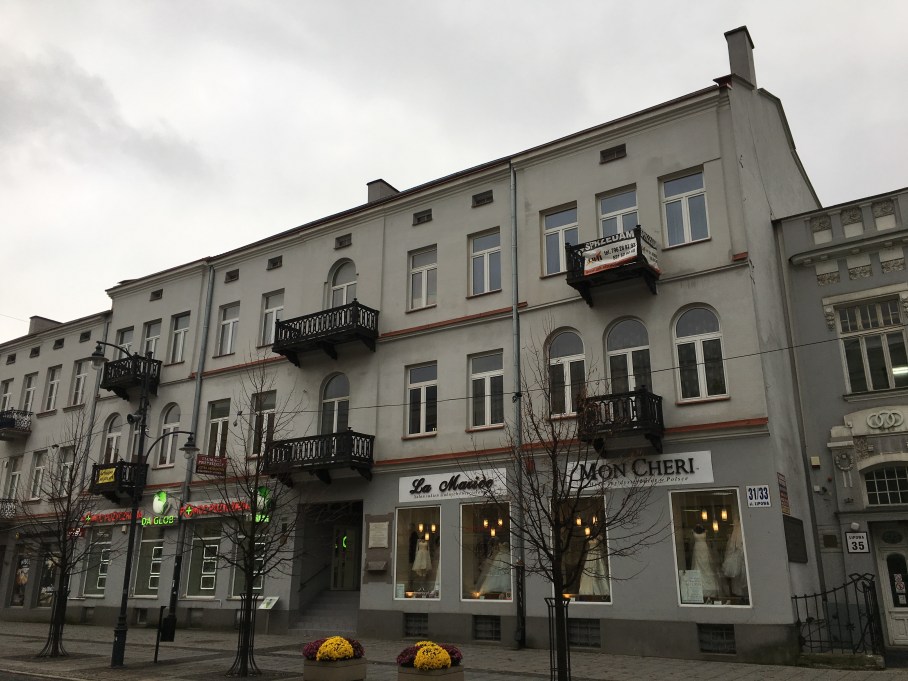
Back on Lipowa we visited the former residence of Jacob Shapiro, who cemented Zamenhof’s legacy by establishing the Bialystok Association of Esperantists, which functions in the Piaskower Synagogue to this day. Shapiro died in Bialystok at the hands of the Nazis.

img_0072

Just next door was the magnificent palace of Chaim Nowik, another Jewish industrialist.

img_0075

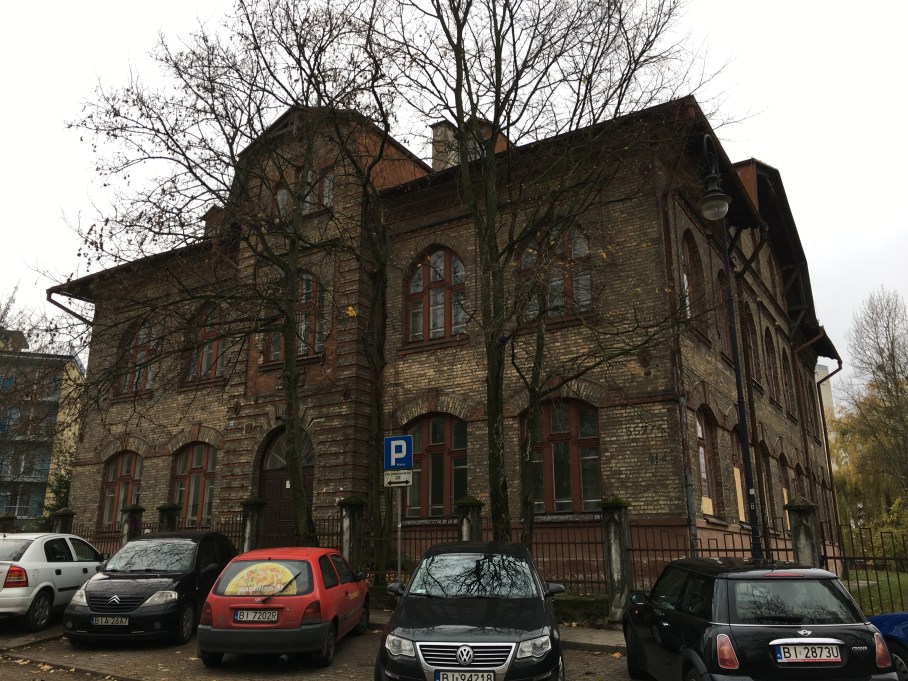
Not far behind we found the former school run by the Tarbut organization, which promoted the Hebrew language and culture. It is described in my guidebook as the best preserved example of the ‘Bialystok school of masonry’, which drew inspiration from a variety of methods and cultures.

img_0079

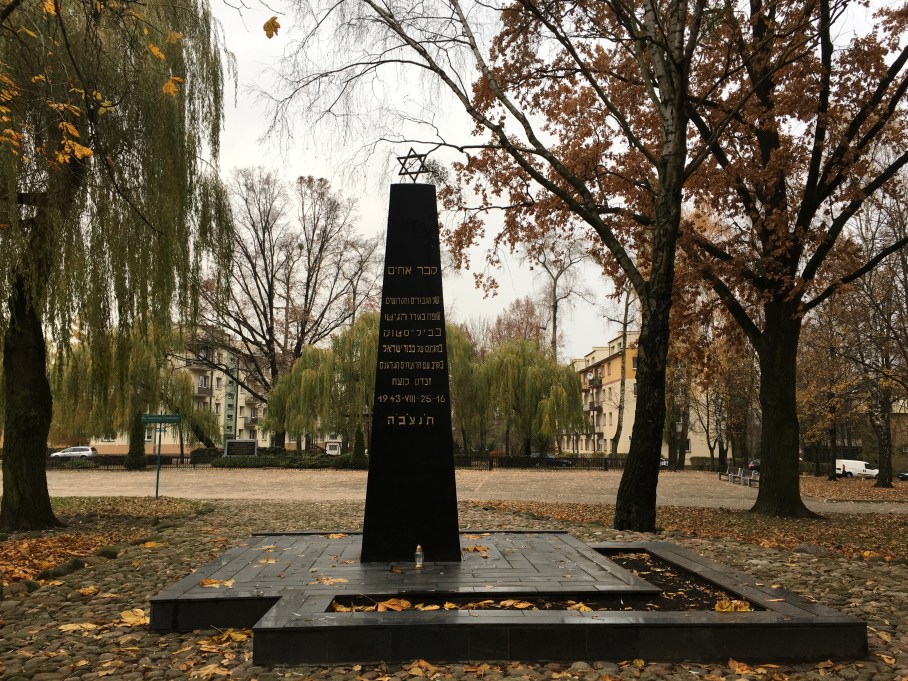
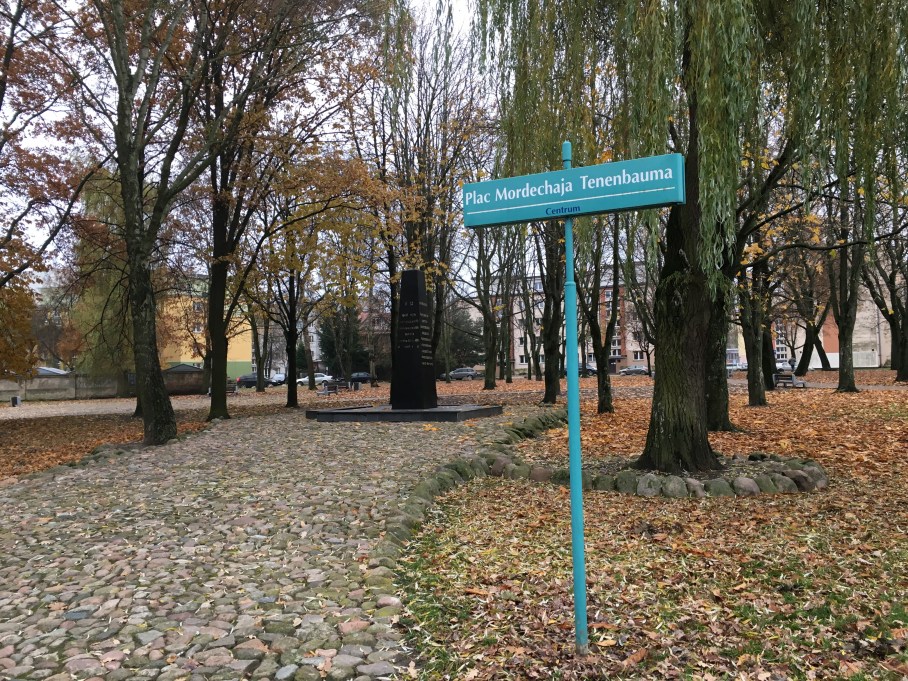
We then walked a couple minutes to the Bialystok Ghetto Uprising memorials located on Zabia Street. They commemorate the heroic actions of around 400 Jews who revolted against German authorities upon the announcement of mass deportations.

img_0086

They were led by Mordechai Tenenbaum who was no more than 27 years old.

img_0092

While the Jewish rebels were unable to entirely liberate the ghetto as they had hoped, about 150 combatants managed to escape.  50,000 Jews from Bialystok and vicinity had been forced into the Ghetto in late July of 1941. By September 1943, all had been deported to Majdanek and Treblinka death camps.

img_0088

Our final destination was the nearby Cytron Synagogue. Built only in 1936 by the Jewish industrialist Samuel Cytron, it is one of only two synagogues that survived the war.

img_0098

With that we headed back to the hotel. We grabbed our things and made our way via taxi to Avis.

img_0104

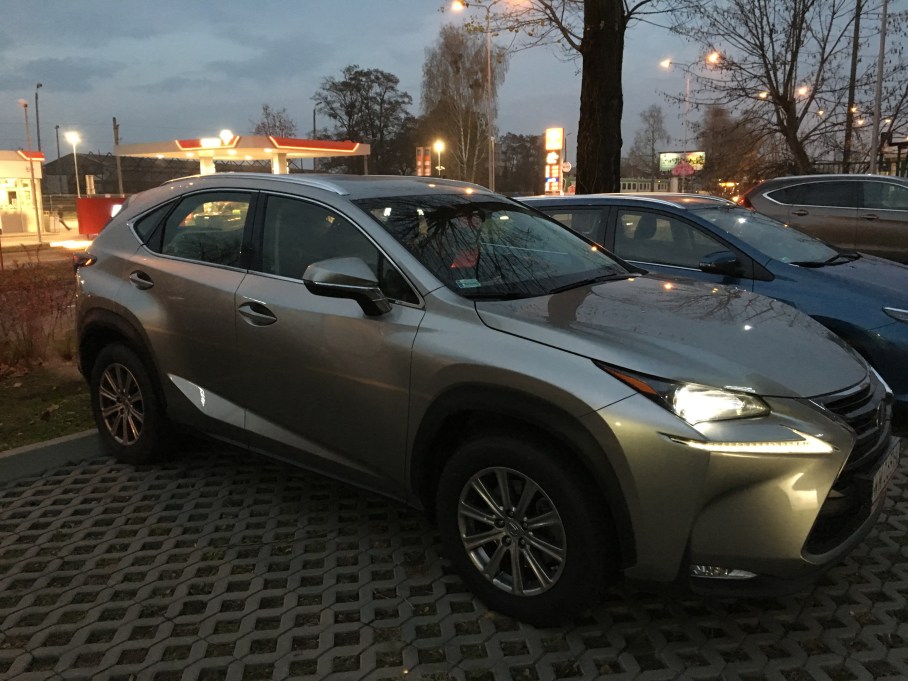
They didn’t have the VW Golf as I’d ordered, so they had to upgrade us to a Lexus. No complaints.

img_0105

The drive to Siemiatycze was just over an hour. Dad agreed to drive so I could blog. It was already dark when we left at 4:30.

We had a delicious dinner in the hotel restaurant. Our meal was described as traditionally borderland (Siemiatycze sits on the Poland-Belarus border).

img_0107

Blogged and then fell asleep after an exhausting day.

06 November 2016

I was very proud of myself to have gotten out of bed at 7:30 to run again with dad. We got dressed, stretched, and stepped outside to find the ground covered in snow. We inquired about a gym, but found out that it didn’t open until 9:00. Dad begrudgingly showered instead as I got in my full jump rope routine.

Picked up an umbrella and sat down for breakfast before heading out to show Dad secular Vilnius.

We started with the castle complex, which I had already explored at length, but was nevertheless special because of the snow. The Cathedral was packed with attendees for the Sunday morning service. We watched for about ten minutes, I think it was my first time attending a Catholic service. The rituals were interesting and the choir was incredible.

img_9862

Afterwards, we spent some time in the Palace of the Grand Dukes. I think I was slightly more patient with Dad than I have been in previous days. I’m pretty sure he has a solid grasp on the key points of Lithuanian history.

I advised that we skip the National Museum of Lithuania for the sake of time, it’s also not my favorite.

img_9866

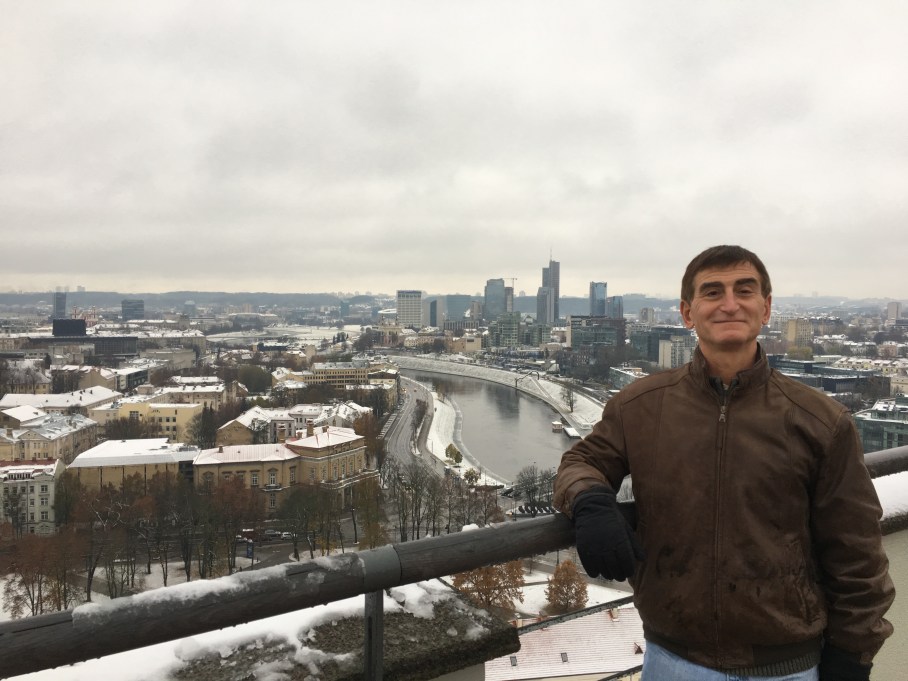
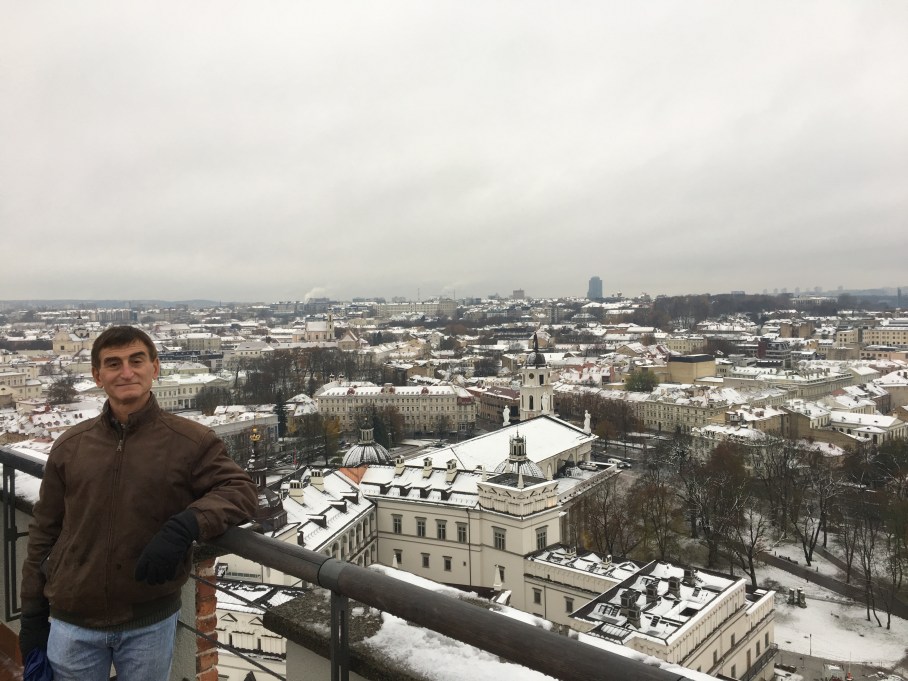
Walked slowly up the snowy trail to Gediminas Tower.

img_9872

It felt by no means redundant as it was an entirely different experience in the snow.

img_9886

Pointed out some important markers to Dad and took a good amount of pictures before walking back down the snowy hill to Pilies.

img_9892

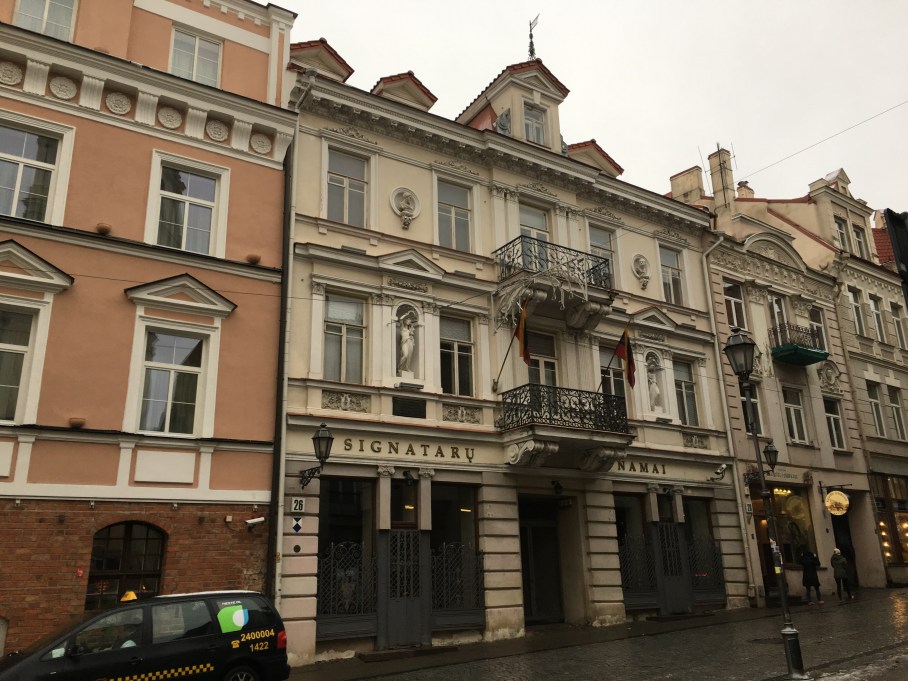
We visited the House of Signatories, where independence was declared from the Russian Empire in 1918.

img_9903

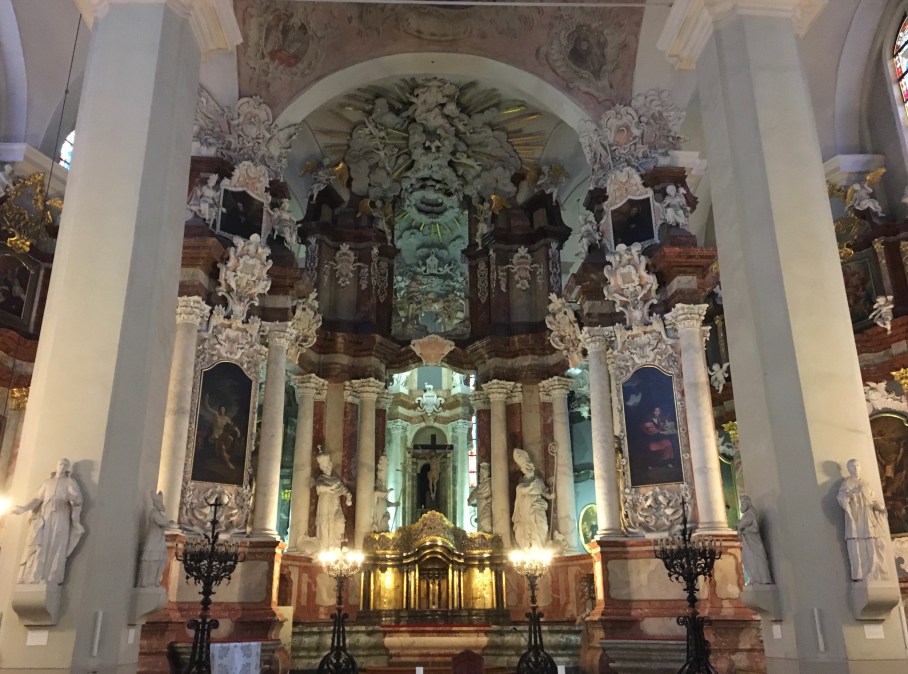
Unfortunately the central square of the university was closed, but we visited her Church of Saint John, which dominates the ensemble. It was reconstructed many times since the 16th century when it propagated the Jesuit rite- as did the University.

img_9914

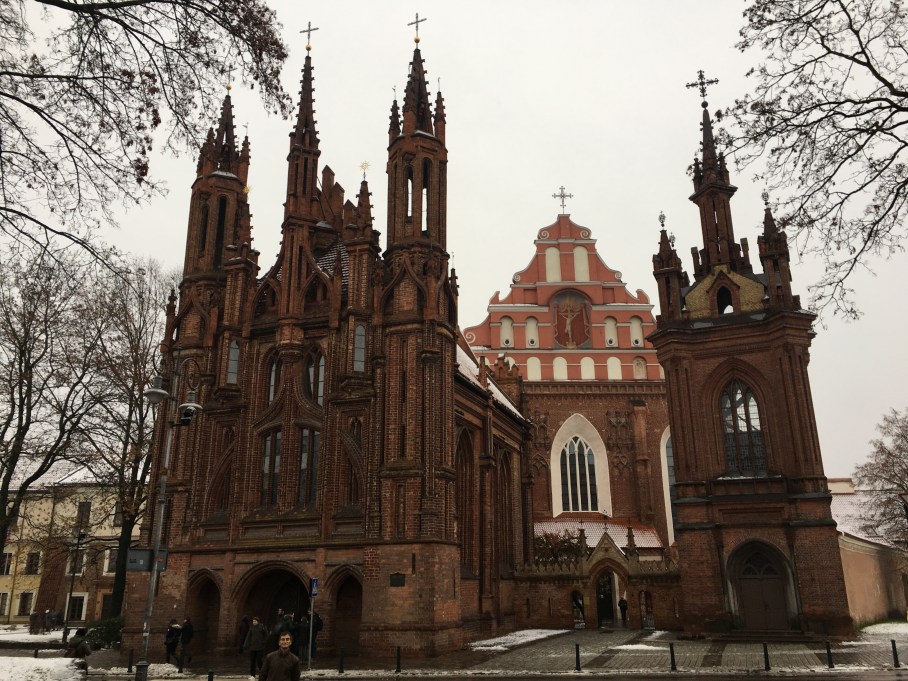
After purchasing souvenirs we walked to the Church of St Anne. With an ‘unforgettable flamboyant Gothic facade’ it is ‘undoubtedly the most celebrated building in Lithuania’ according to my guidebook. I walk by there most days on my way to city center.

img_9917

One of three churches that make up the Bernardine Friary, the building has rather vague origins, but is thought to have been constructed around 1500.

img_9930

Just behind stands the Church of Saints Francis and Bernard, also part of the Bernardine ensemble.

img_9935img_9936

We ubered to the hotel to avoid the frigid weather, gathered our things and went to the bus station. We enjoyed a surprisingly decent lunch at the station before departing for Poland at 4:30.

The bus ride took five hours, one hour longer than expected (I didn’t account for the time change). Gave me time to write though. We arrived in Bialystok by 9:00. Took a taxi to our hotel where we enjoyed a delicious dinner before going to sleep.

img_2932img_9949

05 November 2016

Started our day with a long run along the river in a light snow and then grabbed a quick breakfast before traveling.
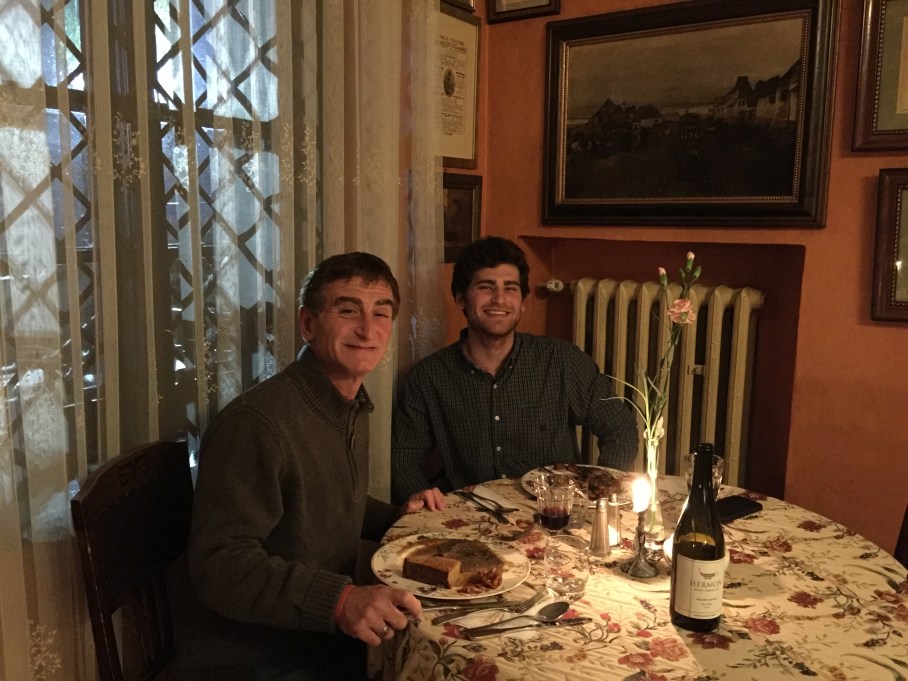
We left Vilnius via CityBee no earlier than noon. Dad kindly read some context for our destinations as I drove. At 2:00 we arrived in Birstonas, the de facto center of Nemunas Loop Regional Park.
img_2814

It took some time to find the information center, where we learned that Birstonas has functioned as a full fledged resort town since the mid-19th century. She flourished during the interwar period in particular, when the only larger resort town of Druskininkai was absorbed into Poland.

img_9709

The Nemunas Loop Regional Park boasts a variety of flora and fauna, but her most impressive feature is a series of sharp turns in the Nemunas River.

img_9715

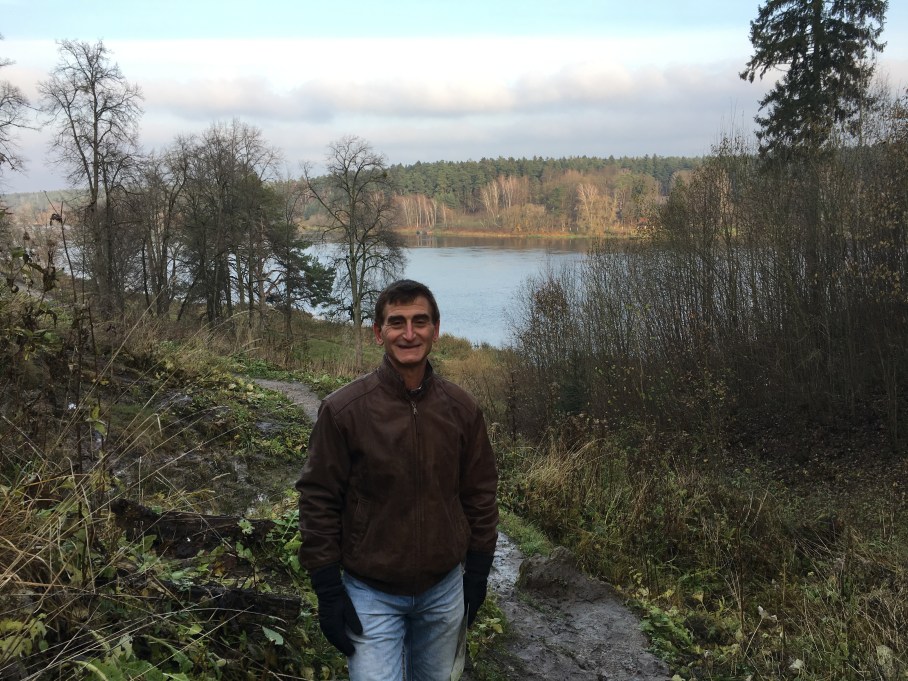
We spent some time in Vytautas Park before making our way up Vytautas Hill.

img_9720

It was a steep climb up a muddy trail with intermittent crumbling stairs, but managed to talk to Mom on the way.

img_9733

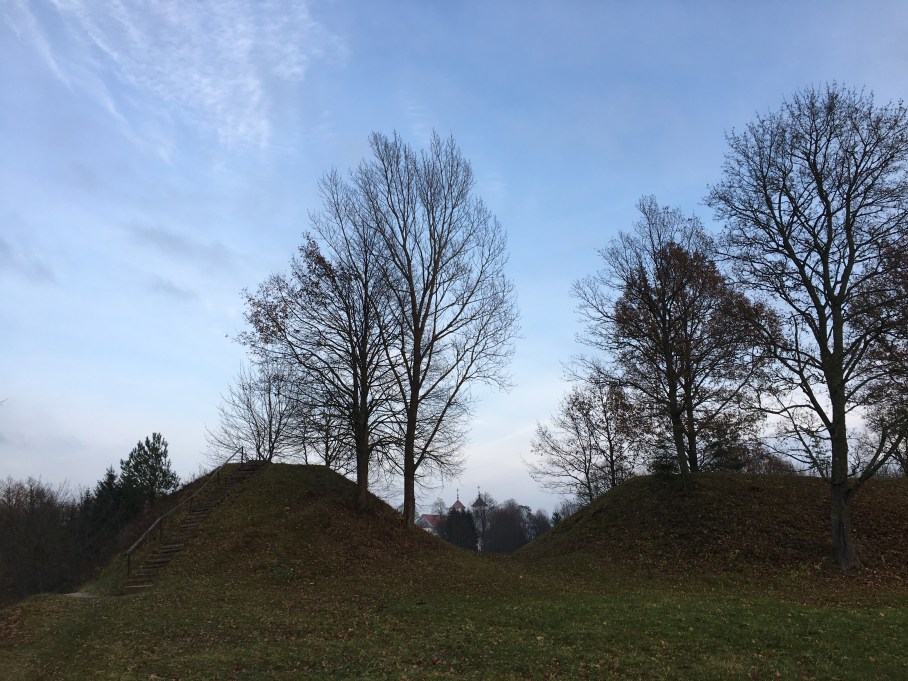
Vytautas Hill accommodated a castle as early as the 14th century when it endured repeated attacks by Teutonic Knights, but withstood them all. In the following century it housed a favorite hunting manor of Grand Duke Vytautas.

img_9766

In later years it served as one of many royal residences for the Grand Dukes.

img_9760

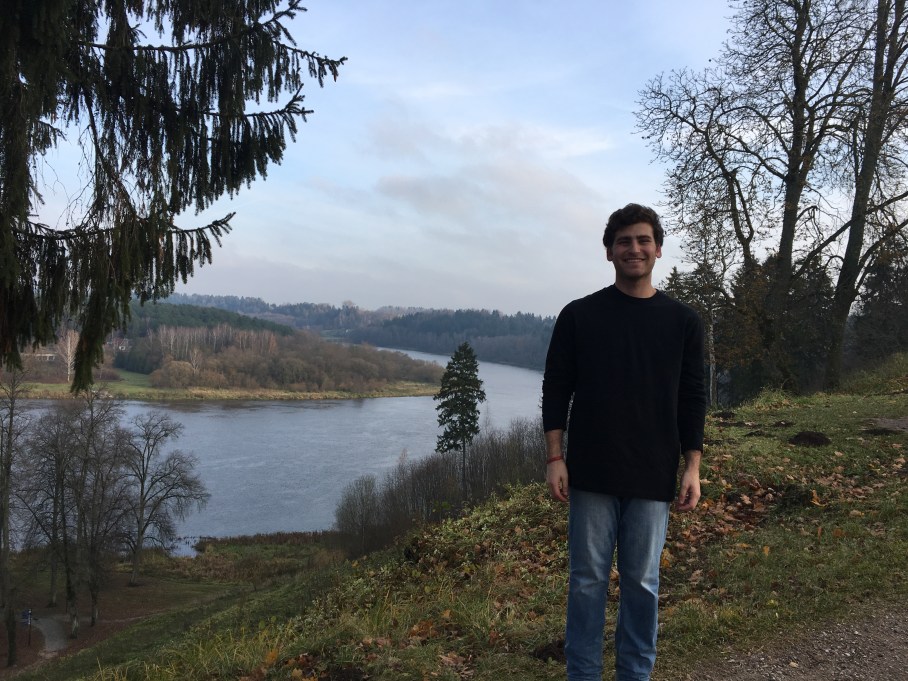
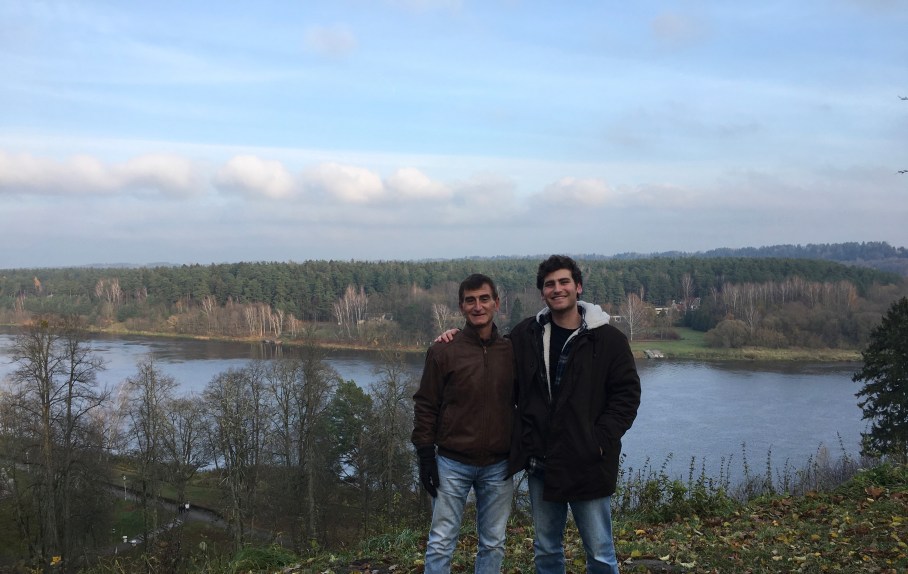
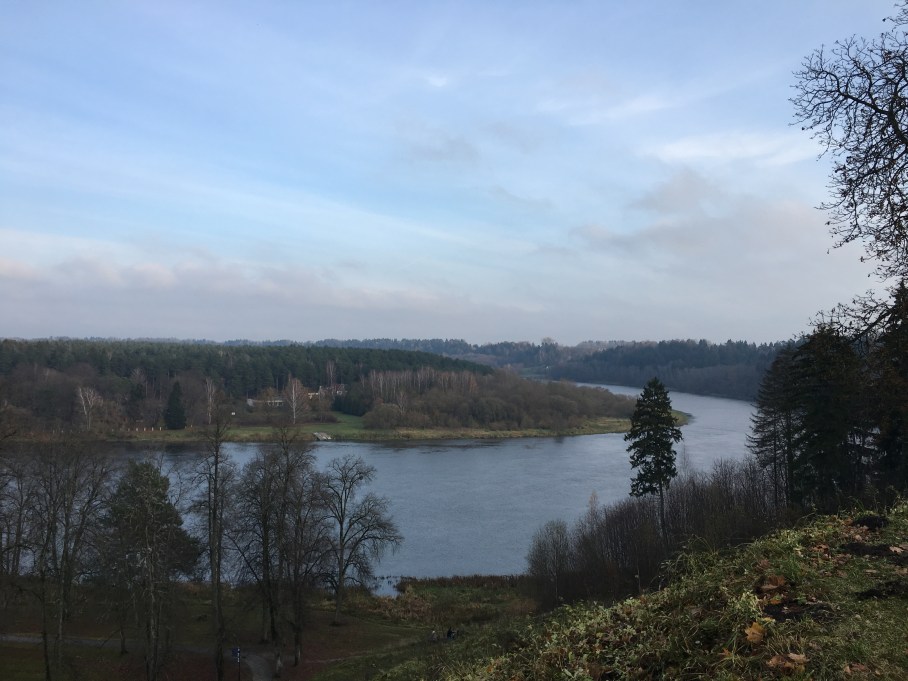
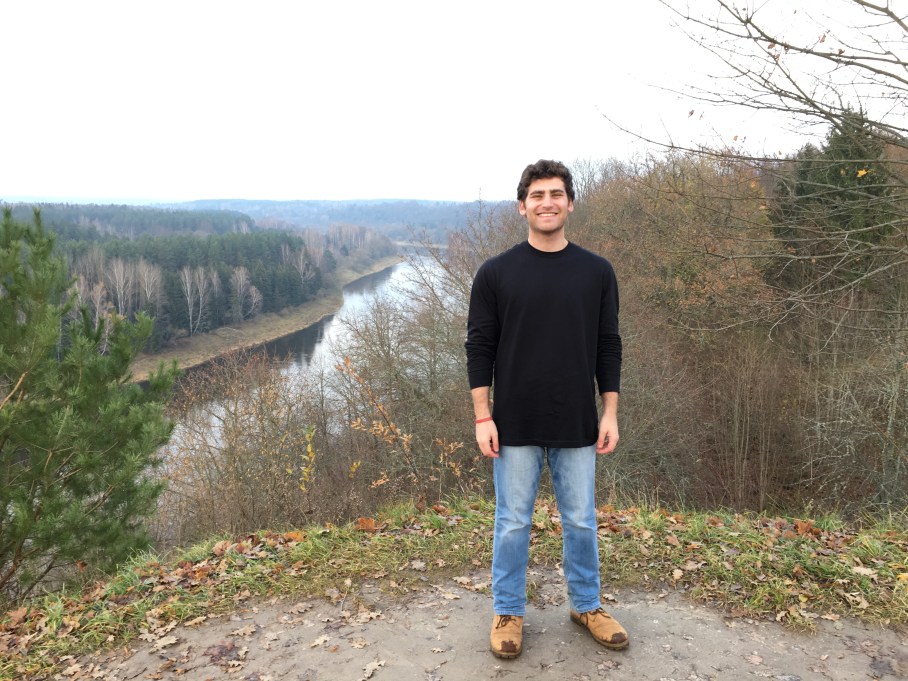
The top of the hill provided for some incredible views of the Nemunas below.

img_9747

The bends were partially formed by underground tectonic activity, which also explains the abundance of minerals that made Birstonas famous. The Nemunas is not only the largest river in Lithuania, but also served as an important waterway and natural defense for the nation.

img_9756

We stopped briefly at one of the mineral fountains for which Birstonas was famed.

img_9775

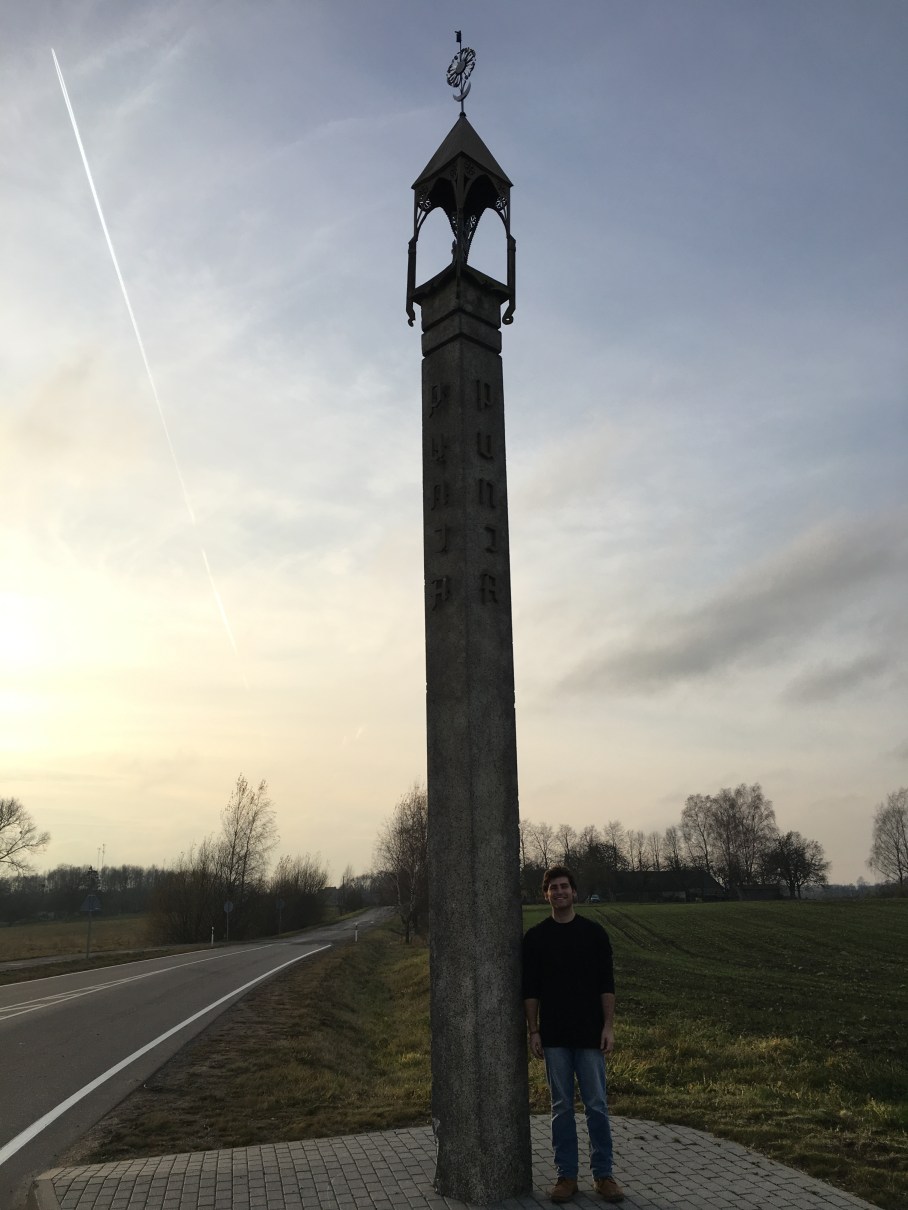
We started our drive to nearby Punia at 3:00.

img_9780

Rose Riches nee Puniansky (literally ‘of Punia’) was born there in 1858 to Chaim-Moshe and Ruth. She lived with her husband and three daughters in Vilnius, where she was widowed at a young age. She immigrated with her youngest daughter in 1894 to Bayonne, New Jersey, where her two eldest daughters already resided (including Ida Lapidus, grandmother of my grandfather). The family later moved to Birmingham, Alabama where Rose died in 1940.

1a989d12-c79d-44c8-a924-c20b5a419bf9

The homes in Punia were brick, gray, surely not any older than the past few decades. City center surrounded a triangular green plot adorned with a cross.

img_9790

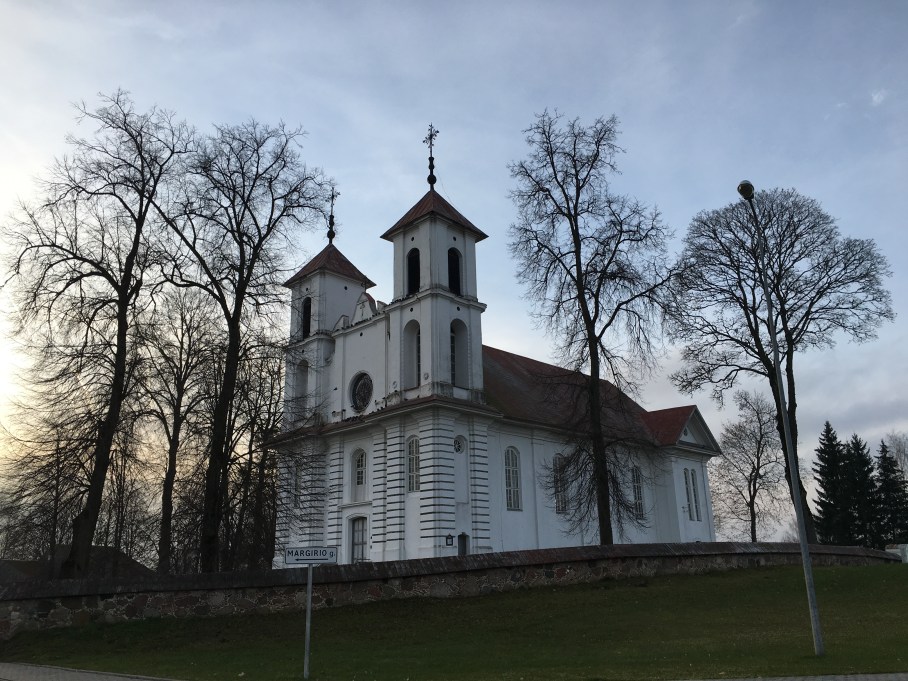
Just behind stood the Church of Saint James the Apostle, built in 1863 atop ruins of an early 15th century church ordered by Grand Duke Vytautas.

img_9786

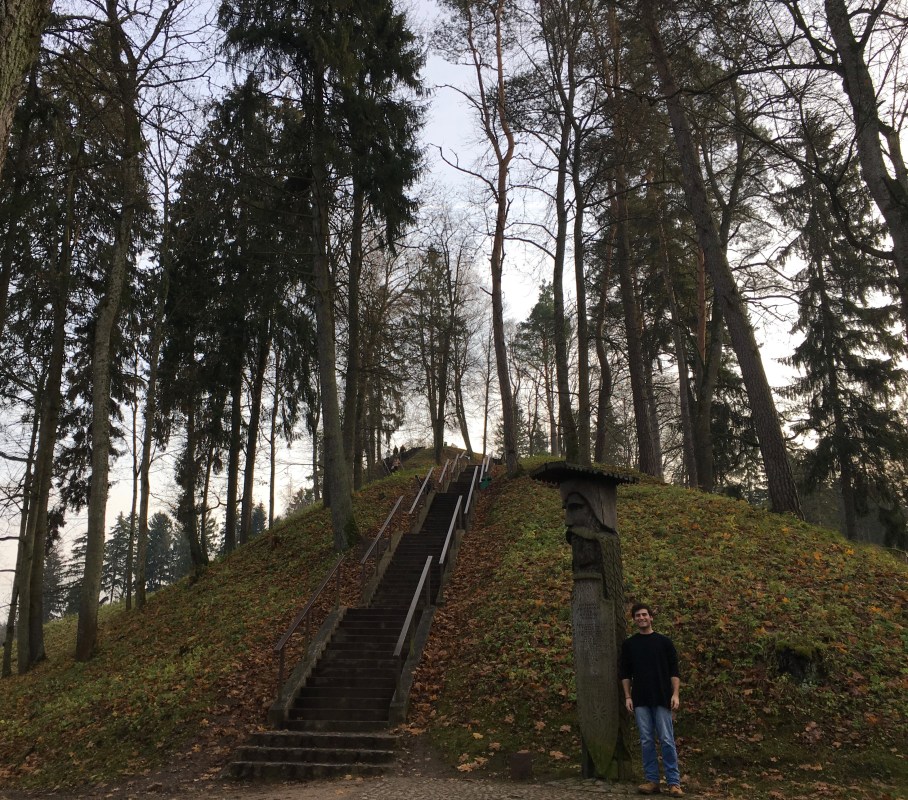
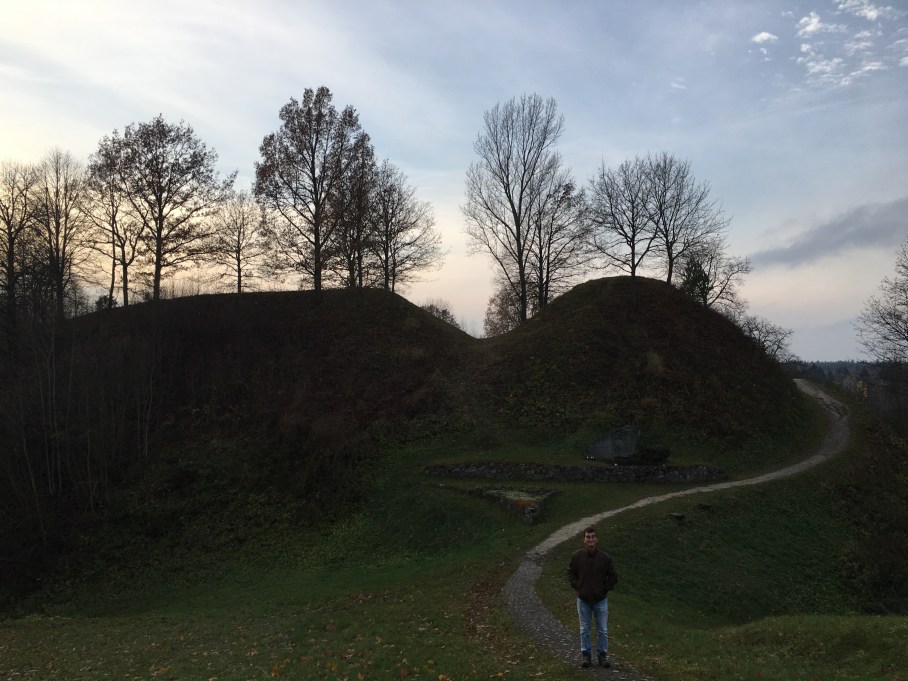
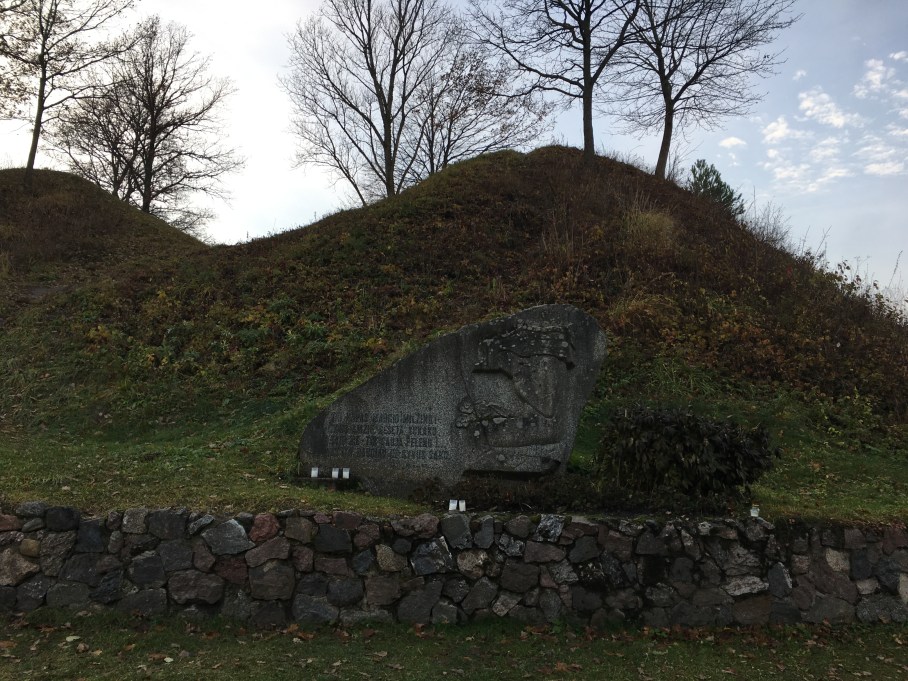
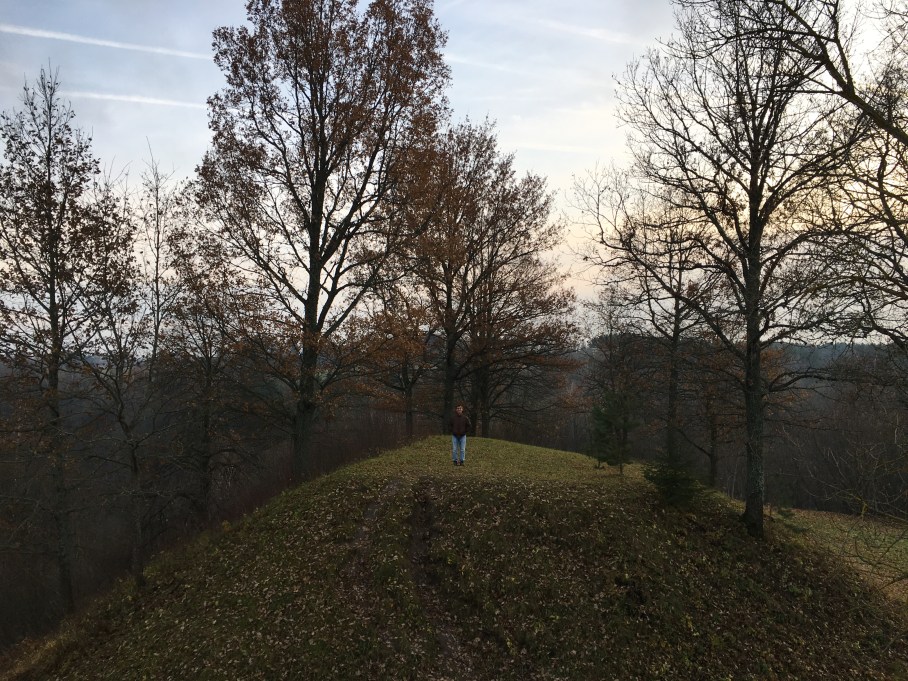
An adjacent sign marked the short trail to Punia Mound, one of the largest mounds in Lithuania.

img_9795

It believed to have been the sight of the castle of Duke Margris known as Pilenai.

img_9802

Legends dictates that in 1336 inhabitants chose death in flames rather than surrender to the Teutonic Order.

img_9803

The story was popularized during the 19th century wave of romantic nationalism.

img_9820

Like Vytautas Hill, it provided for some incredible view of the Nemunas below.

img_9813

Surely young Rose Puniansky would have played there in the 1860s.

img_9822

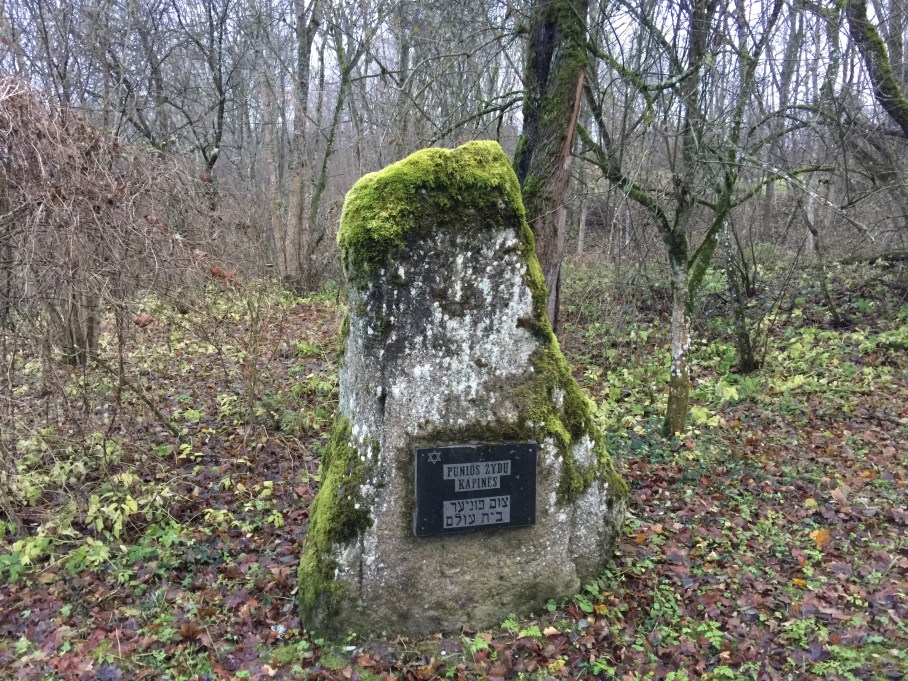
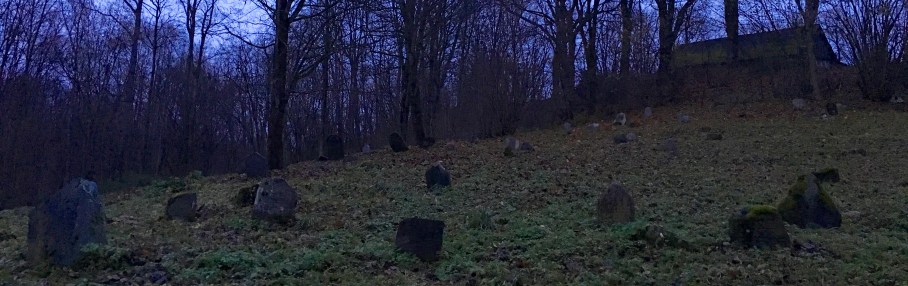
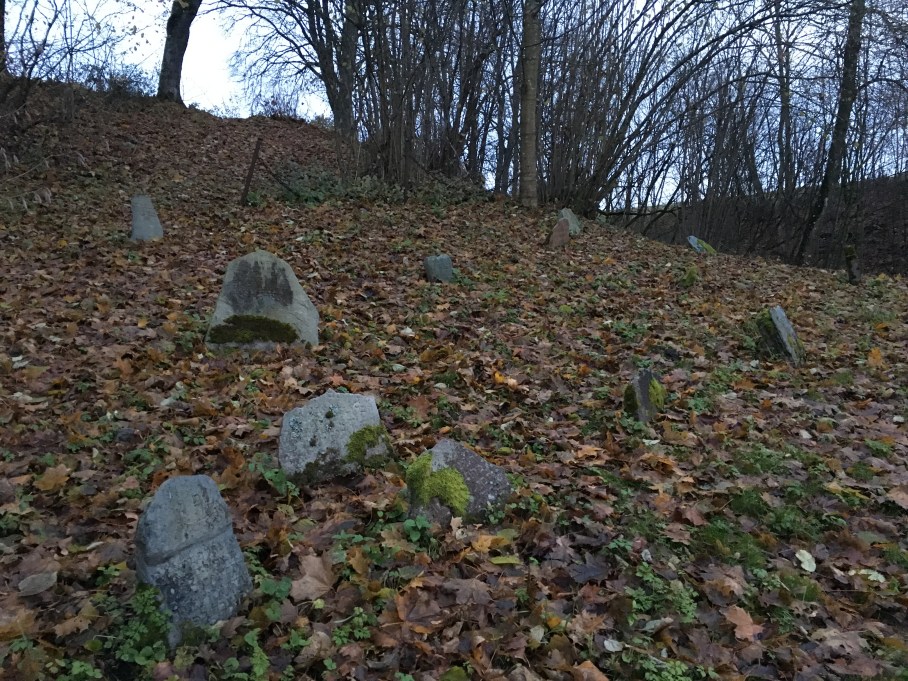
It took a while to find the Jewish cemetery. The twenty year old travelogue that I found online was of no use. I even asked ’zydu kapines’ with inflection to a roadside babushka, who provided extensive directions in Lithuanian. After some more online research I learned that the cemetery was located along a nearby stream. Dad directed me to the stream using Google Maps and surely enough…

img_2841

We parked close by and then walked over the stream to reach the cemetery.

img_9824

The Jewish community of Punia numbered over 1,000 in 1897.

img_9848

At the turn of the century Jews accounted for over 92 percent of the total population.

img_9835

By the interwar period that number had substantially decreased to no more than two dozen families due to emigration. The wooden synagogue was as such disassembled in 1933.

img_9832

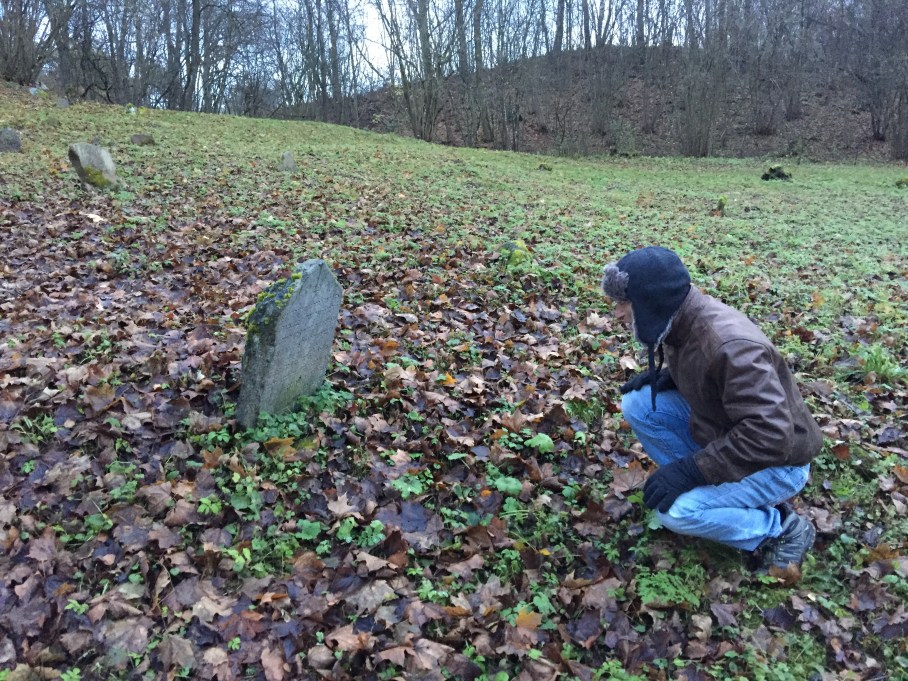
Dad and I tried to find relatives, but turned up fruitless without assistance from Regina.

img_2852

We said Kaddish for our ancestors buried there.

Dad graciously drove back to Vilnius as I blogged.We changed and headed to dinner at Neringa Hotel, frequented by Soviet socialites in the 1950s.

img_9854

Dinner was delicious and there was even live music. The band, who I thought had a country twang, played ‘Babylon’ by George Ezra- one of Dad’s favorites.

img_9851

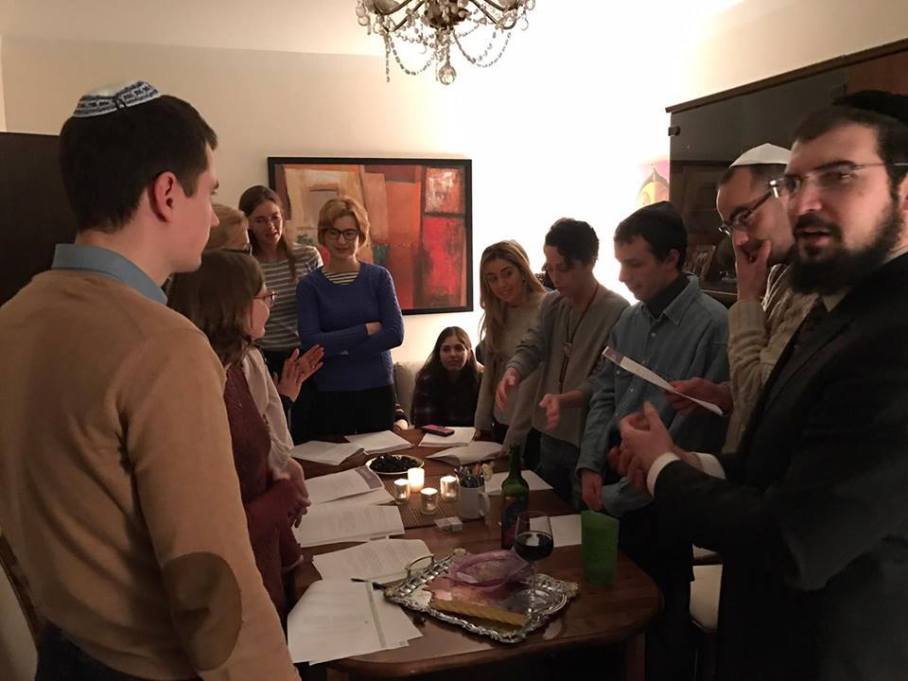
From dinner we traveled to Amit’s home where she had hosted Havdallah and still had many guests over. I spent time talking to a couple teenagers from Minsk and later to an opera-singer from Moscow who recently moved to Vilnius.

15036545_10154285378633285_6427206671892460875_n

After a lovely night we traveled back to the hotel.

04 November 2016

We dedicated our day to Jewish Vilnius. Used two phenomenal websites to plan our route:
https://www.inyourpocket.com/vilnius/Jewish-Vilnius_73607f
http://www.vilnius-tourism.lt/en/what-to-see/routes/jewish-vilnius/

Walked from our hotel on Gediminas Street, thoroughfare of Old Town, down Jogaila Street to Pylimo Street, thoroughfare of New Town- deceiving as it actually dates to the 19th century.

We started at the ‘Holocaust Exhibition’, an annex of the Vilna Gaon State Jewish Museum. Surely it was fascinating, but felt a bit more like walking into a book than a museum. There was an overwhelming amount of text and limited artifacts.

img_9638

At the end of our tour we enjoyed a brief film set to diary entries of young Isaac Rudashevsky, a Vilnius resident who perished during the Holocaust. The family name sounded familiar… turns out he was a nephew of Rachel-Leah Rudashevsky nee Reiches who was a first-cousin to my great-great-grandmother, Ida Riches Lapidus.

We continued down Pylimo to the Bagel Shop in the Jewish Community Center (Pylimo 4) where I had previously led Shabbes. I had to show Dad how great their tuna bagels are.

Strayed a bit from Pylimo to the first home of YIVO, which was established in 1925 by the preeminent Yiddish scholars of the time (notably Max Weinreich) to preserve and promote Yiddish language and culture, which was thought by many to be endangered by the promotion of Hebrew language and culture among European Jewry. Headquarters were later moved to New York City where YIVO remains the preeminent Yiddish institution. Their Encyclopedia of Jews in Eastern Europe has been of utmost value in my research. I would not mind working there one day.

img_9652

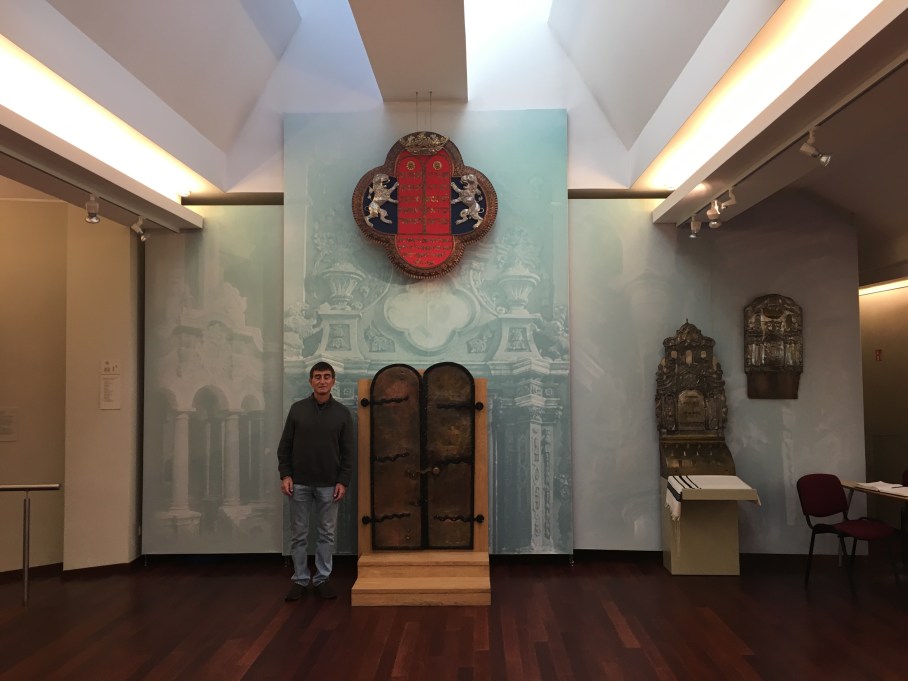
Ventured past Pylimo to the central building of the Vilna Gaon Jewish State Museum known as the ‘Museum of Tolerance’, dedicated to Lithuanian Jewish (Litvak) history and culture.

img_9663

It was really well put together. The top floor housed a collection of traditional Litvak art. Perhaps most fascinating was an 18th century shield of the Ten Commandments that hung in the Great Synagogue during the time of the Vilna Gaon.

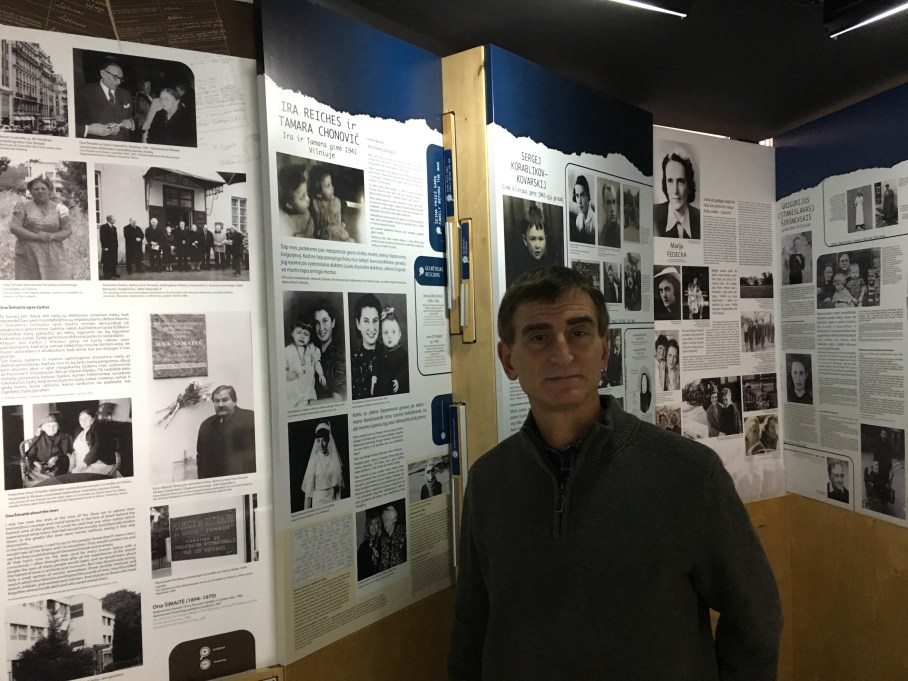
img_9653

The second floor featured a temporary exhibit about Jewish children of Lithuania during the Holocaust. Isaac Rudashevsky’s story was one of many on display, also that of an ‘Ira Reiches’ who is presumably a relative.

img_9657

The main floor provided a general overview of Jewish history in Lithuania, I look forward to spending more time there in the future.

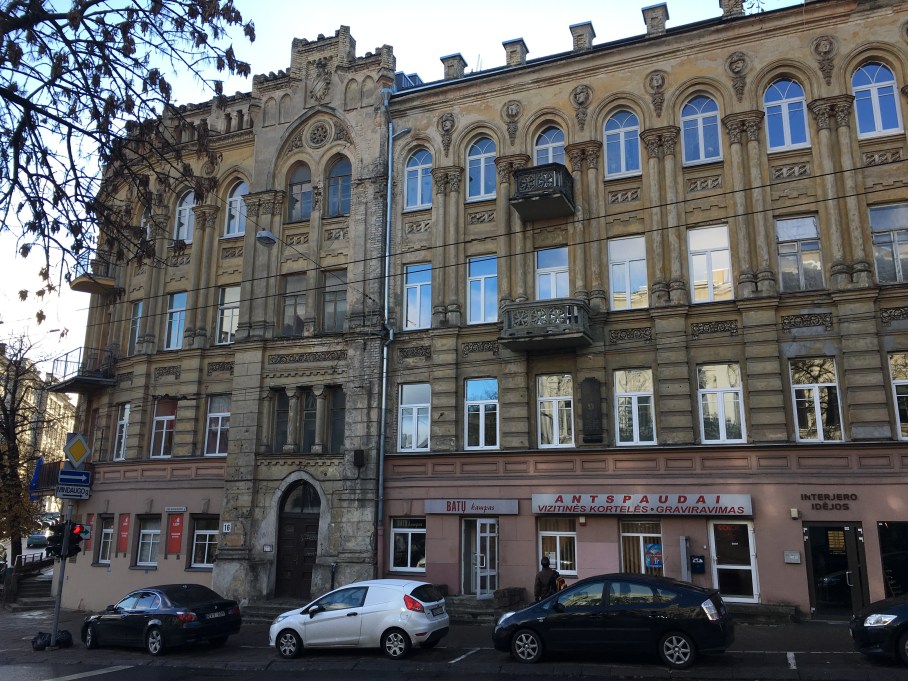
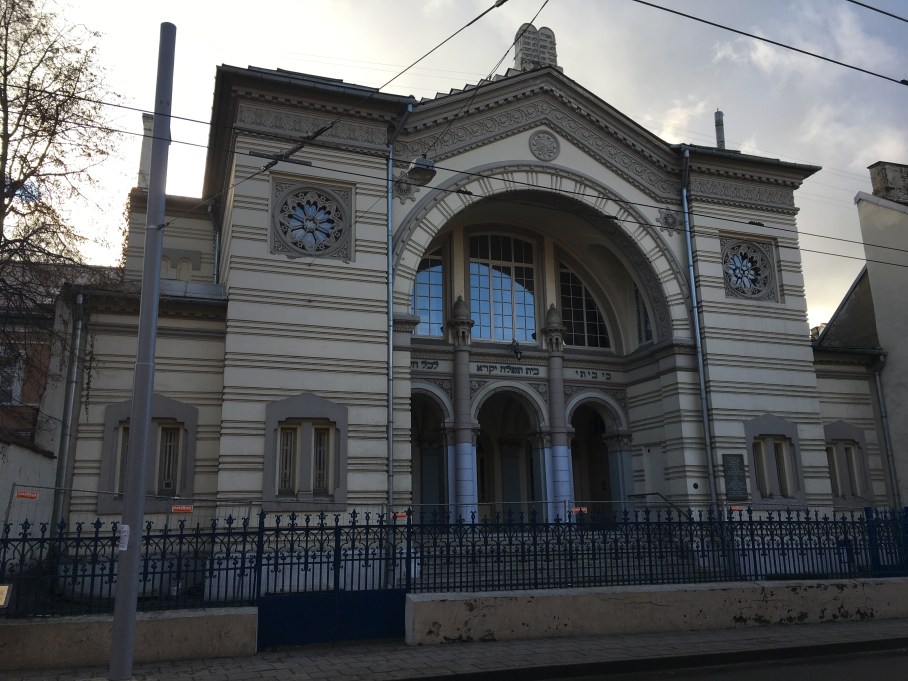
Continued to the southern end of Old Town to find the only synagogue that survived the war out of the 100+ that stood prior. Built in 1903, the Choral Synagogue was used as a medical store by the Nazis.

img_9667

It generally holds weekly services, but is currently undergoing repair.

img_9668

Walked a short distance to the entrance of the Big Ghetto, arranged in 1941 to replace the recently liquidated Small Ghetto. It held at least 29,000 Jews until they were systematically massacred in the Paneriai Forest.

img_2800

Within the bounds of the Big Ghetto lies the Jewish Cultural and Information Center where I’ve attended a variety of Jewish programs.

img_2802

The Big Ghetto is separated from the Small Ghetto only by one street, which it turns is Vokiecu Street where I have my international relations courses on Mondays. Stopped by the building where my classes are held.

img_2803

The small ghetto was located in the area where Jews had resided since medieval times.

img_9674

The first synagogue of Vilnius is said to have been built there in 1440, and replaced by the Great Synagogue in 1663. The Great Synagogue was heavily damaged during WWII and then completely razed by the Soviets.

img_9693

The Great Synagogue served as the epicenter of the Jewish community, which accounted for more than half the population of Vilnius in the early 20th century. Adjacent stands a monument of the legendary Vilna Gaon (1720-1797). The Gaon played no small part in developing the Litvak religious tradition, which can be defined essentially as a strict opposition to Hasidism. Litvak even became synonymous with ‘misnaged‘, meaning the opposition.

img_9691

A plaque marks the building next door as his residence, but it is not universally accepted as such.

img_9678img_9696

A newly adorned sign at the ghetto entrance labels the road as ‘Jewish Street’, first in Hebrew and then in distorted Yiddish, emblematic of the continuous usurpation of Yiddish language and culture by Hebrew language and culture (as promoted by the Israeli embassy here).

img_9699

Afterwards, Dad and I walked back to the Jewish Community Center at Pylimo 4 for Shabbes. The service was conducted in Hebrew and the sermon entirely in Russian. Perhaps ten others joined us, we learned later that they were all paid to be there.

img_9701

We walked down Jogaila back to our hotel on Gediminas where we warmed up and dressed up for dinner.

We met Amit and her boyfriend (Rokus) for dinner at 8:15.  They were kind enough to indulge our bombardment of questions about the Jewish community of Vilnius. It was a delightful and insightful evening, they are such great company.

img_9706

Ubered back to the hotel where we didn’t fall asleep until past 1:00.